Logical thinking improvement Chess Worksheets for Ages 4-7
3 filtered results
-
From - To
Enhance your child's logical thinking skills with our engaging Chess Worksheets designed specifically for ages 4-7. These worksheets incorporate fun, age-appropriate puzzles and exercises that introduce essential chess concepts while fostering critical thinking and problem-solving abilities. Children will explore patterns, enhance their understanding of strategic decisions, and improve their concentration as they immerse themselves in the world of chess. Our thoughtfully crafted activities encourage children to think ahead and develop a strong foundation in logic that will benefit them in various aspects of learning. Perfect for home or classroom use, these worksheets make thinking skill development enjoyable and interactive!
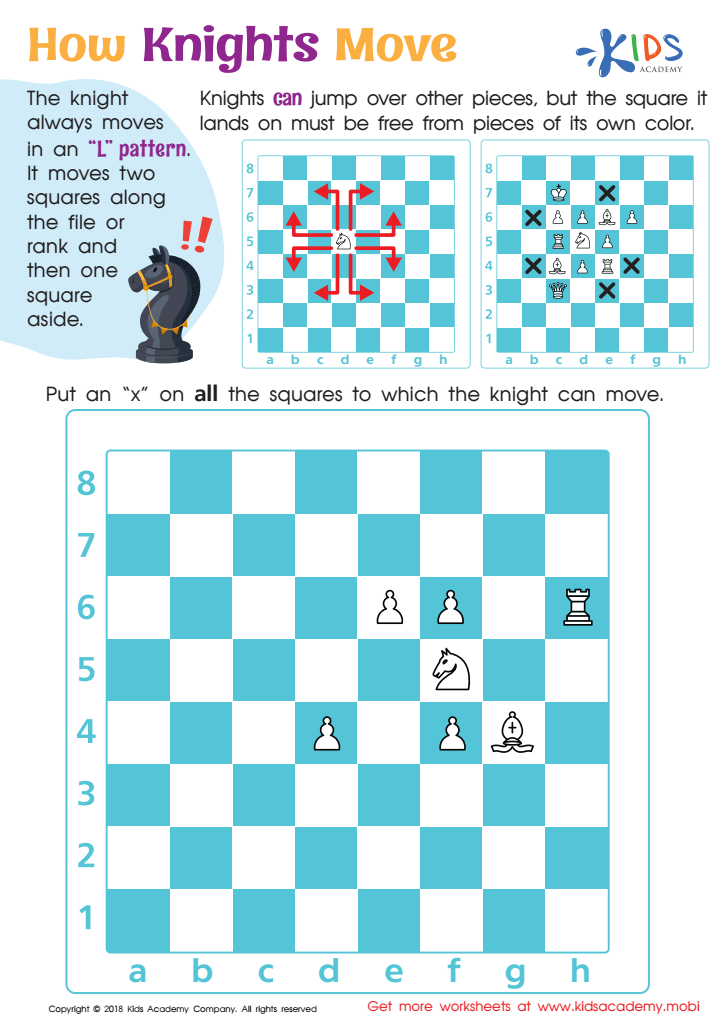
How Knights Move Worksheet
 Assign to My Students
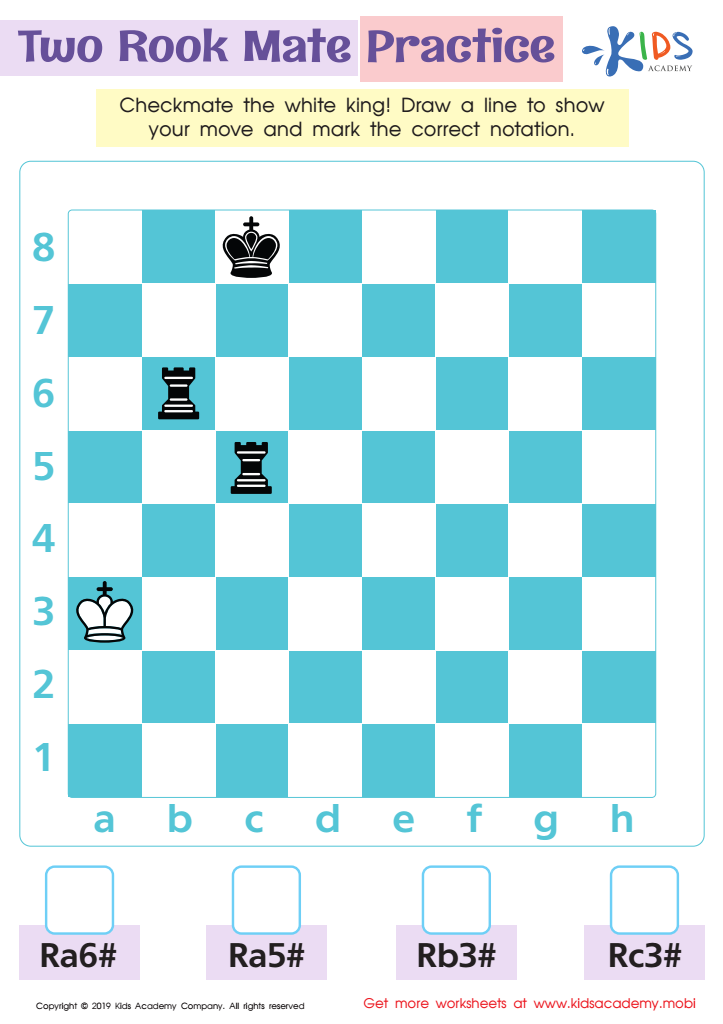
Two Rook Mate Practice Worksheet
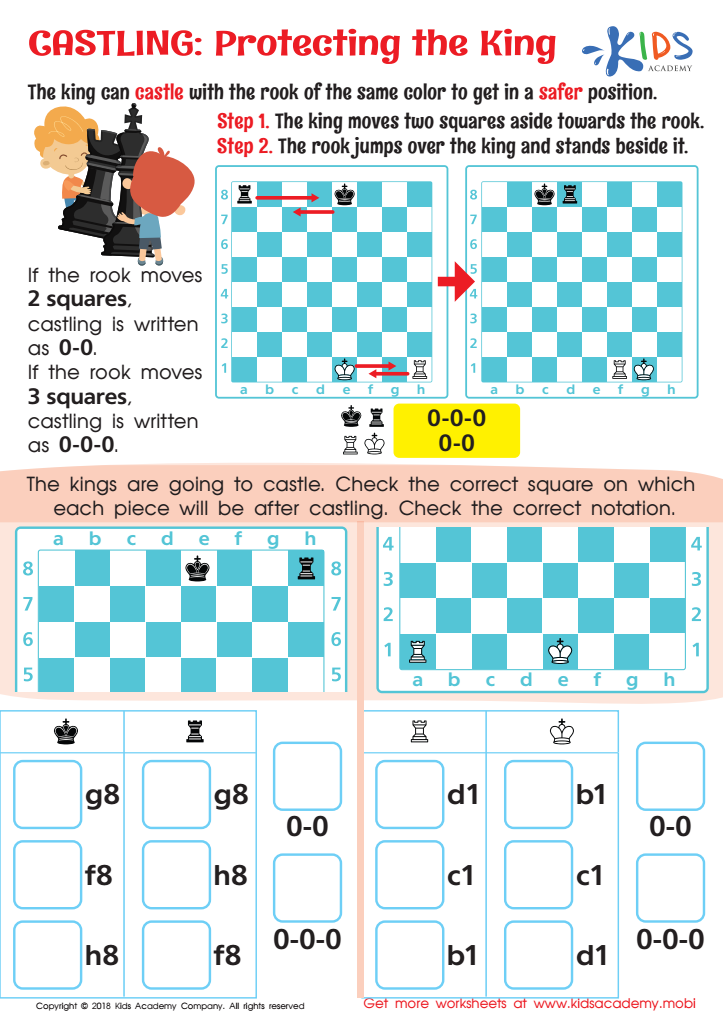
Castling: Protecting the King Worksheet








Logical thinking is a fundamental skill that helps children solve problems, make decisions, and think critically. Introducing chess to children aged 4-7 is an excellent way to enhance their logical thinking abilities. Chess requires players to analyze situations, anticipate opponent moves, and strategize their own. These skills foster a mindset that values planning ahead and considering various outcomes—essential components of logical reasoning.
Moreover, chess is a game that encourages patience and perseverance, qualities that are invaluable in academic and social settings. As children learn to navigate the complexities of the chessboard, they also develop resilience as they encounter and overcome challenges—both winning and losing.
Parents and teachers should care about this improvement not just because it enhances cognitive skills, but also because it promotes social interaction, respect for others, and sportsmanship. Engaging in chess can spark interest in math and science concepts, as children begin to see the connections between strategy and problem-solving in other subjects.
In summary, incorporating chess into the lives of young children can significantly enrich their logical thinking, preparing them for future challenges while making learning enjoyable and interactive.