Alphabetical order practice Worksheets for Ages 4-7
3 filtered results
-
From - To
Boost your child's literacy skills with our Alphabetical Order Practice Worksheets designed specifically for ages 4-7! Our engaging, printable resources help young learners understand the importance of organizing words alphabetically. From interactive exercises to fun activities, these worksheets aim to make learning enjoyable while solidifying foundational skills. Kids can practice sorting words and pictures, enhancing their vocabulary and teamwork abilities. Ideal for teachers or parents looking to reinforce classroom lessons, these worksheets provide a hands-on approach to mastering the alphabet. Start your child’s journey toward reading confidence and organizational skills today! Perfect for home or classroom use!
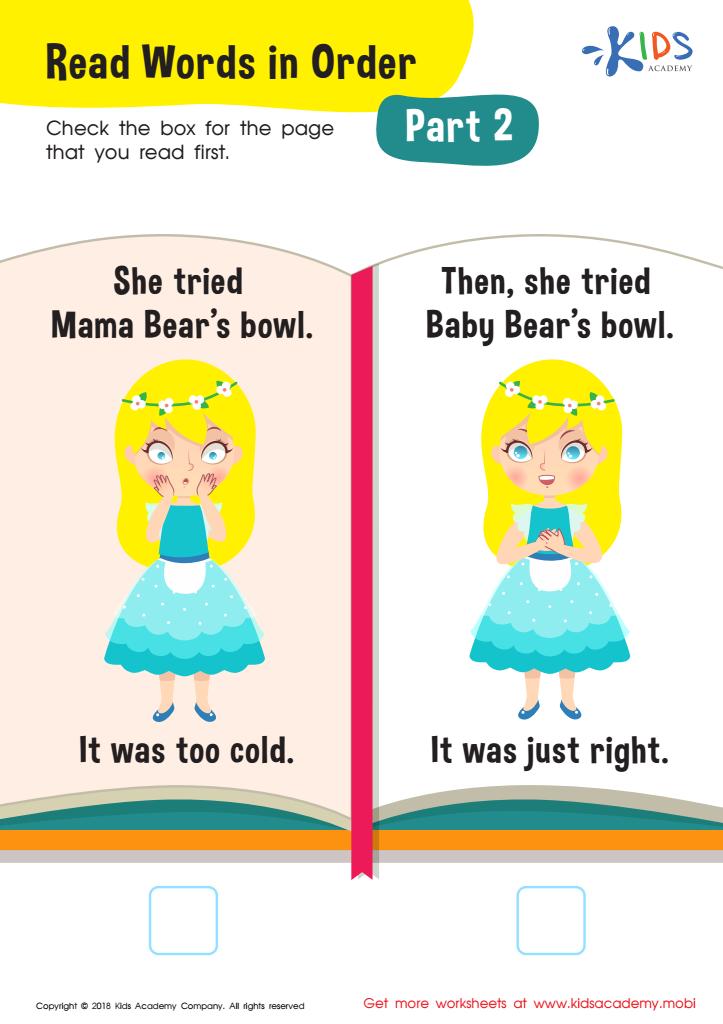
Read Words Order Part 2 Worksheet
 Assign to My Students








Alphabetical order practice for children aged 4-7 is crucial for several reasons. First, it enhances early literacy skills. Understanding the alphabet's sequence not only aids in recognizing letters but also strengthens phonemic awareness, which is vital for reading and writing. Knowing how to arrange items alphabetically improves their ability to organize thoughts and make connections, aiding in information retention.
Furthermore, mastering alphabetical order cultivates confidence in students as they navigate books and resources. Children who recognize that "A" comes before "B" can more easily find words, book titles, and information, promoting autonomy in learning.
Additionally, structured alphabetical order practice encourages cognitive skills such as categorization and sequencing, foundational skills necessary for more complex problem-solving later in life. This organizational skill can support other subject areas, including science and social studies, where sorting information is often required.
Finally, reinforcing alphabetical order can create engaging activities at home and in school. From interactive games to engaging worksheets, these exercises foster collaboration between parents and teachers, fostering a love for learning and the written word. Investing in these skills early lays a strong educational foundation for future academic success.








