Analog Clock Understanding Worksheets for Ages 4-7
3 filtered results
-
From - To
Introduce your child to the world of time-telling with our engaging Analog Clock Understanding Worksheets for Ages 4-7! Tailored to young learners, these printable activities help kids grasp the concepts of hours, minutes, and general time-reading skills. Designed to make learning fun and interactive, our worksheets feature colorful clocks and hands-on exercises that gradually build your child's confidence and understanding of analog clocks. Perfect for classroom use or home practice, these resources support early math development and prepare kids for more advanced time-telling concepts. Start your time-learning journey today with our expertly crafted worksheets!
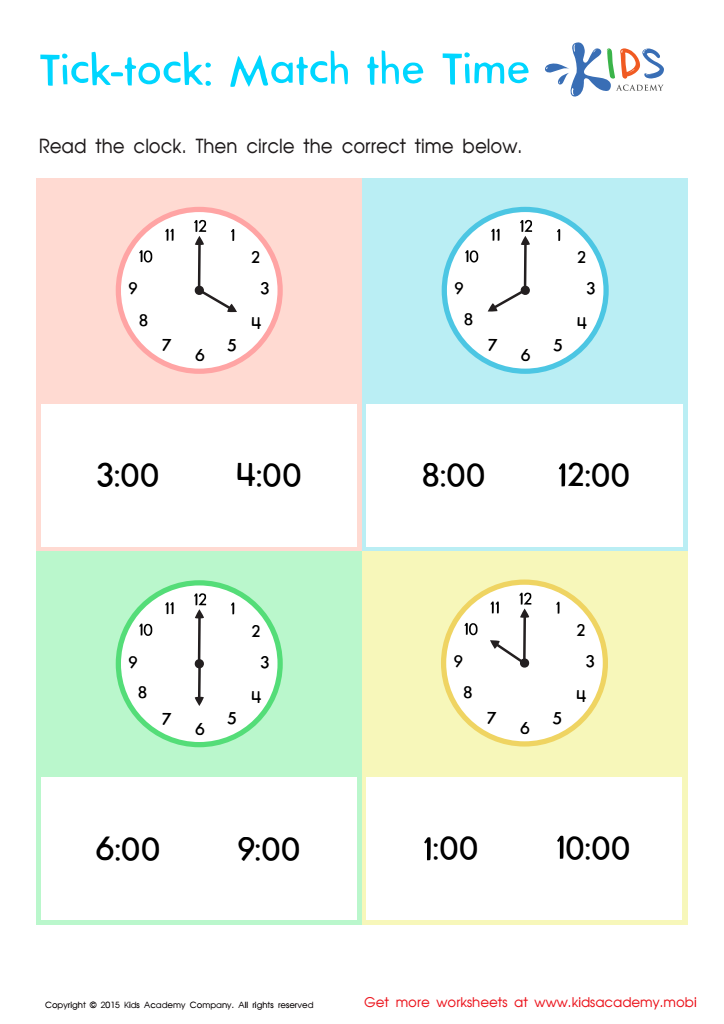
Telling The Time Worksheet: Part 4
 Assign to My Students
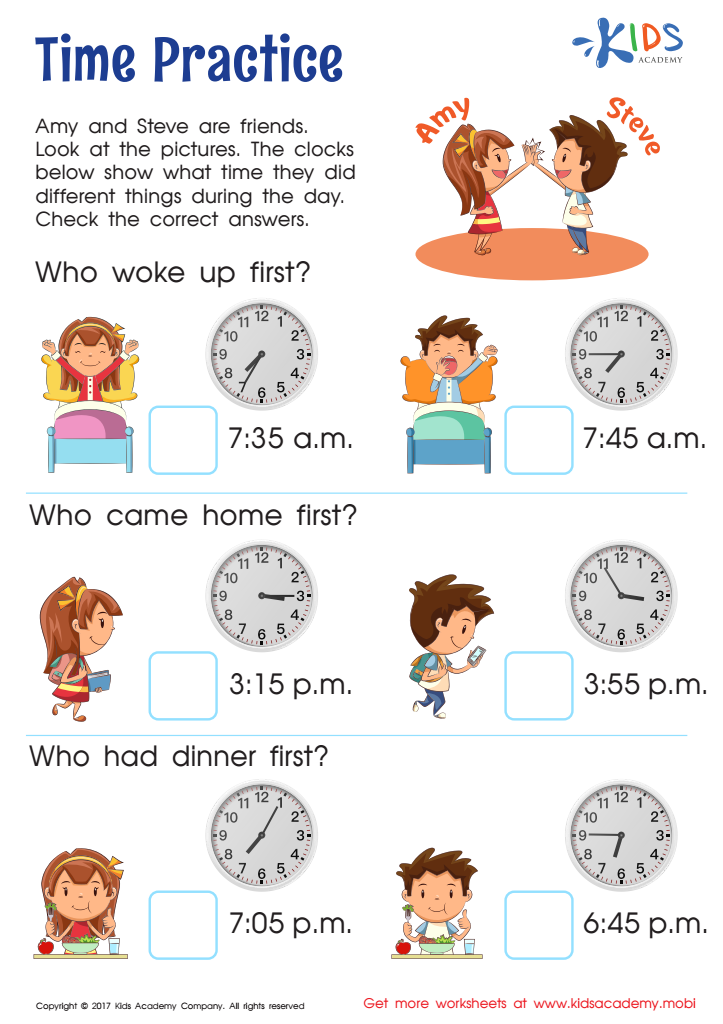
Time Practice Worksheet
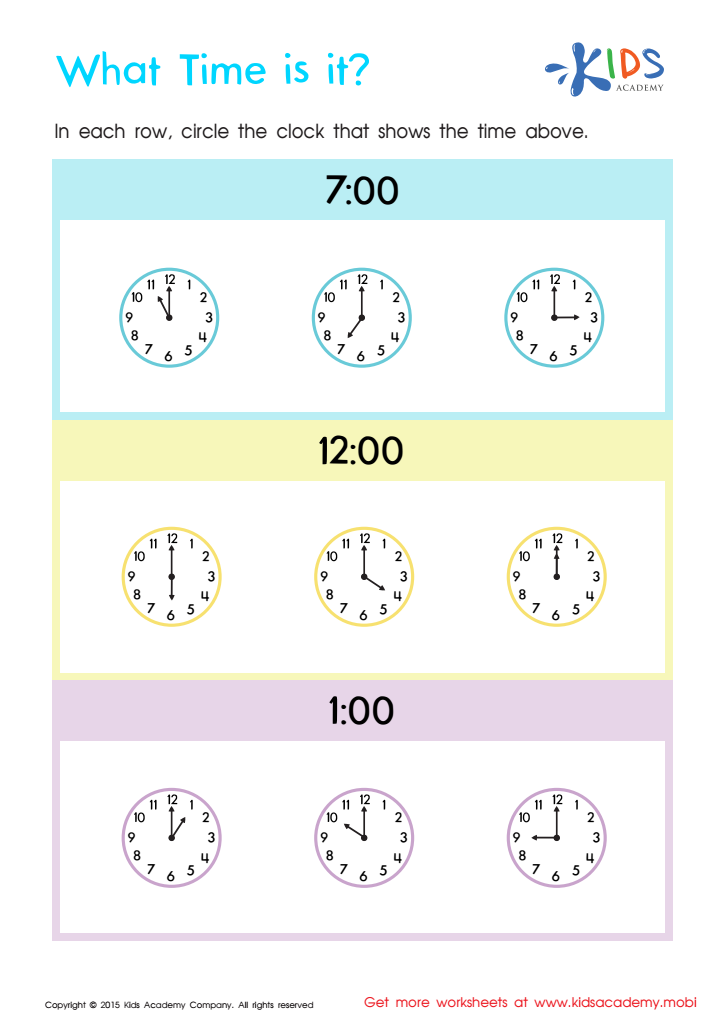
Telling The Time Worksheet: Part 3






Analog clock understanding is essential for children aged 4-7 as it lays a foundation for critical time management skills and cognitive development. First, learning to read analog clocks enhances children’s number recognition and sequencing, as they must identify numbers 1 through 12 in order and match them to specific time intervals. This strengthens their overall number literacy, essential for future mathematical learning.
Second, understanding analog clocks helps children grasp the concept of time as a continuous, cyclic process rather than just a series of digital snapshots. This understanding fosters their ability to regulate daily activities and routines, such as recognizing when it’s time for school, play, meals, and bedtime—crucial for developing structured, effective daily habits.
Moreover, mastering analog clocks promotes fine motor skills and hand-eye coordination. As children physically manipulate clock hands during practice, they develop precision and coordination abilities.
Finally, analog clocks encourage a deeper conceptual understanding of fractions and portions (e.g., quarter past, half-past), elements of more complex math they will encounter later.
Thus, parents and teachers should care about analog clock understanding as it plays a crucial role in developing multiple fundamental skills, contributing to a child's overall academic and personal growth. Engaging with analog clocks isn’t just about telling time; it’s about enhancing their broader learning experiences and life skills.








