Basic addition practice Worksheets for Ages 4-7
26 filtered results
-
From - To
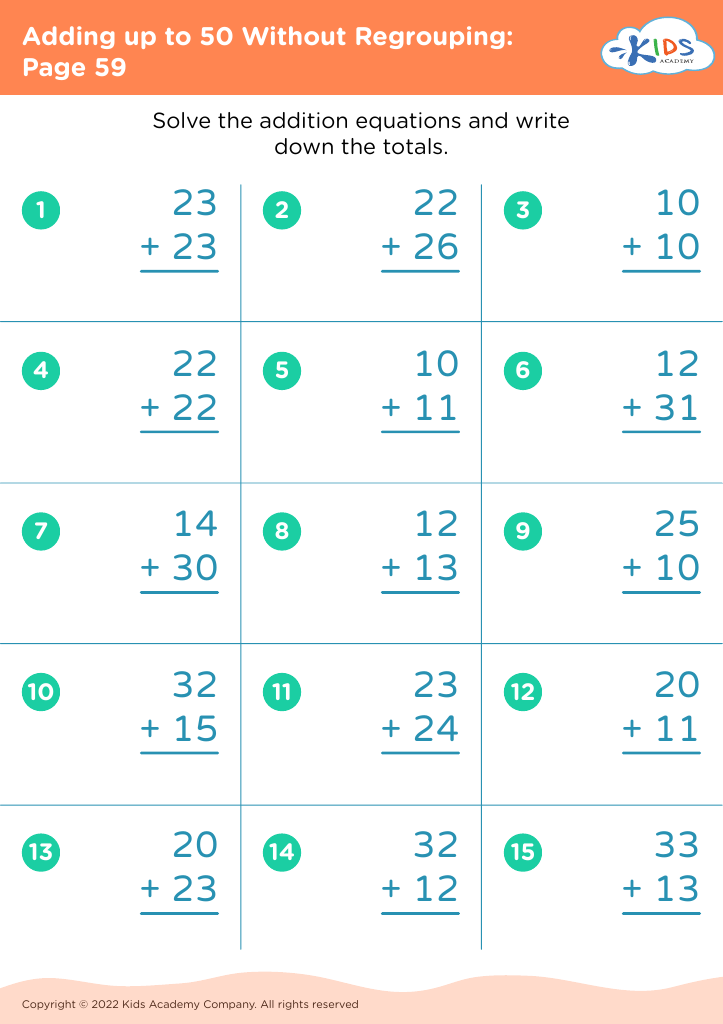
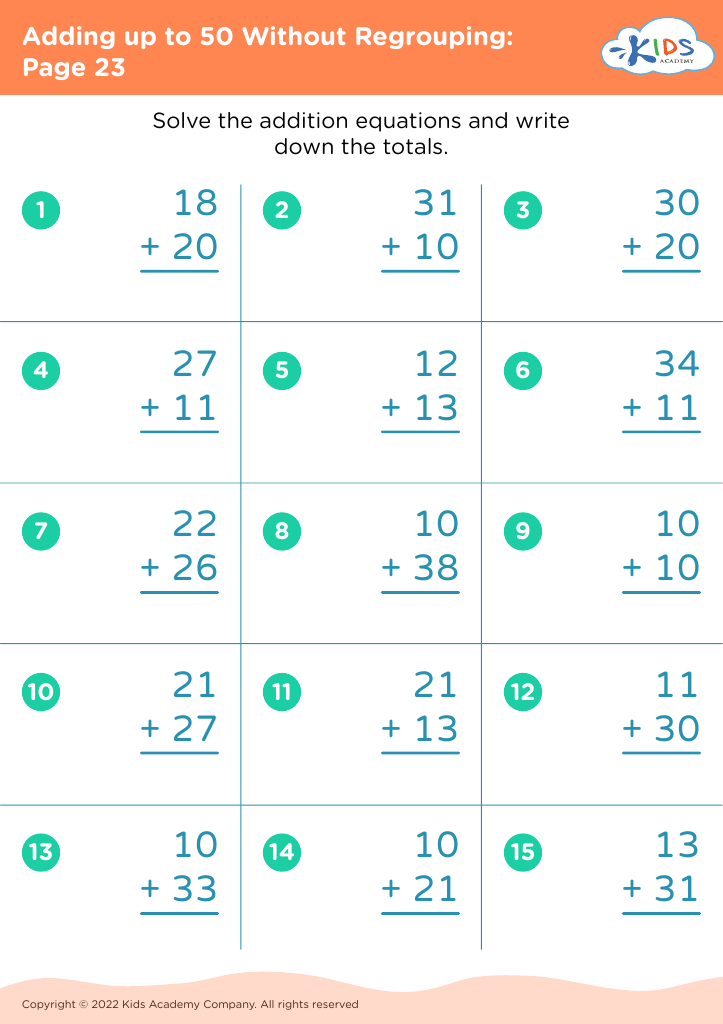
Enhance your child’s early math skills with our Basic Addition Practice Worksheets designed for ages 4 to 7. These engaging and colorful worksheets provide a fun way for little learners to grasp the concept of addition. Through interactive exercises, your child will explore simple addition problems, helping them build a solid foundation in mathematics. Our thoughtfully created resources not only make learning enjoyable but also support critical thinking and problem-solving skills. Perfect for at-home practice or classroom use, these worksheets are a great tool to boost your child's confidence in math. Download now and watch your child's skills grow!
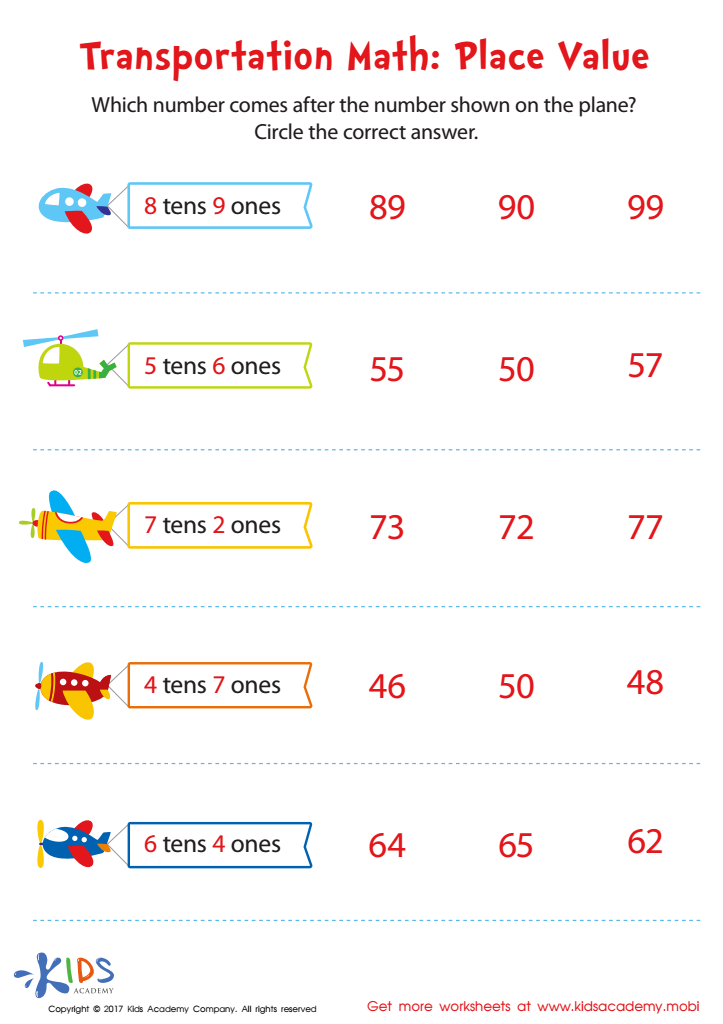
Transportation Math Printable
 Assign to My Students
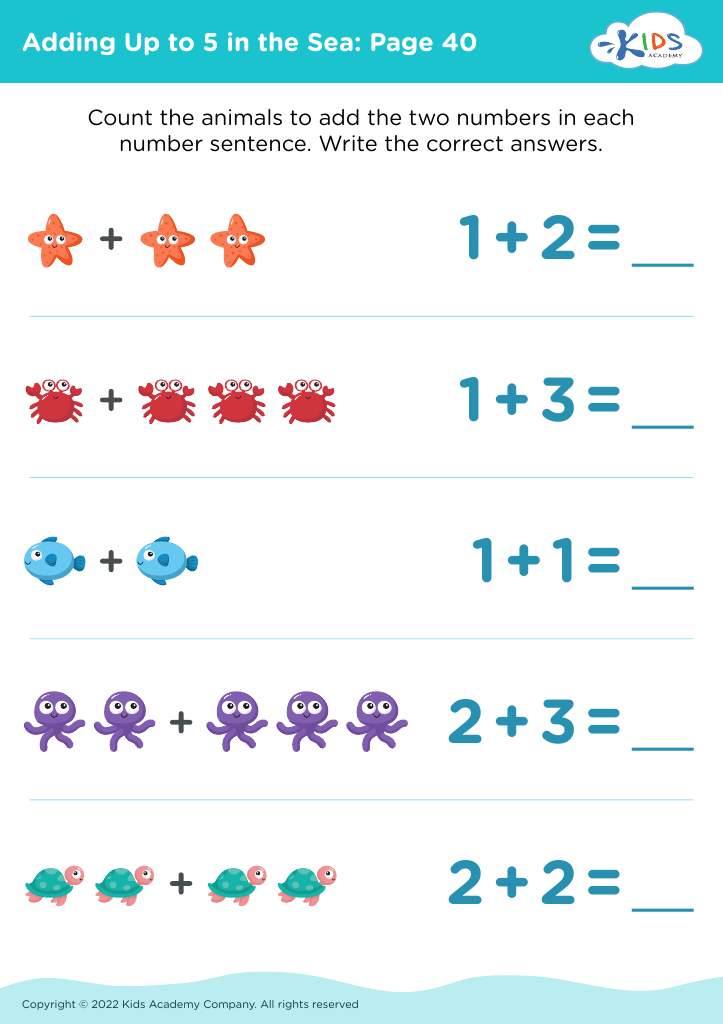
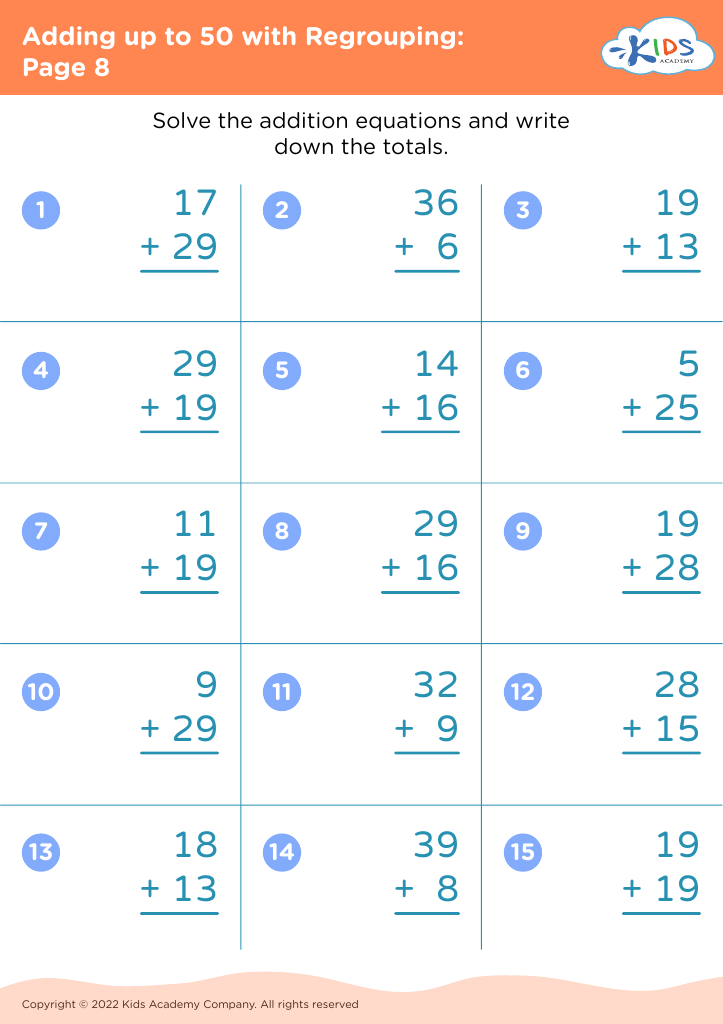
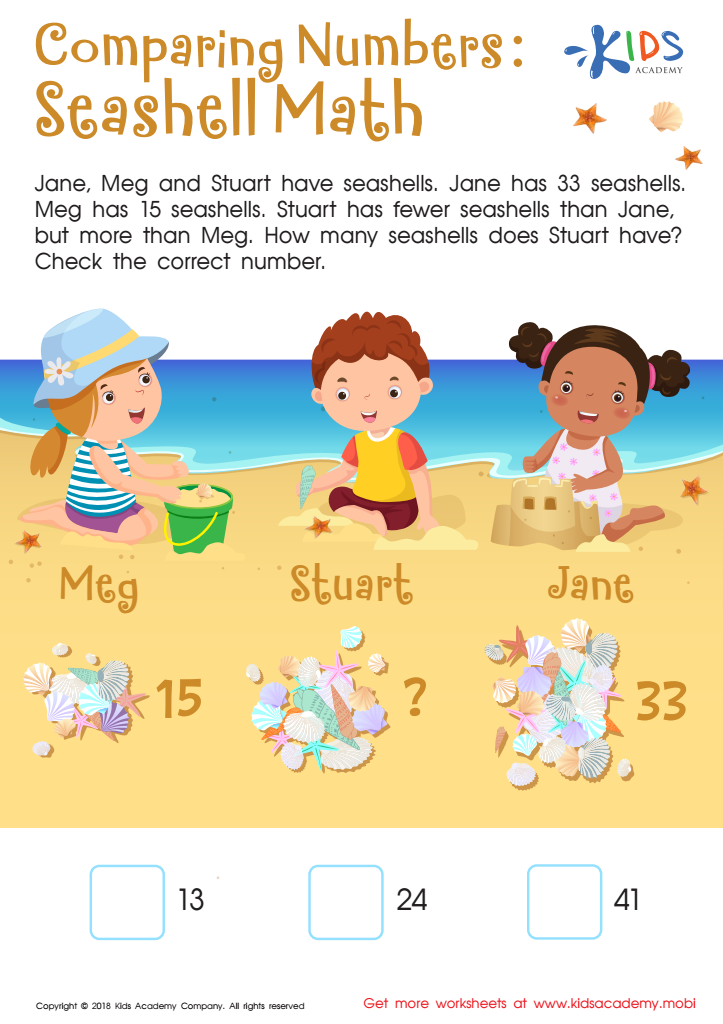
Seashell Collectors Worksheet
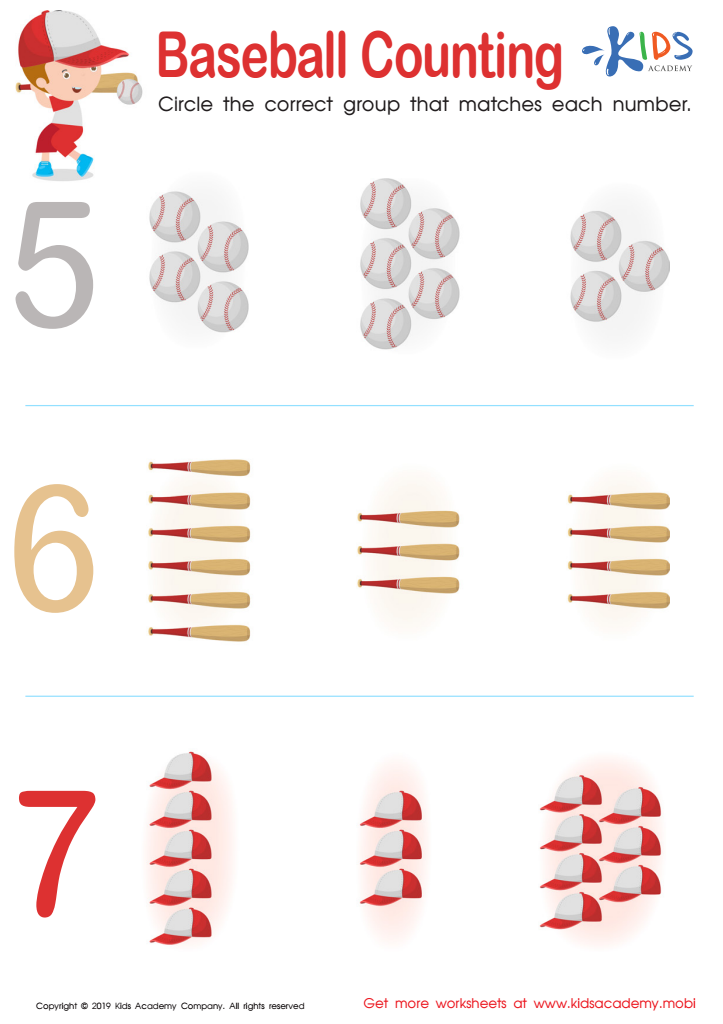
Baseball Counting Worksheet
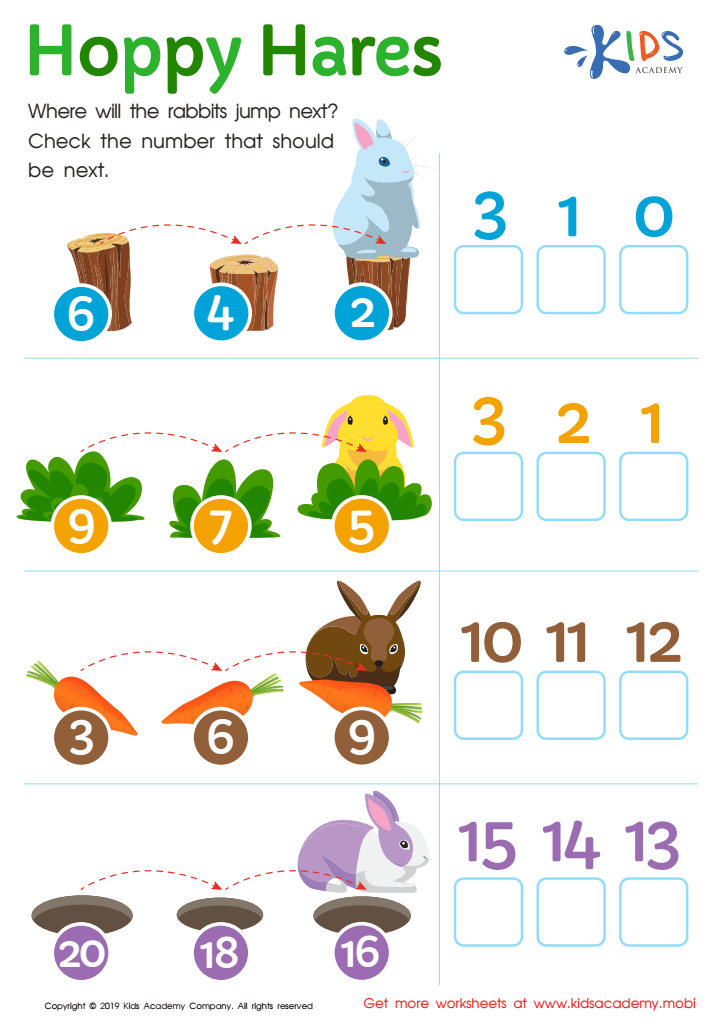
Hoppy Hares Worksheet
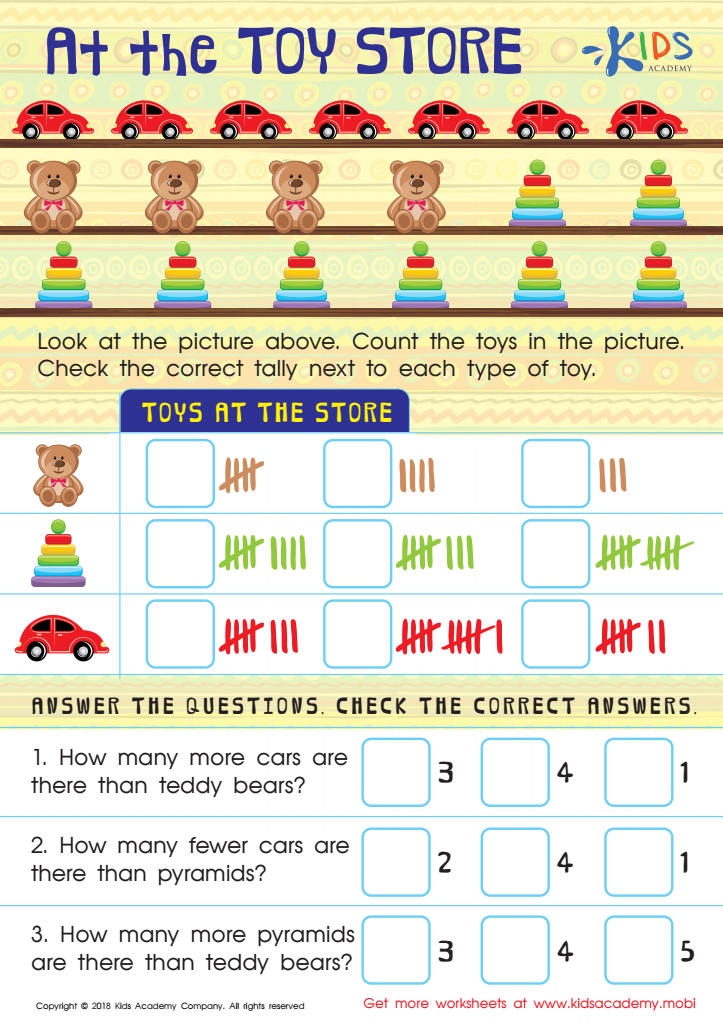
Tally Chart: At the Toy Store Worksheet
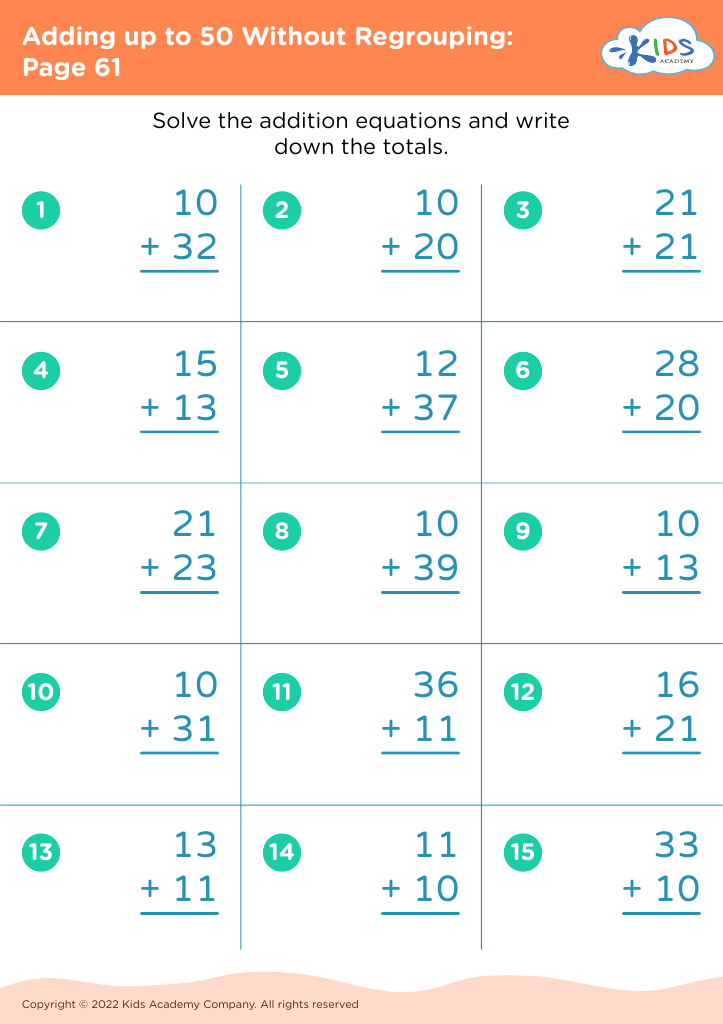
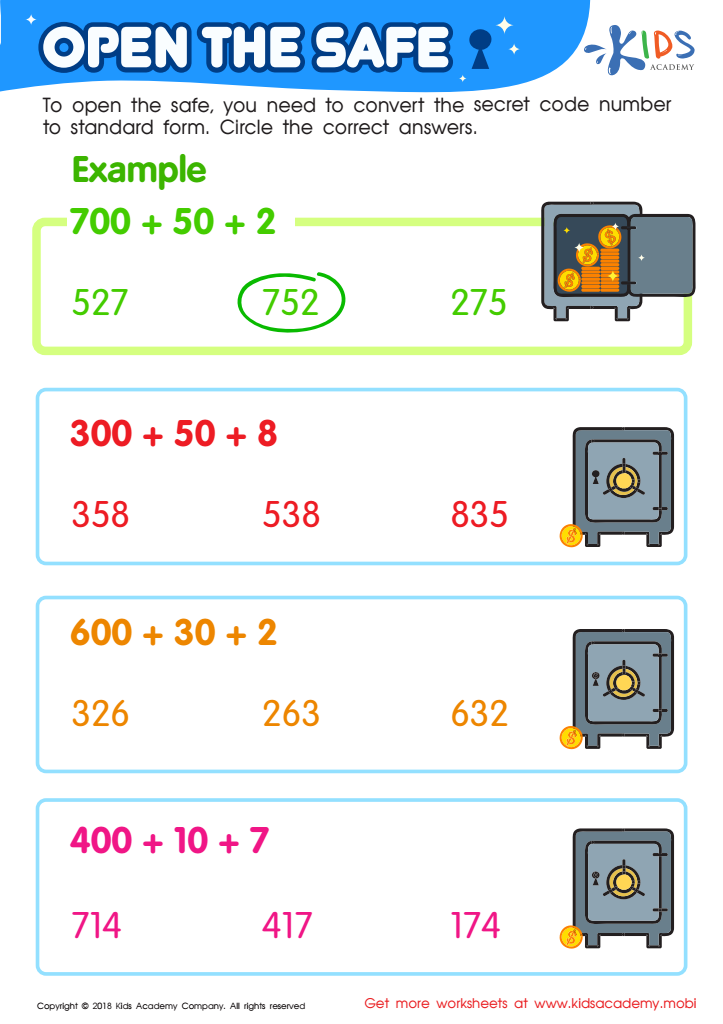
Open the Safe Worksheet
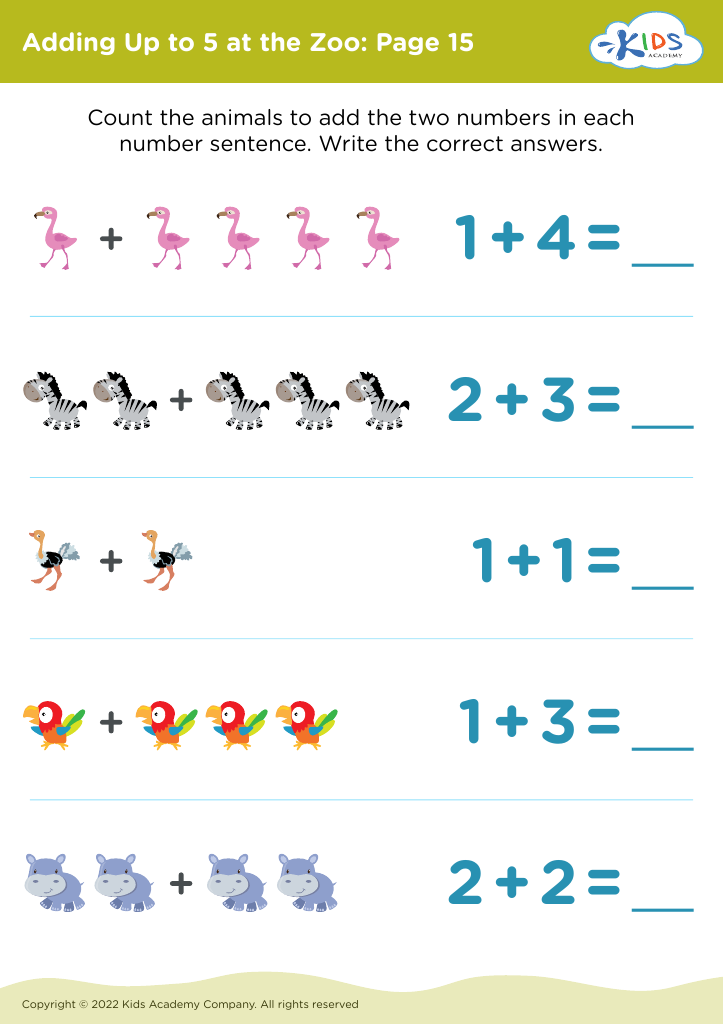
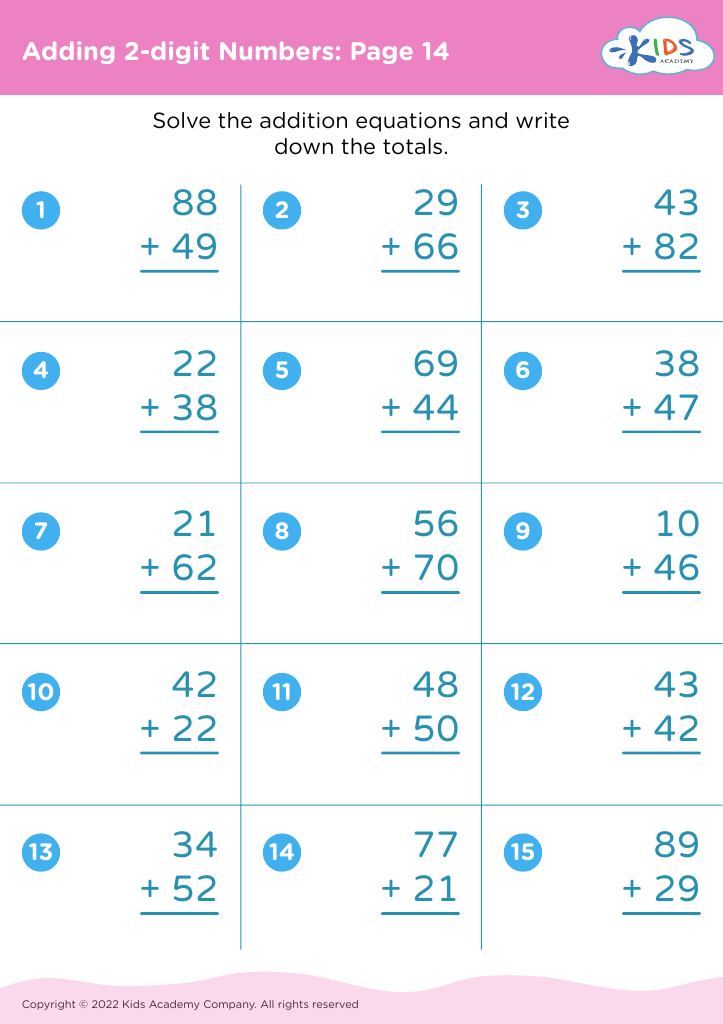
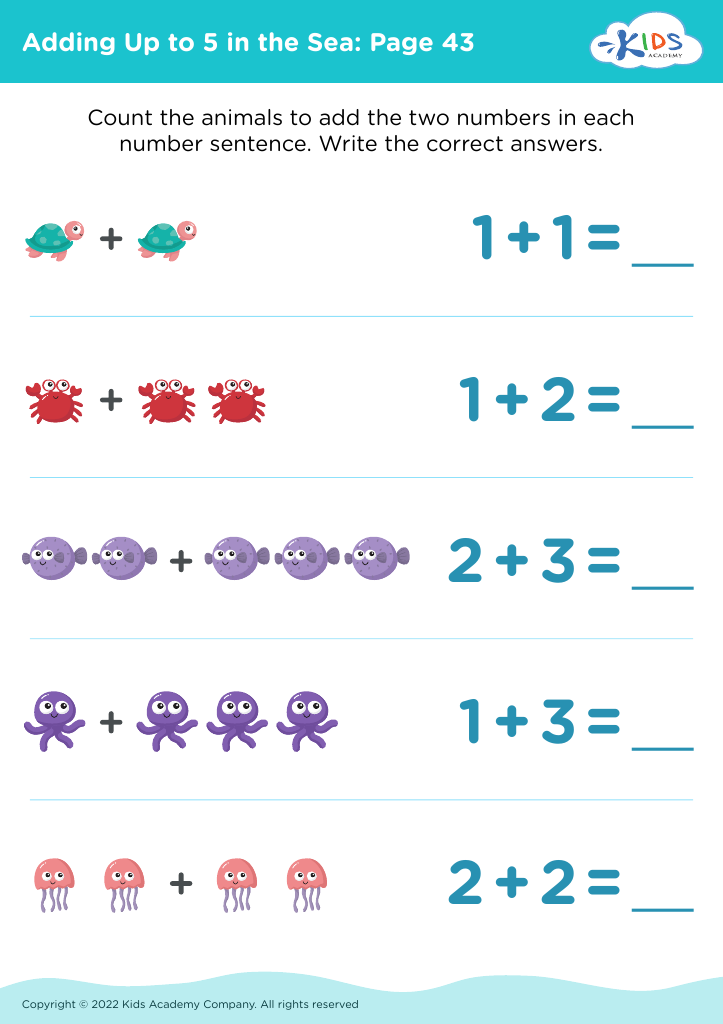
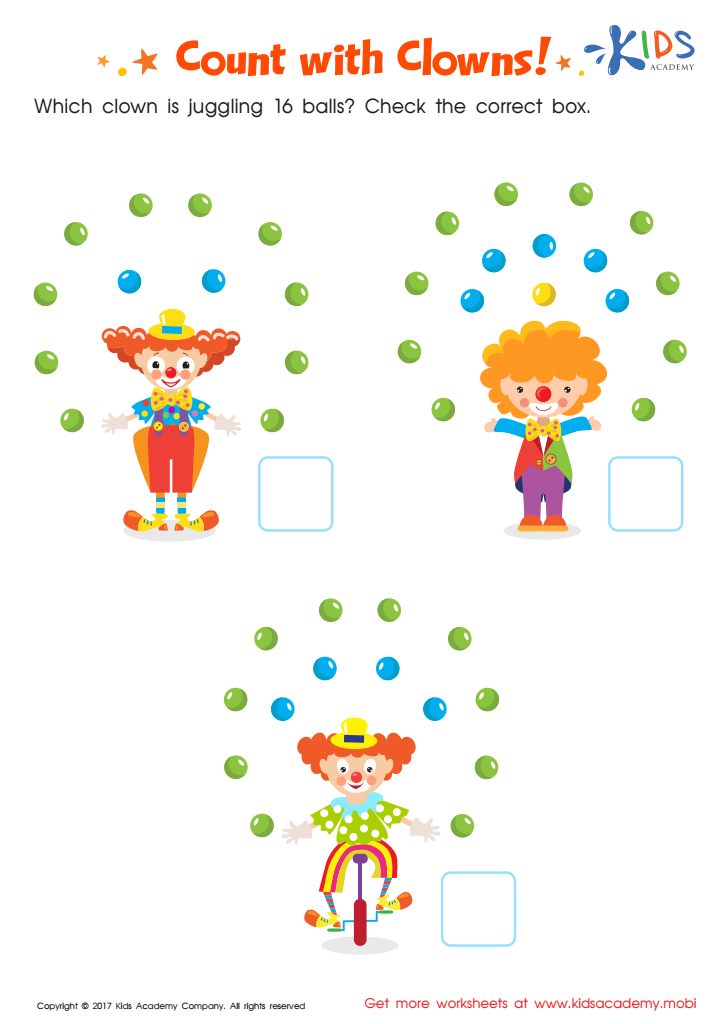
Count with Clowns Worksheet
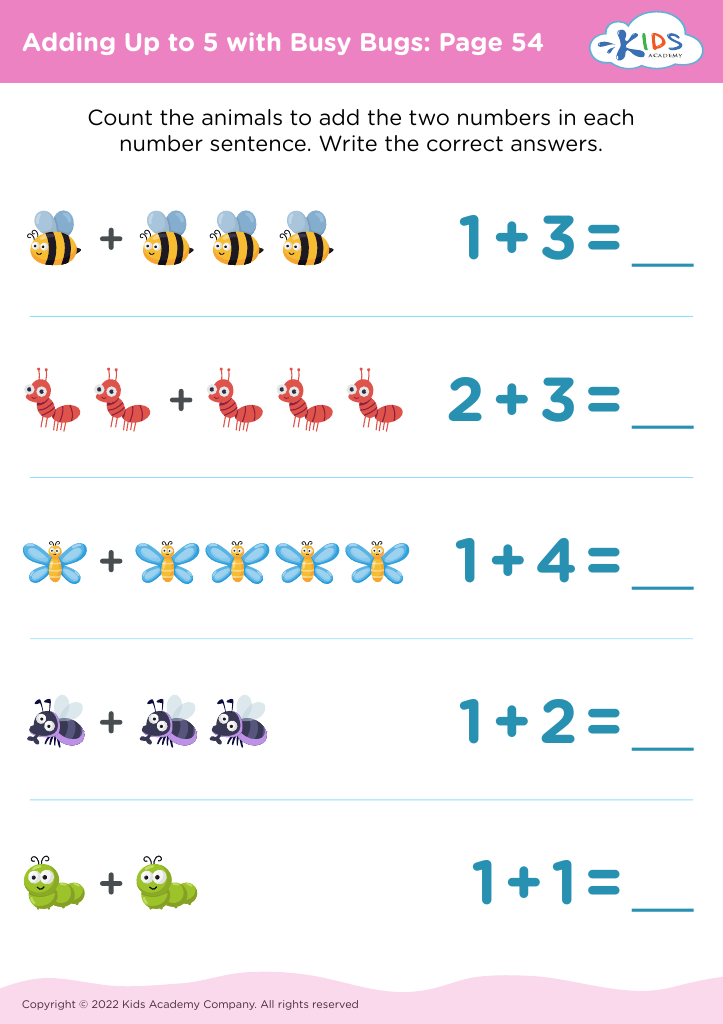
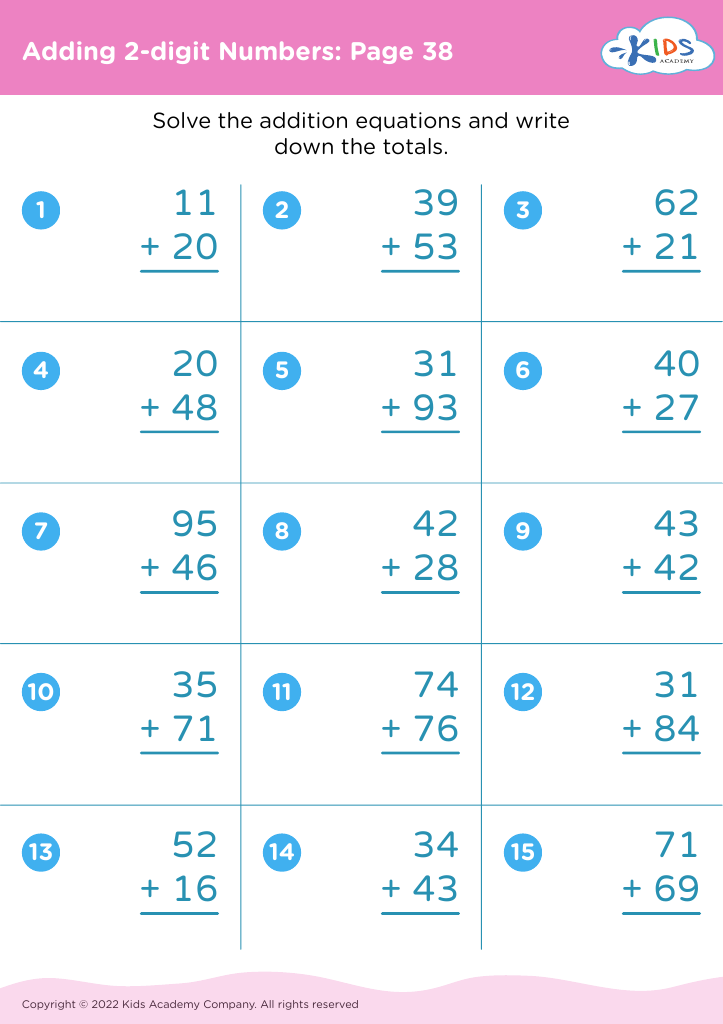
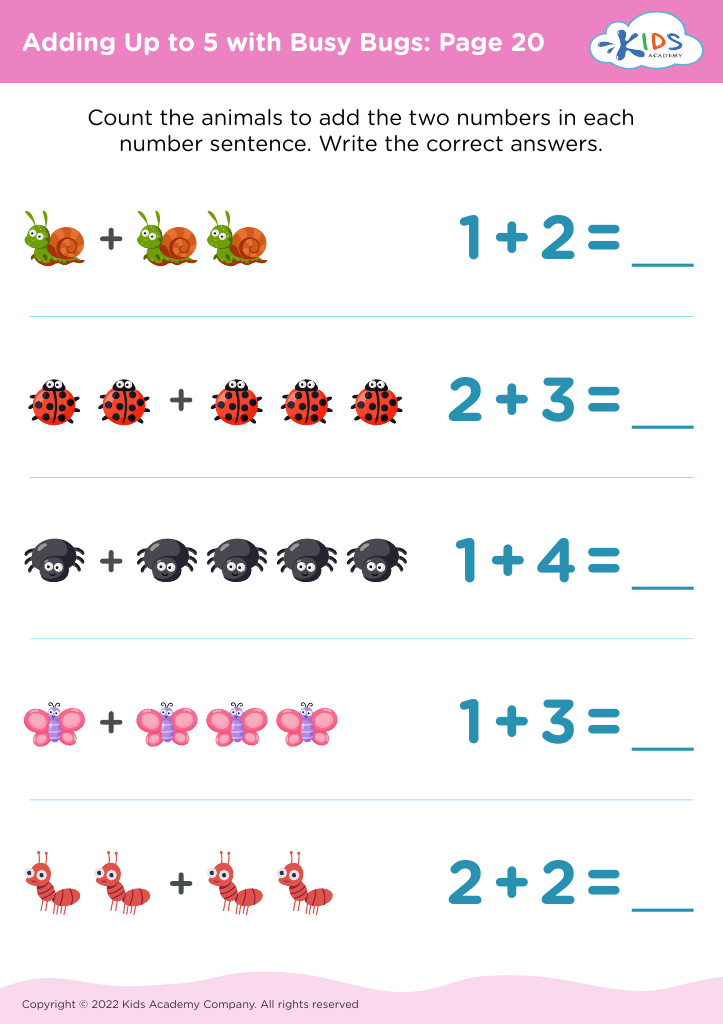
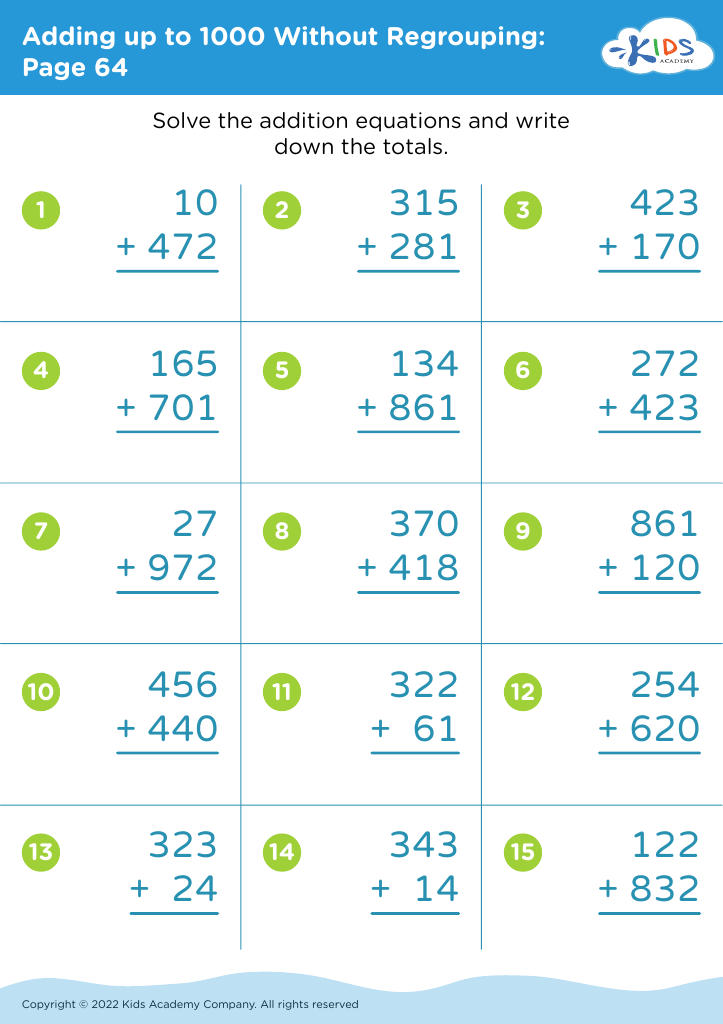
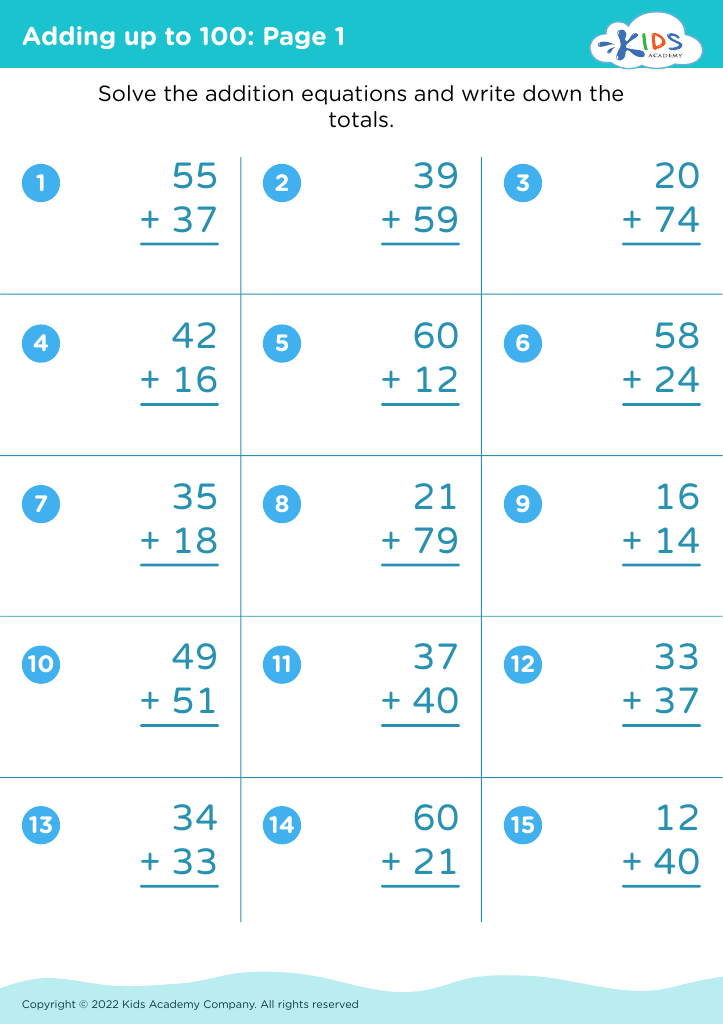








Basic addition practice for children aged 4-7 is crucial for several reasons. At this early developmental stage, children are forming foundational skills that influence their overall mathematical understanding. Learning basic addition helps young learners build confidence in their abilities and fosters a positive attitude toward math.
Additionally, this skill is essential for daily life applications; from simple tasks like counting toys or sharing snacks, addition is woven into everyday activities. Regular practice not only enhances computational skills but also encourages problem-solving and logical thinking. Engaging with basic addition helps children develop a number sense, which is vital for more complex mathematical concepts they will encounter later in school.
Moreover, consistent practice of addition can support various learning styles through the use of visual aids, interactive games, and hands-on activities, making learning enjoyable and dynamic. By integrating addition into fun activities, teachers and parents can create a rich learning environment that promotes collaboration and communication.
Ultimately, emphasizing basic addition at an early age lays a strong mathematical foundation, preparing children for future learning challenges and enhancing their academic journey across subjects, fostering critical thinking, and equiping them with skills essential for lifelong learning.








