Basic Addition Worksheets for Ages 4-7 - Page 4
76 filtered results
-
From - To
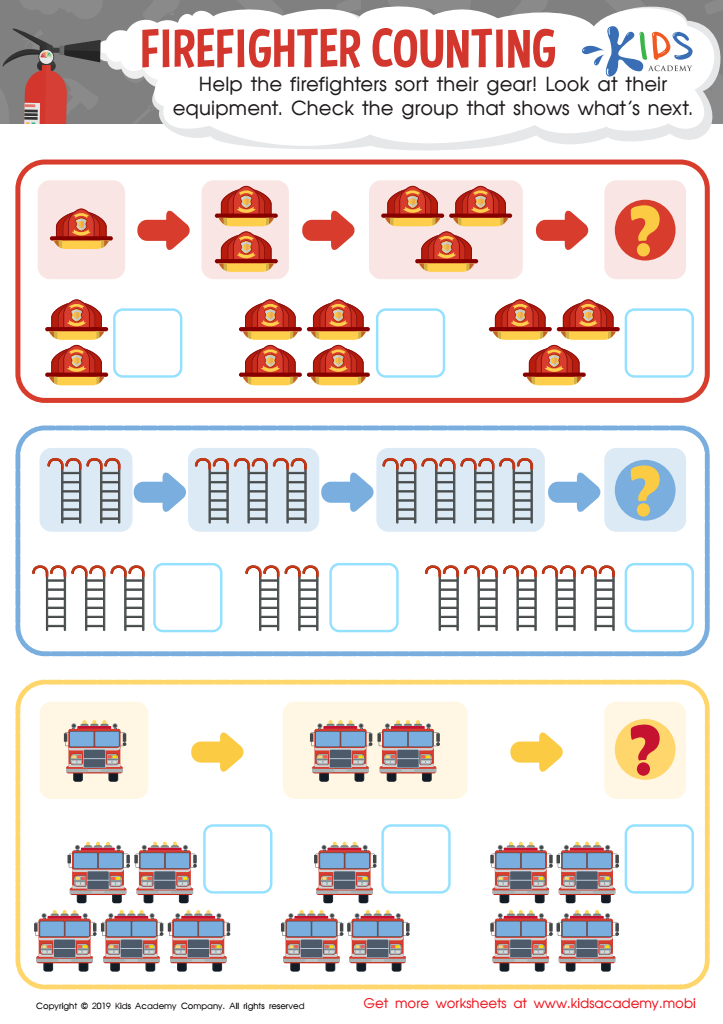
Firefighter Counting Worksheet
 Assign to My Students
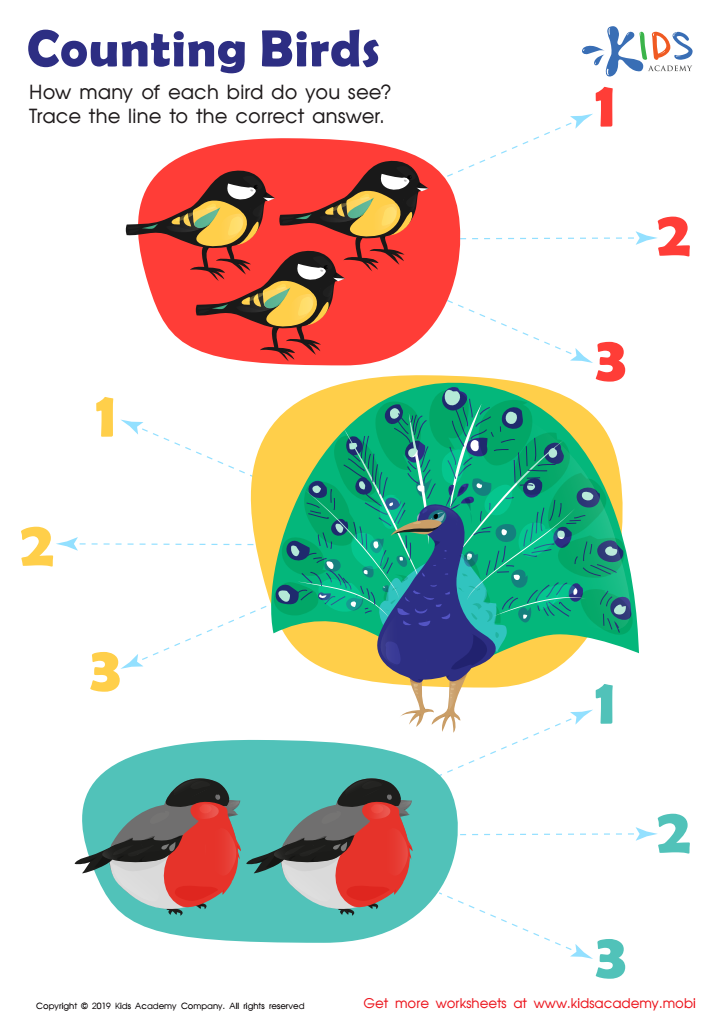
Counting Birds Worksheet







Basic addition is a crucial foundational skill for children aged 4-7, and parents and teachers should prioritize it for several reasons. First, mastering addition fosters essential cognitive development. It encourages critical thinking, problem-solving, and logical reasoning skills, helping young learners make sense of their world.
Second, addition skills lay the groundwork for more complex mathematical concepts. Understanding the fundamentals of addition makes it easier for children to grasp subtraction, multiplication, and division later on, ensuring a smoother transition as they progress through their education.
Additionally, early mastery of basic addition can enhance children's confidence in their mathematical abilities. When they grasp these concepts, they’re more likely to participate actively in math-related activities and challenges, creating a positive mindset toward learning.
Moreover, learning to add also helps children in everyday scenarios, from counting items at home to distributing snacks among friends. This real-world application makes learning engaging and relevant.
Ultimately, when parents and teachers invest time in teaching basic addition, they not only equip children with essential academic tools but also inspire a lifelong love for learning, paving the way for future educational success.








