Basic Arithmetic Worksheets for Ages 4-7
55 filtered results
-
From - To
Welcome to our “Basic Arithmetic Worksheets for Ages 4-7”! Here, we offer a variety of engaging, interactive worksheets designed to help young learners develop essential math skills. Our easy-to-follow activities will guide children through foundational concepts, including addition, subtraction, counting, and number recognition—all tailored for early learners. Explore colorful illustrations and fun themes that captivate young minds while they practice enriching their arithmetic abilities. Whether you’re a teacher or a parent, our worksheets are perfect for both classroom use and home practice. Start fostering a love for math today with our comprehensive and delightful resources!
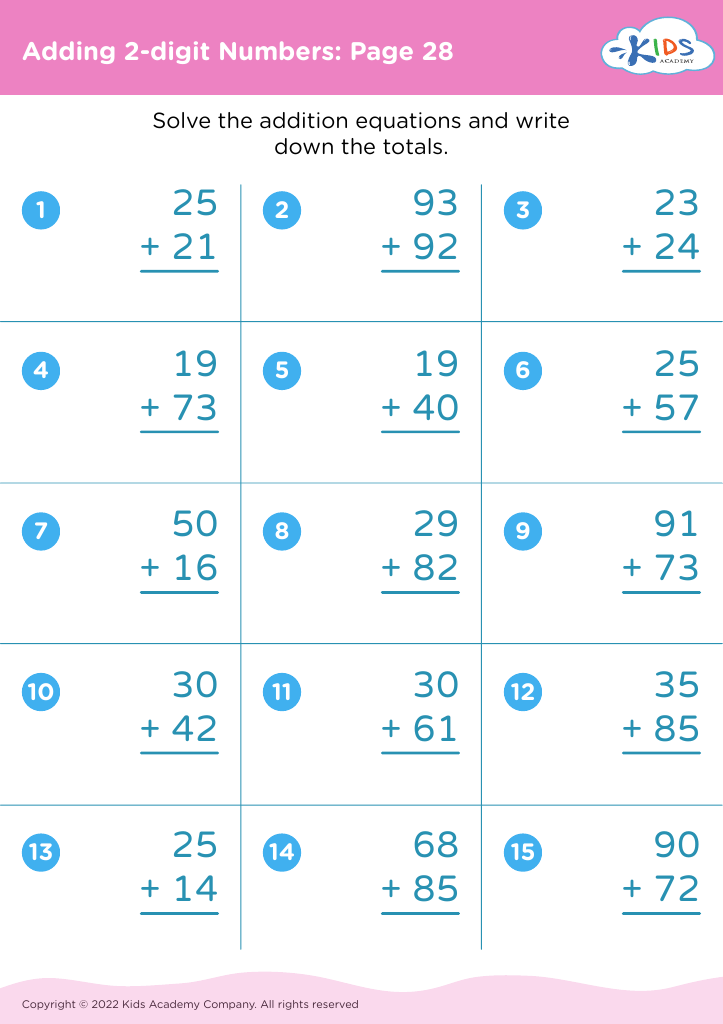
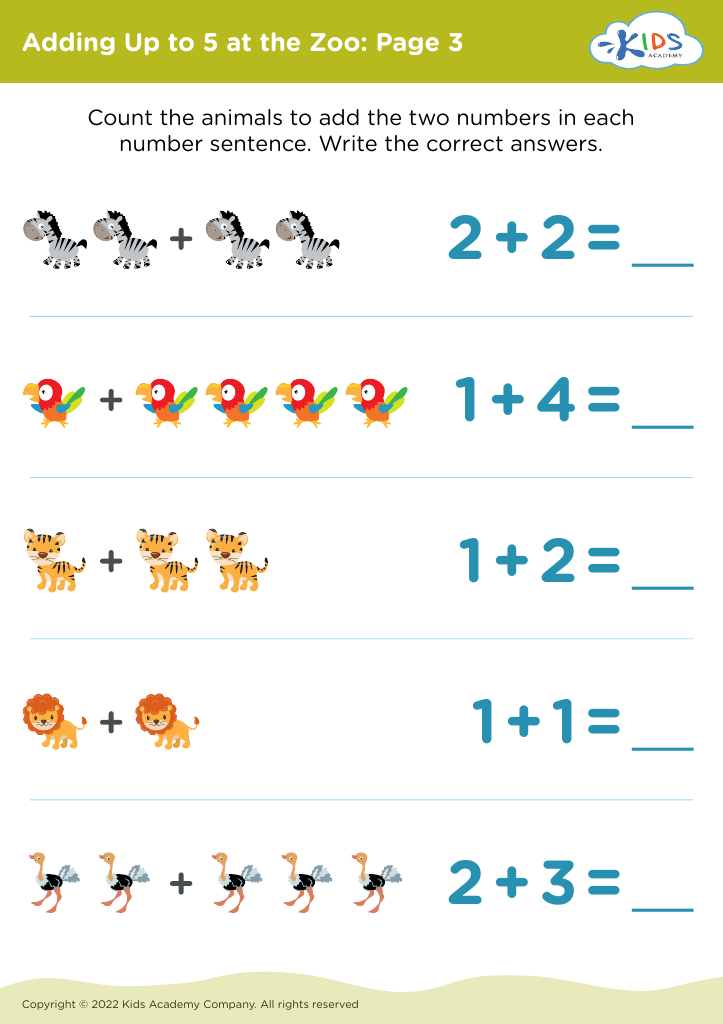
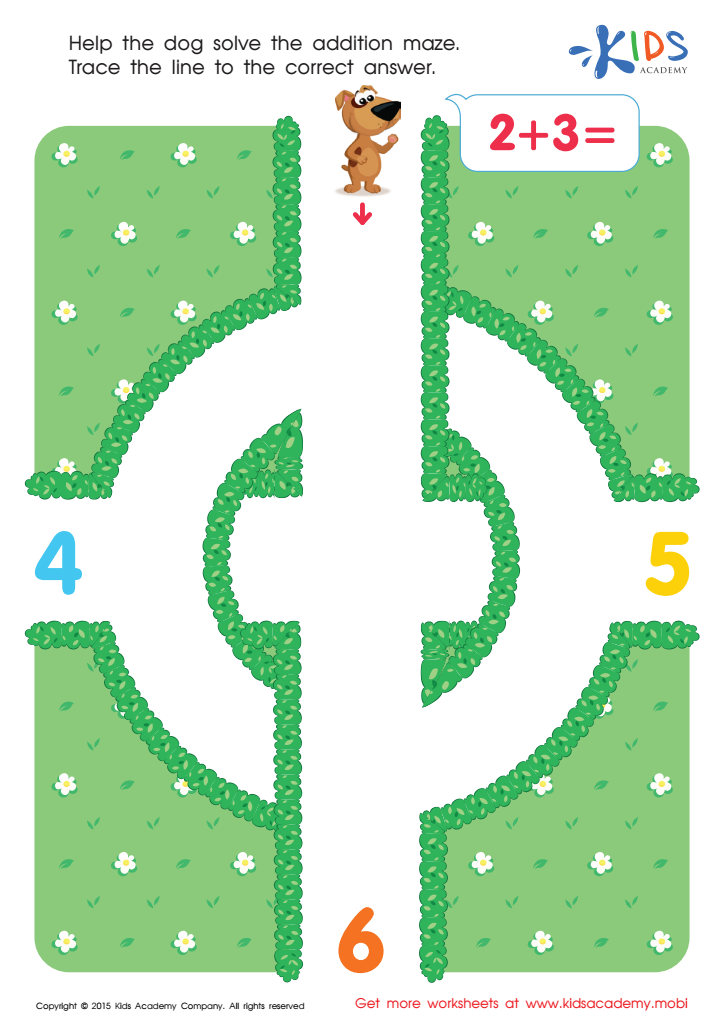
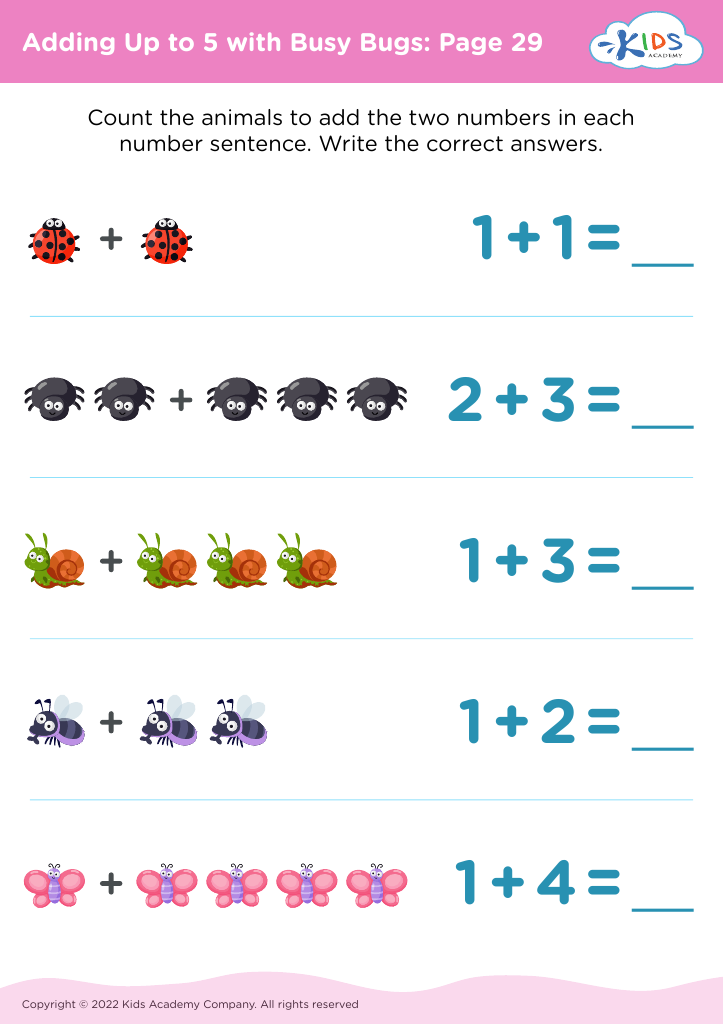
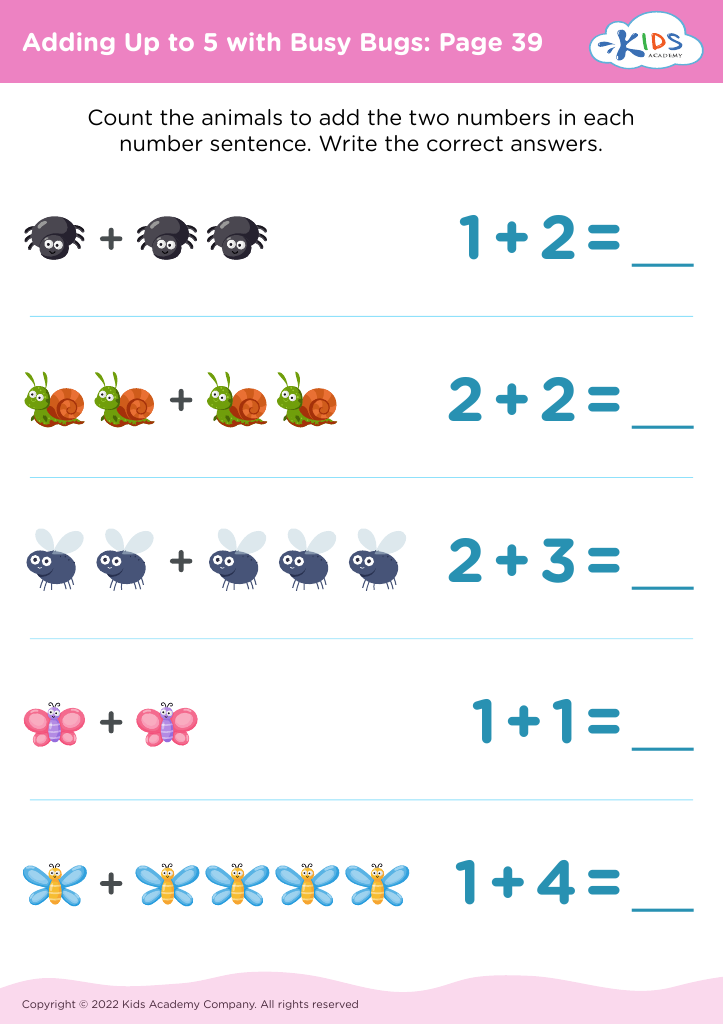
Two And Three Addition Worksheet
 Assign to My Students
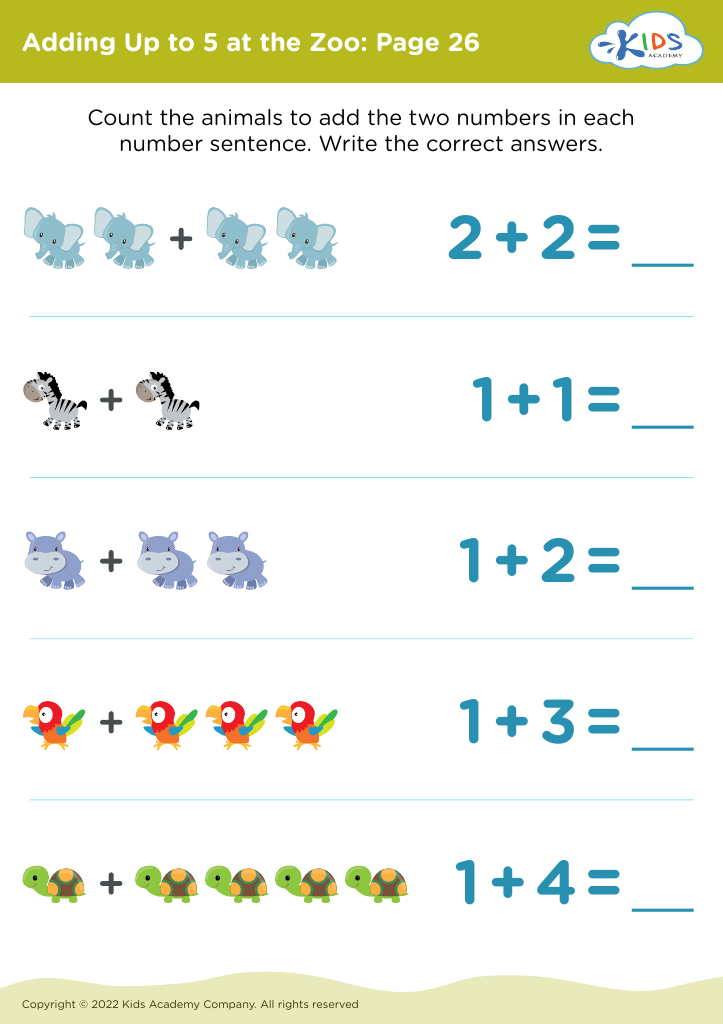
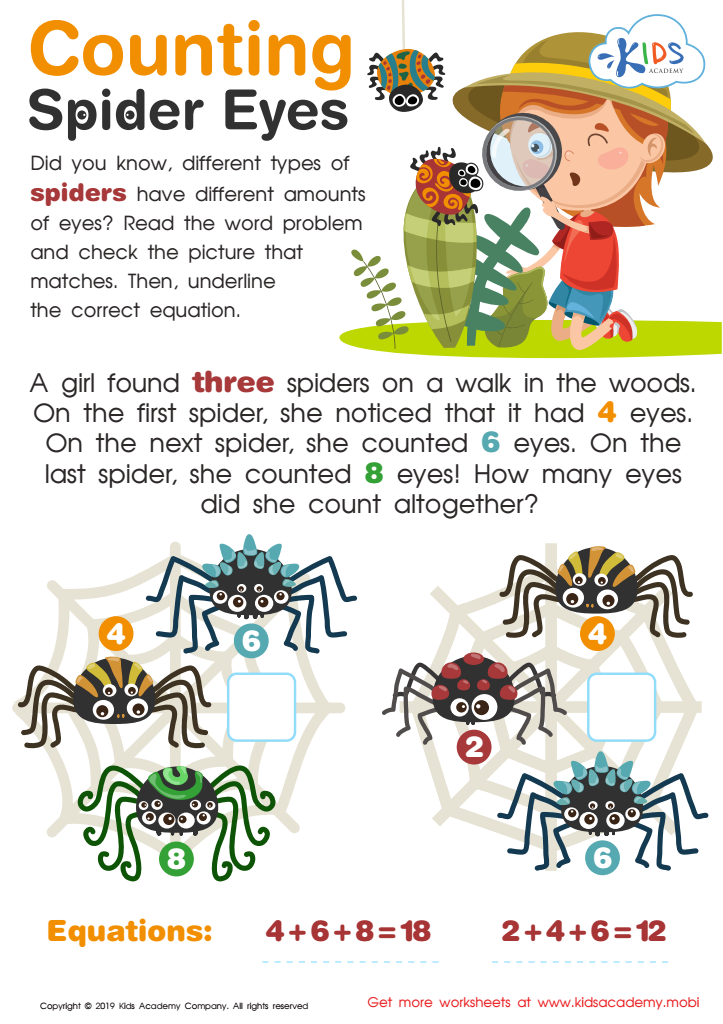
Counting Spider Eyes Worksheet
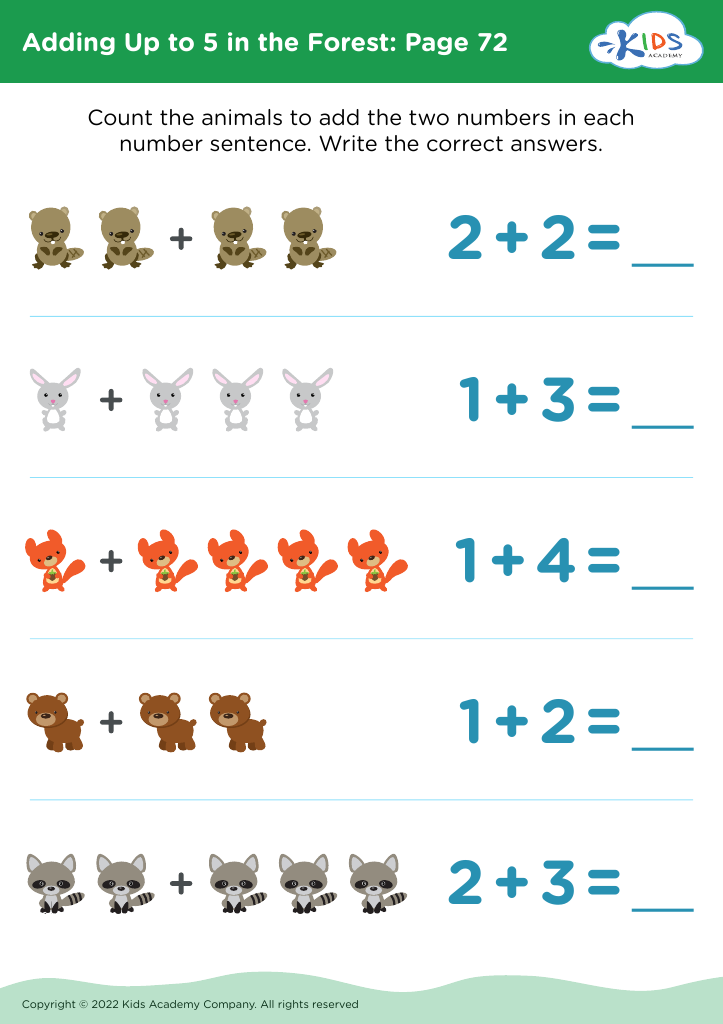
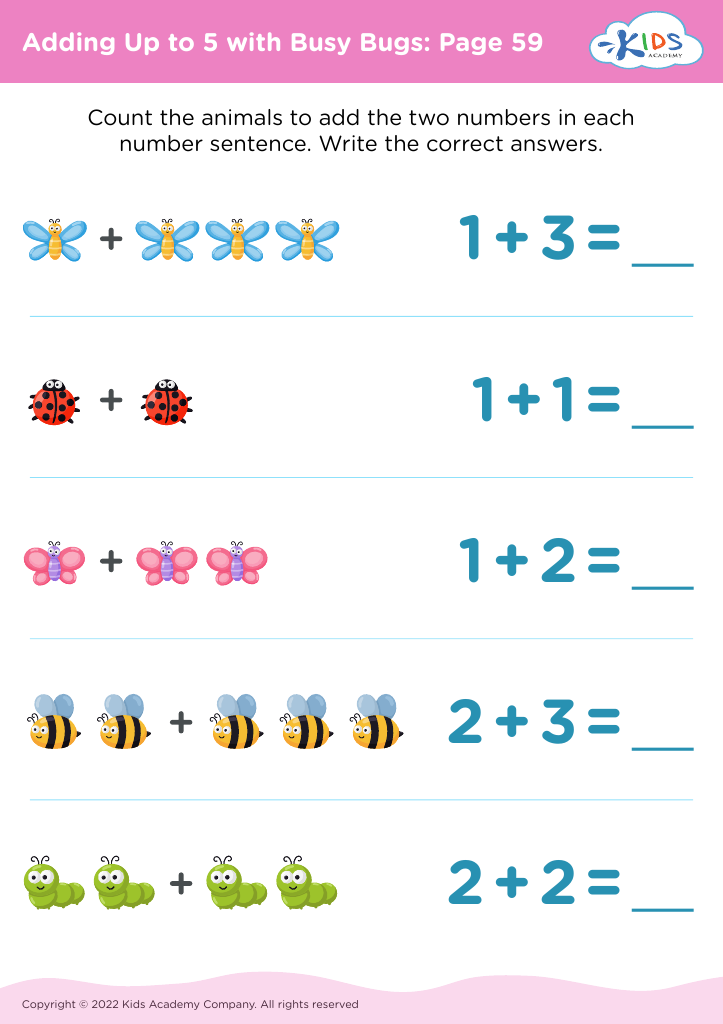
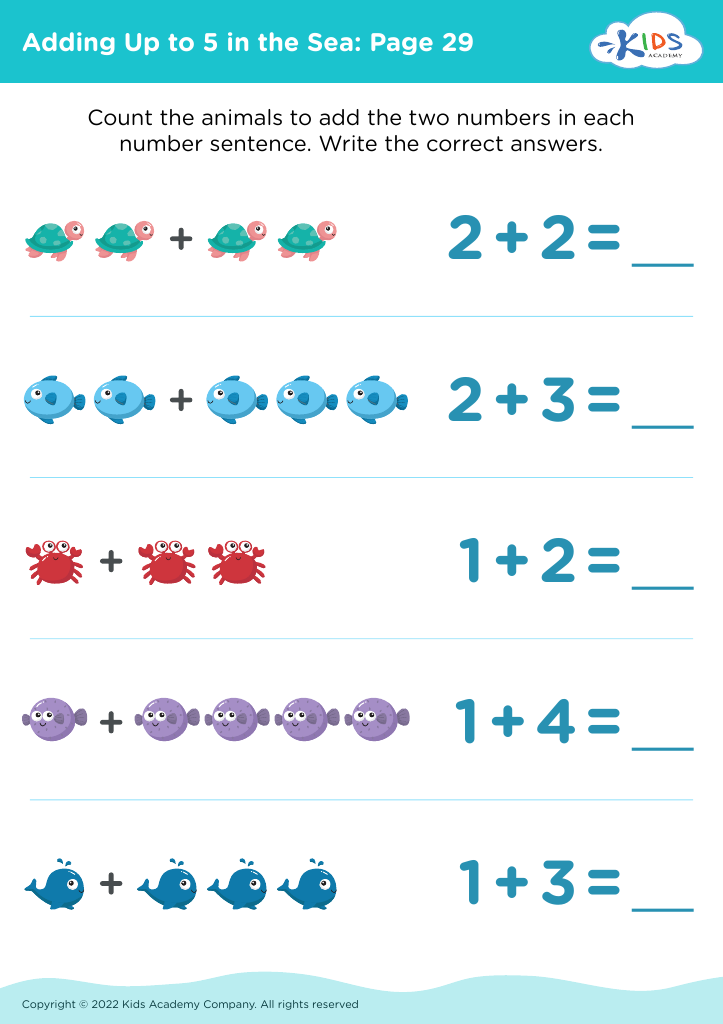
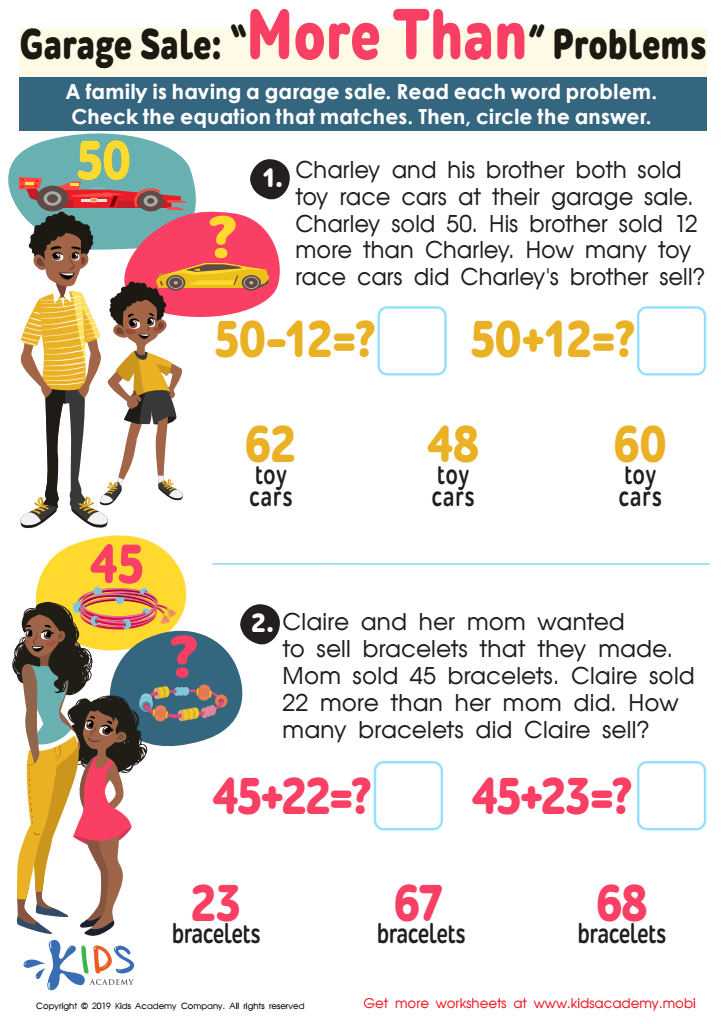
Garage Sale - More yhan Worksheet
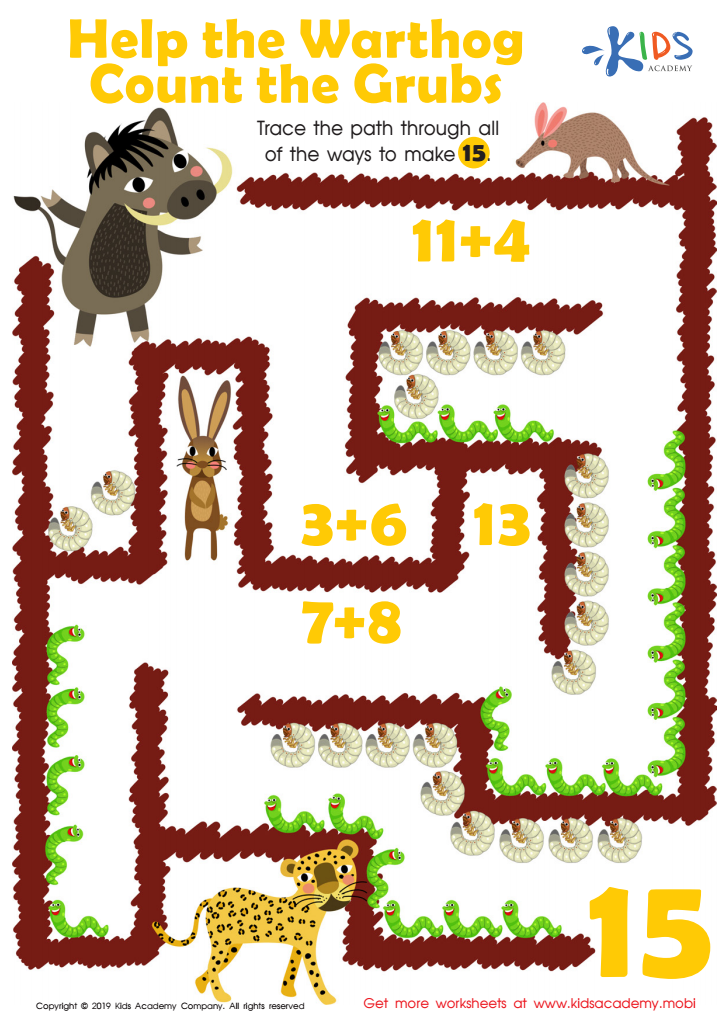
Help the Warthog Count the Grubs Worksheet
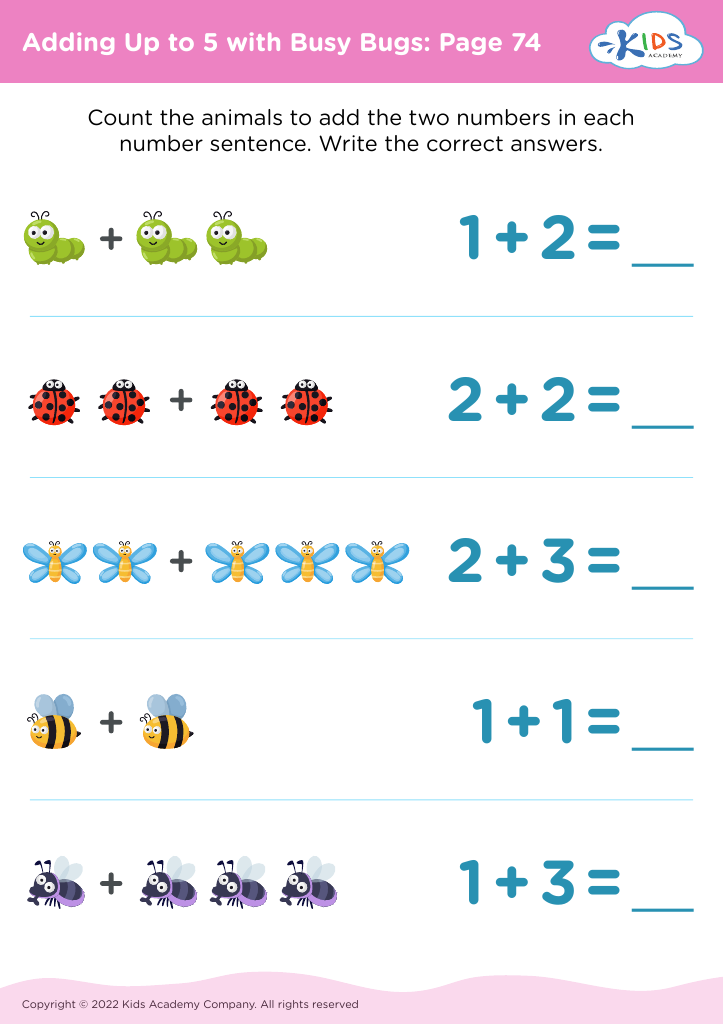
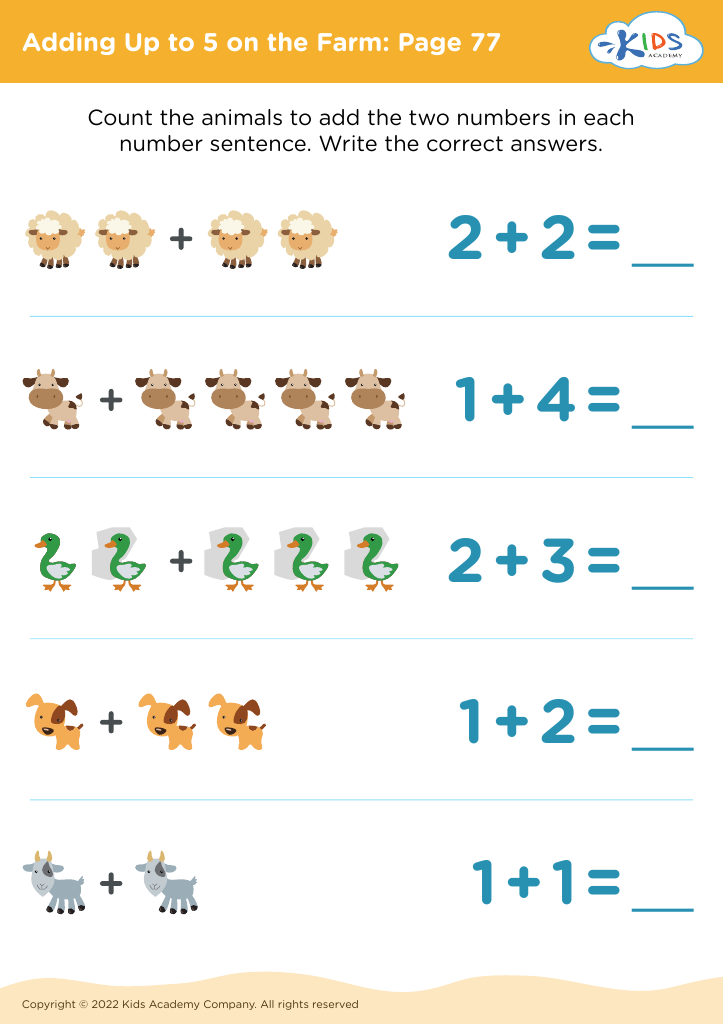
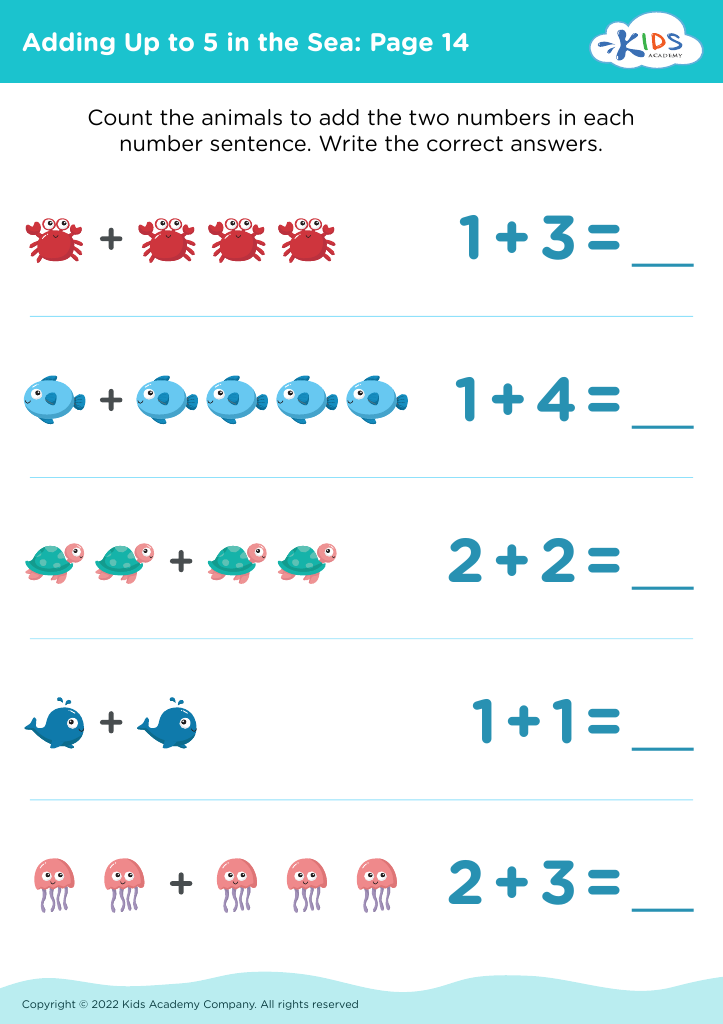
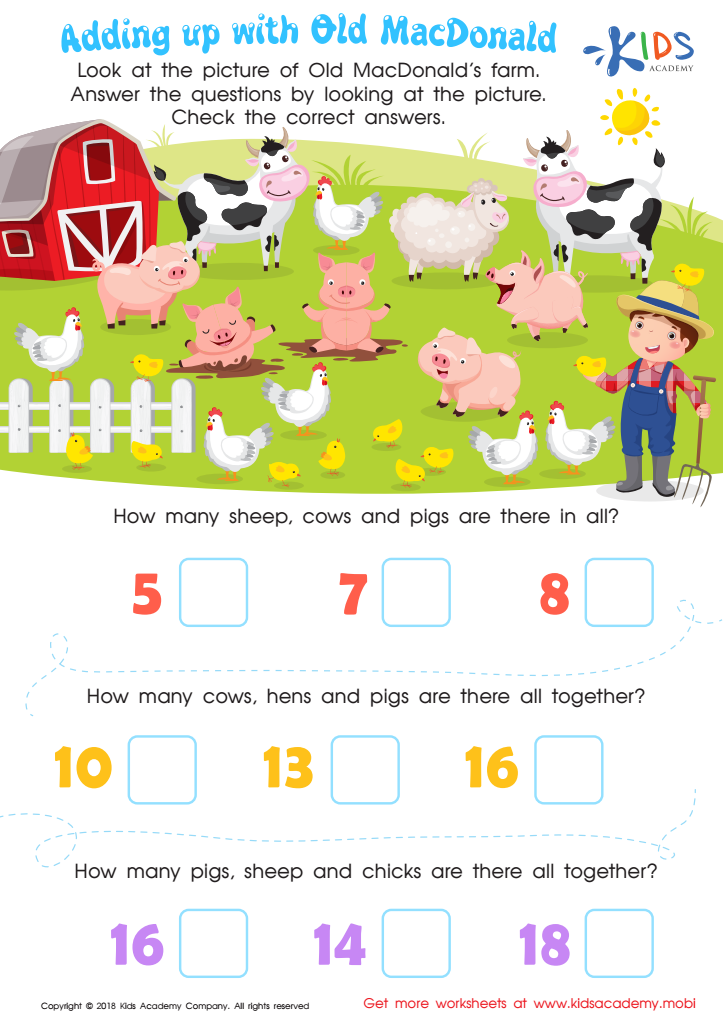
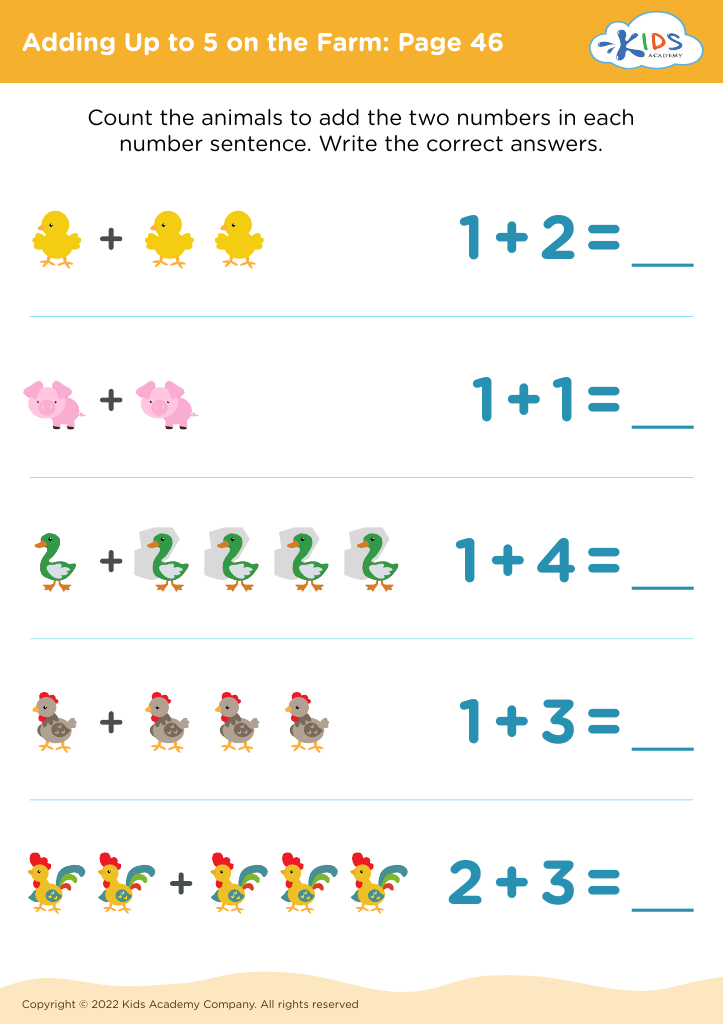
Adding Up with Old MacDonald Worksheet
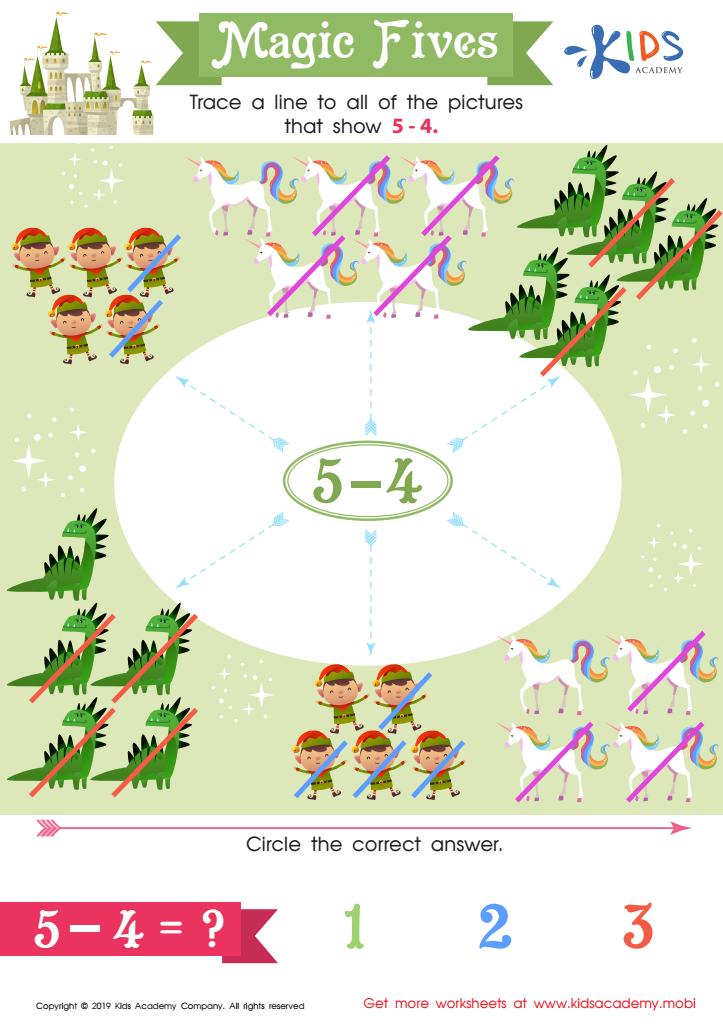
Magic Fives Worksheet
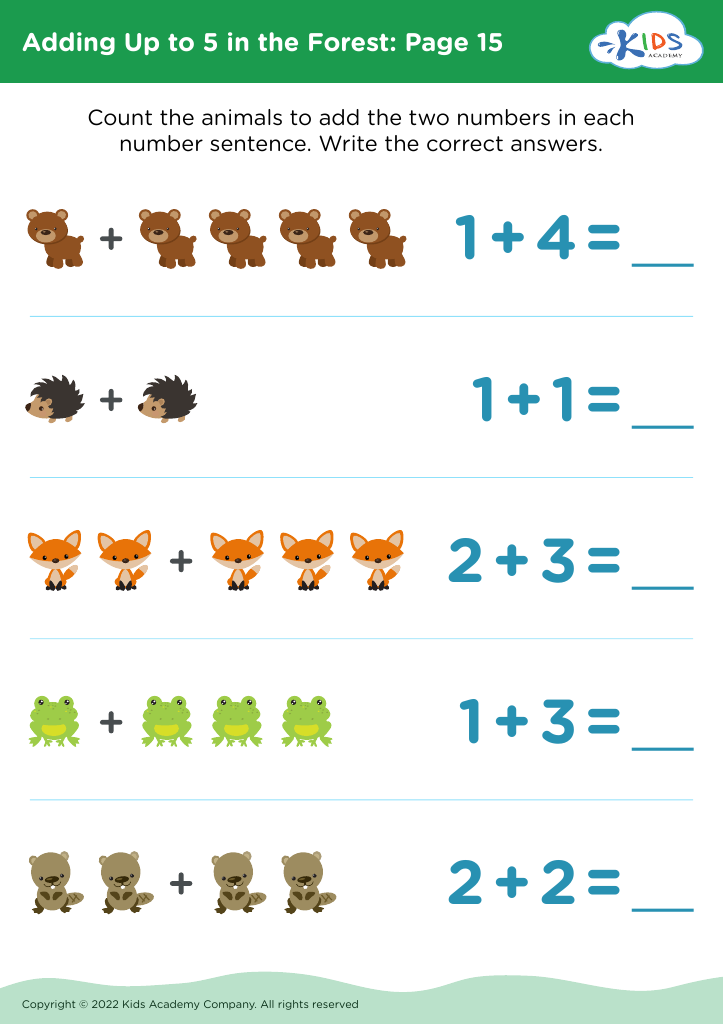
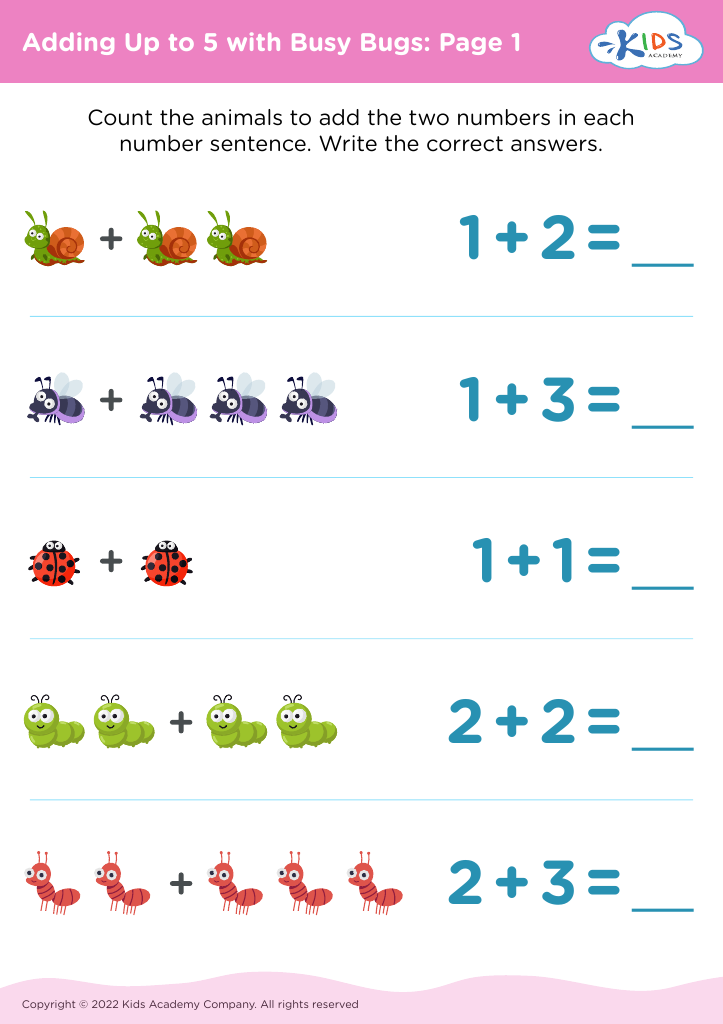
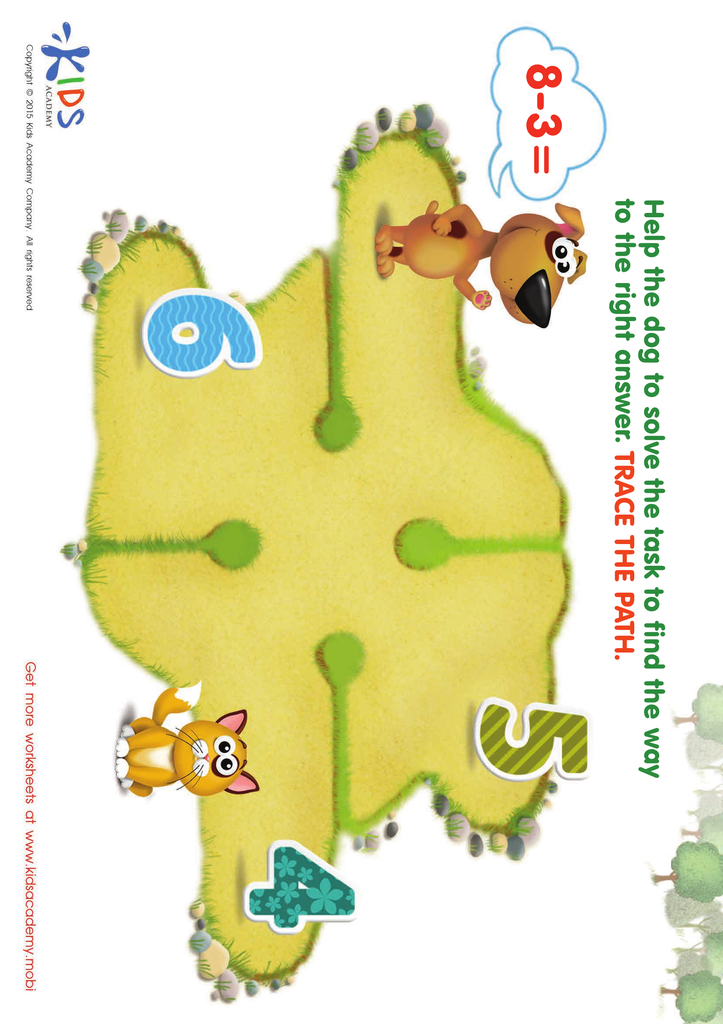
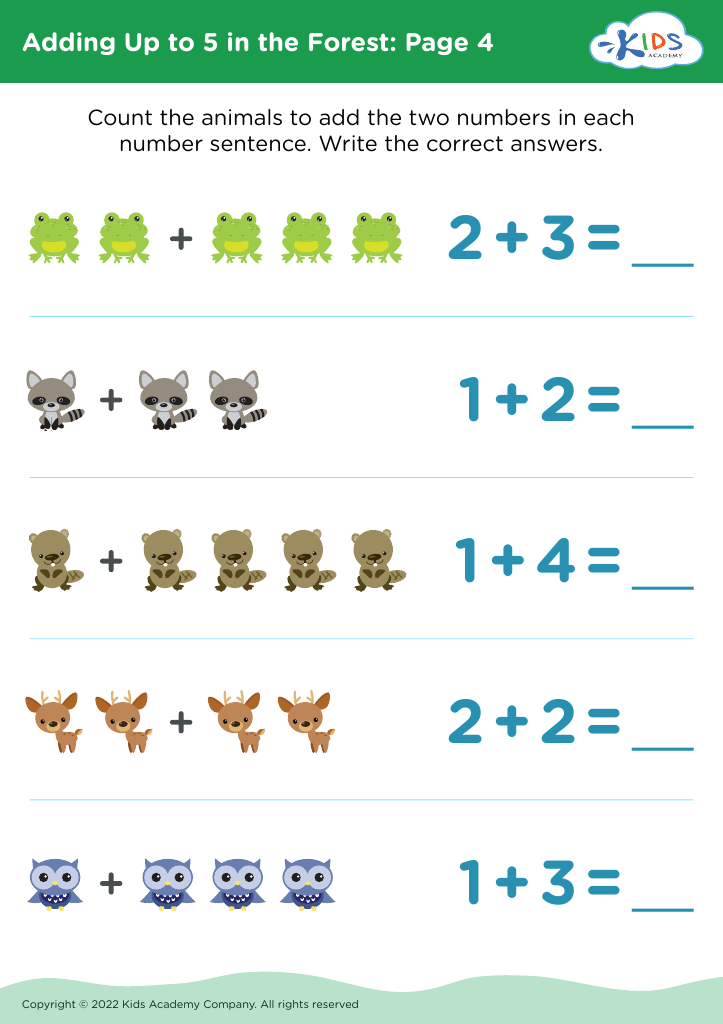








Parents and teachers should prioritize Basic Arithmetic education for children ages 4-7 because these foundational skills are crucial for later academic success and everyday problem-solving. At this age, children develop essential cognitive abilities and mathematical concepts, which shape their attitudes toward learning. Early exposure to concepts like addition, subtraction, and number recognition fosters not only mathematical understanding but also critical thinking skills.
Learning Basic Arithmetic helps children gain confidence and competence, creating a positive attitude toward mathematics that will greatly benefit them in school. It builds a strong foundation for more complex math skills they will encounter later. Additionally, arithmetic skills are essential for everyday life, helping children make sense of quantities, manage simple finances, and understand time-related concepts.
Moreover, fostering an early interest in math can lead to improved academic engagement and motivation. Activities involving Basic Arithmetic can be fun and interactive, thereby promoting a love of learning. Involving parents at this stage also deepens family engagement in education, creating supportive environments for children to thrive. By prioritizing Basic Arithmetic, parents and teachers equip children with not just the skills needed for academic success, but also lifelong problem-solving abilities that extend beyond the classroom.








