Basic arithmetic comprehension Worksheets for Ages 4-7
6 filtered results
-
From - To
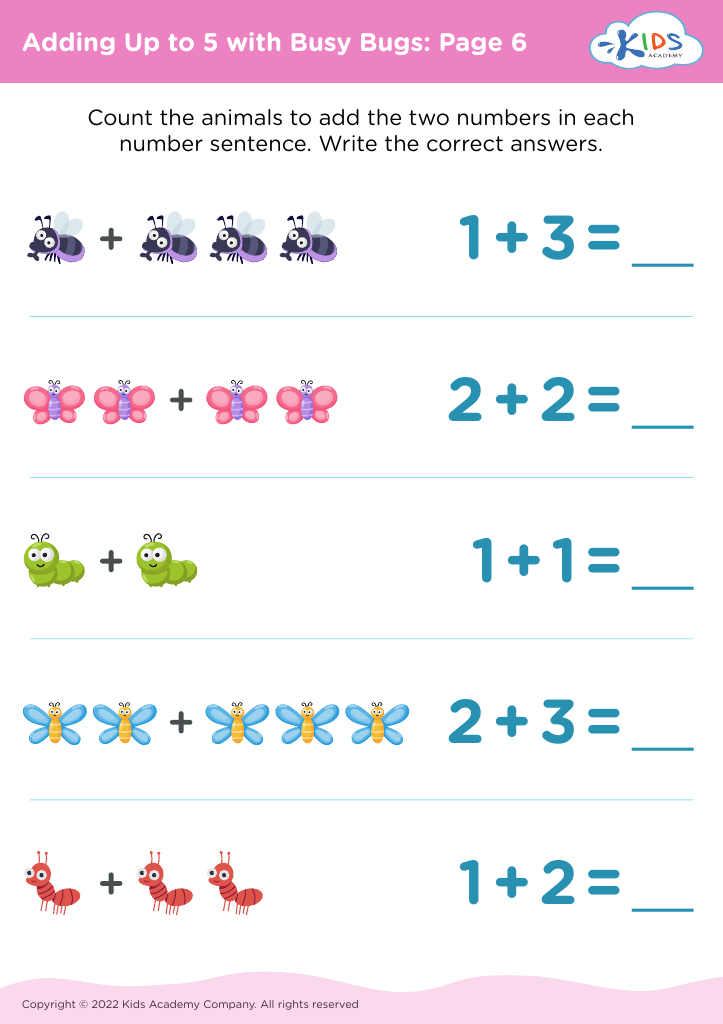
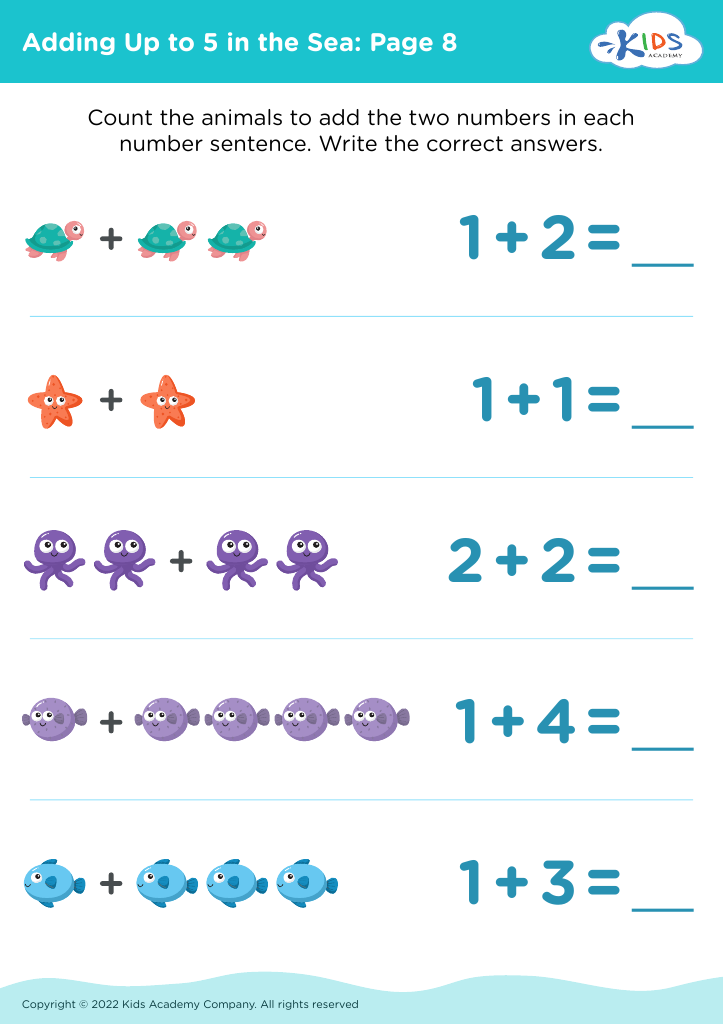
Welcome to our engaging collection of Basic Arithmetic Comprehension Worksheets designed specifically for children aged 4 to 7! These thoughtfully crafted worksheets provide young learners with foundational math skills through fun activities focused on addition, subtraction, and number recognition. Each worksheet encourages hands-on learning and promotes critical thinking, making math both accessible and enjoyable. Our materials align with early education standards, ensuring your child gains confidence in their arithmetic abilities. With colorful illustrations and interactive problems, these worksheets are perfect for home or classroom use. Support your child's early math journey today with our comprehensive and easily printable resources!
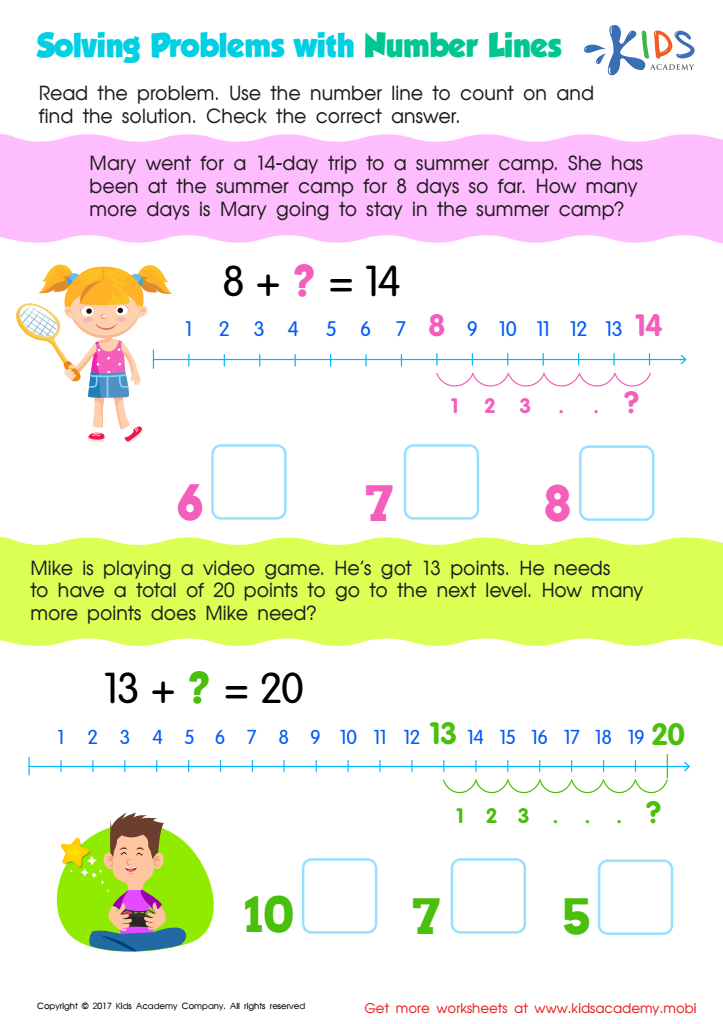
Solving Problems: Number Lines Worksheet
 Assign to My Students
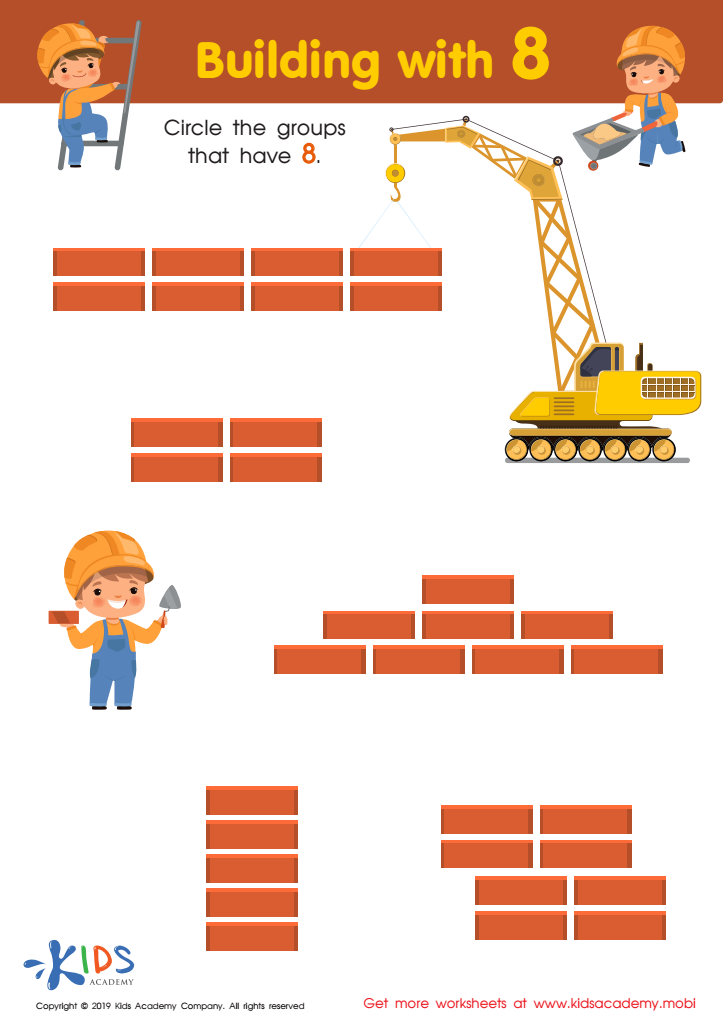
Building with 8 Worksheet
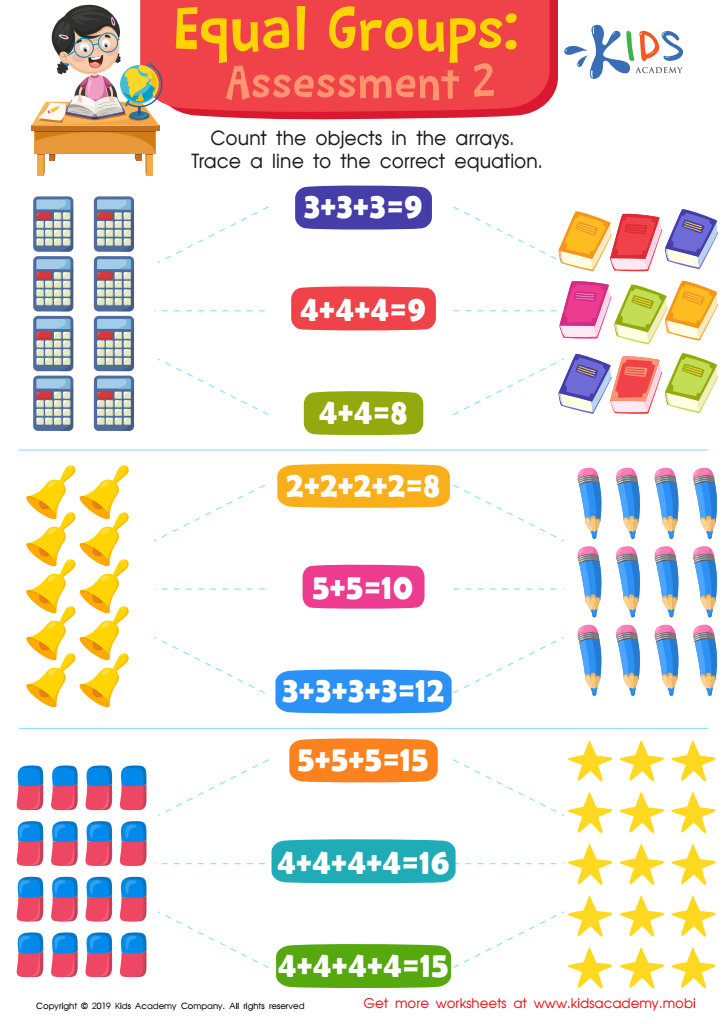
Equal Groups: Assessment 2 Worksheet
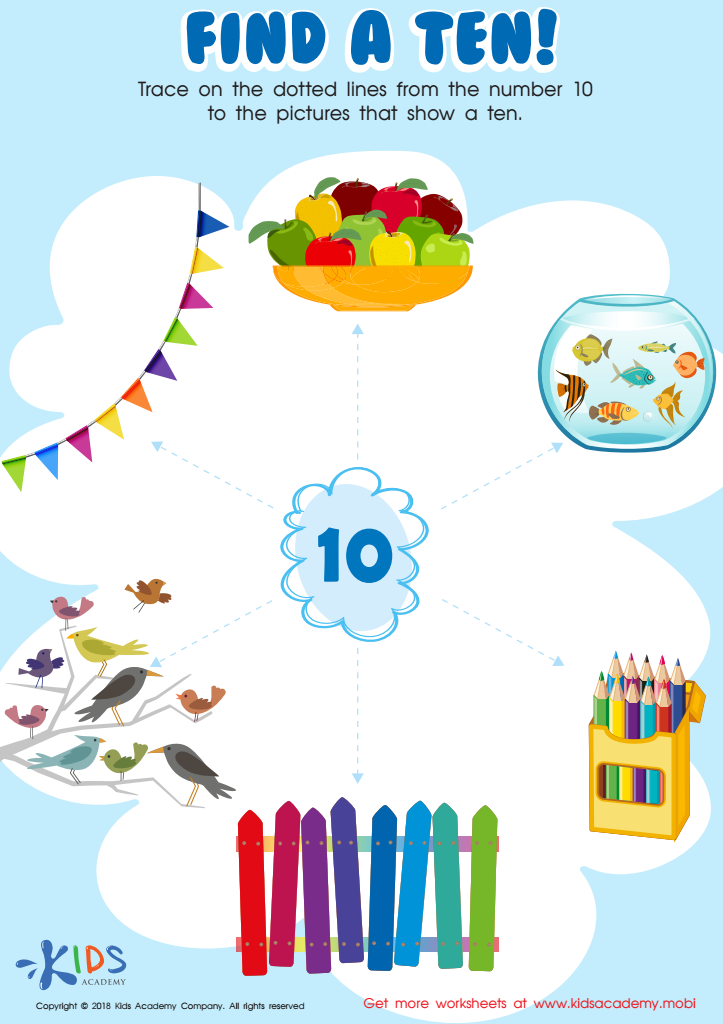
Kindergarten Math Worksheet: Find a Ten


.jpg)

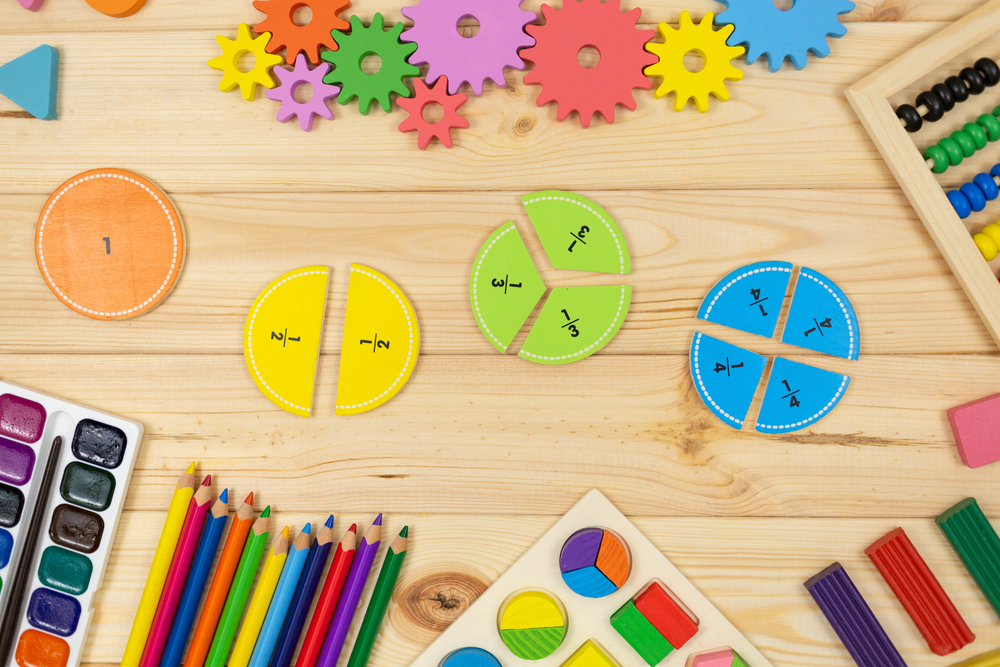



Basic arithmetic comprehension is vital for children aged 4-7, as it lays the foundation for their future learning and everyday decision-making. At this stage, children develop key cognitive skills, and understanding arithmetic helps enhance their problem-solving abilities and logical thinking.
First, early arithmetic skills aid in number recognition, counting, and simple calculations, which are essential for progressing to more complex math concepts later in school. Mastery of these basics boosts children’s confidence, allowing them to tackle new challenges fearlessly.
Moreover, arithmetic comprehension goes beyond academics; it fosters critical life skills. Basic math is used in everyday scenarios, such as understanding time, handling money, and measuring ingredients. By building competency in arithmetic, children become more independent and better prepared for real-world situations.
Additionally, strong foundational skills can close the achievement gap, especially for those who may struggle with learning disabilities. Early intervention and support from parents and teachers can help ensure all children have a solid grasp of these essential concepts.
In summary, investing time and effort in fostering basic arithmetic comprehension during early childhood has long-lasting benefits that transcend the classroom, shaping both academic success and practical life skills.








