Basic geometry comprehension Worksheets for Ages 4-7
3 filtered results
-
From - To
Discover our engaging Basic Geometry Comprehension Worksheets, specially designed for children aged 4-7. These worksheets help young learners explore essential geometric concepts, including shapes, sizes, and spatial awareness. Through fun and interactive activities, children will master identifying, comparing, and categorizing various geometric shapes. Each worksheet encourages critical thinking and improves fine motor skills, ensuring that your child builds a strong foundation in geometry. Perfect for classroom or home use, our resources are tailored to foster an early love for math while promoting creativity and problem-solving abilities. Start your child’s journey in mathematics today with our captivating worksheets!
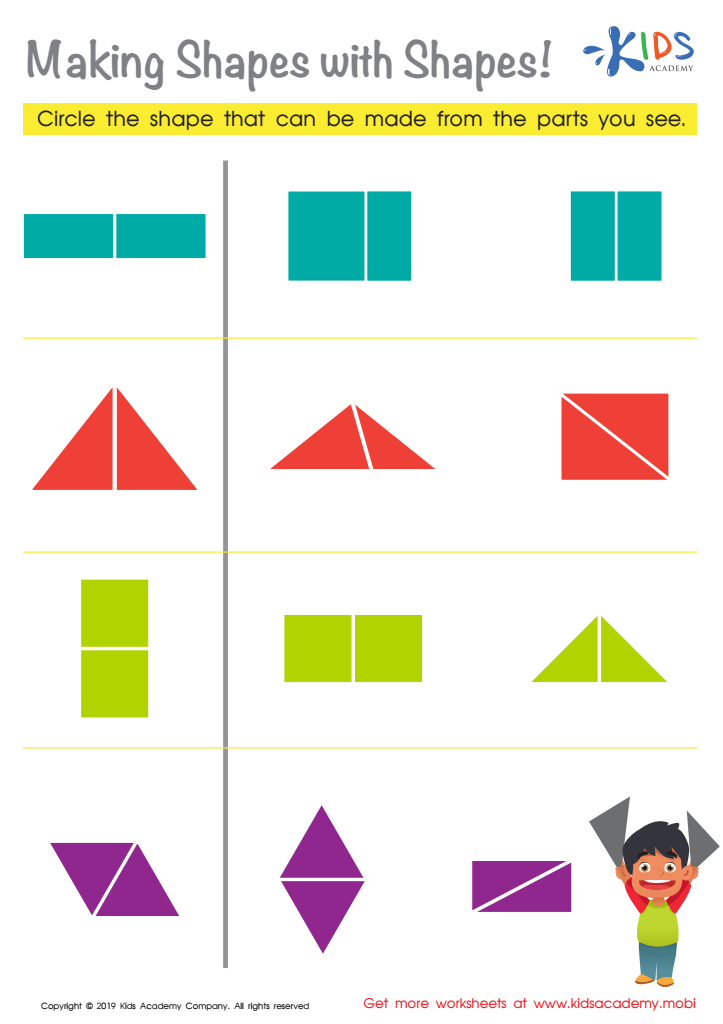
Making Shapes with Shapes Worksheet
 Assign to My Students
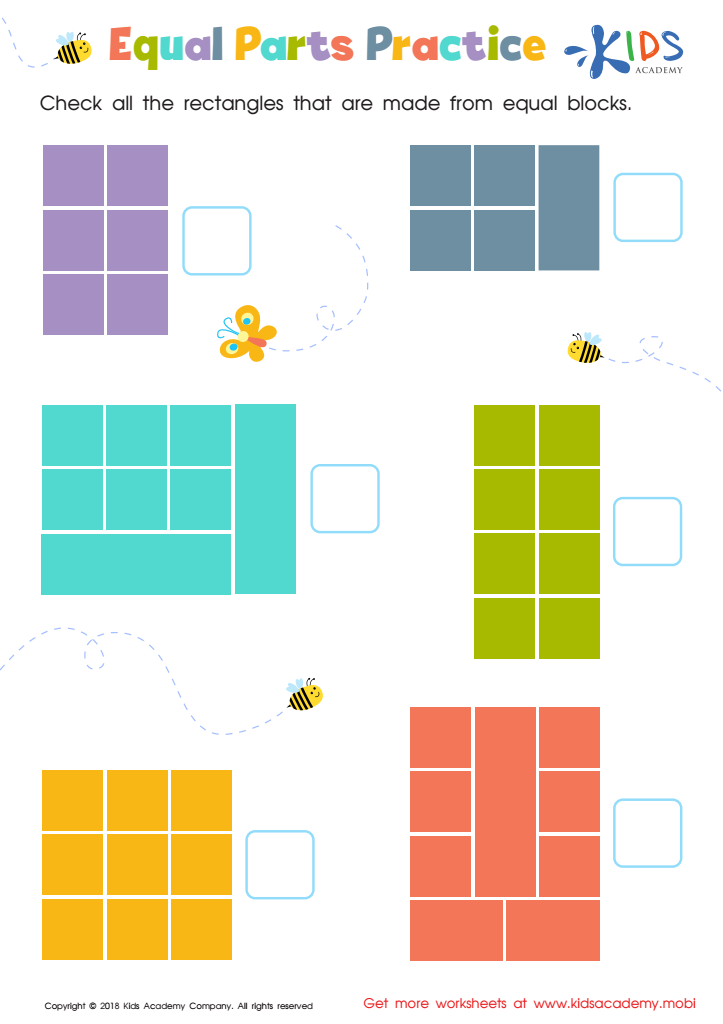
Equal Parts Practice Worksheet
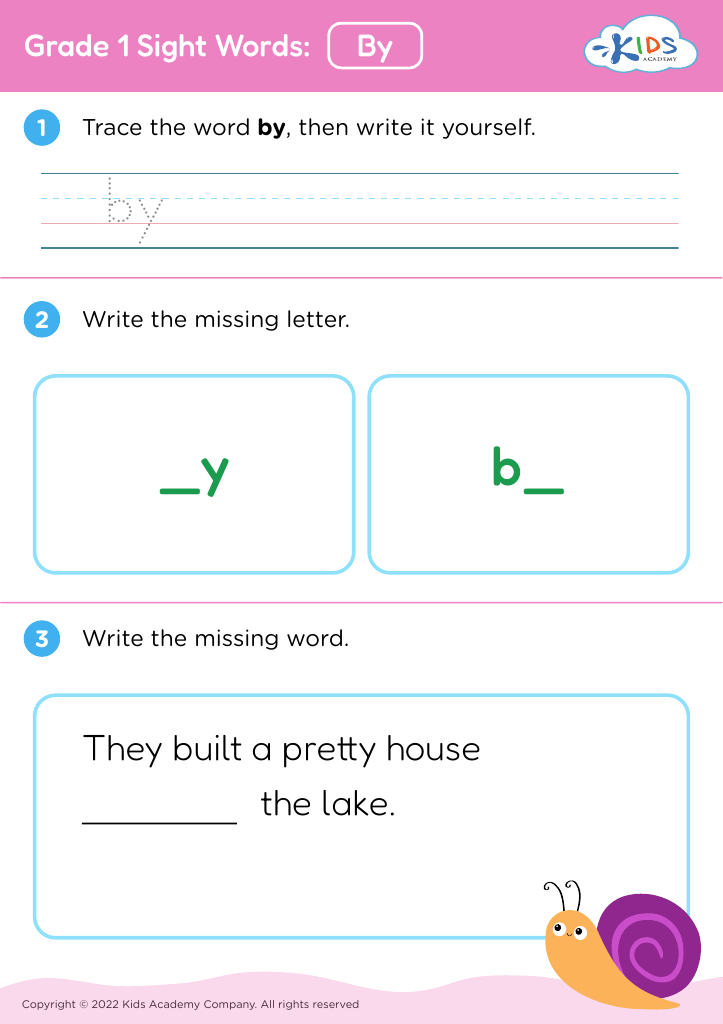






Basic geometry comprehension is essential for children aged 4-7 as it lays a strong foundation for their cognitive development and critical thinking skills. During these formative years, children begin to explore shapes, sizes, and spatial relationships, which are fundamental concepts that help them understand the world around them. Engaging with basic geometry promotes problem-solving abilities, enhances creativity, and encourages logical reasoning.
Moreover, geometry supports early math skills by introducing concepts such as counting, pointing out patterns, and understanding measurements. Children who grasp these principles are better prepared for more complex mathematical topics later in their education. Beyond academics, geometry fosters spatial awareness, which is crucial for tasks such as navigation and task execution in daily activities.
In addition, geometry plays a vital role in developing fine motor skills through activities like drawing shapes, building blocks, or completing puzzles. These activities not only enhance a child's understanding of geometry but also contribute to social skills as they collaborate with peers during hands-on learning.
Parents and teachers should prioritize geometry comprehension to instill a love for math, enable a solid educational foundation, and prepare children for future academic success. Understanding geometry enriches children's lives and builds essential life skills that extend beyond the classroom.








