
Cognitive skill development Worksheets for Ages 4-7
6 filtered results
Difficulty Level
Grade
Age
-
From - To
Subject
Activity
Standards
Unlock your child's potential with our engaging Cognitive Skill Development Worksheets, specially designed for ages 4-7. These interactive resources foster critical thinking, problem-solving, and memory enhancement through fun activities that make learning enjoyable. Packed with colorful images and stimulating challenges, our worksheets cover a range of topics, including logic puzzles, pattern recognition, and categorization exercises. Parents and educators can aid in scaffolding essential cognitive concepts, ensuring kids build a strong foundation for future learning. Explore our collection to help your child develop the skills necessary to thrive academically and socially while enjoying the process of discovery and creativity!
Favorites
With answer key
Interactive
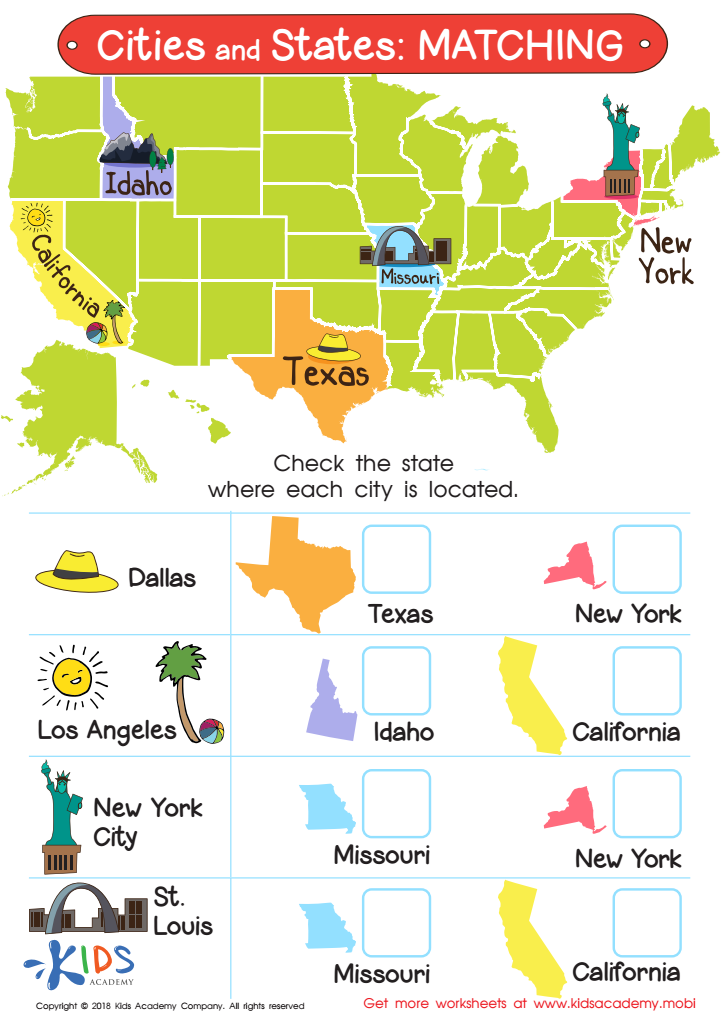
Cities and States: Matching Worksheet
Ask your child if they can name some of the states in your country. If they can, great! If not, use this worksheet to have them learn some states. Show them the map and ask them to observe the shape and color of each state. Then, have them answer the questions by checking the state where each city is located.
 Assign to My Students
Cities and States: Matching Worksheet
Worksheet
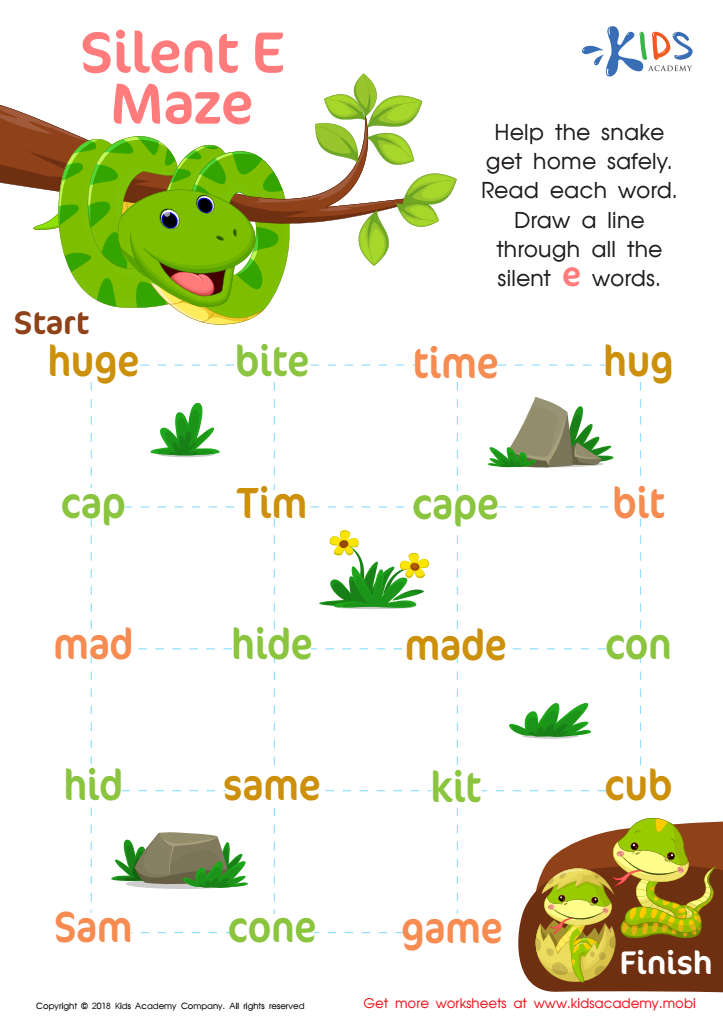
Silent E Maze Worksheet
Kids love mazes! This fun printable worksheet lets them help a mama snake get home to her babies, using Silent E words. They'll practice fine motor skills, while they draw lines through words that have Silent E and words with closed syllables that don't. It's a great way to help them recognize Silent E words!
Silent E Maze Worksheet
Worksheet
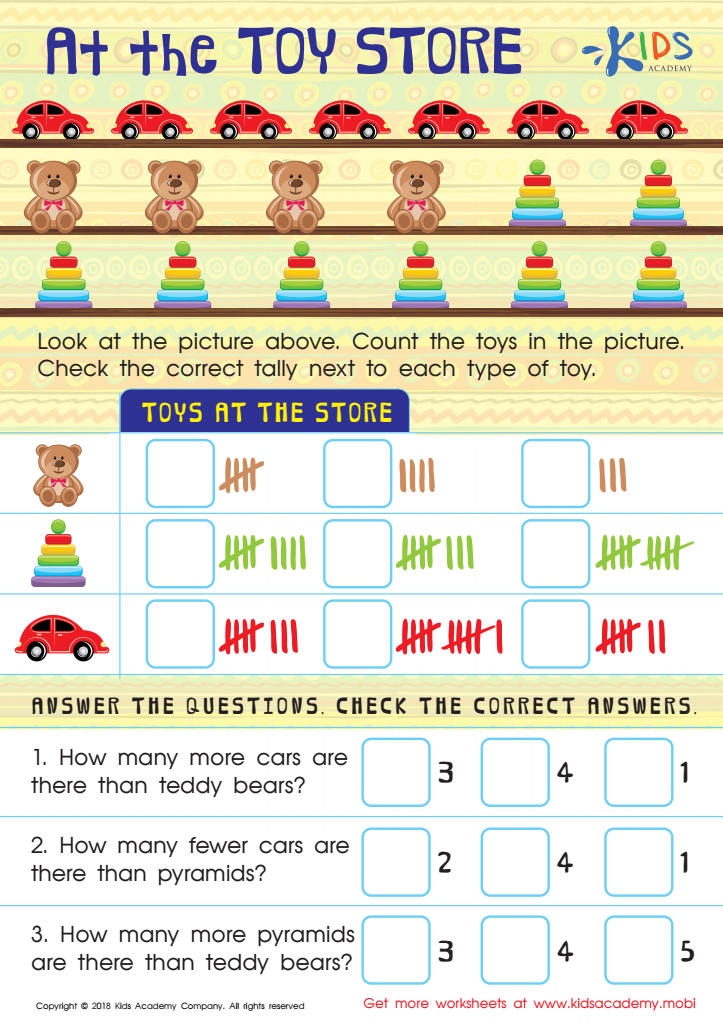
Tally Chart: At the Toy Store Worksheet
Kids Academy has a fun worksheet to help kids practice counting and using tally marks! They can think about the number of toys and compare them. At the bottom, help them answer the questions about the toys on this math page. It's an easy way to learn that one tally mark equals one item.
Tally Chart: At the Toy Store Worksheet
Worksheet
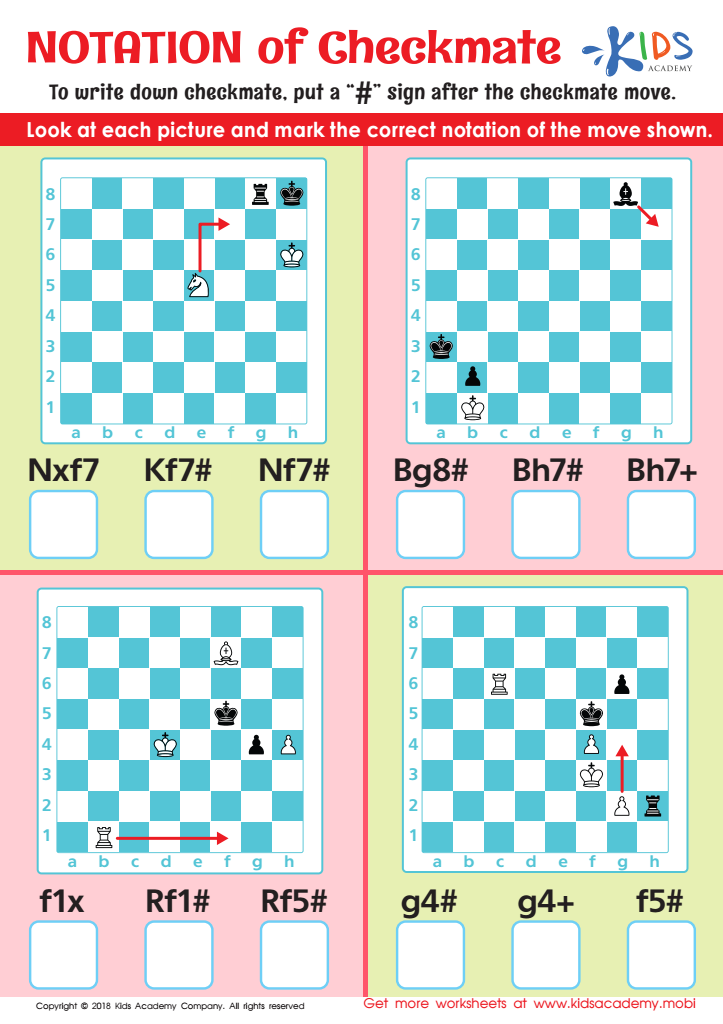
Notation of Checkmate Worksheet
Checkmate is the thrilling, ultimate move in chess! Teach your child to make it and notate it properly with this free worksheet. They'll love being able to capture the king and it's great for brain-building too! Have them look at the sample boards and place a # sign after the checkmate move for notation.
Notation of Checkmate Worksheet
Worksheet
Join Kids Academy for Free
Who is primarily going to use this learning content?








Cognitive skill development for children aged 4-7 is crucial, as this period lays the foundation for lifelong learning, problem-solving, and critical thinking. During these early years, children's brains are remarkably adaptable, making it an ideal time to cultivate cognitive skills. Activities that promote memory, attention, reasoning, and language processing enhance their ability to understand concepts, absorb information, and engage in meaningful social interactions.
Parents and teachers should prioritize cognitive development because it directly correlates with academic success and emotional well-being. Children who develop strong cognitive skills tend to perform better in school, as they are more equipped to follow instructions, think critically, and collaborate with peers. Furthermore, fostering these skills can help to mitigate future learning challenges, making it easier for children to adapt to complex tasks as they progress through their education.
Engaged involvement from parents and educators not only supports cognitive growth but also strengthens the child-parent or teacher-student bond. Encouraging exploration and curiosity through play, reading, and hands-on activities can nurture cognitive skills in engaging ways. Ultimately, by focusing on cognitive development early on, we empower children to reach their full potential and build the necessary foundation for future success.








