Comparative skills Worksheets for Ages 4-7
3 filtered results
-
From - To
Discover our engaging Comparative Skills Worksheets designed for children ages 4-7! These fun, interactive resources help young learners grasp essential concepts of comparison, enhancing their critical thinking and language development. With a variety of activities, kids will explore differences and similarities in size, shape, and quantity through vibrant visuals and relatable scenarios. Our worksheets are perfect for both home and classroom settings, promoting hands-on learning that captivates and motivates your child. Foster a solid foundation in comparative reasoning and boost your child's confidence in their analytical skills with our expertly crafted worksheets. Start teaching comparison today and watch them thrive!
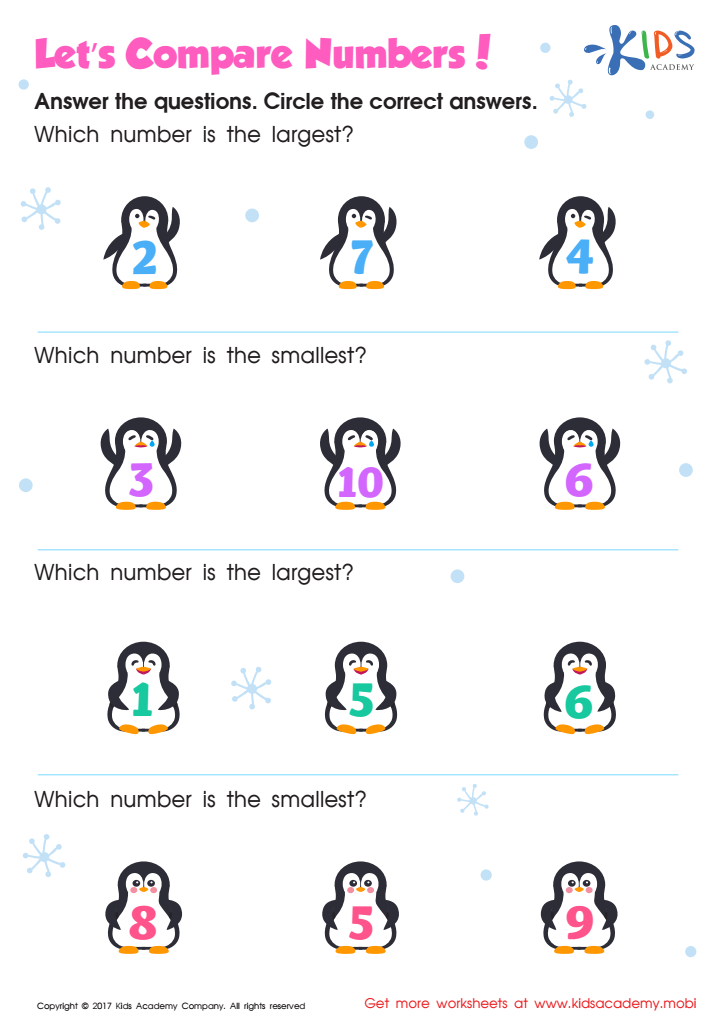
Comparing Numbers 1–10 Worksheet Kindergarten
 Assign to My Students
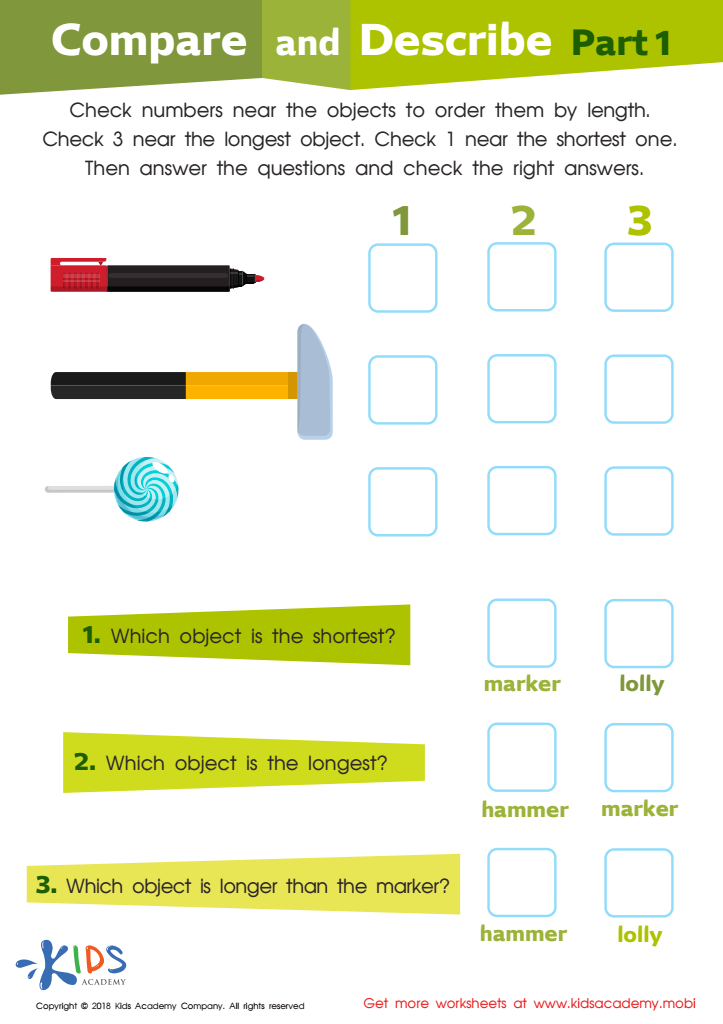
Compare and Describe: Part 1 Worksheet
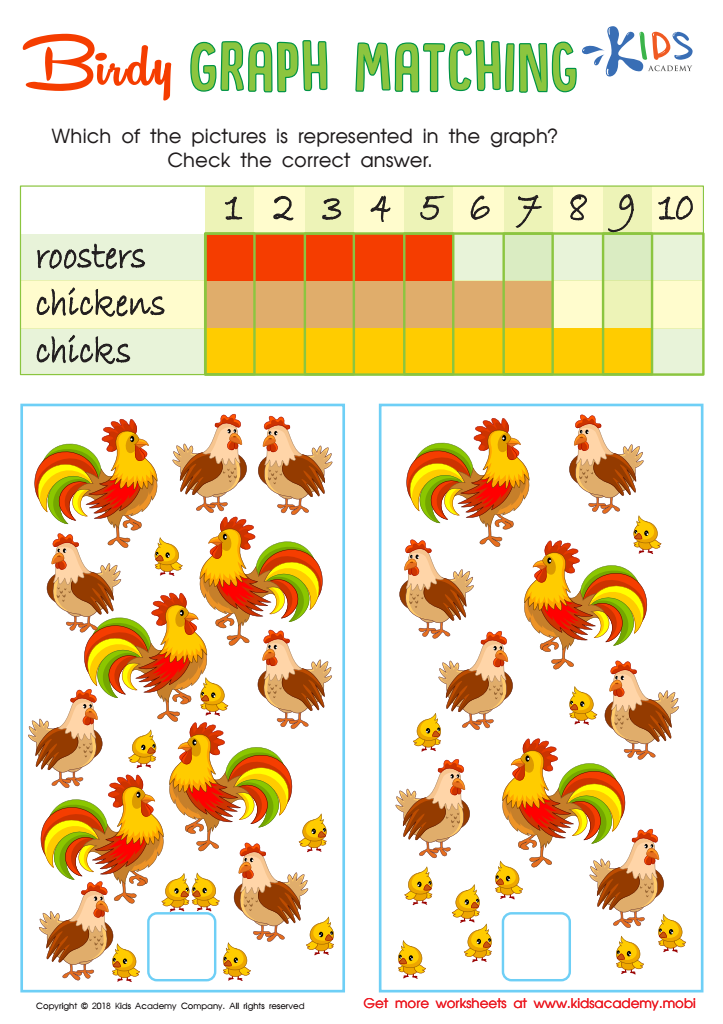
Birdy Graph Matching Worksheet


.jpg)




Parents and teachers should prioritize developing comparative skills in children aged 4-7 because these skills serve as a foundation for critical thinking, problem-solving, and everyday decision-making. At this young age, children are naturally curious and begin to explore relationships between various objects, ideas, and experiences. By learning to compare and contrast, they enhance their understanding of similarities and differences, which expands their cognitive abilities.
Comparative skills help children make sense of their surroundings. For example, they can learn to categorize shapes, sizes, and colors, or compare quantities in simple math activities. This not only fuels their analytical thinking but also leads to improved language skills as they articulate their observations and reasoning. Engaging with comparative tasks fosters creativity as children uncover new ideas by linking different concepts.
Moreover, these skills promote social development as children navigate relationships, learn empathy, and develop perspectives by considering how their experiences might differ from others. Ultimately, nurturing comparative skills equips children with the tools to tackle more complex concepts later in life, creating a strong foundation necessary for academic success and informed decision-making in an ever-changing world. Prioritizing these skills now pays dividends for their future learning journeys.








