Comprehension skills Worksheets for Ages 4-7 - Page 2
27 filtered results
-
From - To
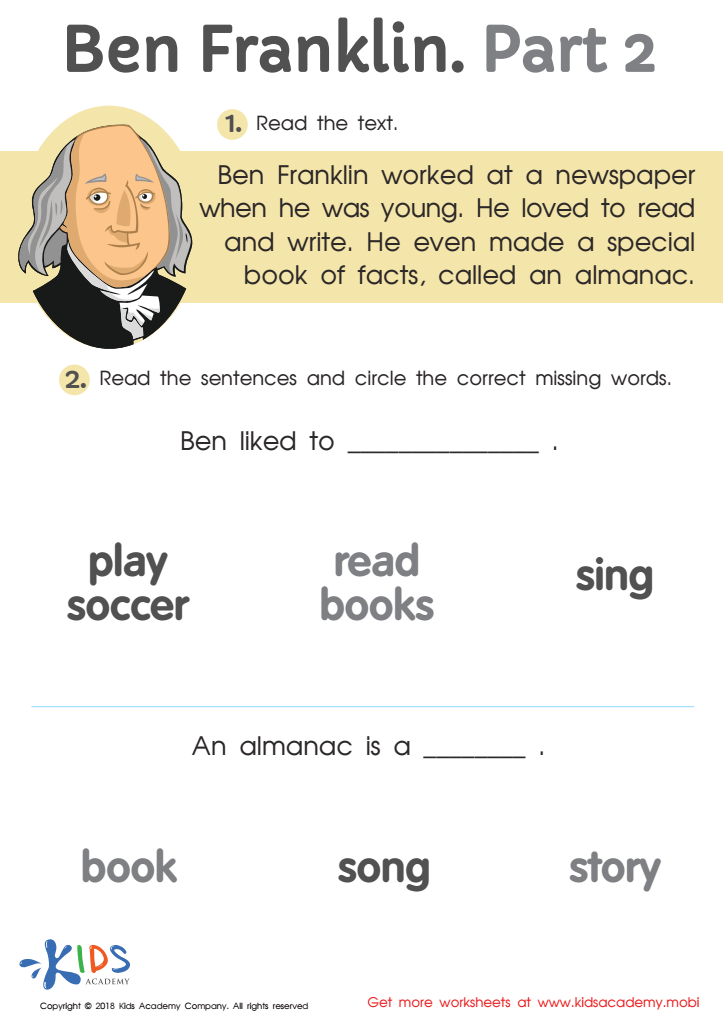
Ben Franklin Part 2 Worksheet
 Assign to My Students
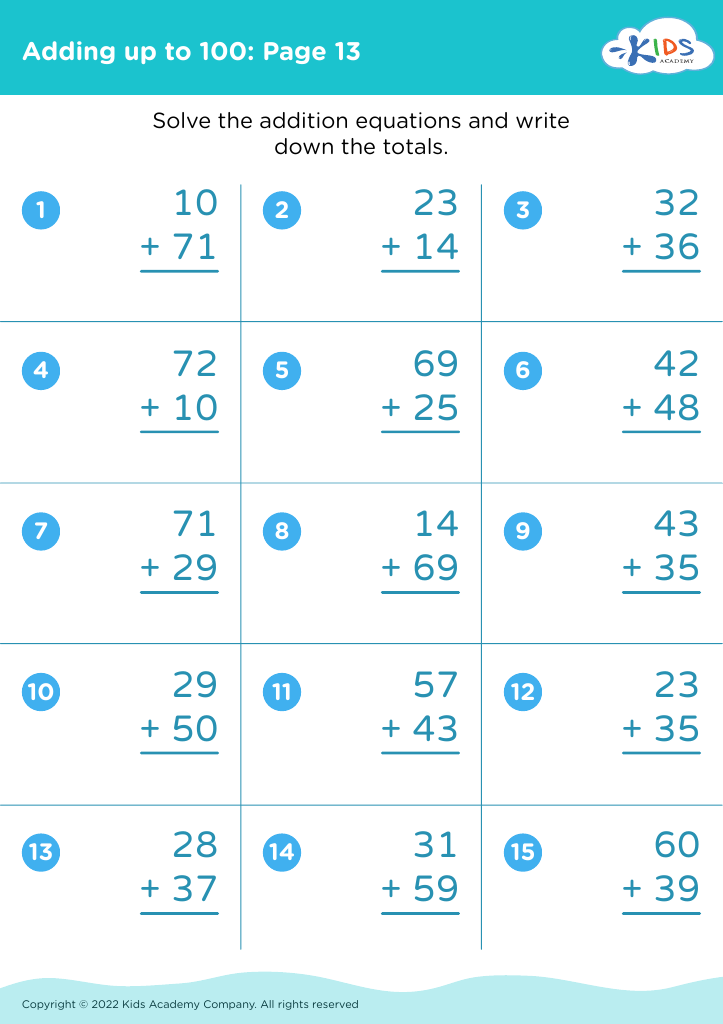
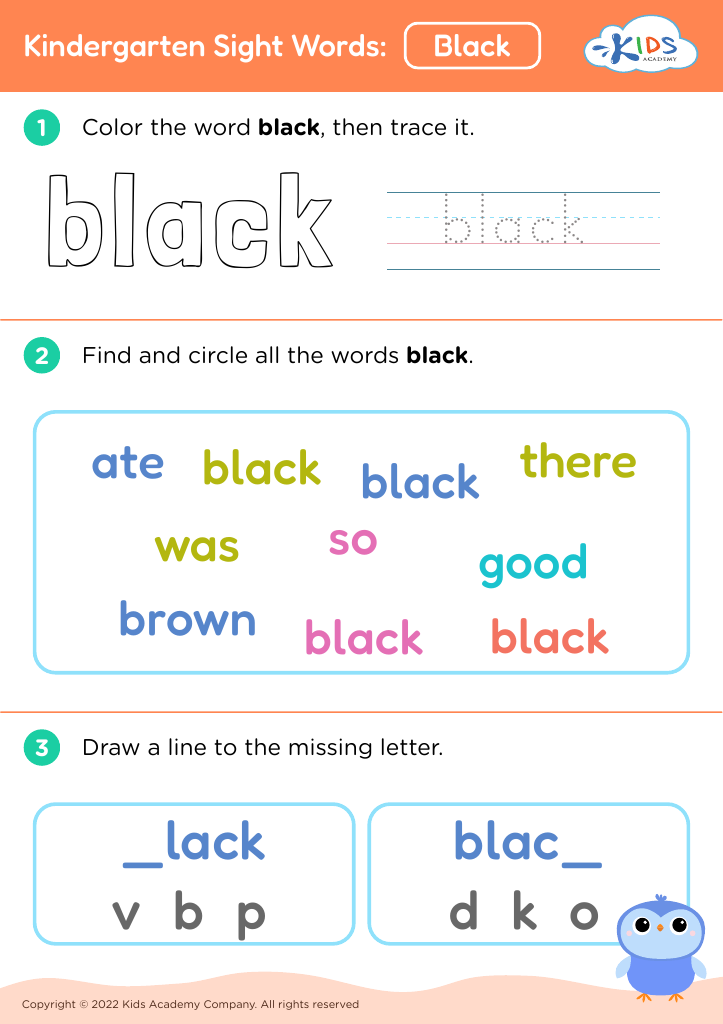








Parents and teachers should prioritize developing comprehension skills in children aged 4-7 because these skills form the foundation for future learning and academic success. At this critical stage, young minds are rapidly growing, and the ability to understand and process information is essential. Strong comprehension skills aid children in understanding stories, following directions, and engaging with the material beyond surface-level recognition of words.
Improved comprehension enriches vocabulary, as encountering new words in context allows children to infer meanings and properly use them. These skills also enhance listening abilities, fostering better communication and social interactions. By grasping context and nuances, young learners improve their critical thinking, enabling them to connect ideas and draw conclusions, which are crucial for problem-solving and reasoning across various subjects.
Moreover, proficient comprehension contributes to a child’s confidence and motivation to learn. Children who understand what they read or hear are more likely to enjoy learning experiences, leading to a lifetime of curiosity and exploration.
For educators and parents, fostering comprehension skills involves reading stories aloud, engaging in discussions about books, using visual aids, and incorporating interactive activities that require children to think about the material. Investing in these skills early sets up a supportive learning environment and equips children to excel both academically and in everyday life.








