Fractions understanding Worksheets for Ages 4-7
3 filtered results
-
From - To
Enhance your child's grasp of fractions with our "Fractions Understanding Worksheets" tailored for ages 4-7. These engaging, kid-friendly worksheets are designed to build a strong foundation in fraction concepts through vibrant illustrations, interactive activities, and hands-on practice. Each worksheet progressively introduces fraction basics, from simple halves and quarters to more complex divisions, ensuring a comprehensive learning experience. Perfect for young learners, our resources make mastering fractions fun and accessible, paving the way for future math success. Start your child's journey to fraction fluency with Kids Academy today!
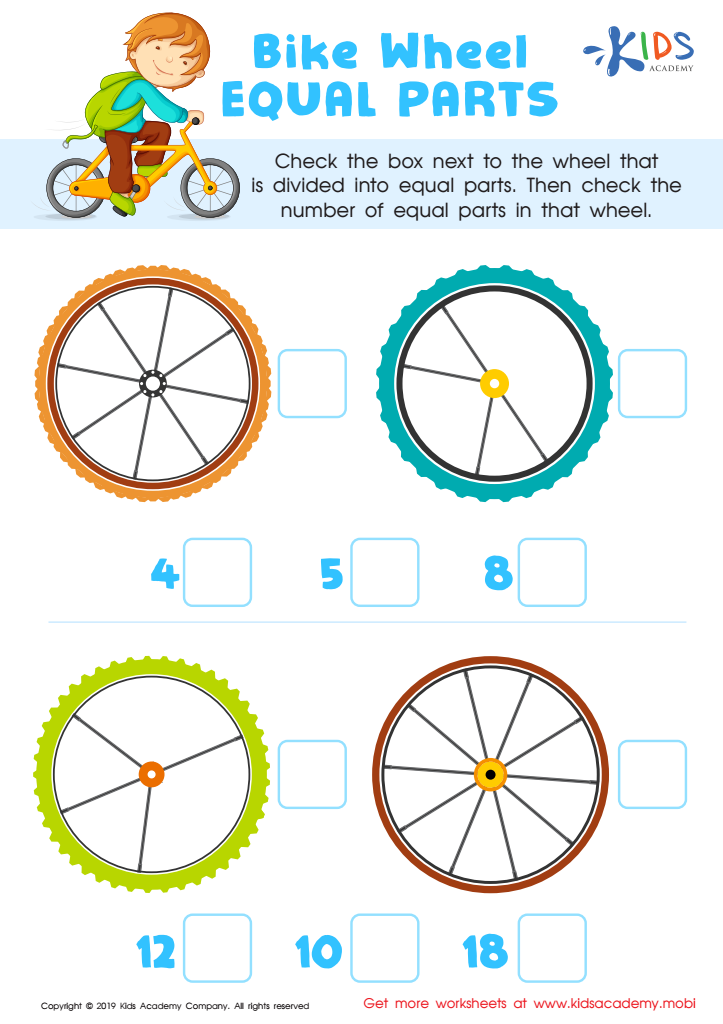
Bike Wheel Equal Parts Worksheet
 Assign to My Students
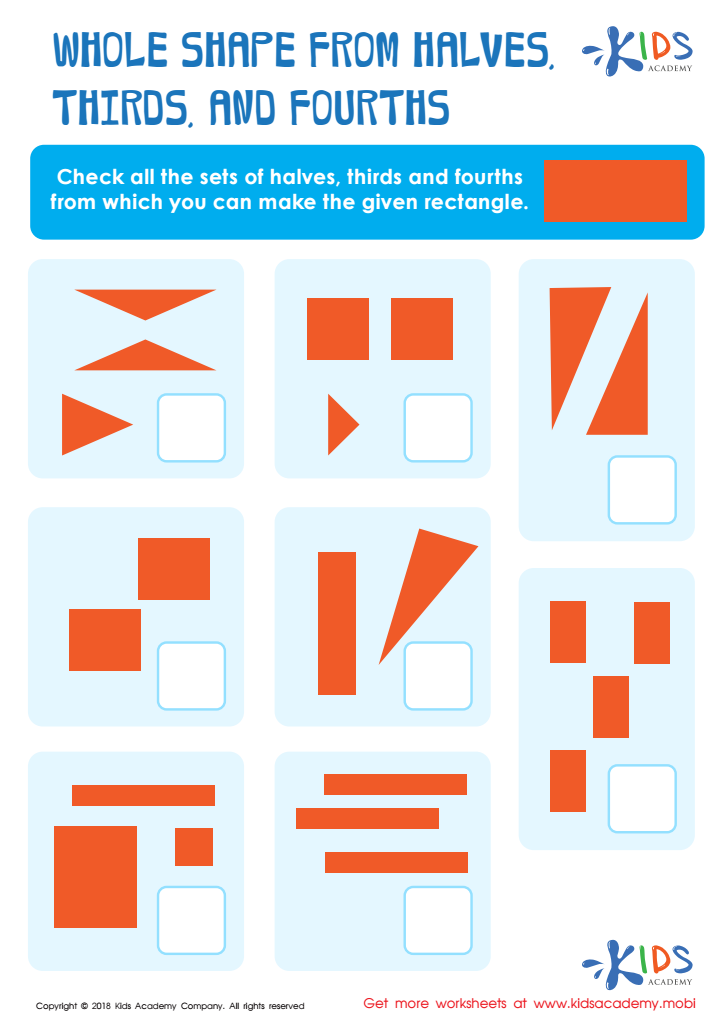
Whole Shape from Halves, Thirds and Fourths Worksheet







.jpg)
Parents and teachers should prioritize fostering a strong understanding of fractions for children aged 4-7 because early math skills are foundational to later academic success. Introducing fractions at a young age helps demystify this critical concept, making it less intimidating as children progress through school. When young learners understand fractions, they build a concrete sense of how numbers work, enabling them to grasp more complex mathematical ideas with greater ease.
Understanding fractions is not only vital for math—it also fosters important cognitive skills like problem-solving and logical thinking. These abilities are transferable to other subjects and real-world situations, promoting overall intellectual development. Moreover, incorporating fractions into day-to-day activities such as cooking, sharing, or playing games makes the learning process enjoyable and meaningful, thereby enriching the child's educational experience.
Lastly, focusing on fractions early on helps bridge gaps in mathematical proficiency, ensuring children do not fall behind when encountering more challenging subjects in later grades. Teachers and parents play a crucial role in providing supportive, engaging environments where children can explore, experiment, and confidently grasp the essence of fractions. In summary, early exposure to fractions is integral to nurturing a child's numerical literacy and overall cognitive toolkit, setting the stage for lifelong learning and success.








