Identify colors Worksheets for Ages 4-7
4 filtered results
-
From - To
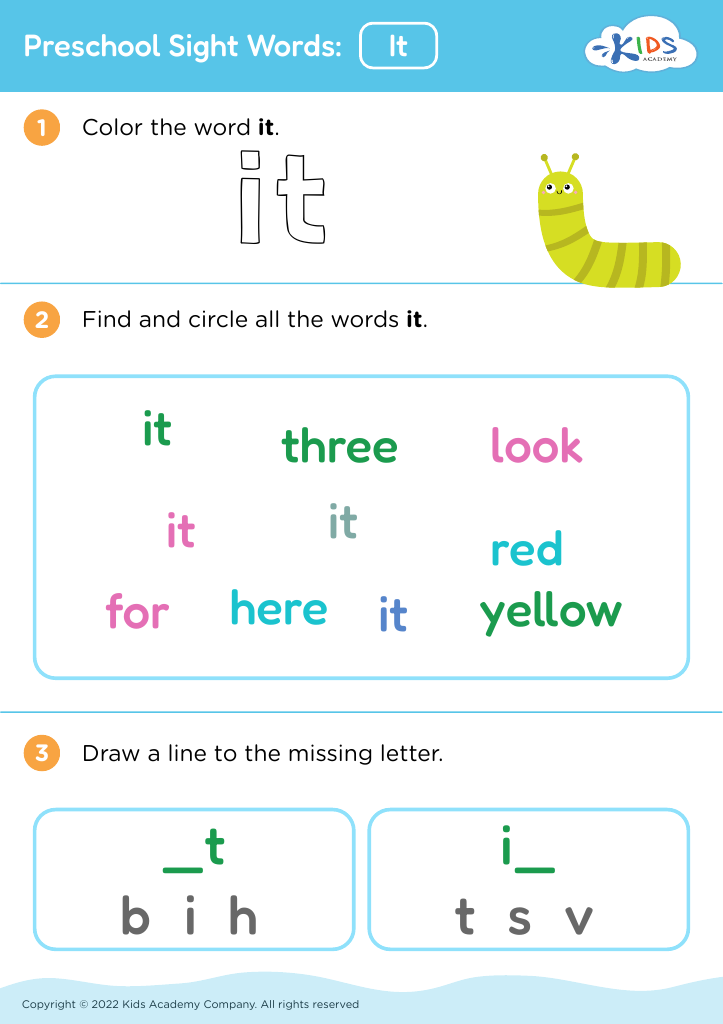
Explore our engaging Identify Colors Worksheets for ages 4-7, designed to make learning fun and effective! These printable resources help young learners recognize and differentiate various colors through interactive activities. Perfect for preschool and early elementary students, our worksheets support cognitive development, enhance fine motor skills, and foster creativity. With vibrant illustrations and child-friendly tasks, children can enjoy sorting, matching, and coloring exercises. Ideal for parents and teachers, the Identify Colors Worksheets offer essential tools to build a strong foundation in color identification and boost confidence in early learning. Discover joyful learning at Kids Academy today!
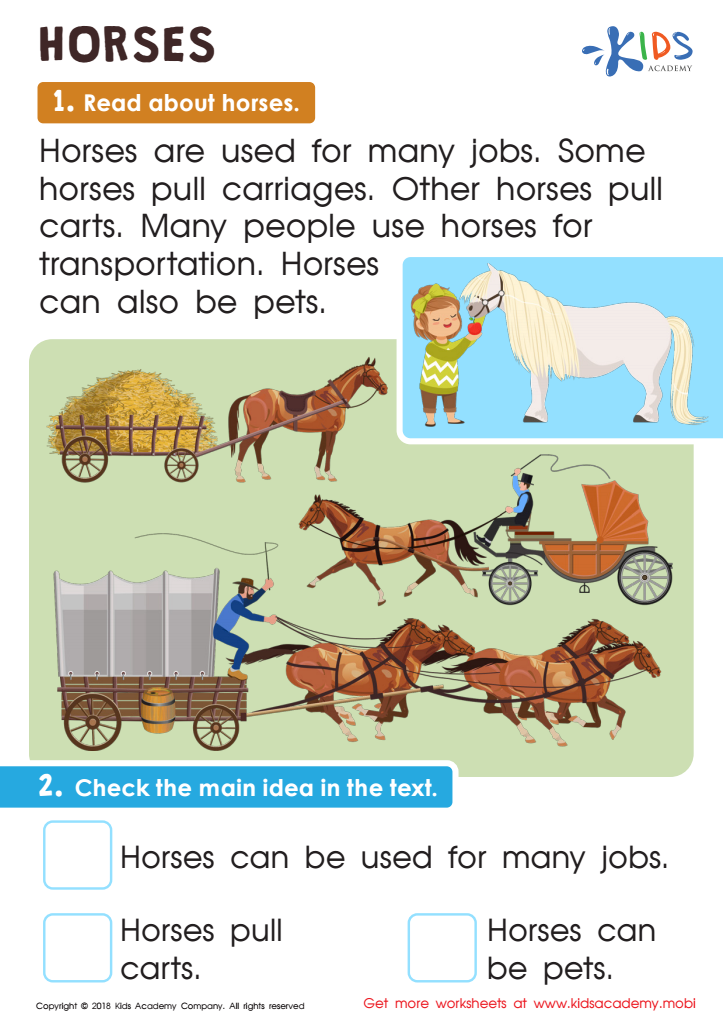
Horses Worksheet
 Assign to My Students







Understanding colors is a fundamental milestone in the cognitive development of children aged 4-7. For parents and teachers, facilitating color identification during this period is crucial for several reasons.
Firstly, knowledge of colors significantly enhances language acquisition. As children learn to identify and name colors, their vocabulary expands, helping them express their thoughts and feelings more precisely. This forms a cornerstone for effective communication skills later in life.
Secondly, color identification aids in early cognitive development. Engaging with colors enhances memory and concentration. Such activities encourage children to observe details in their surroundings, contributing to a better understanding of the world.
Socially, colors play a role in identity and self-expression. Being familiar with colors allows children to make choices about their clothing, toys, and artwork, fostering a sense of individuality and confidence.
Moreover, colors form the basis for many learning activities in subjects like art, math, and science. Recognizing and distinguishing colors can help children grasp more complex concepts such as patterns, sorting, and categorizing.
Lastly, a good understanding of colors aids in safety. Recognizing traffic lights, distinguishing hazard signs, and understanding emergency symbols depend on color recognition.
Therefore, emphasizing color learning not only supports academic and personal growth but also enhances safety and social interactions, making it an indispensable part of early childhood education.








