
Improving calculation skills Worksheets for Ages 4-7
7 filtered results
Difficulty Level
Grade
Age
-
From - To
Subject
Activity
Standards
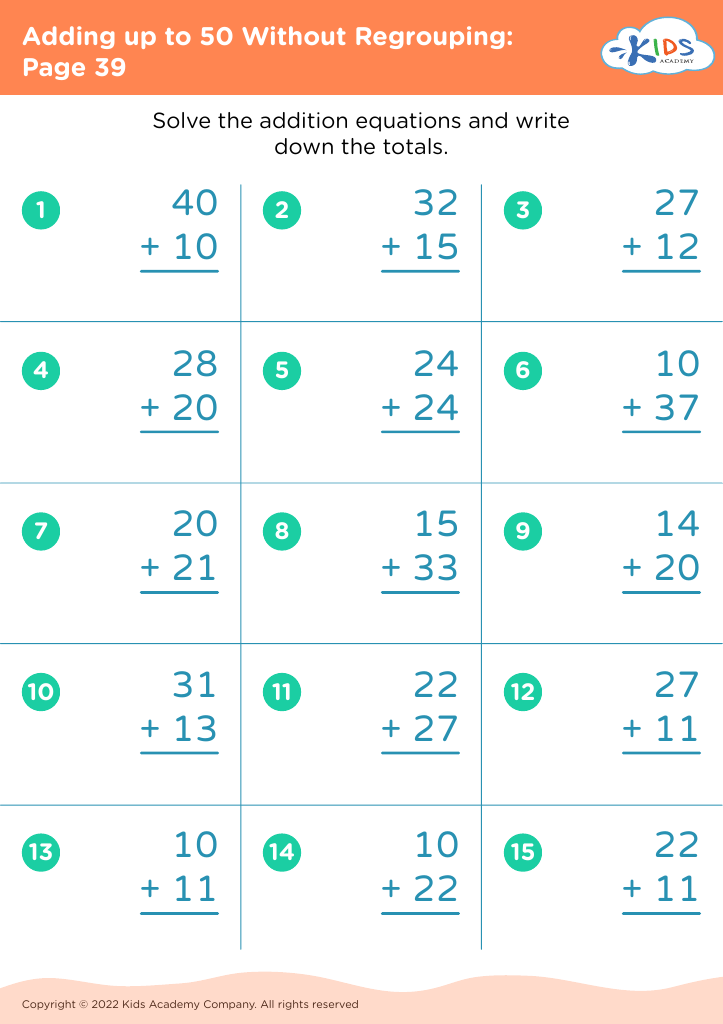
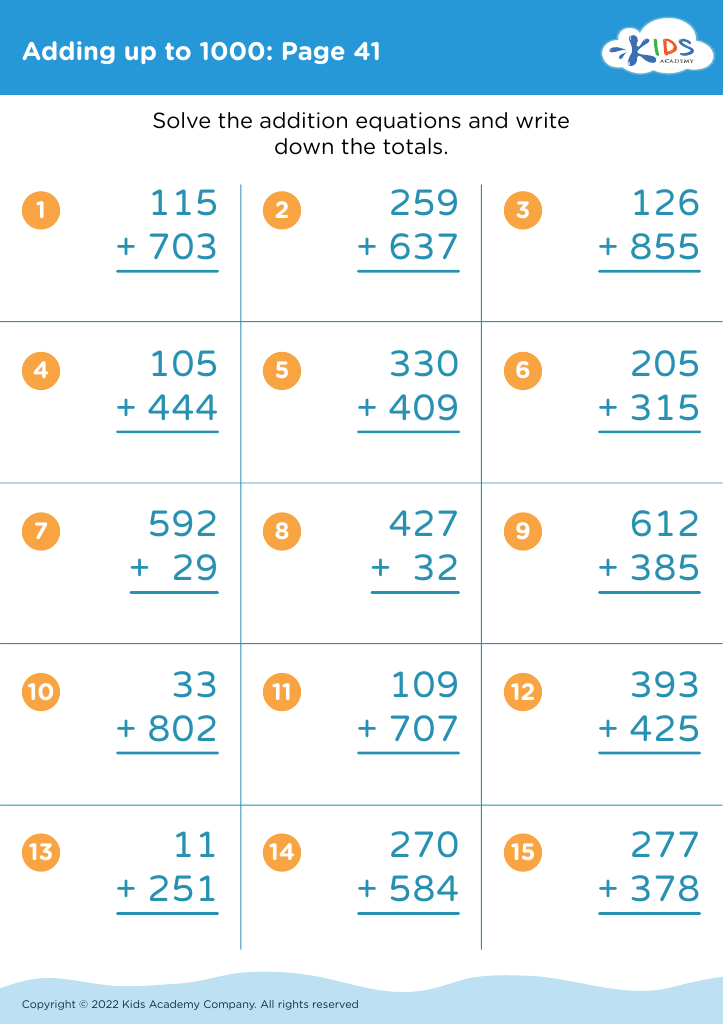
Enhance your child's mathematical abilities with our "Improving Calculation Skills Worksheets," designed specifically for ages 4-7. These engaging and interactive worksheets focus on foundational math concepts, including addition, subtraction, and number recognition. Bright illustrations and age-appropriate activities make learning enjoyable, helping young learners develop confidence in their calculation skills. Each worksheet encourages practice through fun exercises tailored to various learning styles, ensuring a well-rounded approach to early mathematics. Support your child's journey to becoming a confident math whiz! Download our worksheets today and watch their skills flourish as they tackle calculations with enthusiasm!
Favorites
With answer key
Interactive
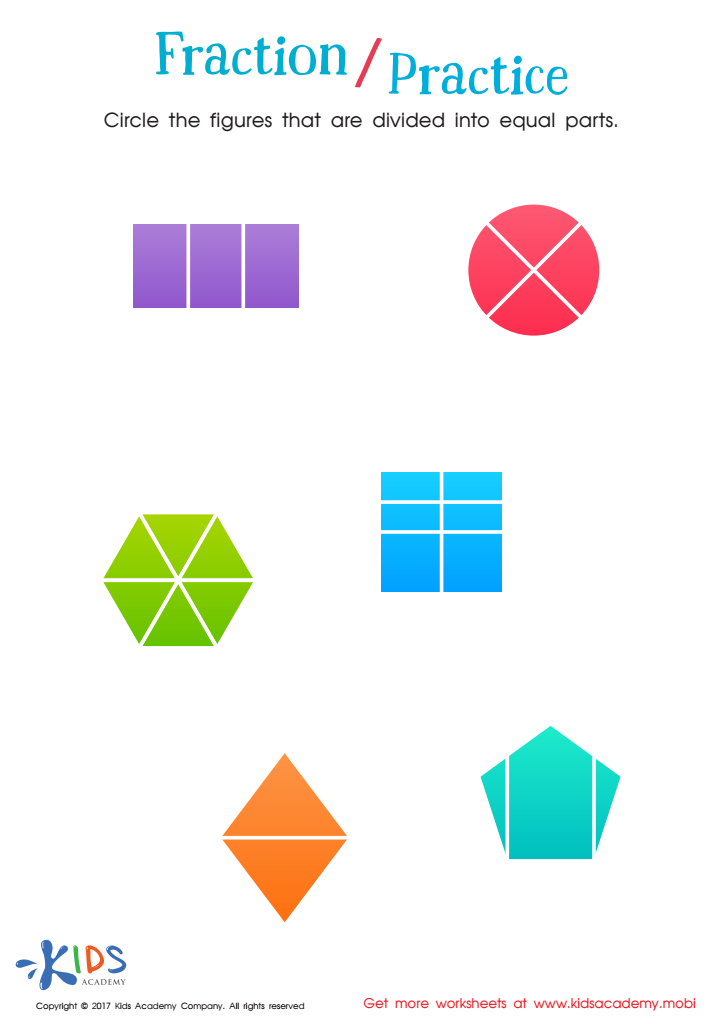
Fractions: Shapes Worksheet
Get your printable now.
Kids learn math differently today than you did in school; understanding concepts rather than memorizing facts. Help your child understand fractions with this printable worksheet. It'll help your child recognize parts of a whole, identify equal parts and build a foundation for numeracy. A better understanding sets kids up for math success! Get your printable now.
 Assign to My Students
Fractions: Shapes Worksheet
Worksheet
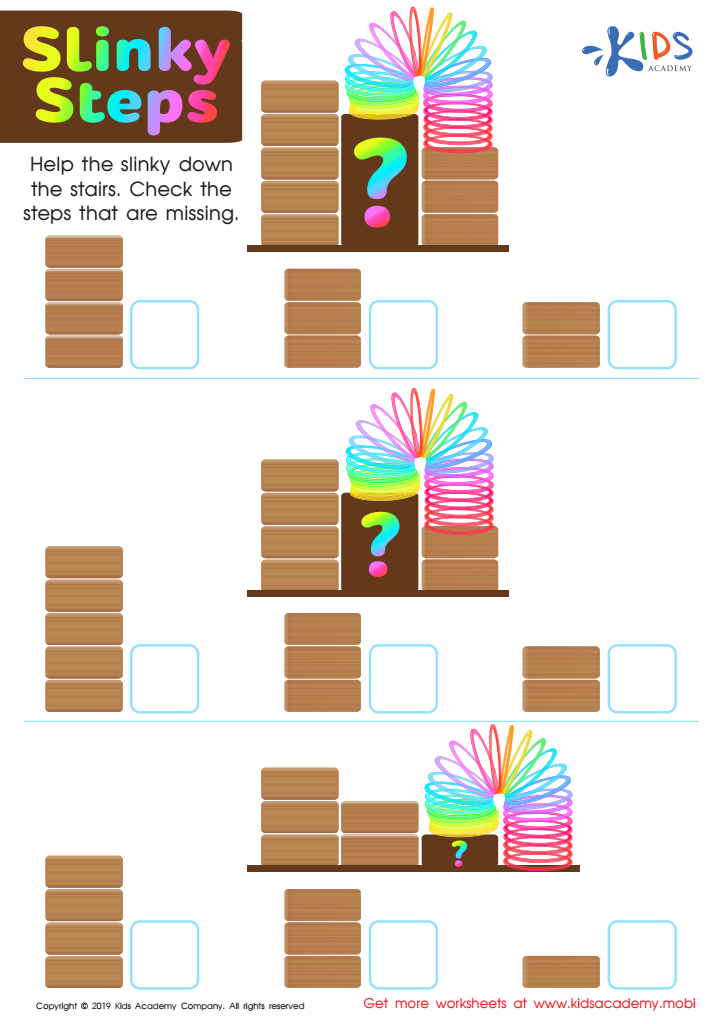
Slinky Steps Worksheet
Help your kids improve their counting and math skills with this fun worksheet! Challenge them to help the slinky make its way down the stairs by selecting and checking the missing steps. Your assistance is key - get the printout and let them practice. It's the best way to becoming better in maths!
Slinky Steps Worksheet
Worksheet
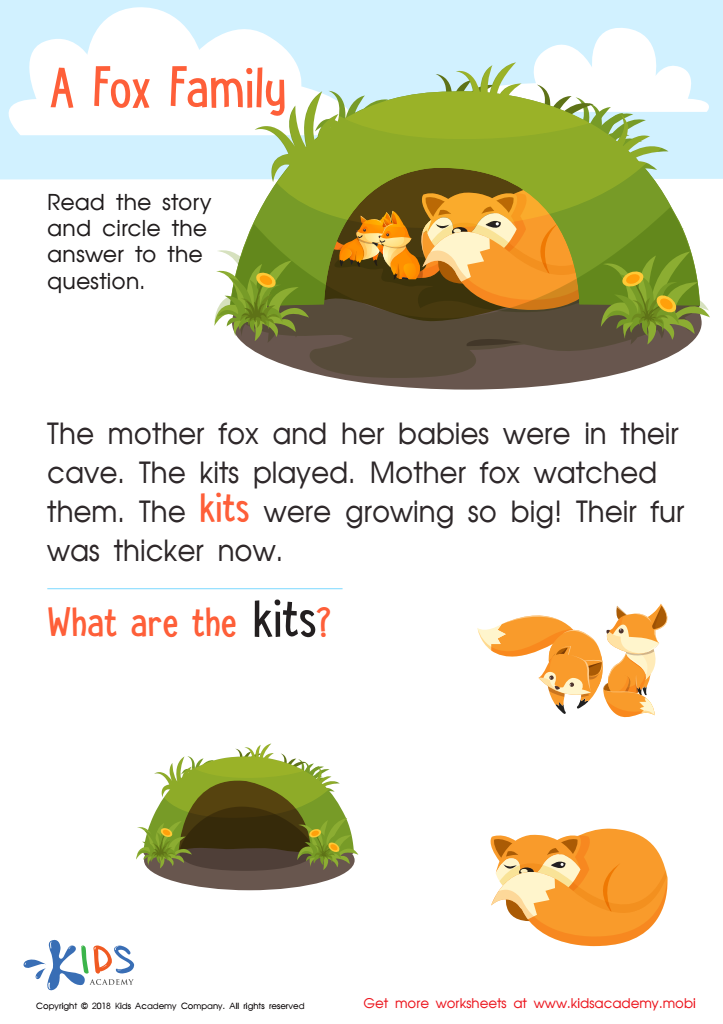
A Fox Family Worksheet
Reading is an easy way to learn new words. This worksheet introduces an interesting story about a fox family, teaching your child that "kits" refers to baby foxes. Read the text together and circle the picture to answer the question.
A Fox Family Worksheet
Worksheet
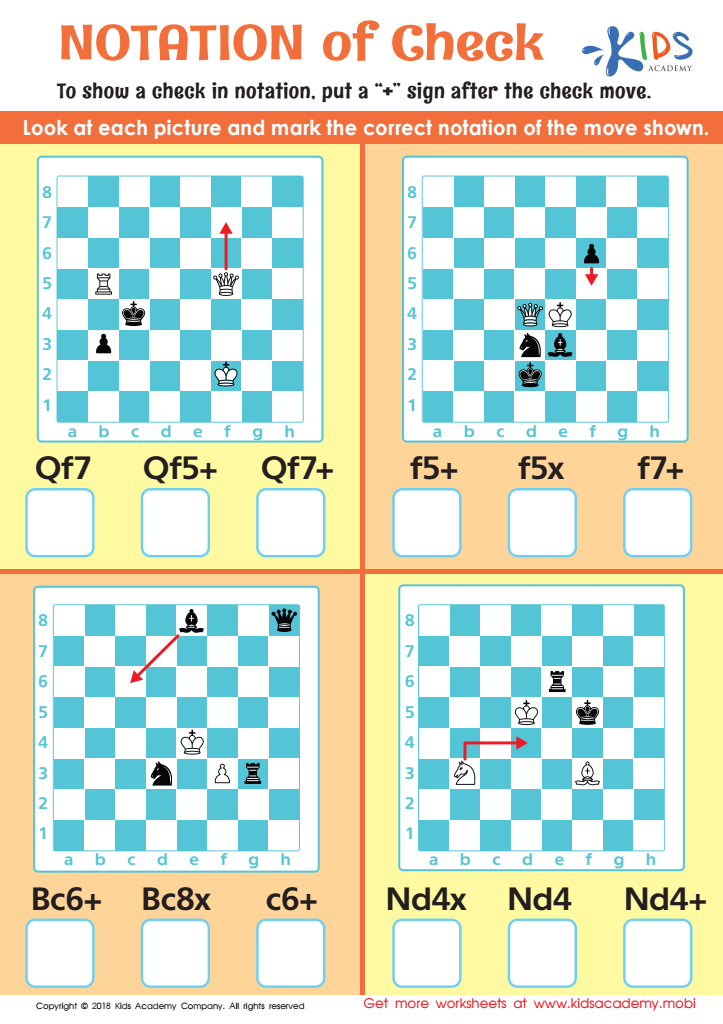
Notation of Check Worksheet
Chess is an addictive game! Once you know the basics of check and checkmate, you'll be hooked! Teach your little one to make check notation with this free PDF worksheet. They can use downloadable practice to look at each picture and mark the correct notation, strengthening their problem-solving skills while they learn to play - and win - this fun game!
Notation of Check Worksheet
Worksheet
Join Kids Academy for Free
Who is primarily going to use this learning content?








Improving calculation skills in children ages 4 to 7 is vital for several reasons. First, this stage is critical for cognitive development; children grasp foundational concepts that set the stage for future mathematical understanding. Strengthening their calculation skills enhances their number sense, enabling them to confidently tackle mathematics in later grades.
Second, these skills encourage problem-solving abilities. As children practice calculations, they learn to approach problems logically and develop resilience when faced with challenges. This builds a growth mindset, teaching them that perseverance can lead to success.
Additionally, early mastery of calculation fosters a positive attitude towards math. When children feel competent in basic operations like addition and subtraction, they are more likely to engage with math in school and view it as an enjoyable subject rather than a daunting one.
Finally, strong calculation skills correlate with better academic performance across disciplines. As children progress, skills learned in early childhood impact their performance in subjects that require analytical thinking.
By prioritizing the development of calculation skills, parents and teachers play a crucial role in nurturing children's overall confidence and academic readiness, paving the way for lifelong learning and success in various fields.








