Improving numeracy skills Worksheets for Ages 4-7
5 filtered results
-
From - To
Our "Improving Numeracy Skills Worksheets for Ages 4-7" are designed to help young learners build a strong foundation in math. These interactive and engaging worksheets cover essential topics such as number recognition, counting, basic addition, and subtraction. Created by early childhood education experts, our resources align with standard math curricula to support key learning milestones in a fun and accessible way. Whether used in the classroom or at home, these worksheets provide valuable practice, boost confidence, and foster a love for math. Start your child’s learning journey today and watch their numeracy skills soar!
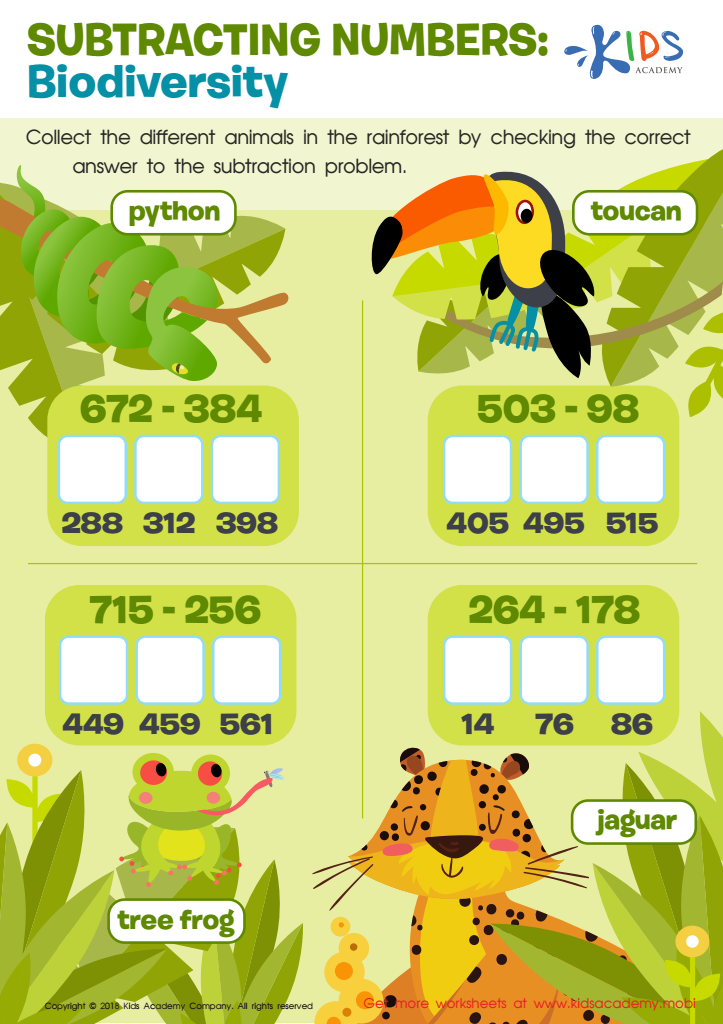
Subtracting Numbers: Biodiversity Worksheet
 Assign to My Students
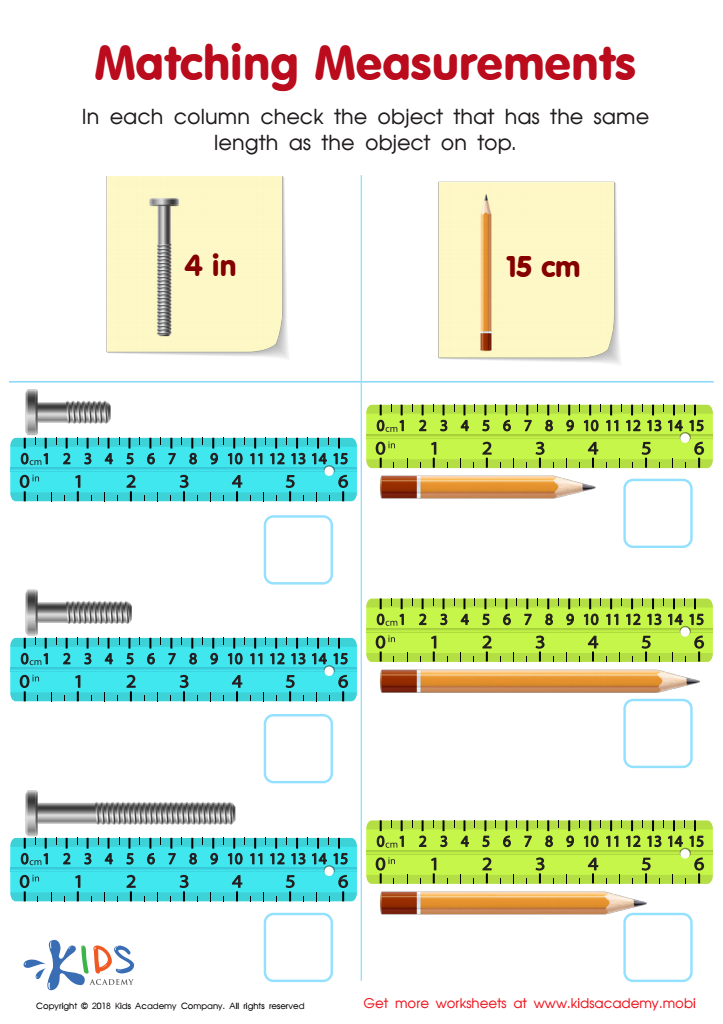
Matching Measurements Worksheet








Numeracy skills form the building blocks for a child's future academic success and real-world problem-solving abilities. For ages 4-7, these foundational skills are crucial as they enable children to comprehend and navigate their environment critically and logically. During these formative years, children's brains are highly receptive to learning new concepts, making it the ideal time to introduce basic numeracy skills such as counting, addition, subtraction, and pattern recognition.
Parents and teachers should prioritize improving numeracy skills to foster children's confidence in math-related subjects. This confidence can carry them through more complex math concepts encountered in later grades. Children proficient in early numeracy skills are more likely to excel in both STEM subjects and everyday financial literacy. Furthermore, these skills help cultivate logical thinking and problem-solving abilities that are valuable across all areas of life.
By investing in the development of early numeracy skills, parents and teachers provide children with the tools they need for academic success and practical decision-making. Structured learning combined with playful and interactive methods can make numeracy fun and engaging, motivating children to explore and appreciate mathematics. Consequently, focusing on numeracy from an early age sets a strong foundation for lifelong learning and intellectual curiosity.








