
Interpreting information Worksheets for Ages 4-7
3 filtered results
Difficulty Level
Grade
Age
-
From - To
Subject
Activity
Standards
Discover a world of fun and learning with our Interpreting Information Worksheets for ages 4-7 at Kid’s Academy! These engaging, expertly designed worksheets help young learners develop essential comprehension skills through exciting activities. Perfect for early readers, each worksheet challenges kids to interpret images, sequences, and basic text, fostering critical thinking and problem-solving abilities. With colorful illustrations and age-appropriate content, our worksheets make learning enjoyable and effective. Boost your child's confidence and academic growth by integrating these valuable resources into their daily learning routine. Visit Kid’s Academy to explore our full collection and watch your little ones thrive!
Favorites
With answer key
Interactive
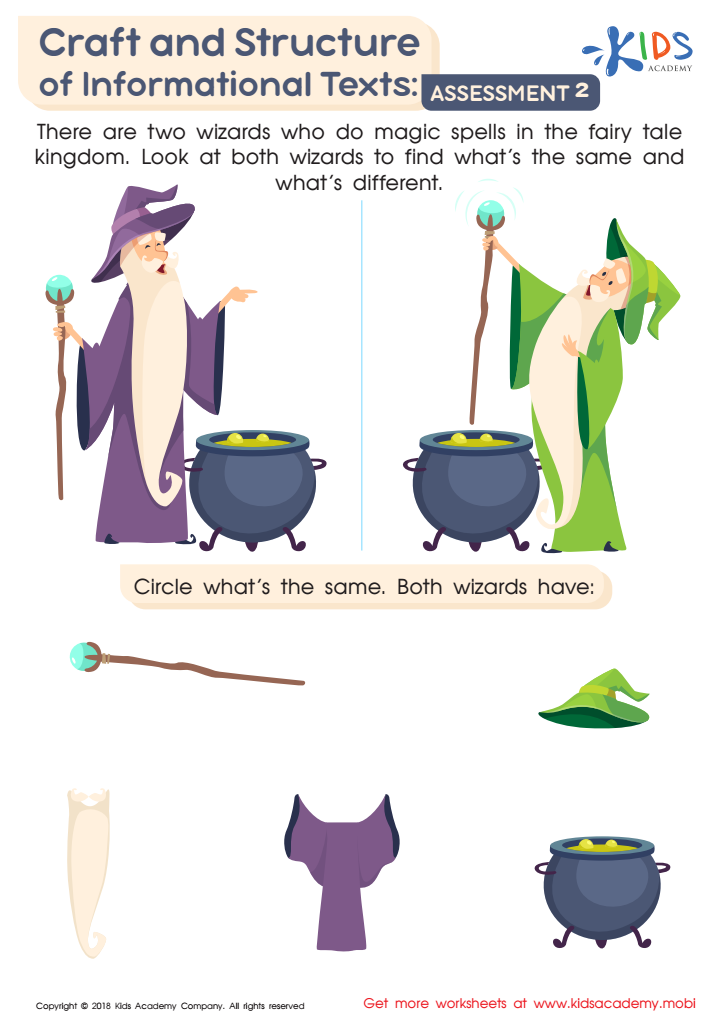
Craft and Structure of Informational Texts: Assessment 2 Worksheet
This assessment has kids looking at two similar fairy tale wizards, focusing on their visuals to find the similarities and differences. Then, they'll circle the things they both have. It's a great way to help children hone their detail-oriented comprehension skills, which is essential when using informational texts.
 Assign to My Students
Craft and Structure of Informational Texts: Assessment 2 Worksheet
Worksheet
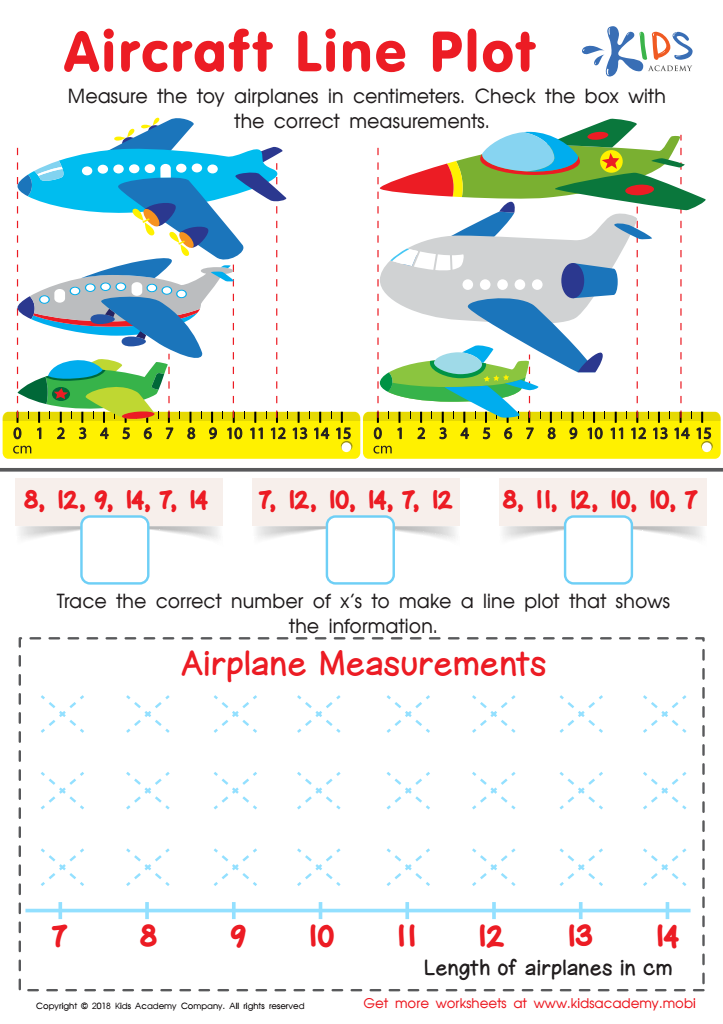
Aircraft Line Plot Worksheet
If your kids are aviation enthusiasts, they'll love this worksheet! Look at the picture with them, then ask them to measure the toy planes in cm. Check the box with the right measurements and then trace the x's to make a line plot with the data.
Aircraft Line Plot Worksheet
Worksheet
Join Kids Academy for Free
Who is primarily going to use this learning content?








Interpreting information for children ages 4-7 is crucial as this is a foundational period in their cognitive and social development. At this age, children are like sponges, absorbing information at a rapid rate, but they also require guidance to understand and process this influx accurately. Ensuring clear interpretation helps them build essential literacy and numeracy skills, which are the building blocks for future educational success.
Moreover, accurate interpretation of information fosters critical thinking and problem-solving abilities. When children are guided to understand what they observe, read, or hear, they learn not just to accept information passively but to question, analyze, and make informed decisions. This initial learning phase lays the groundwork for academic achievement and practical life skills.
Careful interpretation also helps in nurturing emotional intelligence. Young children often struggle with understanding complex feelings and social cues. Parents and teachers can help clarify these aspects, aiding children in developing empathy, cooperation, and better social interactions.
Supporting accurate information processing further bolsters their confidence and sense of security. When children understand their environment and the information presented to them, they feel more competent and empowered. In this way, educators and parents play a pivotal role in shaping a well-rounded, informed, and confident future generation.








