Musical instruments recognition Worksheets for Ages 4-7
3 filtered results
-
From - To
Discover our engaging Musical Instruments Recognition Worksheets designed for children ages 4-7. These fun and interactive activities help young learners identify various musical instruments while enhancing their fine motor skills and cognitive development. Featuring colorful illustrations and easy-to-follow instructions, our worksheets encourage exploration and creativity. Children will enjoy matching instruments with their sounds, drawing their favorite instruments, and completing exciting puzzles. Perfect for both classroom settings and at-home learning, these worksheets provide a foundational understanding of music and improve recognition skills. Inspire your child’s love for music today with our thoughtfully crafted worksheets that make learning enjoyable and effective!
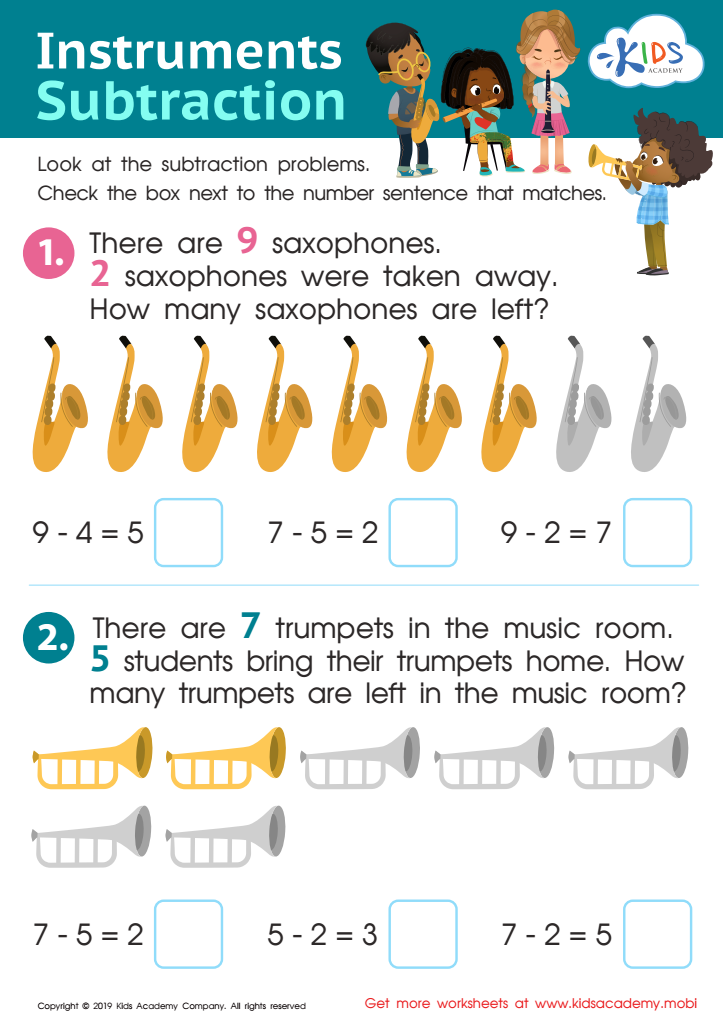
Instrument Subtraction Worksheet
 Assign to My Students
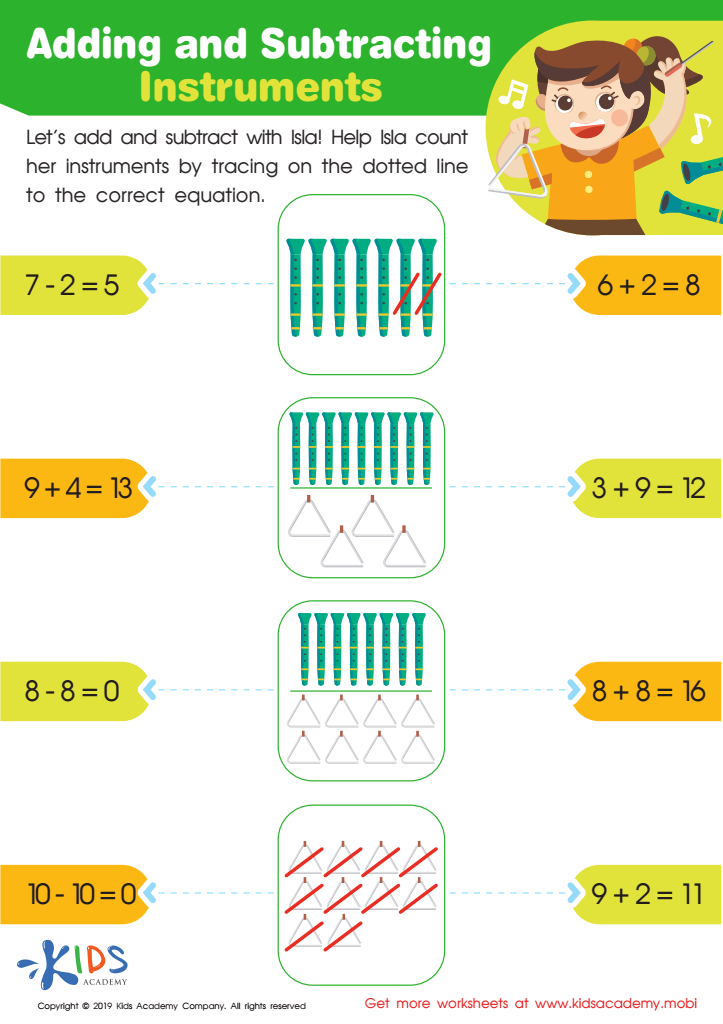
Adding and Subtracting: Instruments Worksheet
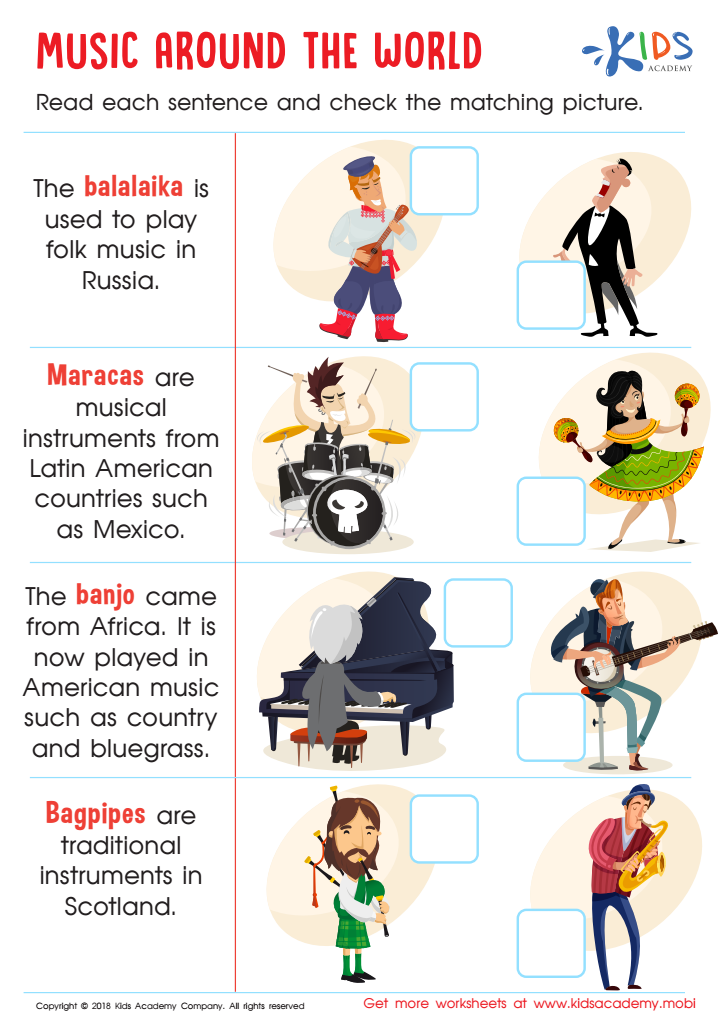
Music Around the World Worksheet








Musical instrument recognition is essential for children aged 4-7, as it significantly enriches their overall development. Introducing young learners to different musical instruments fosters a variety of cognitive skills, including auditory discrimination and memory. By recognizing instruments, children enhance their listening abilities, allowing them to distinguish between varied sounds and rhythms, which can improve their language development and literacy skills.
Additionally, understanding musical instruments helps cultivate creativity and self-expression. Engaging with music encourages children to experiment and explore emotions, nurturing their artistic talents. This early exposure can lead to a lifelong appreciation for music, improving their future social interactions and boosting their confidence.
Music also promotes fine motor skills through play; handling instruments boosts hand-eye coordination and dexterity. Group activities related to instrument recognition, such as ensemble play, foster social skills, teamwork, and respect for others.
Moreover, music education can provide a strong foundation for STEM learning, as children often encounter patterns and mathematical concepts intrinsic to musical composition.
In conclusion, investing in musical instrument recognition during early childhood lays critical groundwork for cognitive, emotional, and social development, making it an invaluable aspect of learning for parents and teachers alike.








