Number formation Worksheets for Ages 4-7
3 filtered results
-
From - To
Introducing our "Number Formation Worksheets for Ages 4-7" – the perfect resource to help young learners master the basics of writing numbers! Designed for children in early grades, these engaging worksheets make learning fun and effective. Packed with colorful illustrations and guided tracing activities, they help kids develop fine motor skills and number recognition. Each worksheet is structured to promote confidence and accuracy in number formation, laying a strong foundation for future math success. Ideal for both classroom and home use, these worksheets are a valuable tool for parents and teachers looking to support their kids in playful numerical learning.
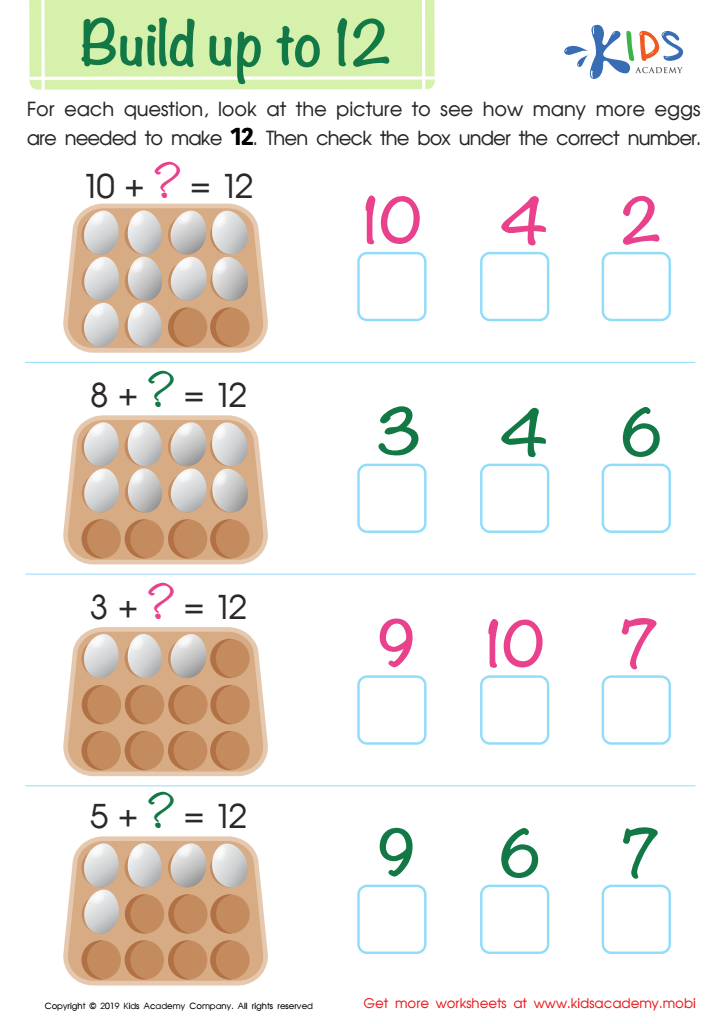
Build up to 12 Worksheet
 Assign to My Students
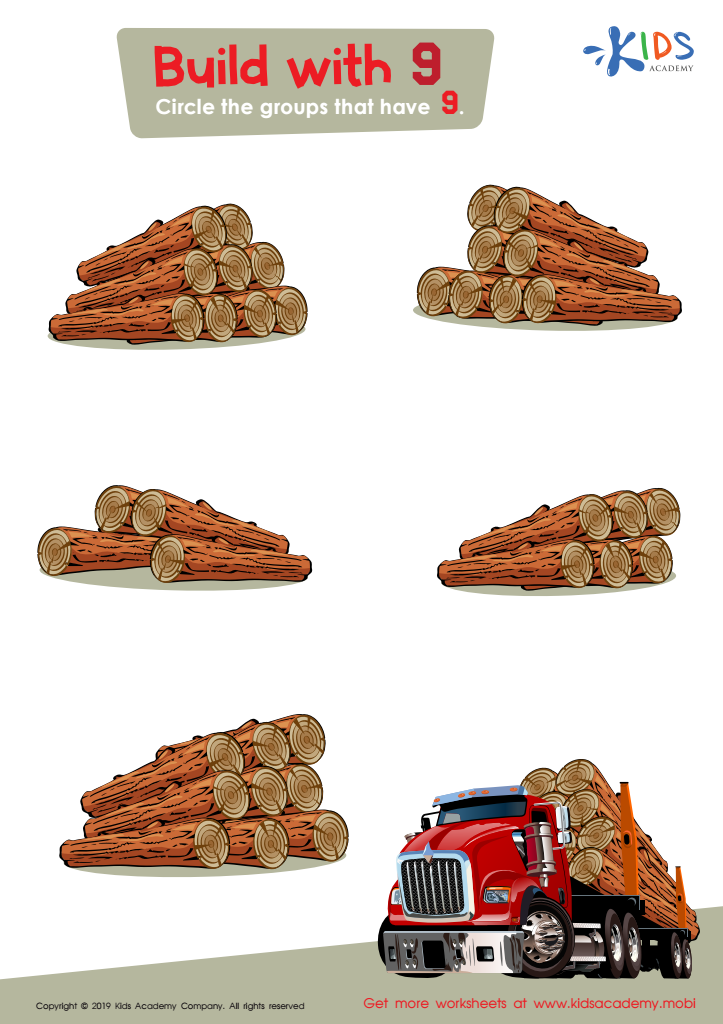
Build with 9 Worksheet








Number formation is a crucial foundational skill for children aged 4-7, and parents or teachers should prioritize its development for several reasons. First, correctly forming numbers enhances fine motor skills, which are essential for writing and other tasks requiring hand-eye coordination. Early proficiency in number formation sets the stage for legible handwriting, helping children express their thoughts clearly and confidently on paper.
When children learn to form numbers correctly, they also reinforce their understanding of numerical concepts. Clear and consistent number formation helps them distinguish between different numbers, improving their ability to identify and perform basic arithmetic operations such as addition and subtraction. This foundational skill supports overall math literacy, making advanced mathematical concepts easier to grasp as they progress in their education.
Moreover, proper number formation fosters a sense of accomplishment and boosts self-confidence in young learners. When children feel competent and capable, they are more likely to engage positively with learning experiences, promoting a lifelong love of learning. Teachers and parents can support this development through fun and engaging activities, positive reinforcement, and consistent practice, ultimately ensuring that children have the skills and confidence needed for academic success.








