
Phonetic awareness Worksheets for Ages 4-7
3 filtered results
Difficulty Level
Grade
Age
-
From - To
Subject
Activity
Standards
Our Phonetic Awareness Worksheets for ages 4-7 are expertly designed to bolster early reading skills in young learners. With engaging and interactive activities, these worksheets help children recognize sounds, decode words, and improve pronunciation. The exercises not only make learning fun but also nurture confidence and provide a solid foundation for fluent reading. Ideal for parents and educators, these tools are tailored to meet the developmental needs of preschool and early elementary school children. Each worksheet is crafted to turn phonetic practice into an enjoyable and educational experience, setting kids on the path to literacy success.
Favorites
With answer key
Interactive
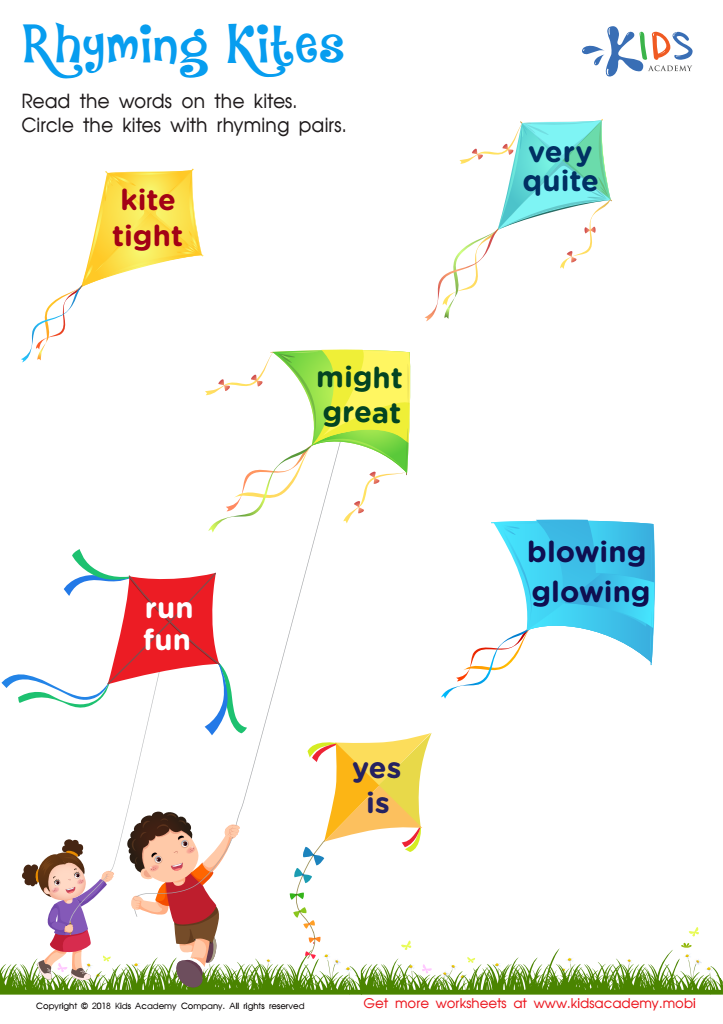
Rhyming Kites Worksheet
On a spring day, fly a kite! Kids Academy has a rhyming worksheet to boost your child's skills. Read the pairs of words aloud. Circle the kites if they rhyme, leave them blank if they don't. Listen carefully and find all the rhyming word pairs to complete this sheet!
 Assign to My Students
Rhyming Kites Worksheet
Worksheet
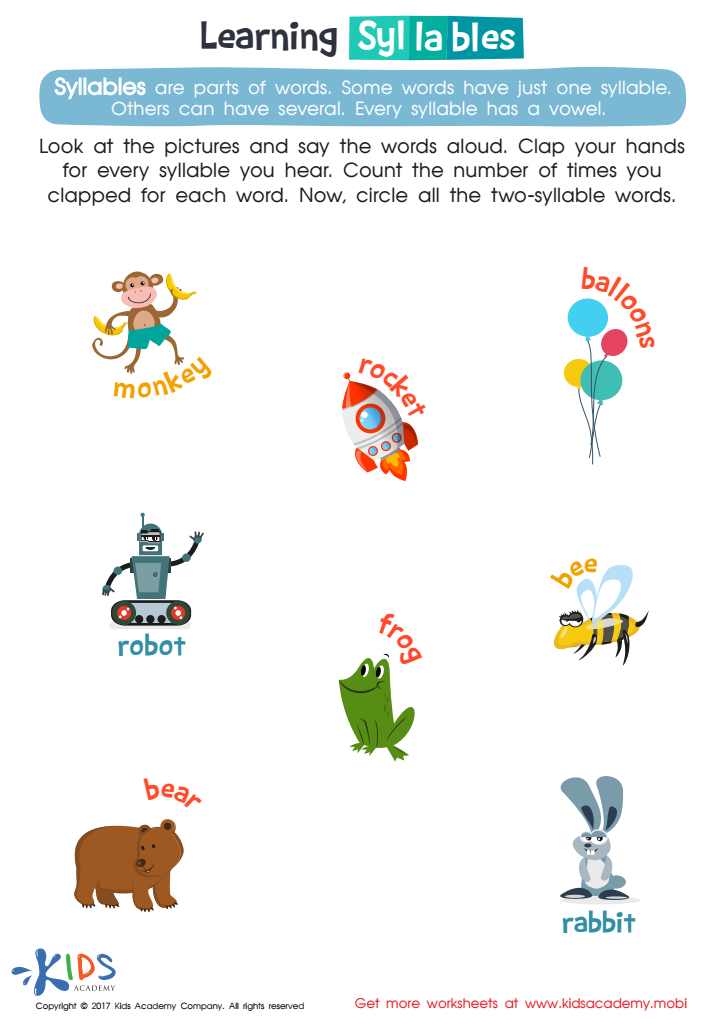
Learning Syllables Word Structure Worksheet
Teach kids to read and spell with our fun Learning Syllables worksheet. Kids will have a blast clapping and saying familiar words while counting syllables. Colorful and catchy, it's a great way to make learning enjoyable!
Learning Syllables Word Structure Worksheet
Worksheet
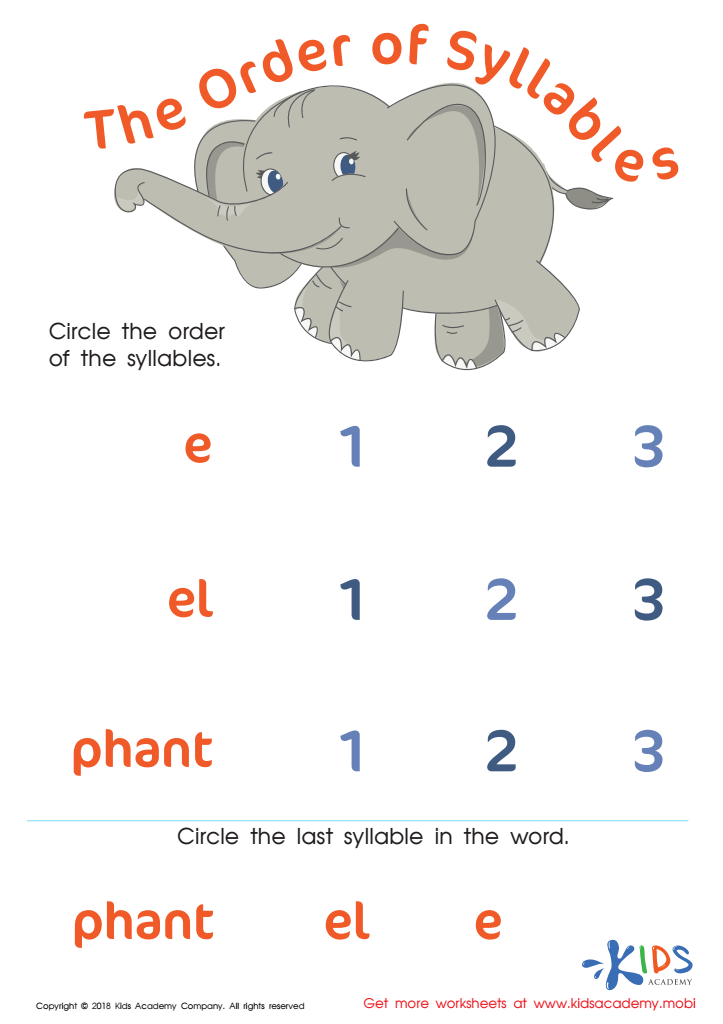
The Order of Syllables Worksheet
Syllabication is vital for prereading and decoding words. Download this fun, free worksheet to help your reader practice breaking words into syllables and arranging them for reading. It also strengthens fine motor skills as they trace the numbers for each syllable, guided by a cheerful elephant!
The Order of Syllables Worksheet
Worksheet
Join Kids Academy for Free
Who is primarily going to use this learning content?








Phonemic awareness is a critical skill for young learners, particularly between ages 4 to 7, as it forms the foundation for reading and spelling proficiency. Phonemic awareness refers to the ability to hear, identify, and manipulate the individual sounds, or phonemes, in spoken words. Here's why parents and teachers need to prioritize it:
First, phonemic awareness is a precursor to decoding, which is the ability to sound out words by correlating sounds with letters. Children with strong phonemic awareness can easily break down words into individual sounds and blend them to form words, significantly aiding in their ability to read fluently.
Second, this skill is closely linked to early reading success. Research shows that children who struggle with phonemic awareness often face difficulties learning to read. These early struggles can lead to ongoing academic challenges and diminished self-esteem.
Moreover, phonemic awareness boosts vocabulary and comprehension. Children who can hear and play with sounds develop a more extensive vocabulary, enhancing their ability to understand and utilize new words in context.
Lastly, engaging in phonemic awareness activities, such as rhyming games or segmenting sounds, can be fun and interactive, making learning a delightful experience for young children. By focusing on phonemic awareness, parents and teachers can lay a robust reading foundation, fostering a lifelong love for learning and literacy.








