
Phonics improvement Worksheets for Ages 4-7
6 filtered results
Difficulty Level
Grade
Age
-
From - To
Subject
Activity
Standards
Enhance your child's reading skills with our Phonics Improvement Worksheets designed specifically for ages 4-7. These engaging and interactive resources help young learners master the foundational sounds of language through fun activities. Each worksheet is tailored to develop phonemic awareness, blending sounds, and recognizing letters, ensuring a solid start in reading. With colorful illustrations and age-appropriate exercises, children will enjoy practicing essential phonics skills while building confidence. Perfect for home or classroom use, these worksheets promote early literacy and foster a love for reading. Explore our collection today to give your child the best phonics learning experience!
Favorites
With answer key
Interactive
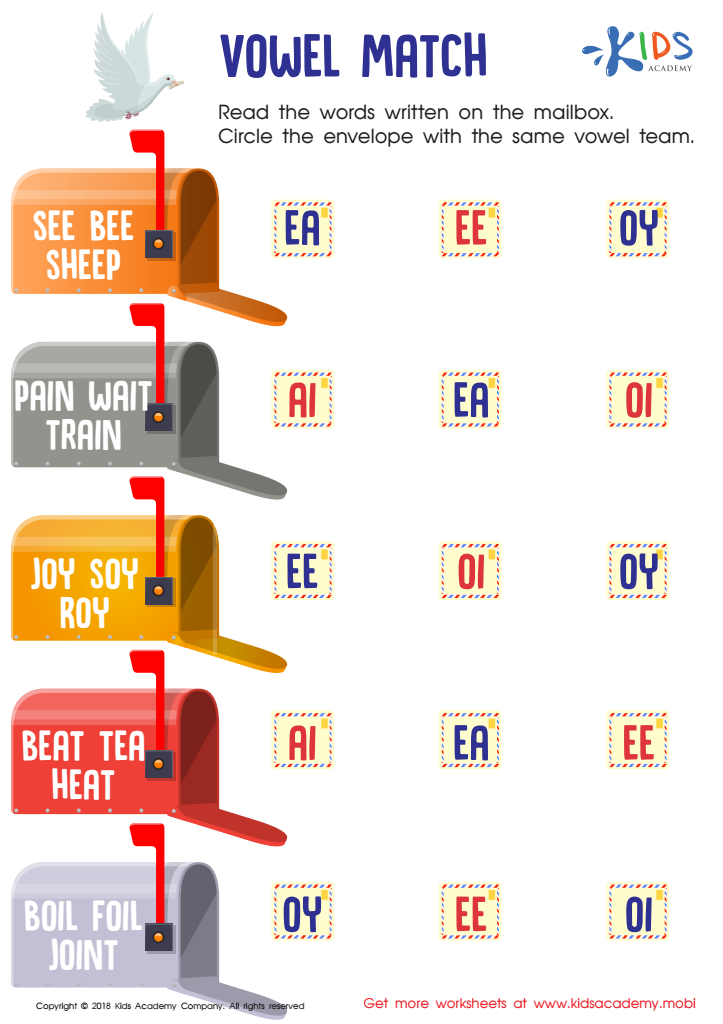
Vowel match Worksheet
Early readers can find vowel teams (digraphs) tricky. This simple worksheet helps kids match words with the right digraphs and learn to read! They'll practice reading words from different families, and linking the letters to their sounds. It's a fun way to get kids sending letters to the right addresses!
 Assign to My Students
Vowel match Worksheet
Worksheet
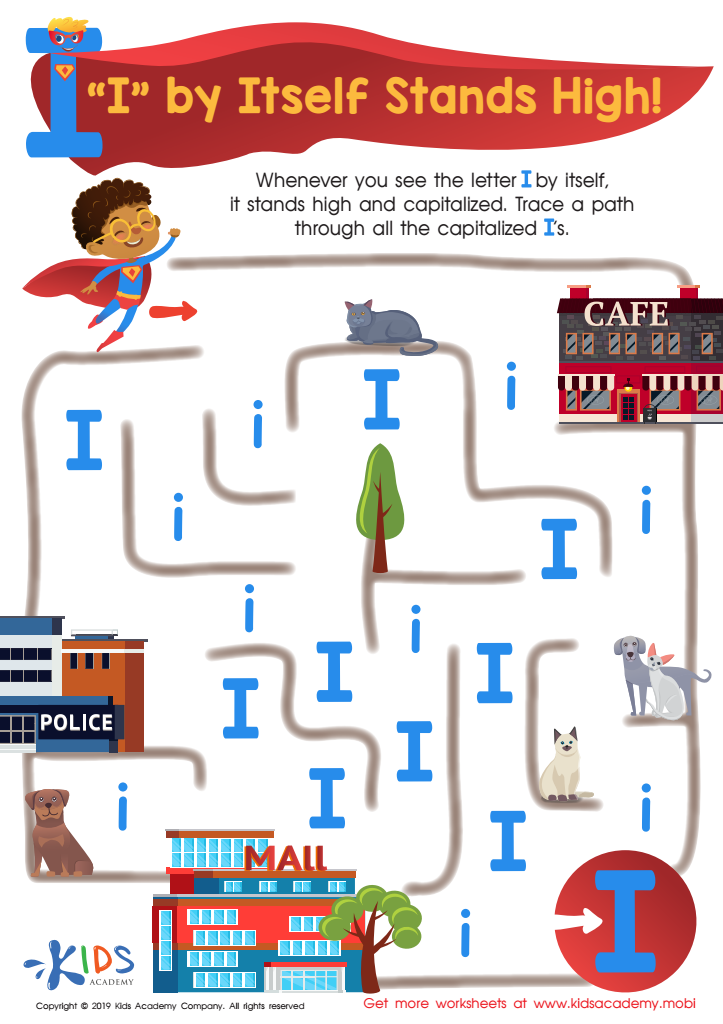
I Stands High Worksheet
Kids can use their imagination to help a superhero find the uppercase 'I's on the 'I By Itself Stands High' worksheet. This helps children learn capitalization, and they can join the superhero in flying over a city of cats, dogs and buildings to locate the needed letters.
I Stands High Worksheet
Worksheet
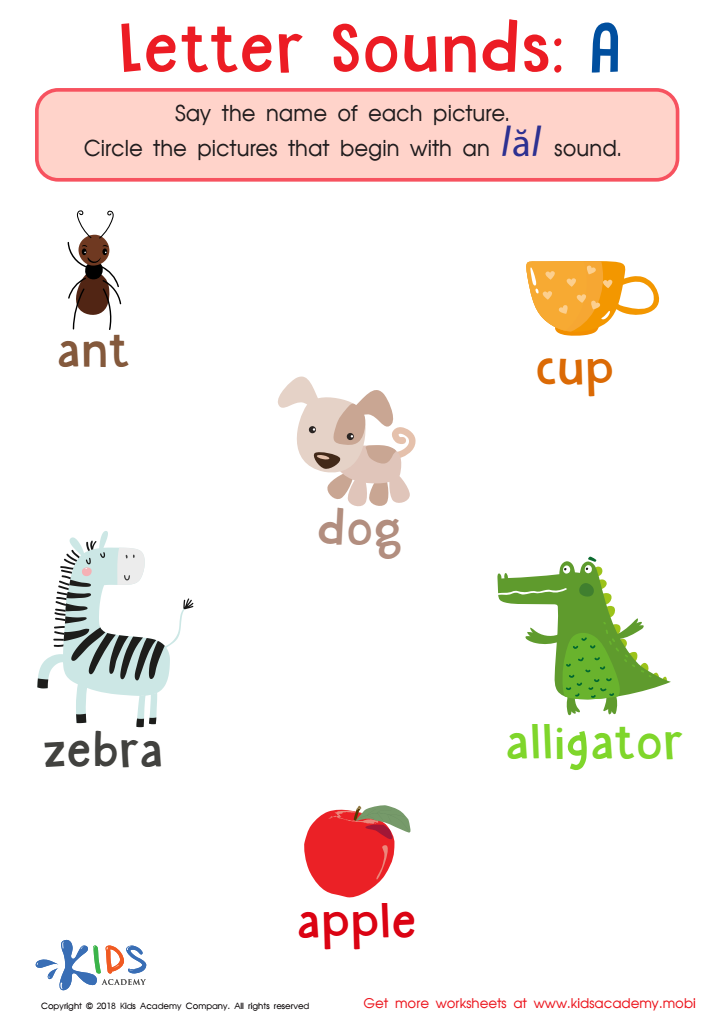
Letter A Sounds Worksheet
Encourage your new reader to practice the «ă» sound with this fun, free PDF worksheet. With the help of picture clues, they'll say the name of each word and trace circles around the items that start with «ă». This worksheet is an effective way to boost beginning sound skills while having fun!
Letter A Sounds Worksheet
Worksheet
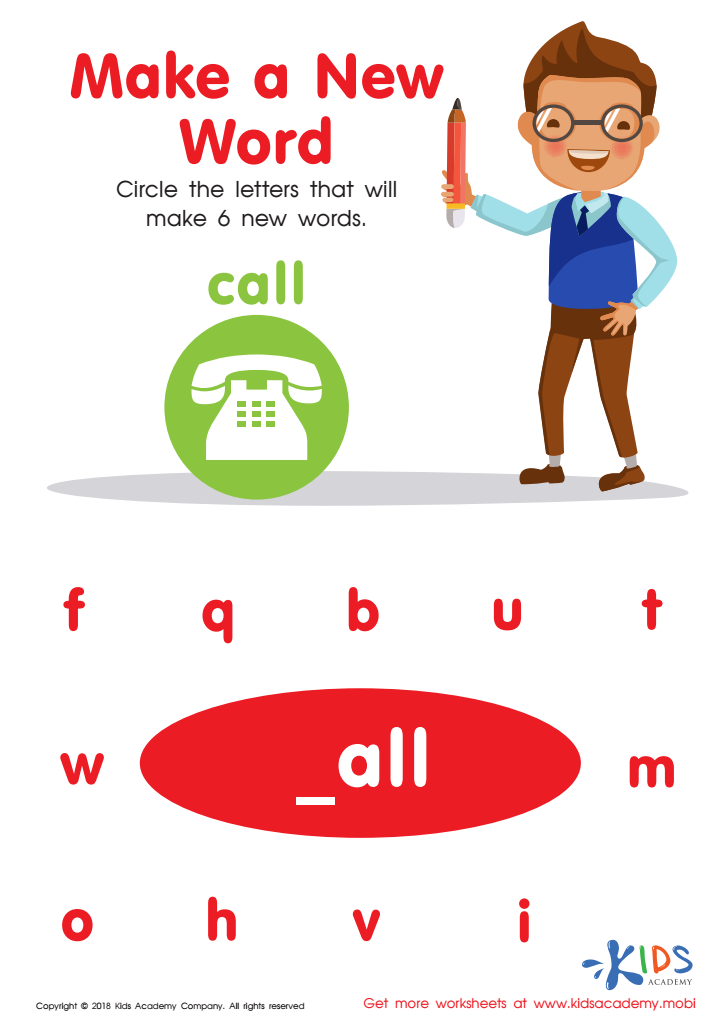
Make a New Word Worksheet
Young readers and writers can enhance their skills with this fun PDF worksheet. They'll trace letters to create new words and feel like super readers and writers after finding six words. They'll also practice building words with the "all" word family.
Make a New Word Worksheet
Worksheet
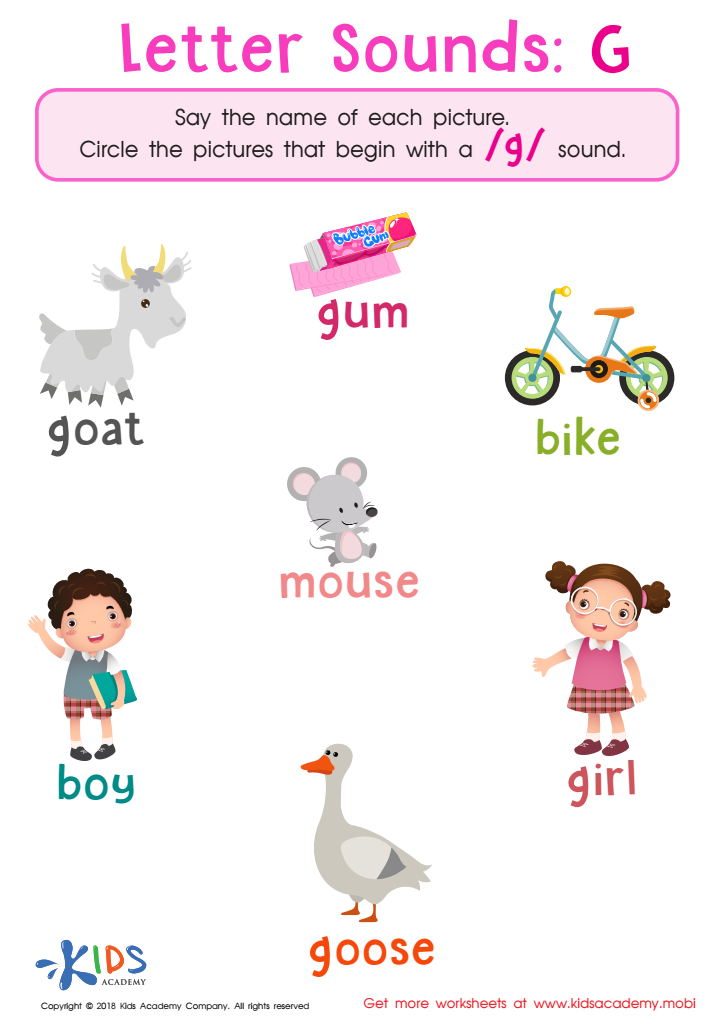
Letter G Sounds Worksheet
Help emerging readers build confidence by giving them practice identifying hard "G" with this free PDF worksheet. They'll use picture clues to name the words, and practice fine-motor skills tracing circles around the corresponding pics. It's a great way to introduce or reinforce hard "G" words.
Letter G Sounds Worksheet
Worksheet
Join Kids Academy for Free
Who is primarily going to use this learning content?





Phonics improvement for children ages 4-7 is crucial because it lays the foundational skills necessary for reading success. As students learn to recognize the relationship between sounds and their corresponding letters, they develop the ability to decode new words. This skill enhances their reading fluency, comprehension, and, ultimately, their love for reading.
At this developmental stage, children's brains are exceptionally primed for language acquisition, making it the perfect time to introduce phonics systematically. By focusing on phonics, teachers and parents can help children build a strong vocabulary, which is essential for effective communication and literacy. Improved phonics skills also boost children's confidence when tackling reading assignments, fostering a positive attitude toward learning.
Moreover, research shows that students who have strong phonics skills often perform better academically in various subjects, as reading is a critical component in all areas of learning. By prioritizing phonics improvement, educators and parents can ensure that children not only meet educational milestones but are also equipped with the tools they need for lifelong learning. In short, investing in phonics education for young learners is essential for their cognitive development and future academic success.








