Phonological awareness Worksheets for Ages 4-7
10 filtered results
-
From - To
Enhance your child's reading readiness with our Phonological Awareness Worksheets designed for ages 4-7! These engaging and educational printables focus on essential skills such as rhyming, syllable counting, and sound recognition. Each worksheet is crafted to make learning fun while efficiently boosting your child's listening and phonemic awareness abilities. Perfect for early learners, our collection supports the development of critical foundational skills, setting the stage for successful reading and spelling. Empower your young learner to explore sounds and words with confidence. Discover our wide variety of worksheets suitable for preschool to first-grade students today!
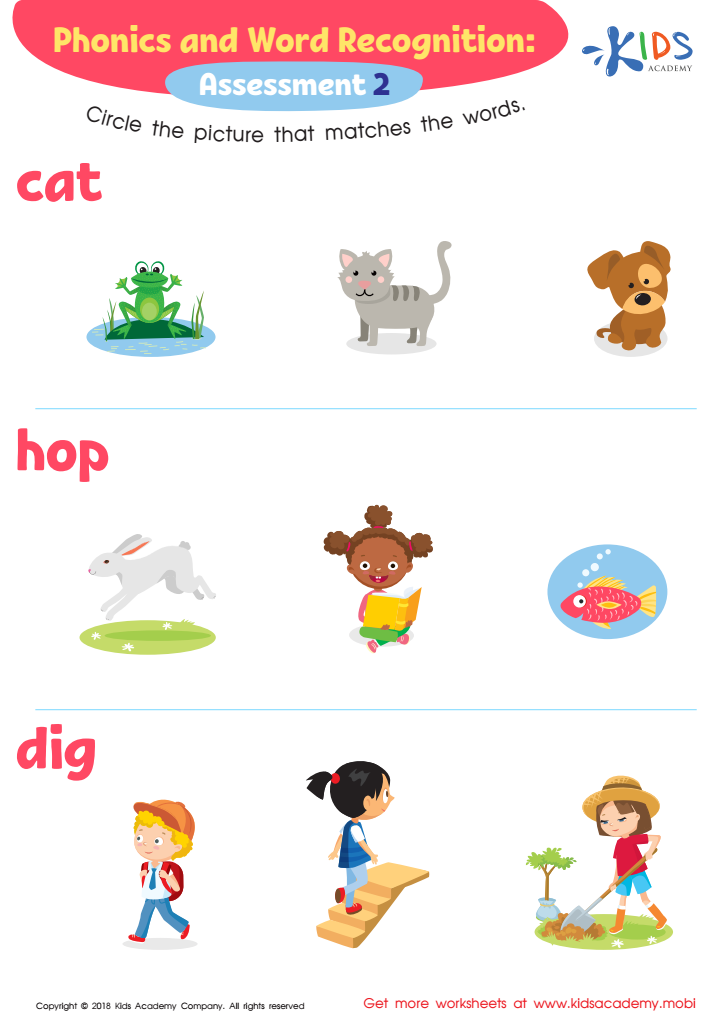
Phonological Awareness: Assessment 2 ELA Worksheet
 Assign to My Students
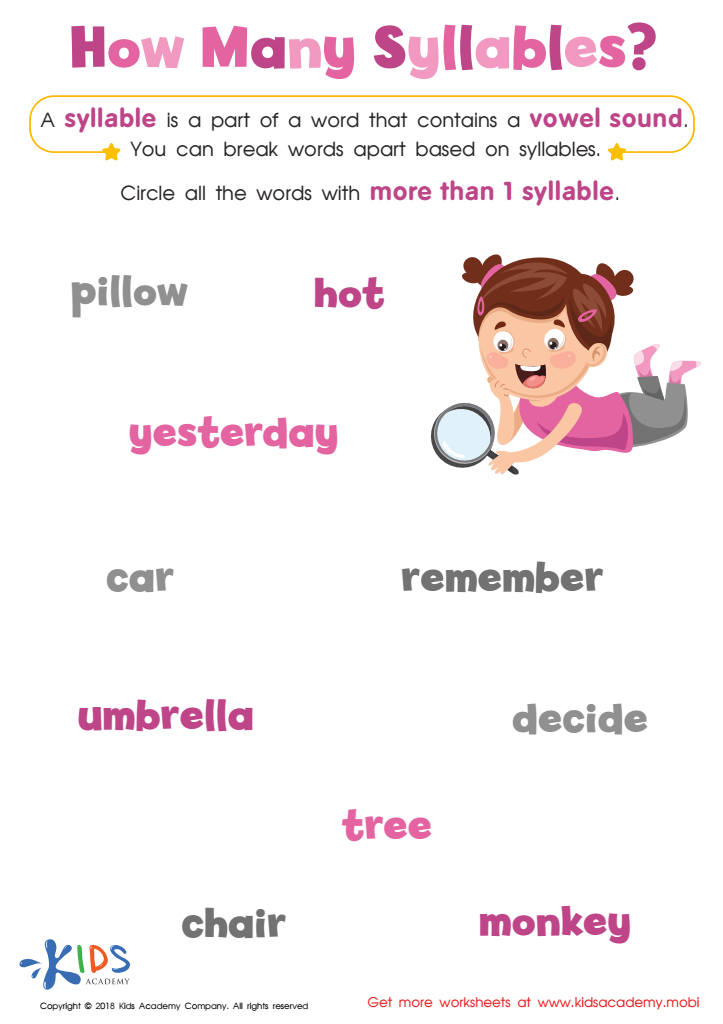
Reading: How Many Syllables Worksheet
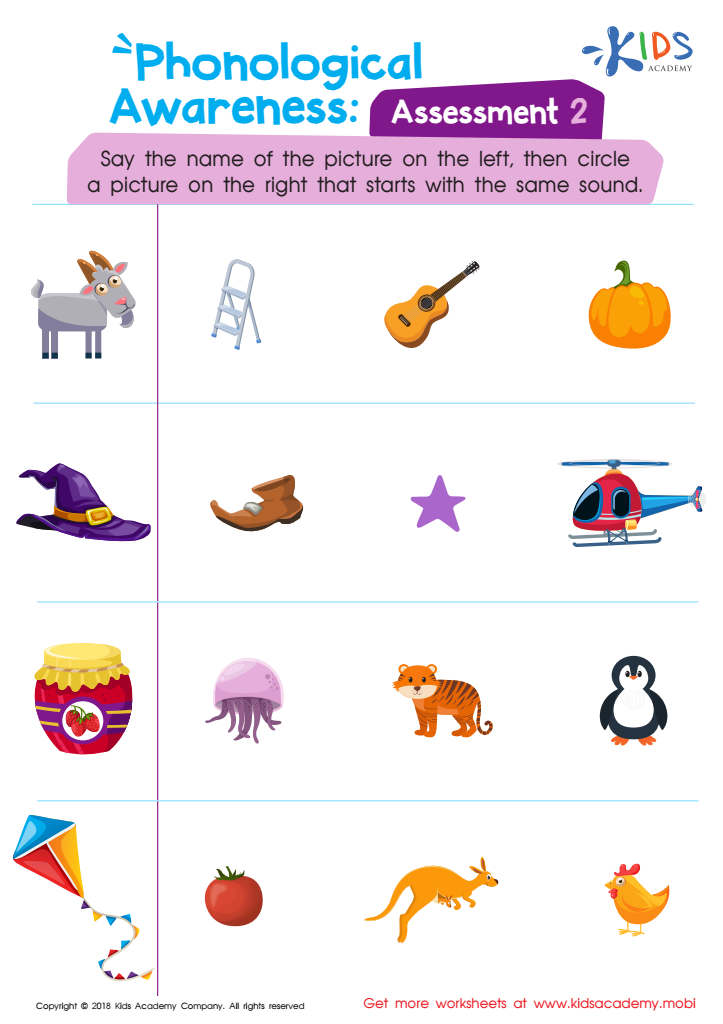
Phonological Awareness: Assessment 2 Worksheet
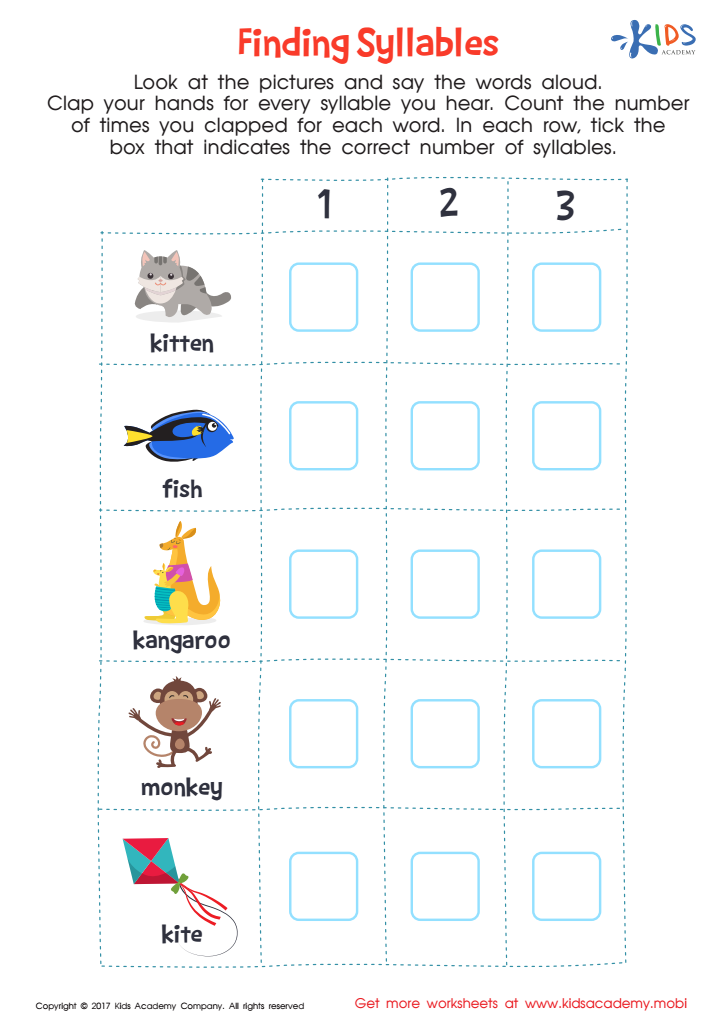
Finding Syllables Word Structure Worksheet
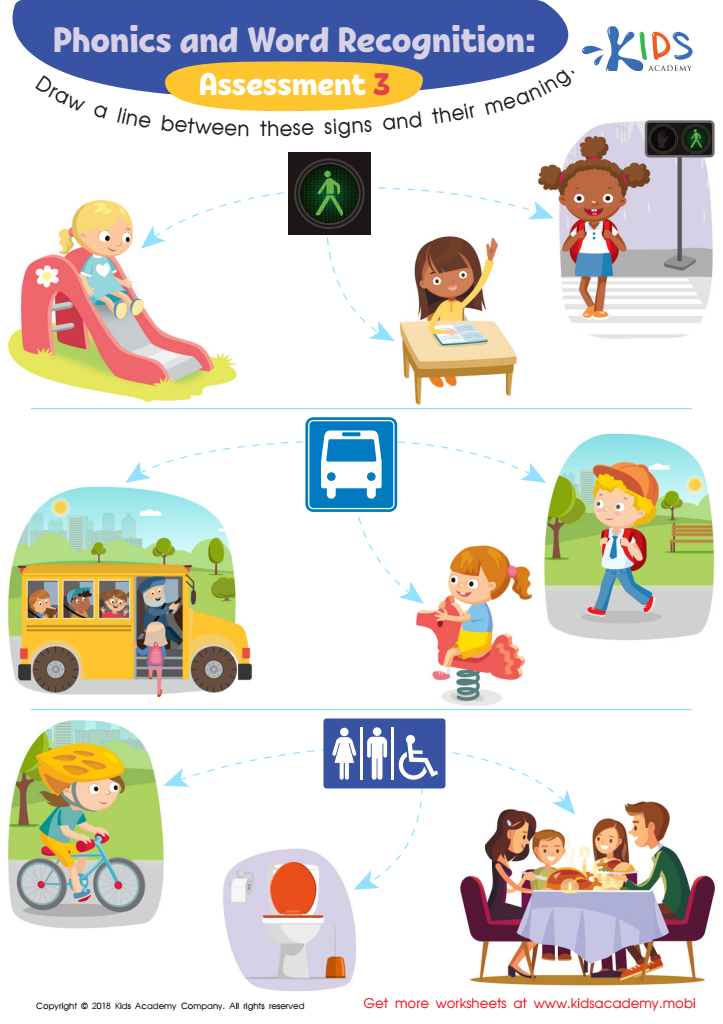
Phonological Awareness: Assessment 3 ELA Worksheet
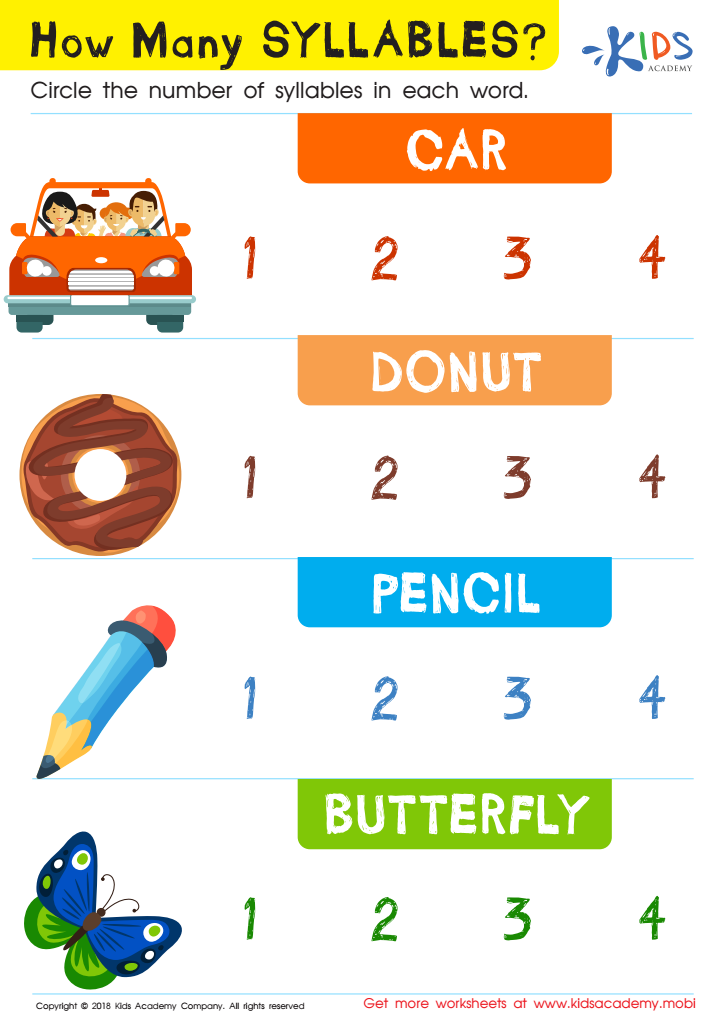
How Many Syllables? Worksheet
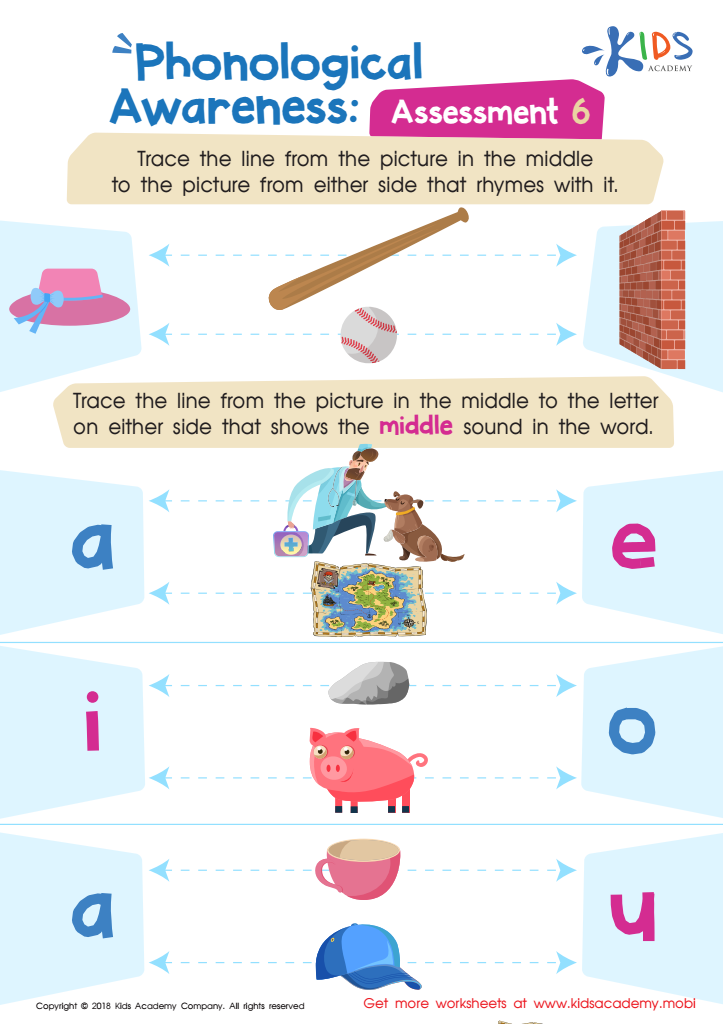
Phonological Awareness: Assessment 6 Worksheet
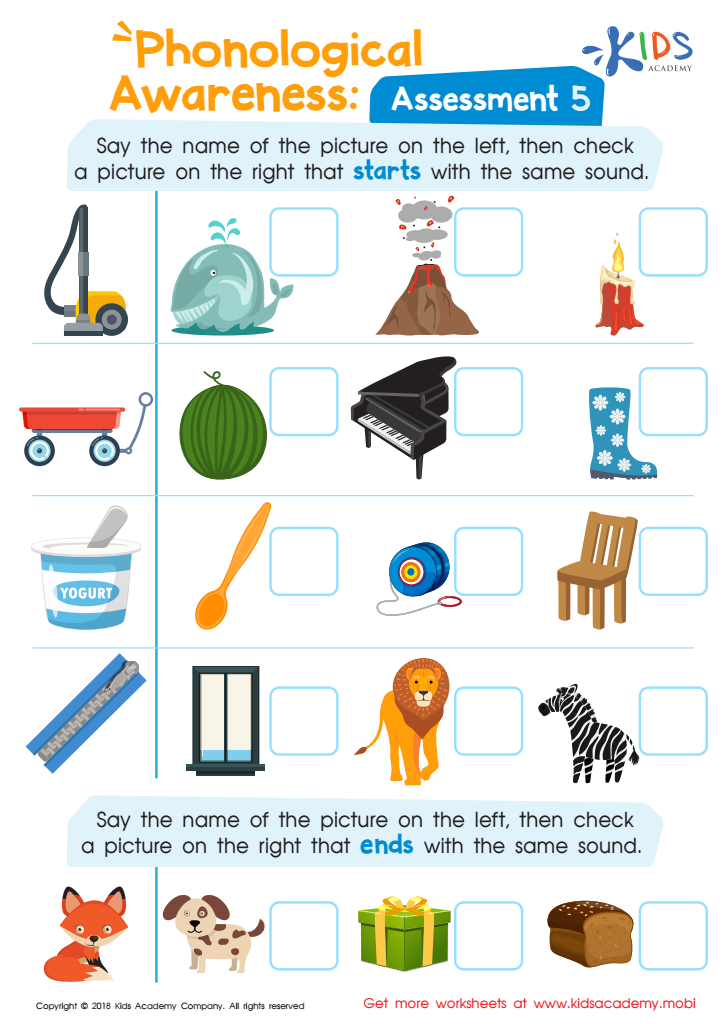
Phonological Awareness: Assessment 5 Worksheet
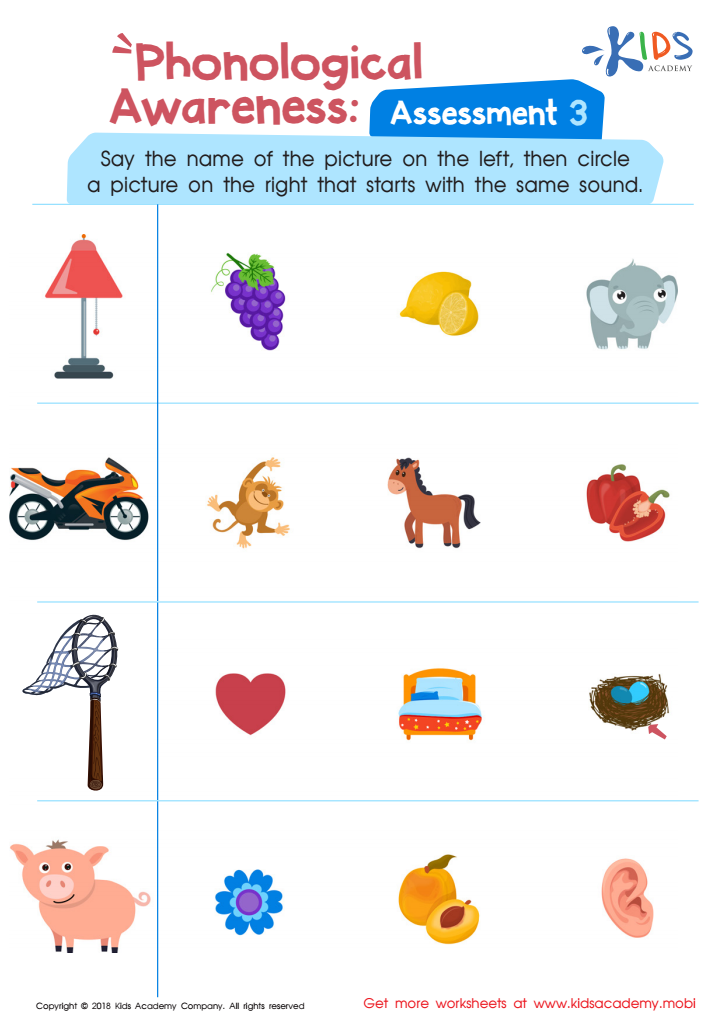
Phonological Awareness: Assessment 3 Worksheet
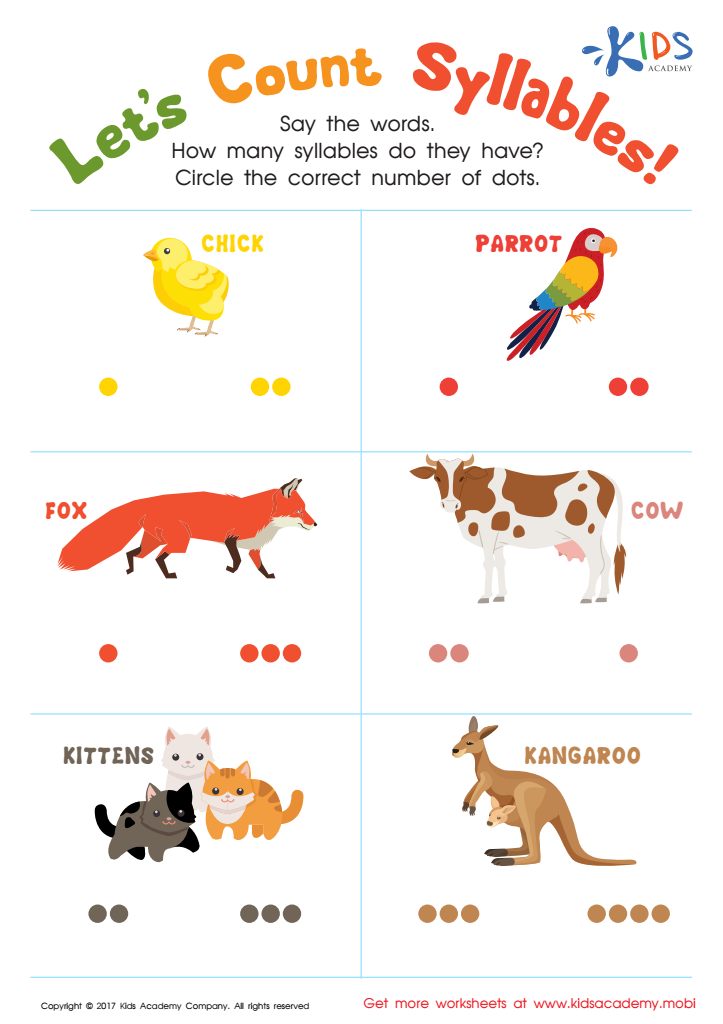
Lets Count Syllables Worksheet







Phonological awareness is essential for children ages 4-7 because it lays the foundation for successful reading and spelling skills. This critical early literacy skill includes the ability to hear, identify, and manipulate sounds in spoken words. Children who develop strong phonological awareness can recognize how words are structured, divided, and the distinct sounds that comprise them. Opportunities to engage in rhyming, segmenting, and blending activities come a long way.
Parents and teachers who prioritize phonological awareness support children’s ability to grasp the alphabetic principle, which is the understanding that letters represent sounds in spoken language. This knowledge aids children in learning to decode words—a pivotal skill for fluent reading.
When children struggle with phonological awareness, they often face challenges in attaining literacy milestones, which could lead to difficulties across various subjects where reading is integral. By cultivating this awareness early on, caregivers ensure that children build the confidence and enthusiasm necessary for a lifetime of reading and learning.
Furthermore, phonological awareness stimulates cognitive development, enhances memory, and strengthens listening skills. Engaging in fun, sound-based activities together also fosters a nurturing learning environment, boosting children’s emotional and social well-being.
In essence, supporting phonological awareness from ages 4-7 sets children on a path to academic success, confident communication, and a lifelong love of learning.








