Practice counting Worksheets for Ages 4-7
6 filtered results
-
From - To
Boost your child's math skills with our Practice Counting Worksheets for Ages 4-7! Designed for young learners, these engaging and educational worksheets help children develop fundamental counting skills through fun activities. Kids will enjoy counting objects, filling in missing numbers, and connecting dots, all while reinforcing their number recognition and understanding of basic math concepts. Perfect for early learners, our worksheets make learning playful and effective. Get ready to see your child's confidence in counting soar with our expertly crafted resources! Visit Kids Academy for free printable worksheets tailored to support your child's academic journey.
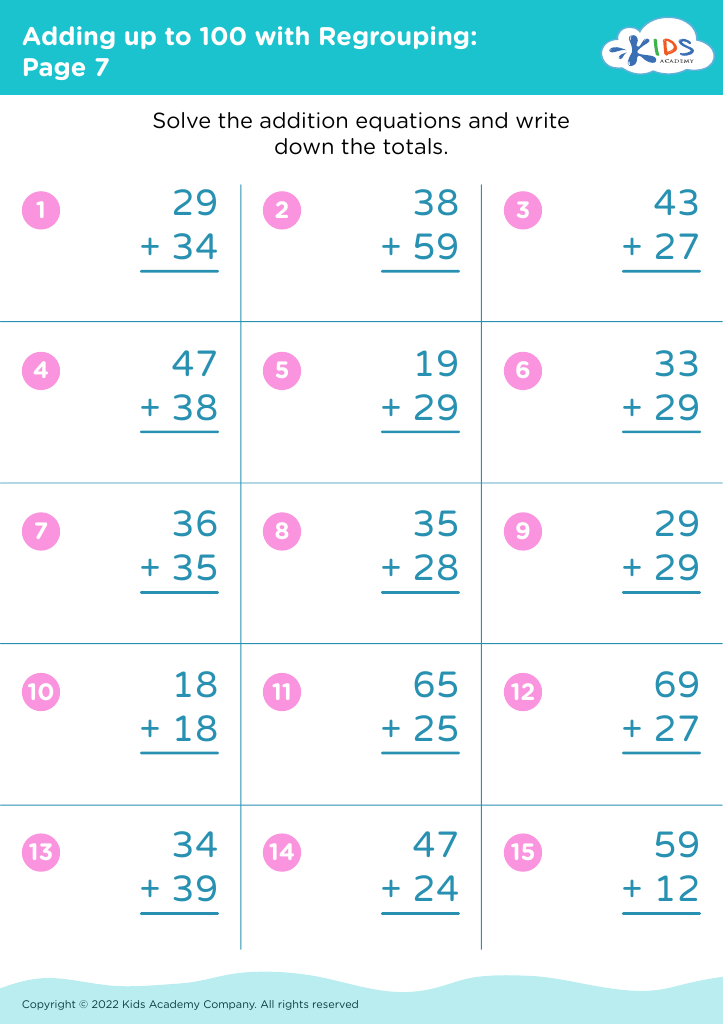
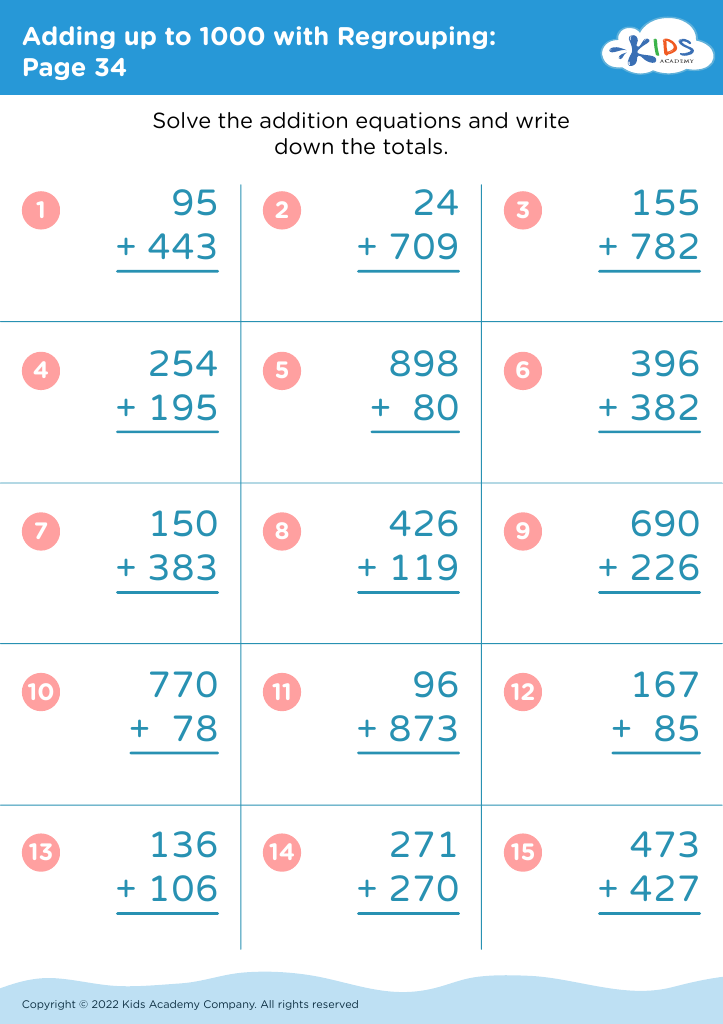
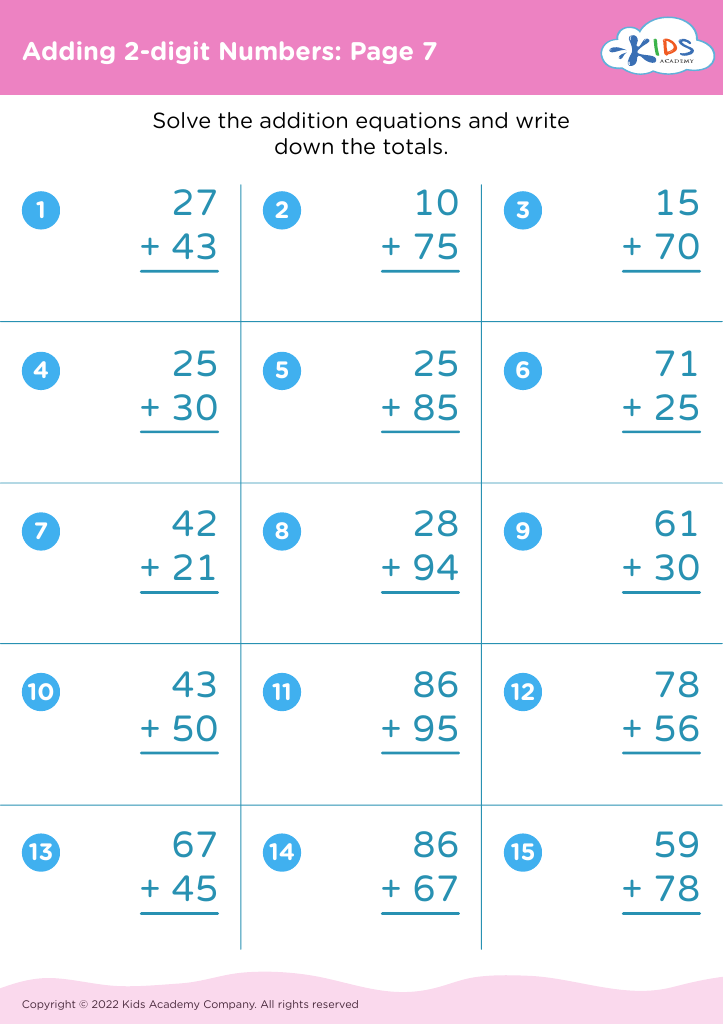
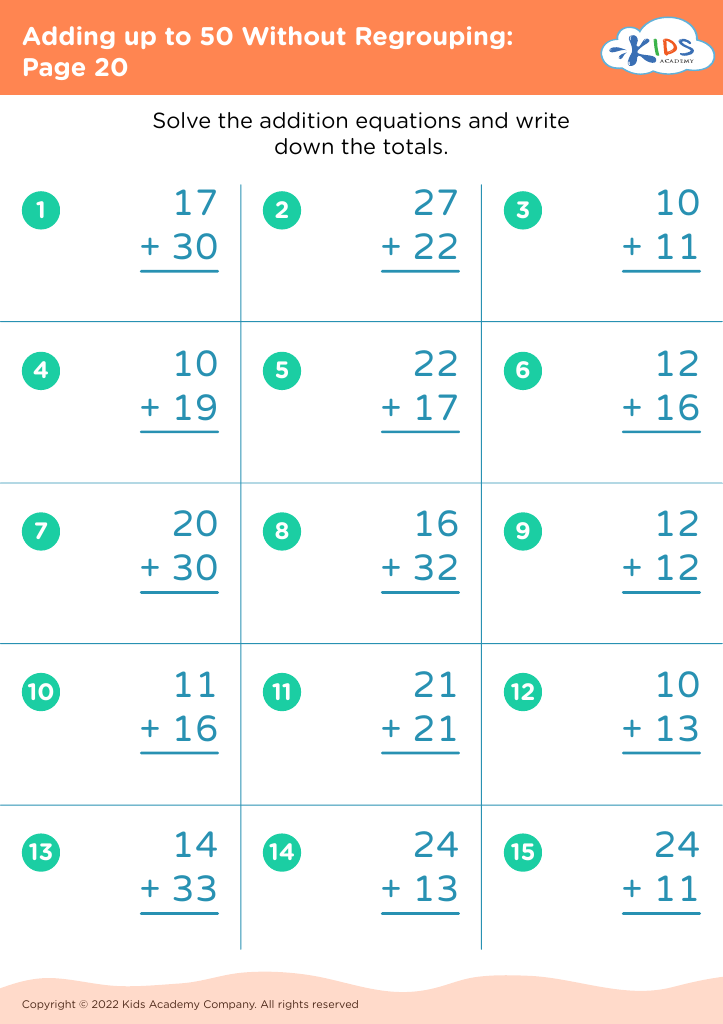
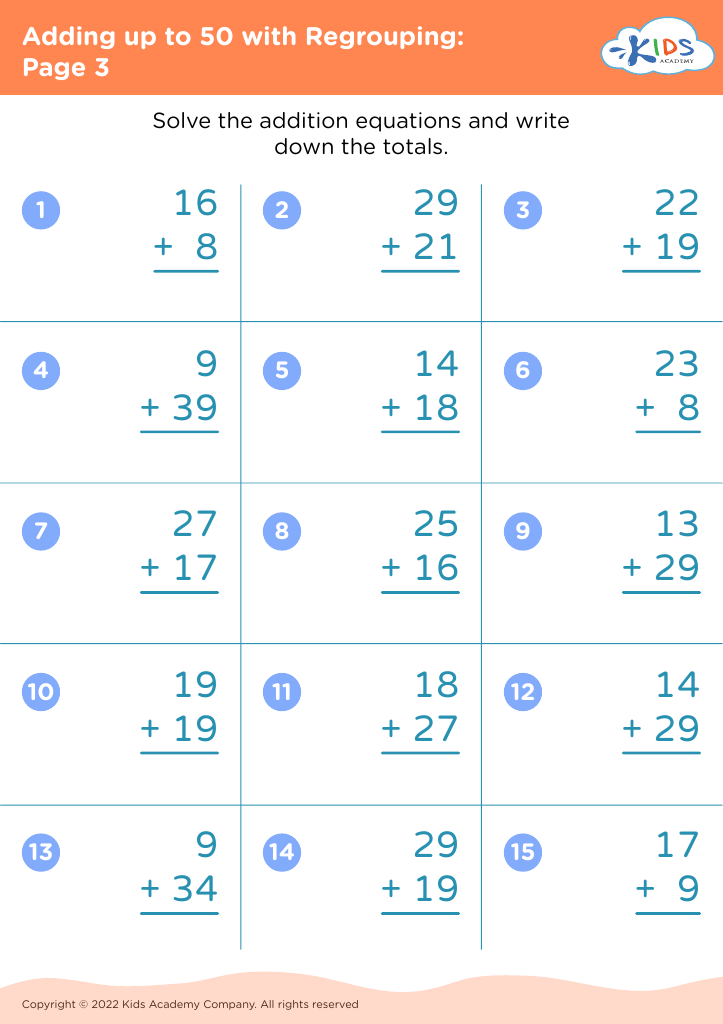
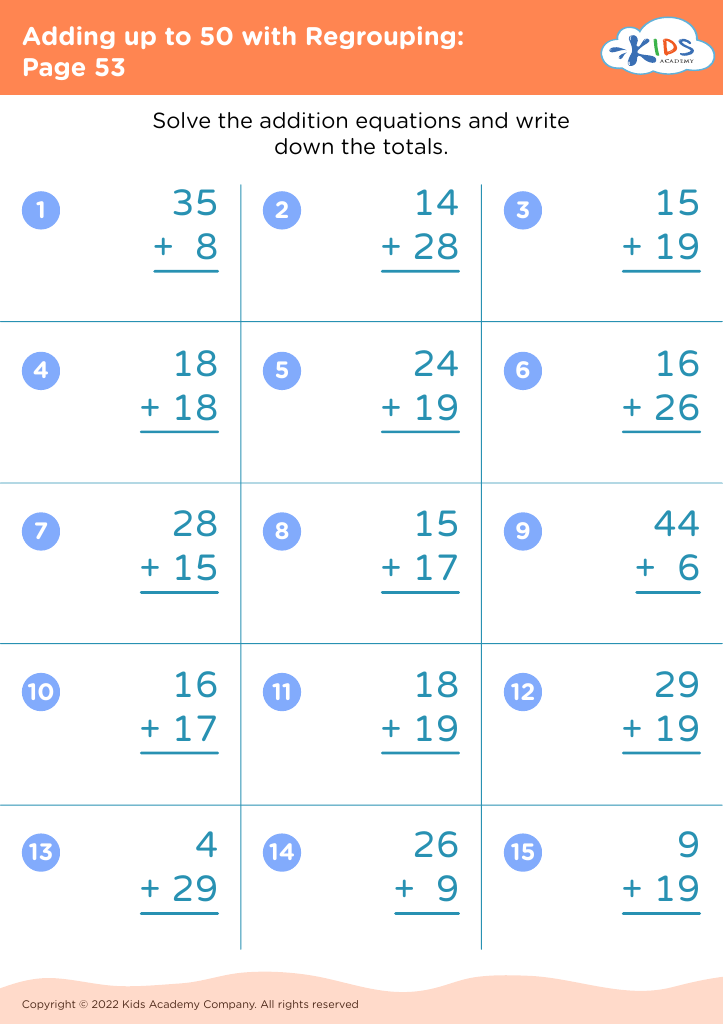







Practicing counting in the early years, specifically ages 4-7, is fundamental for a child's cognitive development and future academic success. At this age, children are in a crucial developmental phase where their brains are particularly receptive to learning basic mathematical concepts. Counting helps build a strong foundation for their number sense, which encompasses understanding numbers, their relationships, and how they operate.
For parents and teachers, incorporating counting into daily activities fosters logical reasoning and problem-solving skills, which are essential beyond mathematics. Early practice in counting also promotes fine motor skills through activities such as counting objects, using fingers, or tracing numbers. This, in turn, aids hand-eye coordination.
Moreover, positive early experiences with counting can build a child’s confidence and create an association of fun and curiosity with learning math. This can minimize math anxiety, a common barrier to mathematical proficiency as they grow older. Regular practice of counting, whether through games, songs, or everyday interactions, supports the child’s ability to grasp more complex math problems later on, thus providing them with tools for academic success across various subjects. Importantly, a child propelled by a supportive environment that values these foundational skills is more likely to enjoy and excel in their educational journey.








