
Punctuation understanding Worksheets for Ages 4-7
5 filtered results
Difficulty Level
Grade
Age
-
From - To
Subject
Activity
Standards
Explore our engaging punctuation understanding worksheets designed specifically for children ages 4-7! These fun and interactive resources help young learners grasp the basics of punctuation, such as periods, commas, question marks, and exclamation points. Each worksheet features vibrant illustrations and age-appropriate activities, making learning enjoyable and effective. Our materials focus on developing essential writing skills, promoting comprehension, and encouraging creativity through playful exercises. Whether at home or in the classroom, these worksheets are perfect for reinforcing punctuation knowledge while fostering a love for language. Start your child's punctuation journey today and watch their confidence soar as they learn!
Favorites
With answer key
Interactive
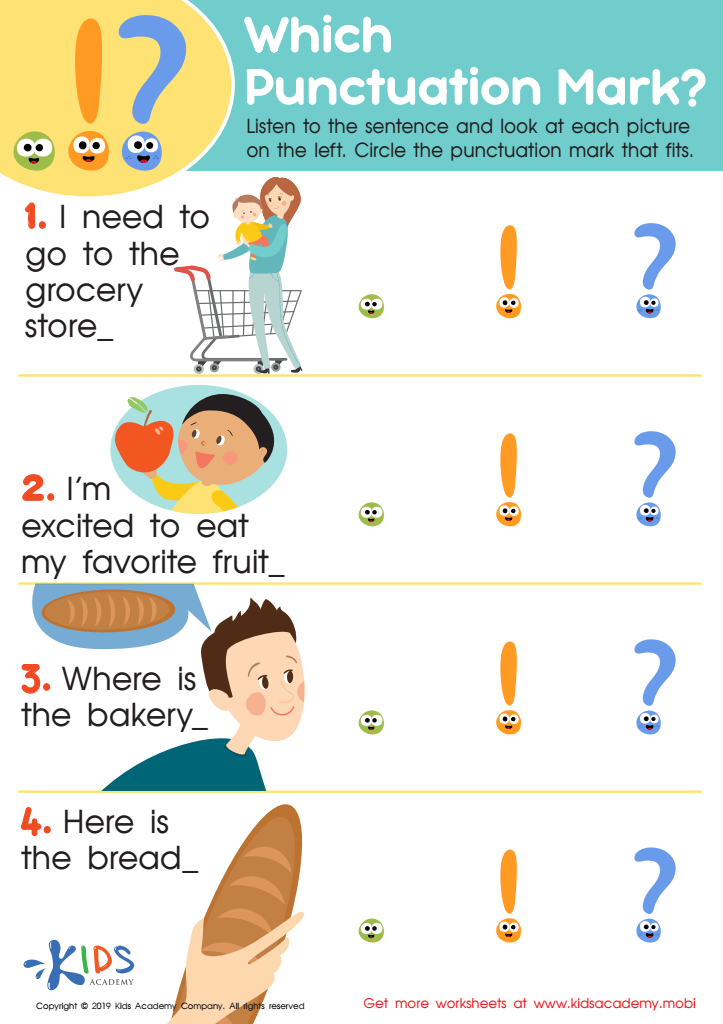
Which Punctuation Mark Worksheet
Punctuation marks are essential for expressing what we say. This worksheet asks your kindergarten student to circle the correct punctuation mark for each sentence. Read each sentence aloud and help them identify the expression needed. A picture accompanies each sentence. Enjoy! (79 words)
 Assign to My Students
Which Punctuation Mark Worksheet
Worksheet
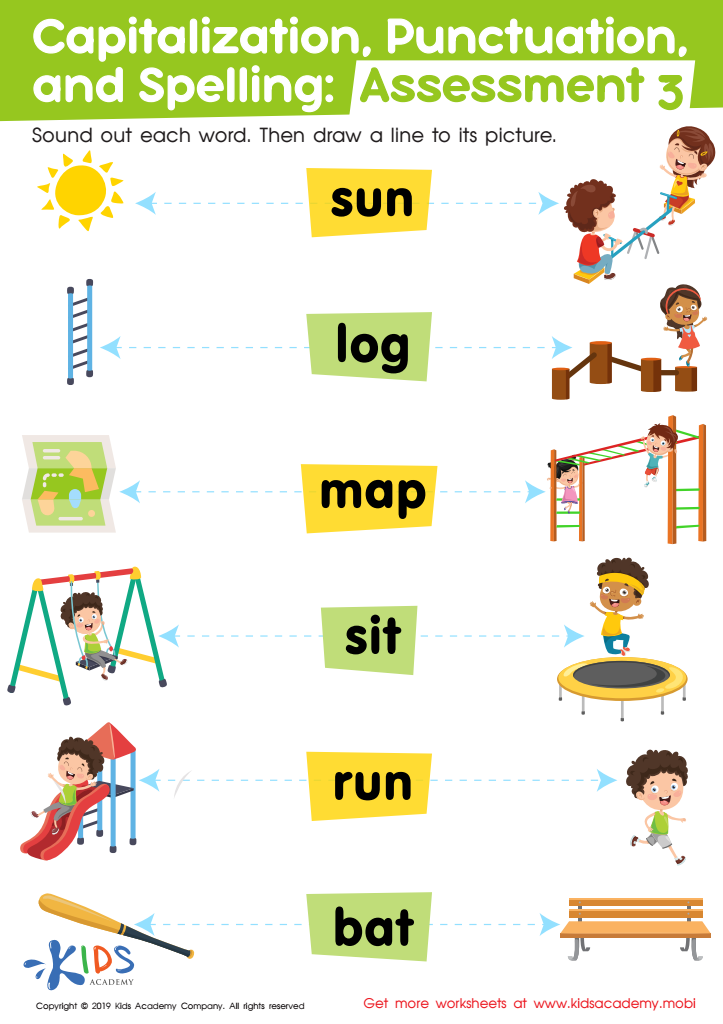
Capitalization. Punctuation. Spelling. Assessment 3 Worksheet
Before starting this worksheet, have your kids spell some simple words. Correct if wrong and show the right spellings. Then, ask them to link the pictures to the words you read out. Spelling is key for a good writer, and kids need to know how to spell to read texts easily.
Capitalization. Punctuation. Spelling. Assessment 3 Worksheet
Worksheet
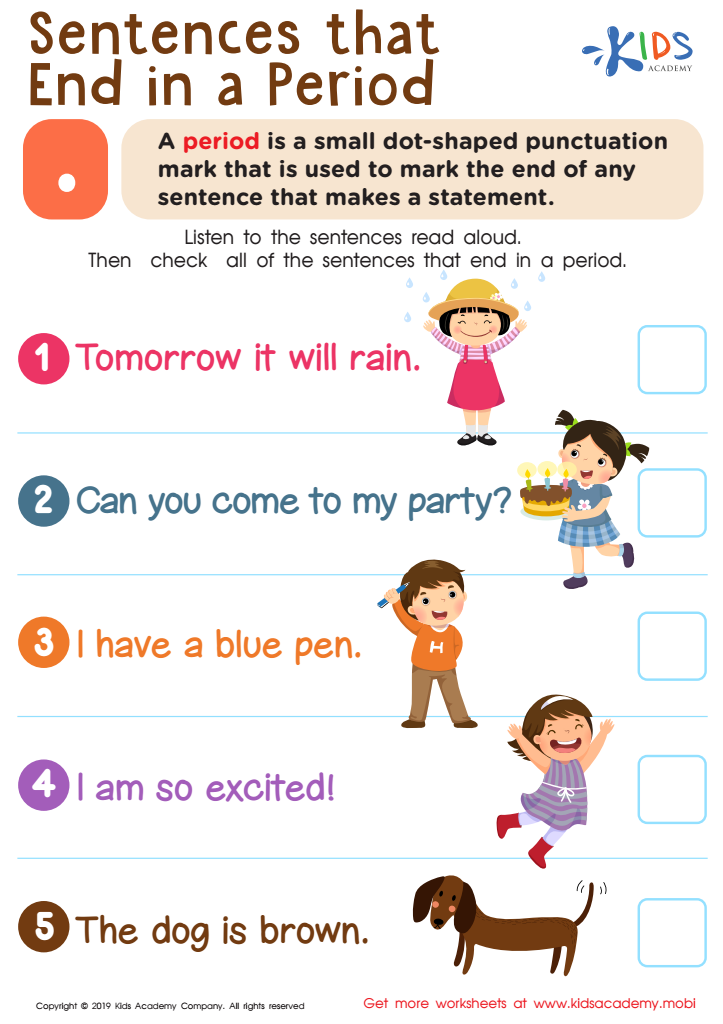
Sentences That End in a Period Worksheet
Before beginning, ask your kids if they know what punctuation marks are and can name a few. Common examples are the period (a small dot-shaped mark at the end of sentences), comma, question mark, and exclamation mark. Help practice their use with questions in the worksheet.
Sentences That End in a Period Worksheet
Worksheet
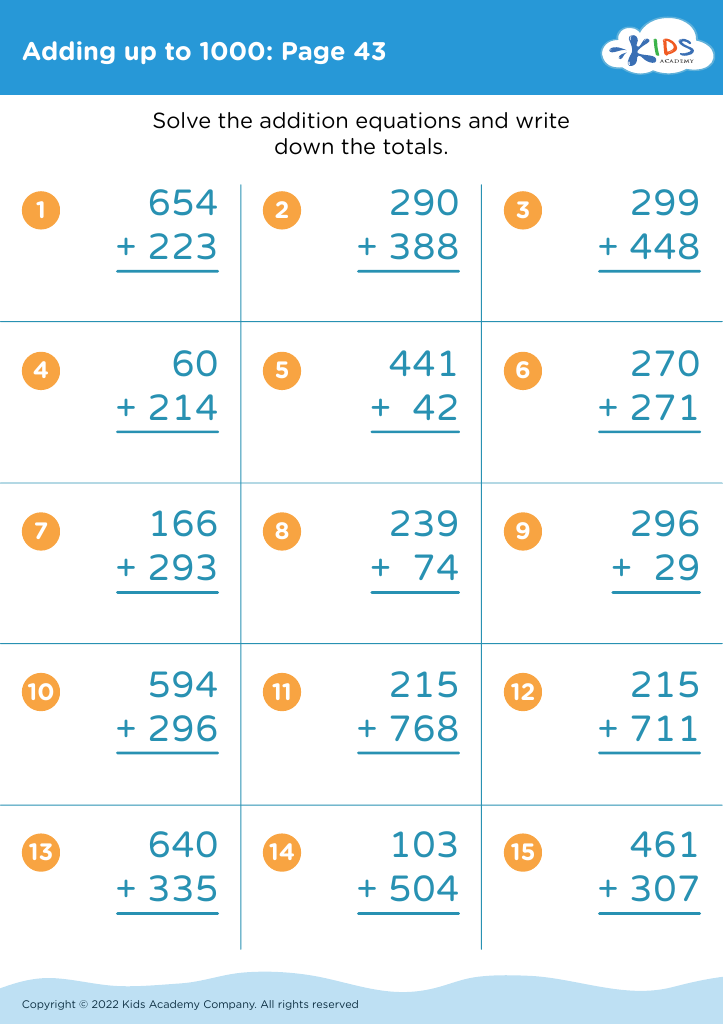
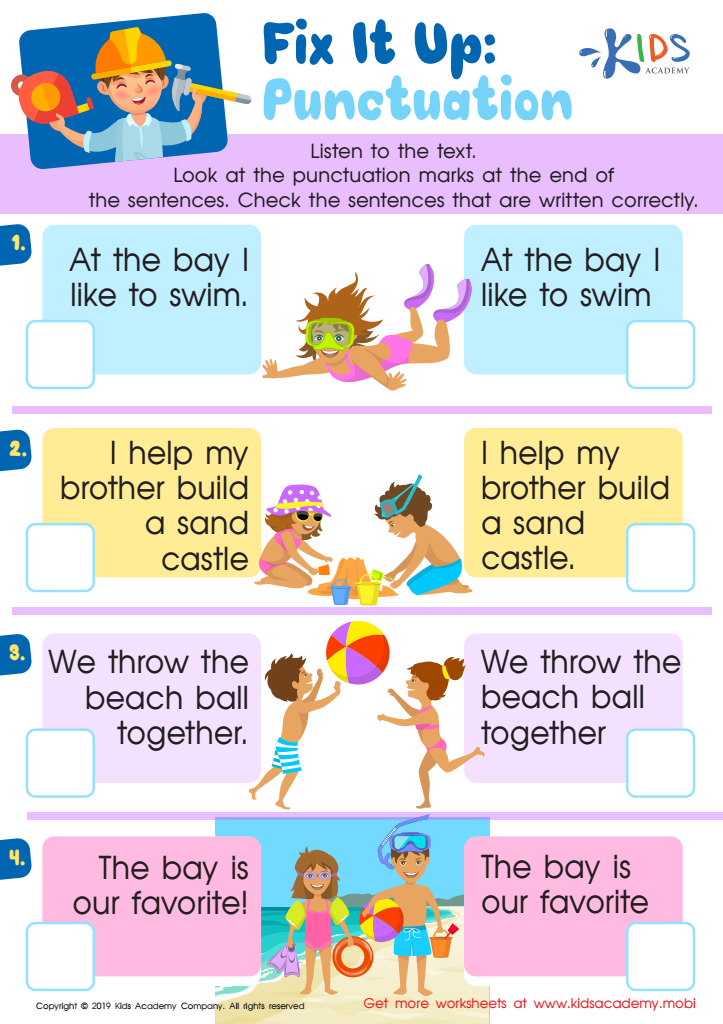
Fix Punctuation Worksheet
Have your kids tell you which punctuation marks they know before using this colorful worksheet. Read the sentences together and ask them to identify which are correctly punctuated. Guide them to check their answers. This simple activity helps teach kids to use punctuation correctly.
Fix Punctuation Worksheet
Worksheet
Join Kids Academy for Free
Who is primarily going to use this learning content?







Punctuation understanding is crucial for children aged 4-7 as it lays the foundation for effective communication and literacy development. At this age, children begin to recognize and use basic punctuation marks, such as periods, commas, and question marks, which are essential for structuring sentences and conveying meaning. By grasping punctuation, young learners can differentiate between statements, questions, and exclamations, enhancing their comprehension and expression in both spoken and written language.
Moreover, mastering punctuation helps foster clarity in writing. Children learn that punctuation marks serve as guides, indicating pauses, excitement, or inquiries, which invites readers to navigate their thoughts smoothly. This understanding promotes a sense of confidence in sharing ideas and encourages creativity, as they express their thoughts in written form.
Additionally, supporting punctuation learning nurtures critical literacy skills, enabling children to decode texts more easily and engage meaningfully with stories. This skill is fundamental during the formative years when they are building a love for reading. Thus, teachers and parents play a vital role in emphasizing punctuation, ensuring that children not only develop strong communication abilities but also cultivate a love for language and storytelling. Investing in these foundational skills will benefit children throughout their educational journey.








