
Recognition skills Worksheets for Ages 4-7
4 filtered results
Difficulty Level
Grade
Age
-
From - To
Subject
Activity
Standards
Enhance your child's learning journey with our Recognition Skills Worksheets designed specifically for ages 4 to 7! These engaging worksheets aim to strengthen children's ability to identify letters, shapes, numbers, and colors, laying a solid foundation for early literacy and numeracy. Perfect for both classroom and home learning, our worksheets feature fun, interactive activities that captivate young minds while promoting essential skills development. Foster creativity and critical thinking with versatile exercises that cater to various learning styles. Empower your little learners to confidently recognize and categorize items in their world, making their educational experience both enjoyable and effective. Discover our collection today!
Favorites
With answer key
Interactive
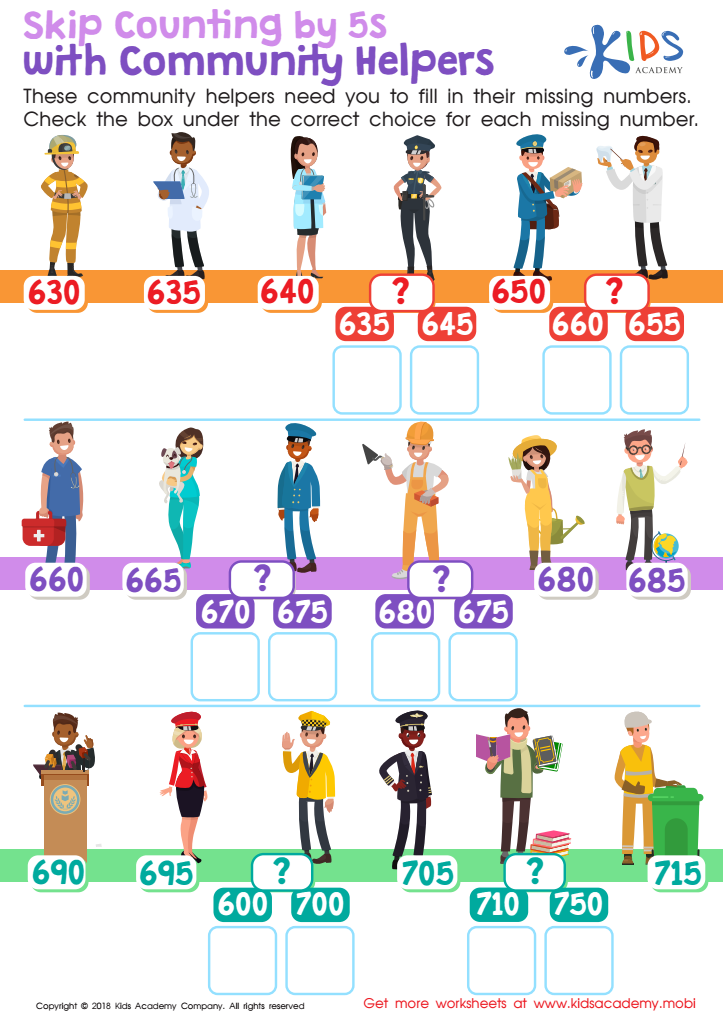
Skip Counting by 5s With Community Helpers Worksheet
This free worksheet combines social studies with math! Kids will practice counting by 5s, rounding numbers and honing their computation skills while also familiarizing themselves with community helpers. Develop your child's number sense and strengthen their math skills - all through a fun and interactive activity.
 Assign to My Students
Skip Counting by 5s With Community Helpers Worksheet
Worksheet
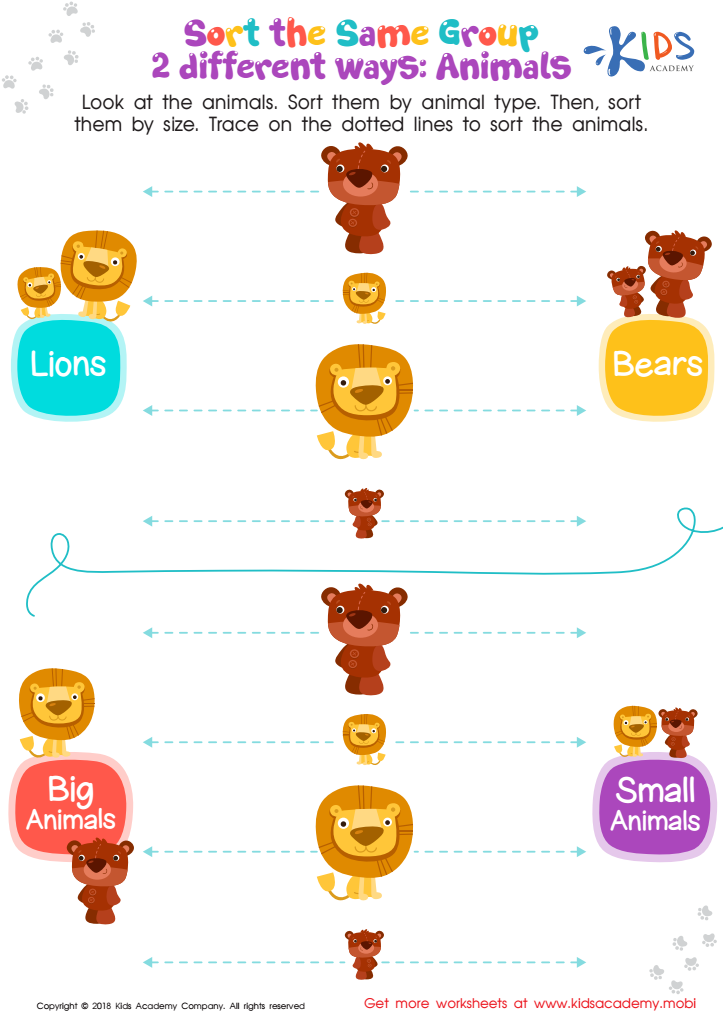
Sort the Same Group 2 Different Ways: Animals Worksheet
Look at the animals with your child. Ask them to name them, then sort them by type (e.g. lions and bears). Next, help them sort by size, tracing the dotted lines. This will teach them sorting skills.
Sort the Same Group 2 Different Ways: Animals Worksheet
Worksheet
Join Kids Academy for Free
Who is primarily going to use this learning content?



.jpg)




Recognition skills are vital for children aged 4-7 as they form the foundation for academic success and cognitive development. During this critical phase, children learn to recognize letters, numbers, shapes, and colors, which are integral to literacy and numeracy skills. When parents and teachers invest in helping young learners master these skills, they set the stage for effective reading, writing, and problem-solving.
Recognizing letters and words enables children to read independently, comprehend texts, and express themselves clearly. Similarly, number recognition aids in basic arithmetic, fostering a sense of confidence in mathematical thinking. Moreover, developing recognition skills enhances children's ability to categorize and differentiate objects, aiding their understanding of the world around them.
Beyond academics, recognition skills contribute to children's social and emotional growth. When children succeed in recognizing and naming their environment, they build self-esteem and engage more confidently in social interactions, enabling better communication with peers and adults alike. Overall, emphasizing recognition skills equips young learners with essential tools for both academic achievement and lifelong learning. Parents and teachers play a crucial role in nurturing these skills, ensuring that children are well-prepared for future educational challenges and personal development.








