
Rhyming skills development Worksheets for Ages 4-7
5 filtered results
Difficulty Level
Grade
Age
-
From - To
Subject
Activity
Standards
Enhance your child's language and literacy skills with our engaging Rhyming Skills Development Worksheets designed for ages 4-7. These printable worksheets are tailored to spark creativity and improve phonemic awareness through fun activities centered around rhyming words. From matching pairs to filling in the blanks, each worksheet encourages children to explore sounds and patterns in a playful manner. By practicing with these worksheets, your child will build a strong foundation in language skills while enjoying the learning process. Perfect for home or classroom settings, these resources ensure a delightful way to make learning enjoyable and effective!
Favorites
With answer key
Interactive
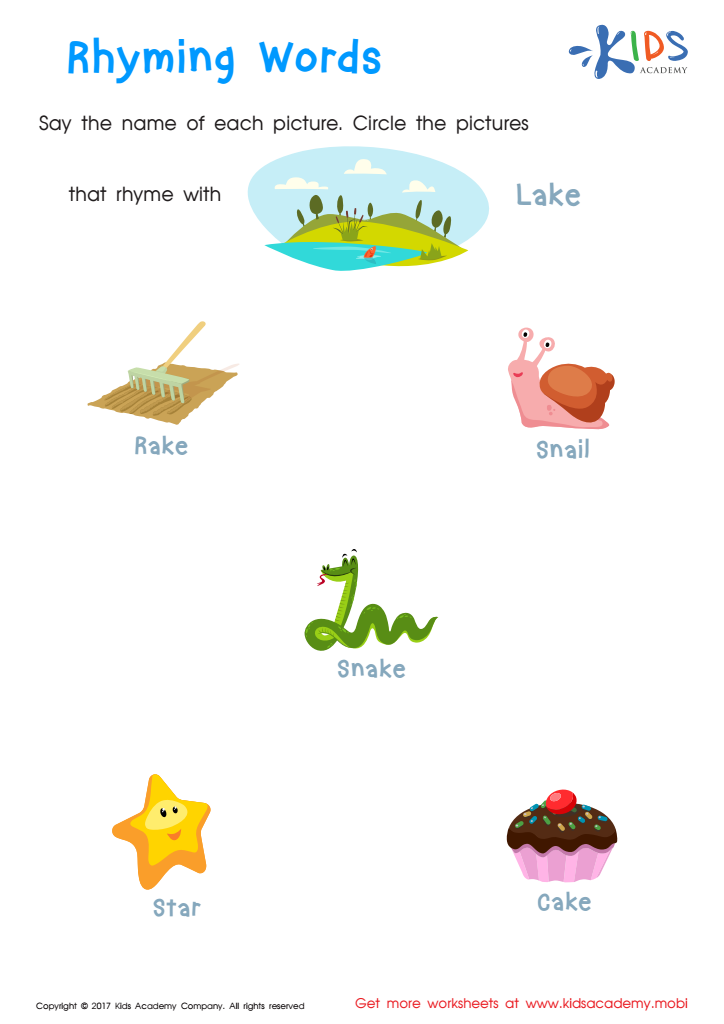
Rhyming Words Rhyming Worksheet
This worksheet is great for honing pre-reading skills. It helps kids make connections between pictures and written words, use problem-solving, and recognize sounds and words that rhyme. Have fun exploring rhyming words with your child, and they'll be rhyming in no time!
 Assign to My Students
Rhyming Words Rhyming Worksheet
Worksheet
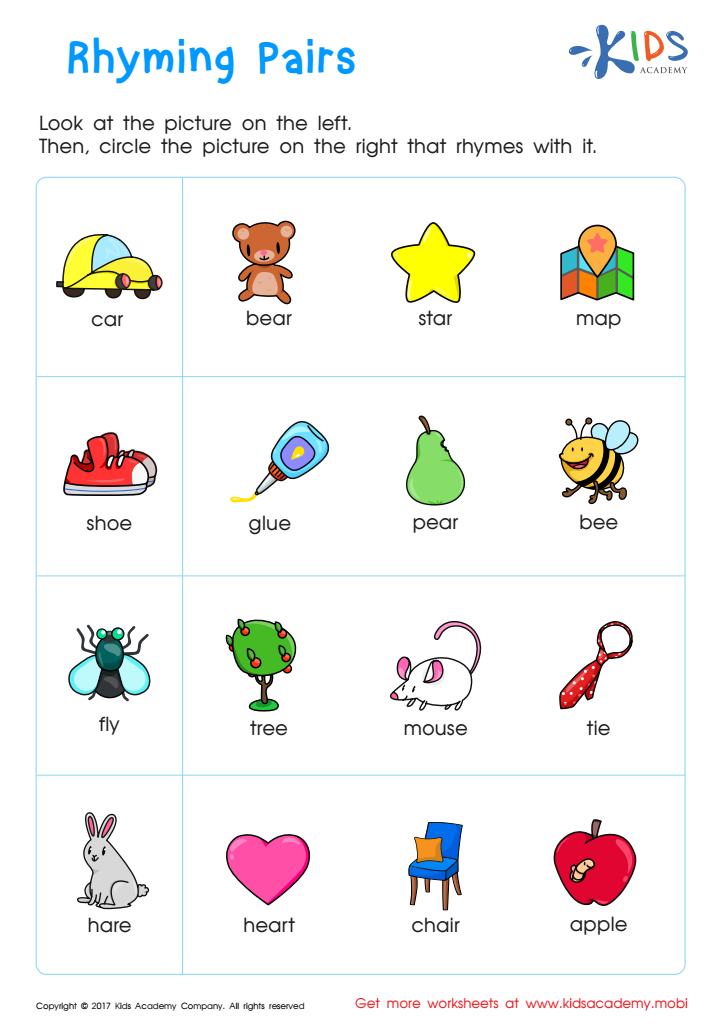
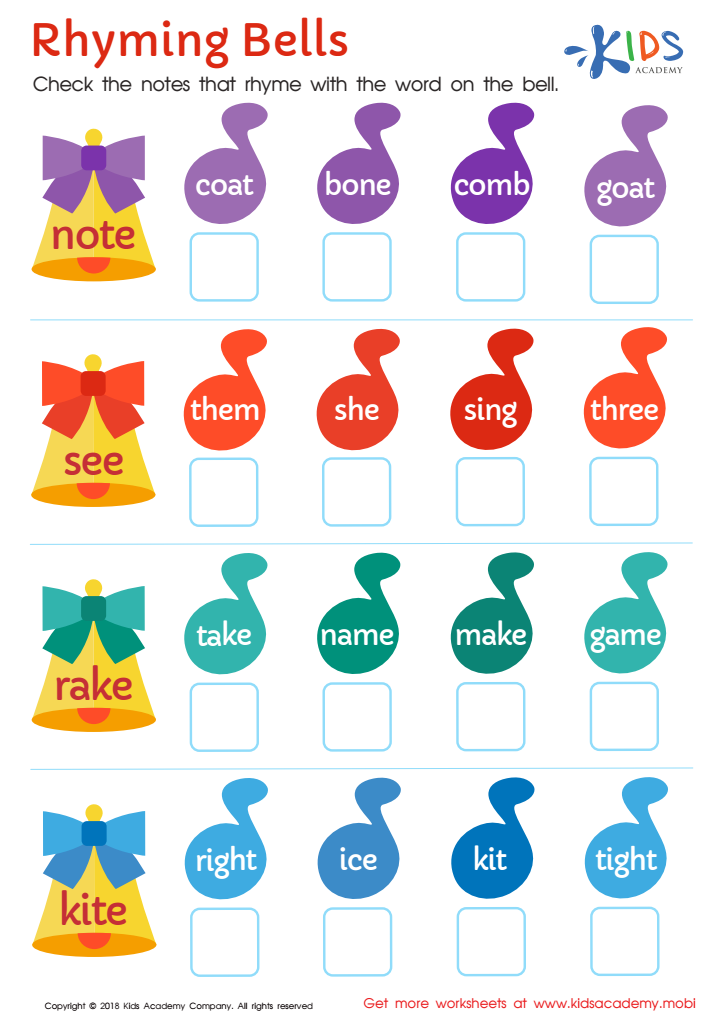
Rhyming Bells Worksheet
This printable worksheet helps students recognize rhyming words. Read a word, then pick the 4 words that rhyme. Look out for words with different spellings but same ending sound. It's a great exercise to improve understanding of rhyming words.
Rhyming Bells Worksheet
Worksheet
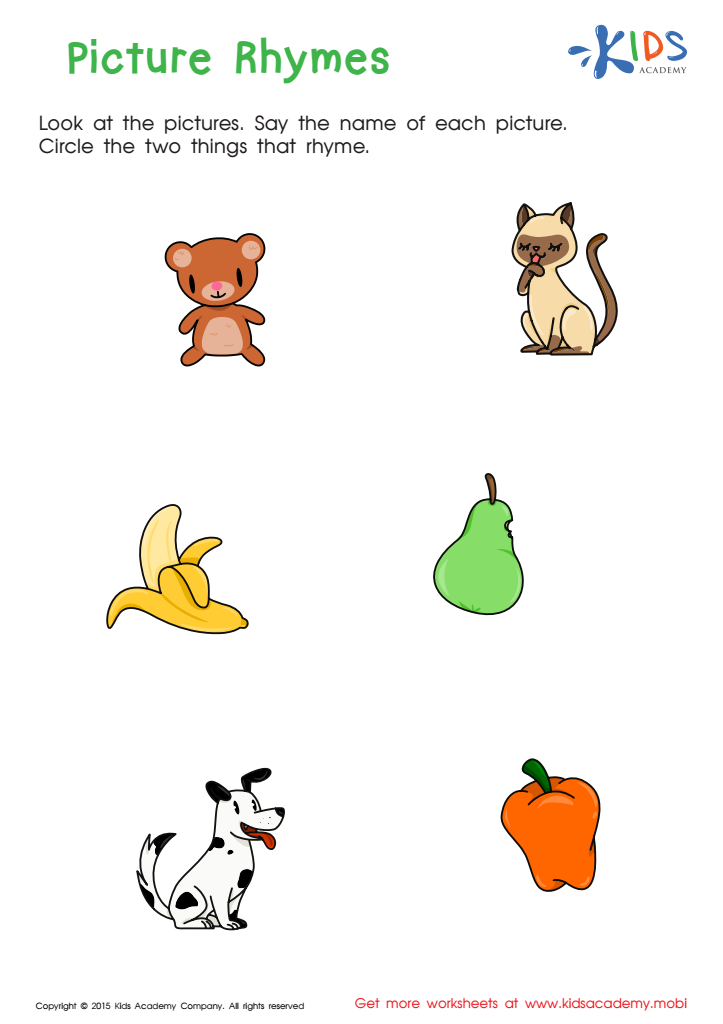
First Words: Picture Rhymes Worksheet
Rhyming helps kids understand language, read and write better. This printable worksheet boosts problem-solving and cognitive skills with vibrant pictures. It teaches kids to identify words, recognize rhymes, complete mental tasks and write words. An extra activity: show them how rhyming words share some of the same letters.
First Words: Picture Rhymes Worksheet
Worksheet
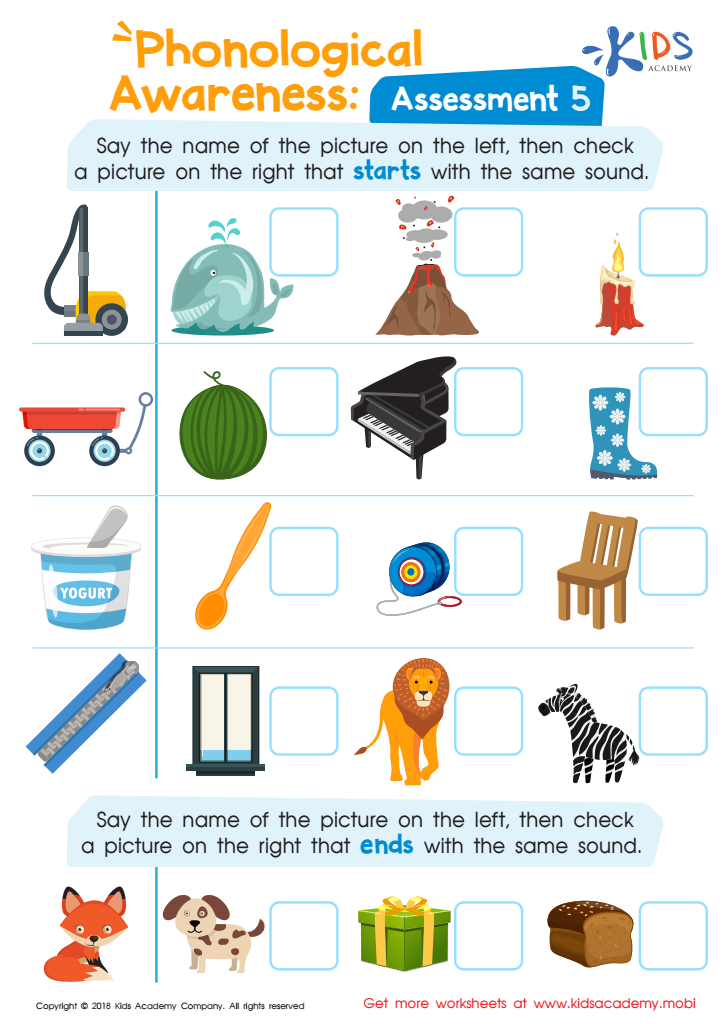
Phonological Awareness: Assessment 5 Worksheet
Repetition is key to success! This worksheet tests kids' ability to match beginning and ending sounds in words. Instruct them to say each word and listen closely to the sounds they make. Focus on the starting sounds for the first four pics, then the last one to hear ending sounds and find the right match!
Phonological Awareness: Assessment 5 Worksheet
Worksheet
Join Kids Academy for Free
Who is primarily going to use this learning content?








Rhyming skills development for children aged 4-7 is crucial for various reasons. First, rhyming enhances phonemic awareness, a key component of literacy that involves recognizing and manipulating sounds in words. When children learn to identify and produce rhyming words, they become more aware of the sounds in language, which aids in reading and spelling proficiency later on.
Moreover, engaging in rhyming activities fosters vocabulary expansion. As children explore new rhyming words, they encounter diverse language patterns and meanings, enriching their overall language development. Rhymes found in songs, poems, and stories ignite a love for reading and language, making learning fun and engaging.
Additionally, the rhythmic and melodic aspects of rhymes help improve memory and recall, beneficial for learning in general. Rhyming can also enhance children’s social skills; when they participate in group rhyming games, they foster cooperation, empathy, and communication skills.
Lastly, rhyming lays a foundation for more complex literacy skills, such as decoding and comprehension. By prioritizing rhyming skill development, parents and teachers not only support early literacy but also nurture critical thinking and creativity, guiding children toward future academic success.








