Time calculation skills Worksheets for Ages 4-7
3 filtered results
-
From - To
Enhance your child's time-telling abilities with our engaging Time Calculation Skills Worksheets for ages 4-7. These expertly designed worksheets from Kids Academy provide fun, interactive exercises to help young learners master the essentials of reading clocks, understanding hours, and grasping basic time concepts. By incorporating colorful images and relatable scenarios, these worksheets make learning time both enjoyable and effective. Perfect for early grade students, these activities build a strong foundation in time management, ensuring kids gain confidence and competence in accurately telling and calculating time. Visit Kids Academy to explore our comprehensive collection and support your child’s learning journey today!
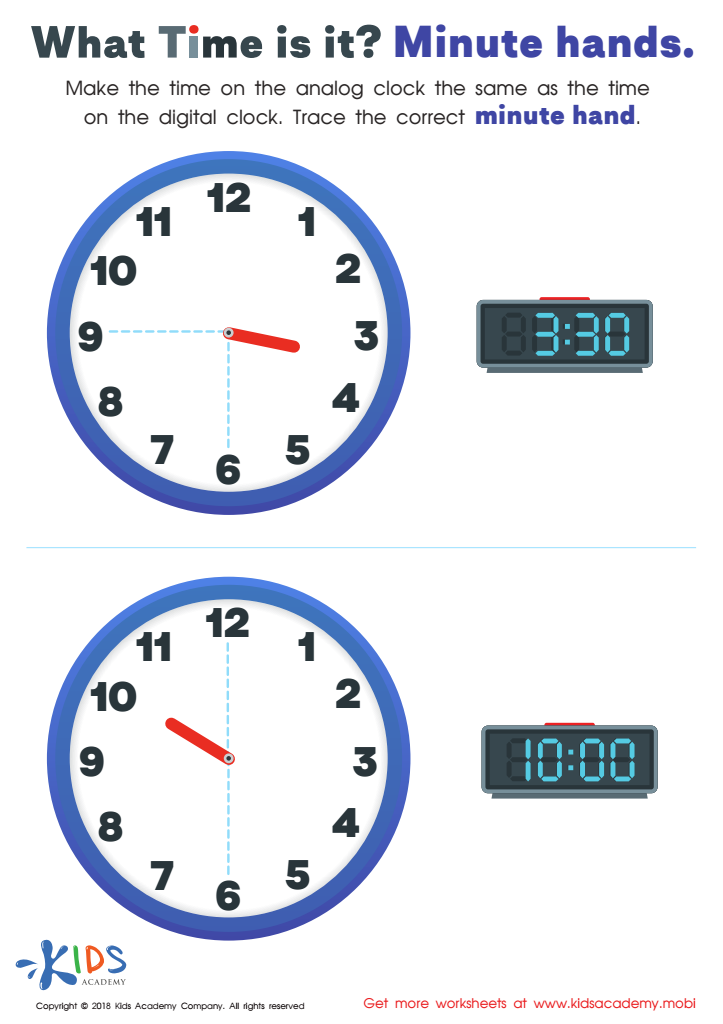
What Time Is it? Minute Hands Worksheet
 Assign to My Students
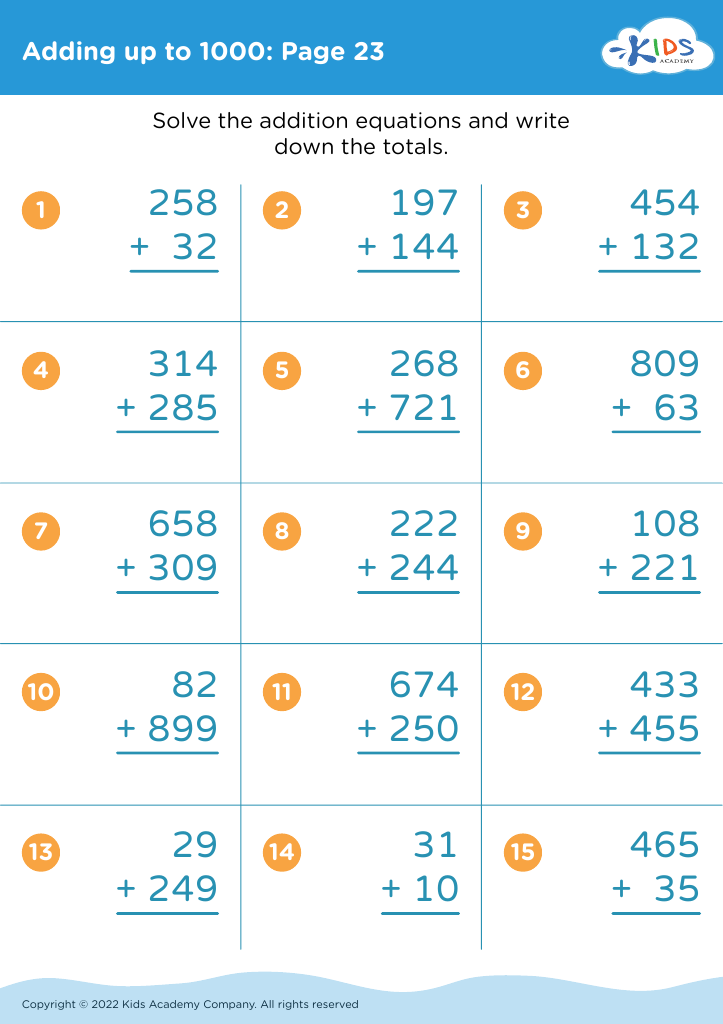
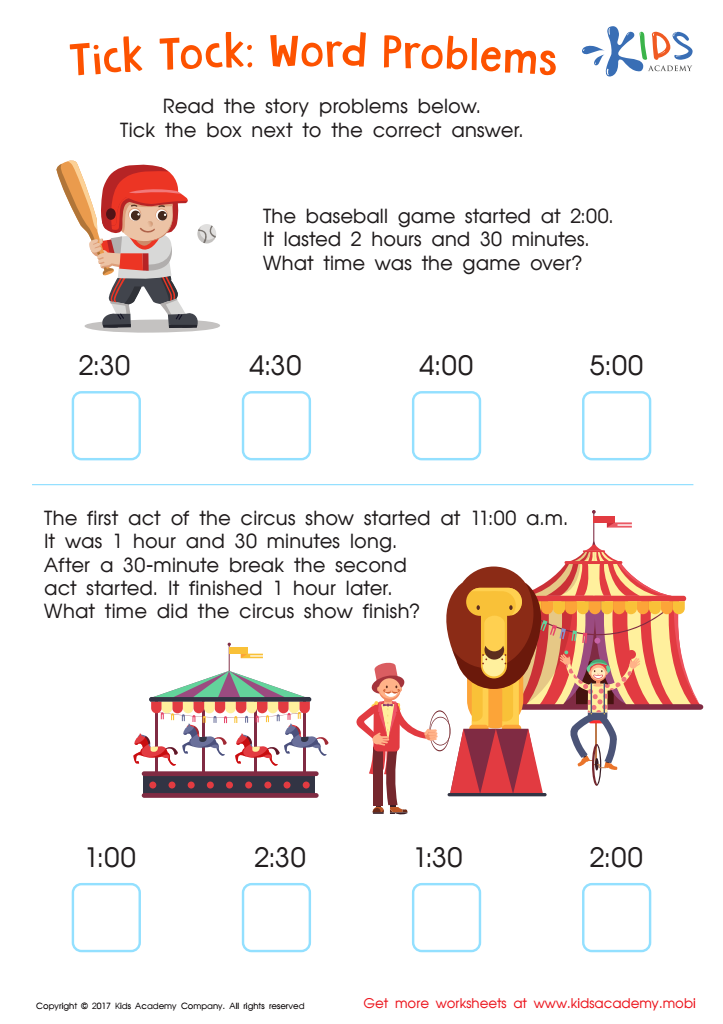
Tick Tock Word Problems Time Worksheet








Time calculation skills are crucial for young children, typically aged 4-7, as they lay a strong foundation for future academic and life skills. Understanding concepts of time helps children develop a sense of order and routine, promoting better time management and organizational abilities, which are essential for lifelong success. By learning to read clocks and understand time intervals, children can manage their daily activities with increased independence, enhancing their self-confidence and sense of responsibility.
Moreover, time calculation skills are closely linked to mathematical development. They help strengthen children's understanding of numbers, sequencing, and basic arithmetic, such as adding and subtracting minutes or hours. These skills feed into more advanced math topics, fostering cognitive development and critical thinking.
For parents and teachers, nurturing these skills early on means fewer struggles as the child progresses in school. It ensures that children are punctual, which is a valuable habit for attending classes and other structured activities. It also aids in the development of other vital life skills, such as planning, prioritization, and adherence to schedules. Overall, caring about time calculation skills for young children prepares them to navigate the structured demands of school life and beyond effectively.








