Understanding bar graphs Worksheets for Ages 4-7
4 filtered results
-
From - To
Unlock your child's potential with our "Understanding Bar Graphs Worksheets" designed for ages 4-7! These engaging worksheets introduce young learners to the art of interpreting and creating bar graphs, turning math into a fun and interactive experience. Through colorful visuals and relatable themes, children will develop essential skills in data representation and analysis. Our worksheets cater to various learning styles, ensuring that each child can grasp the concept at their own pace. Perfect for classroom or home learning, these resources help foster critical thinking and problem-solving abilities. Discover the joy of learning with our thoughtfully crafted bar graph worksheets today!
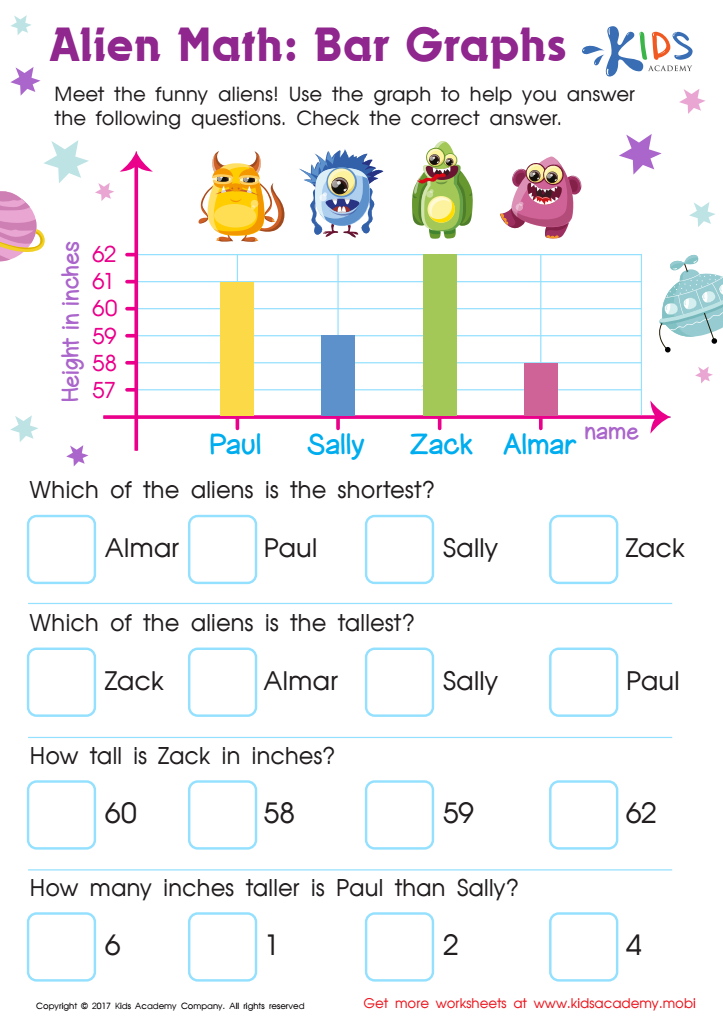
Bar Graphs Worksheet
 Assign to My Students
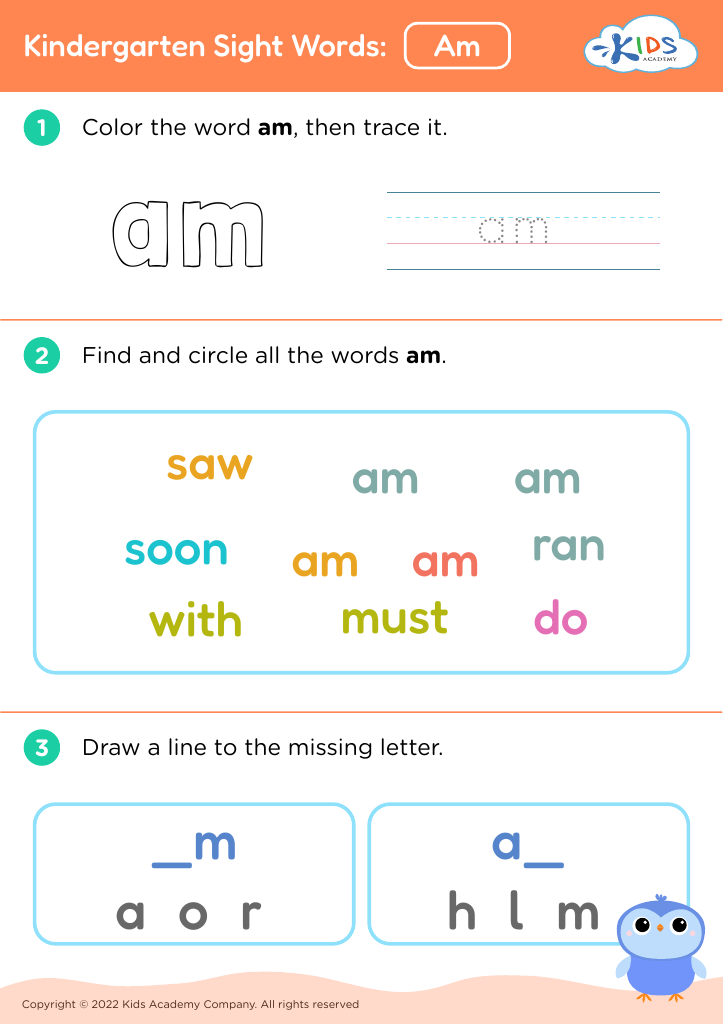
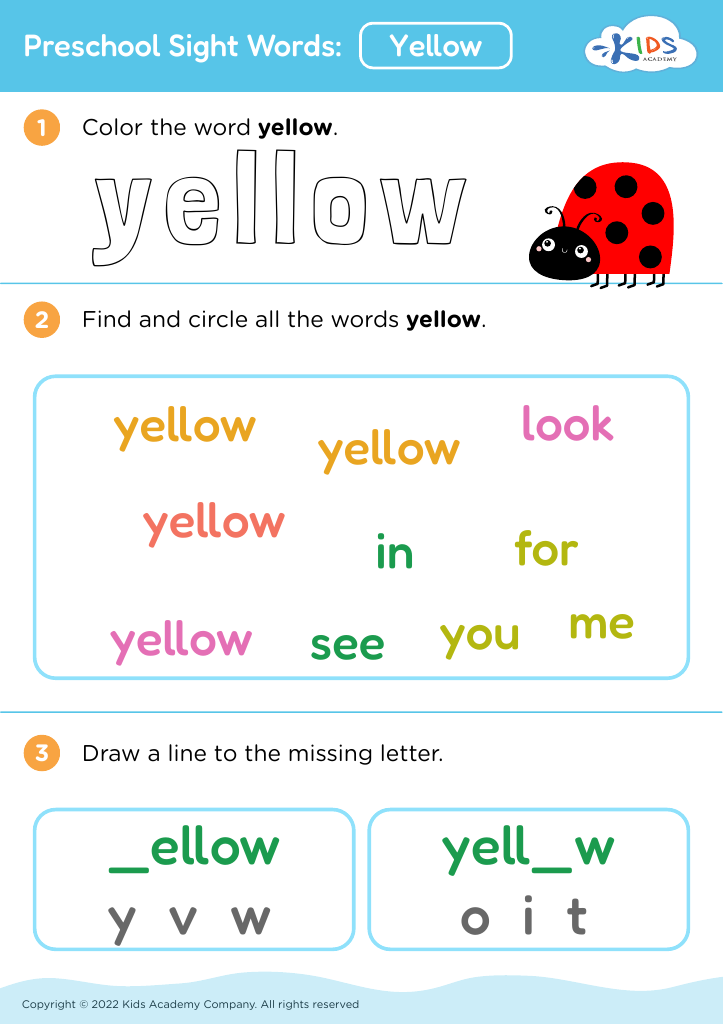
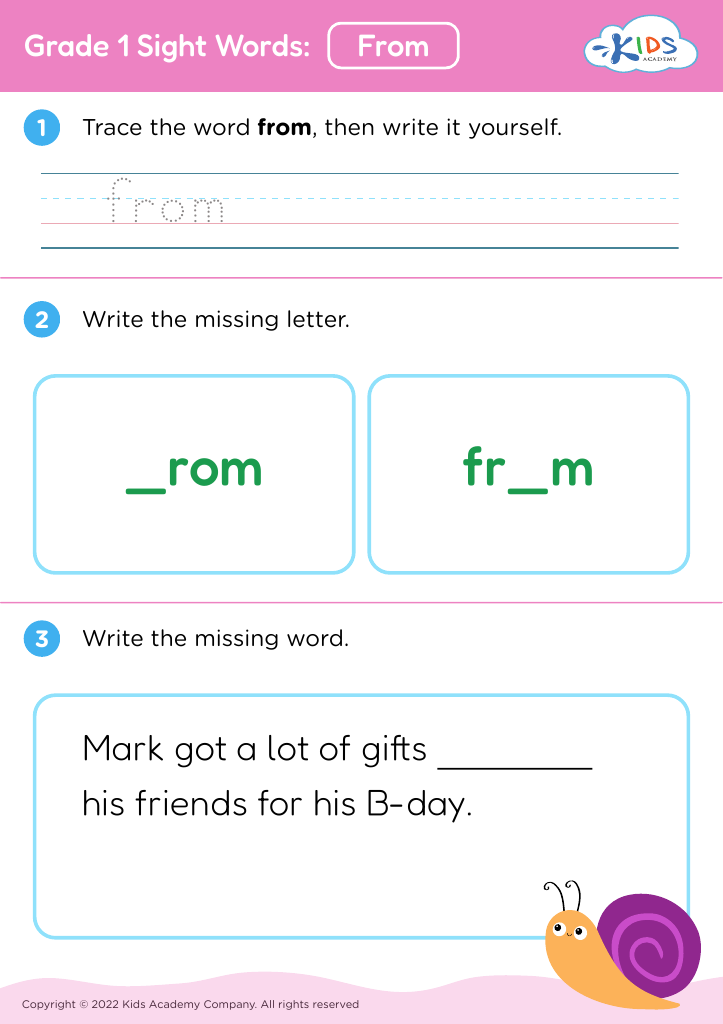








Understanding bar graphs is an essential skill for children aged 4-7, as it lays the foundation for data literacy and critical thinking. For parents and teachers, recognizing the importance of this skill can significantly impact a child's mathematical and cognitive development.
Bar graphs visually represent information, making it easier for young learners to interpret data. By simplifying complex ideas into visual formats, children can grasp concepts of quantity, comparison, and categorization more effectively. This understanding not only enhances their math skills, but also encourages observation and analytical thinking, vital components for future learning.
Moreover, when parents and teachers introduce bar graphs in playful, engaging ways—like tracking favorite fruits or pets—they foster a love for math and learning. Engaging with graphics encourages children to ask questions and discover answers through exploration, promoting curiosity.
Additionally, learning to read and create bar graphs nurtures collaborative skills as children share their findings and opinions. This builds confidence in communication and expression with peers. Ultimately, understanding bar graphs is a crucial step toward developing problem-solving abilities and information interpretation, equipping children with competencies they will need throughout their educational journey and beyond.








