
Understanding directions Worksheets for Ages 4-7
14 filtered results
Difficulty Level
Grade
Age
-
From - To
Subject
Activity
Standards
Help your child navigate the world with our "Understanding Directions Worksheets" designed for ages 4-7. These engaging, interactive resources enhance children’s comprehension of spatial concepts, directional language, and basic navigation skills. With fun activities that encourage critical thinking, your little learners will master terms like ‘left,’ ‘right,’ ‘near,’ and ‘far’ while following simple directions. Perfect for home or classroom use, these worksheets promote essential cognitive and problem-solving skills, setting a strong foundation for their future learning. Download now to inspire your child's ability to understand and follow directions confidently, making learning both enjoyable and effective!
Favorites
With answer key
Interactive
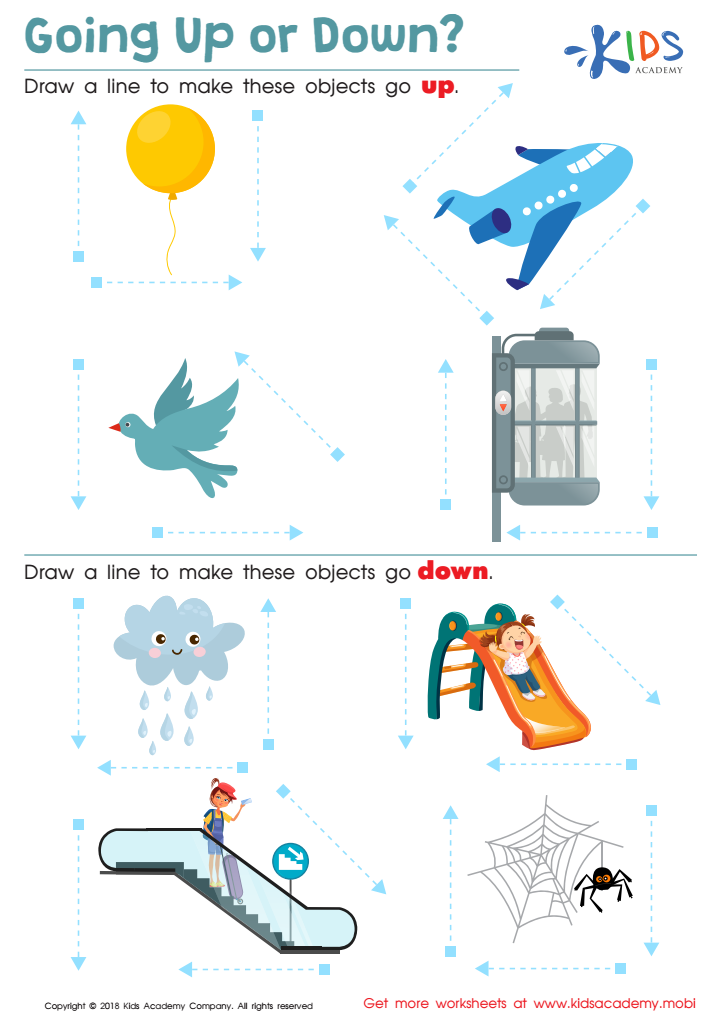
Going up or Down? Worksheet
Young students learn the concept of up and down with this geometry worksheet. They trace lines to identify relative positioning as an object travels. Kids can use position words to describe an object's movement, enhancing their spatial relationship skills - an important geometry foundation.
 Assign to My Students
Going up or Down? Worksheet
Worksheet
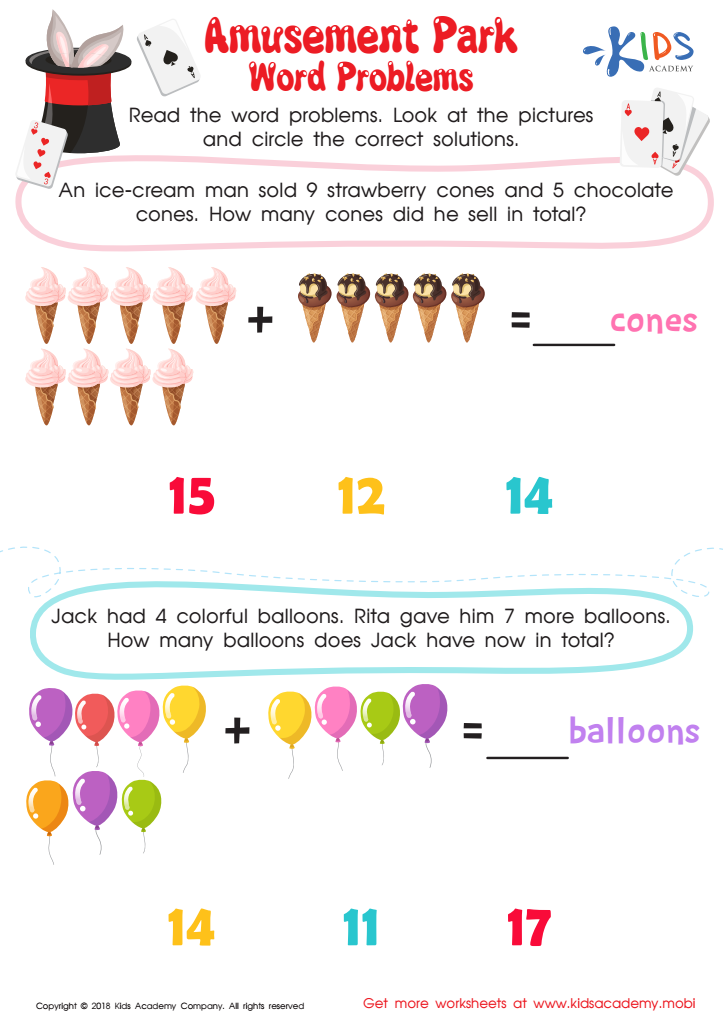
Amusement Park Word Problems Worksheet
Engage kids with math by making it realistic and incorporating manipulatives or pics they like! This worksheet helps kids understand word problems. Read the problem, note numbers and key phrases like "in total," then count the pics to find the total!
Amusement Park Word Problems Worksheet
Worksheet
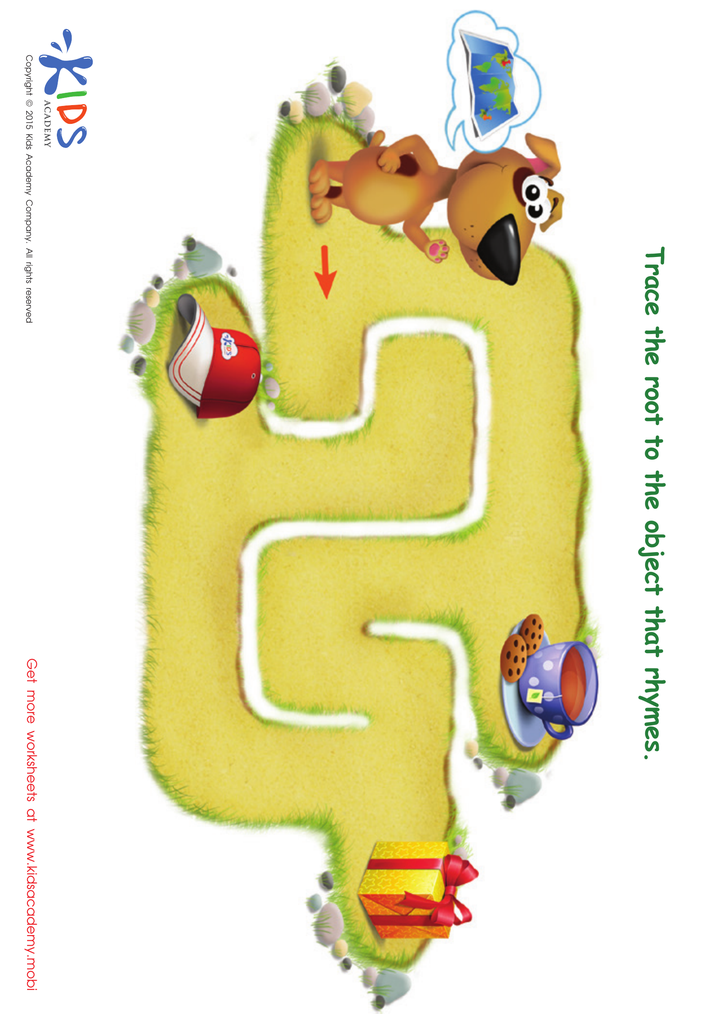
Map Rhyming Words Worksheet
Get them now and practice your skills while having fun playing. Find words that rhyme, trace the roots and enjoy the journey!
Map Rhyming Words Worksheet
Worksheet
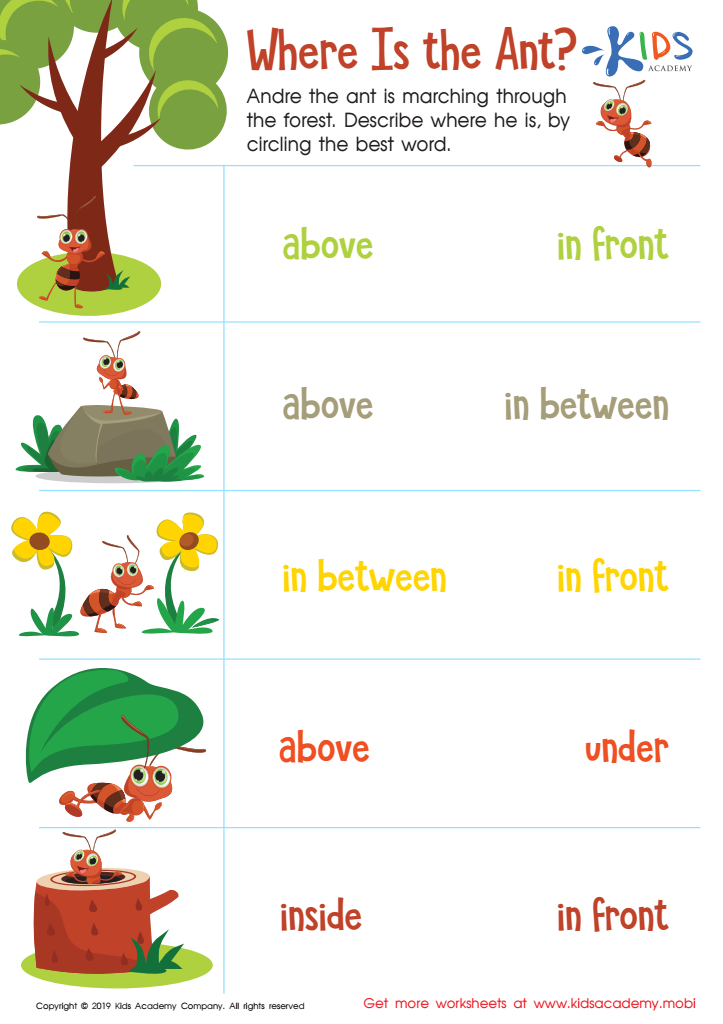
Where Is the Ant? Worksheet
Kids are captivated by ants. Andre is a busy ant, marching through the forest. Help your child circle the best word that best describes what he's doing in each picture. This colorful printout will show them the way.
Where Is the Ant? Worksheet
Worksheet
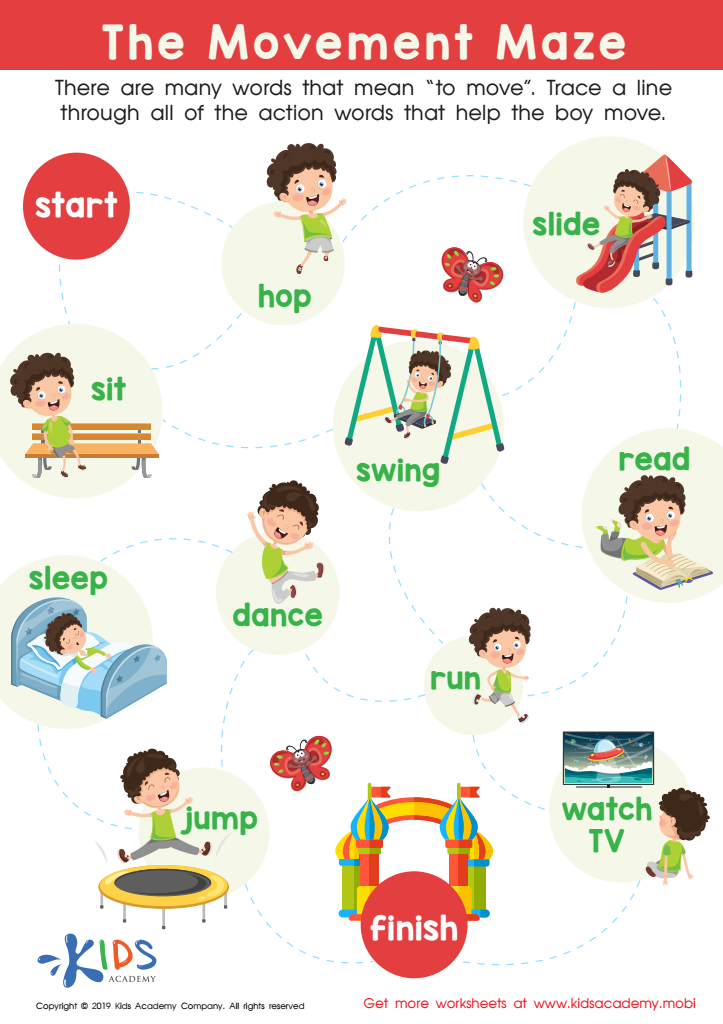
The Movement Maze Worksheet
Let your child have fun with this interactive PDF download. Kids will learn movement words with cute pictures, plus practice fine motor skills as they trace. A fun way to reinforce vocabulary. Jump, hop and sit – it's all here!
The Movement Maze Worksheet
Worksheet
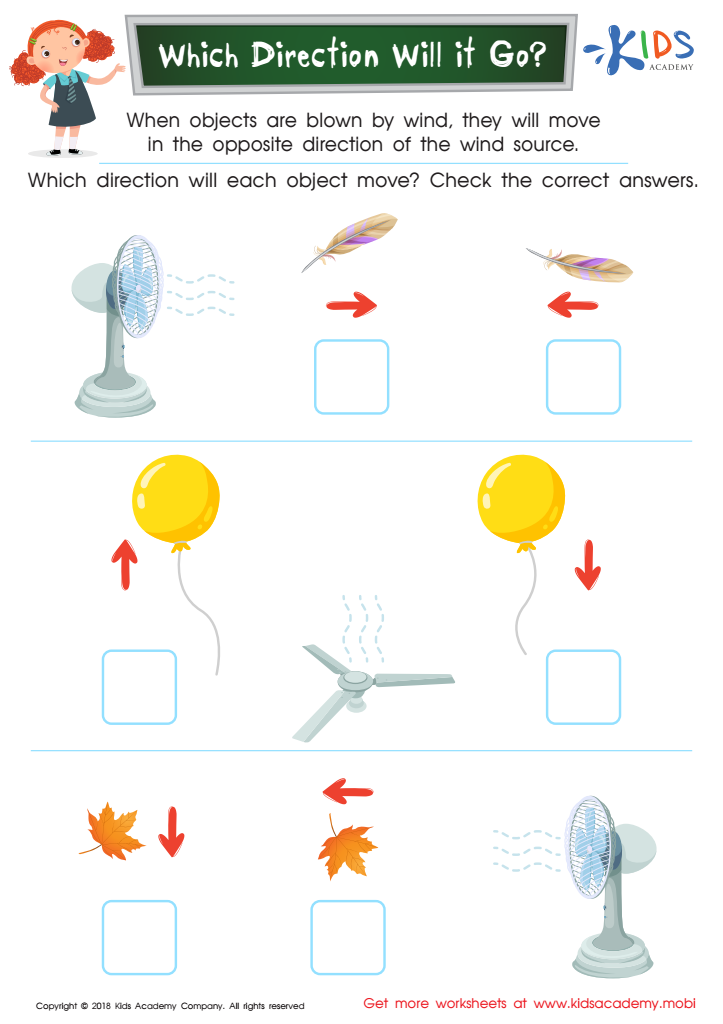
Which Direction Will it Go? Worksheet
Explain to your students: when objects are blown by wind, they will move in the opposite direction. In the worksheet, there are pictures of wind sources and objects being blown by the wind. Ask your child to identify and check the direction each object will move.
Which Direction Will it Go? Worksheet
Worksheet
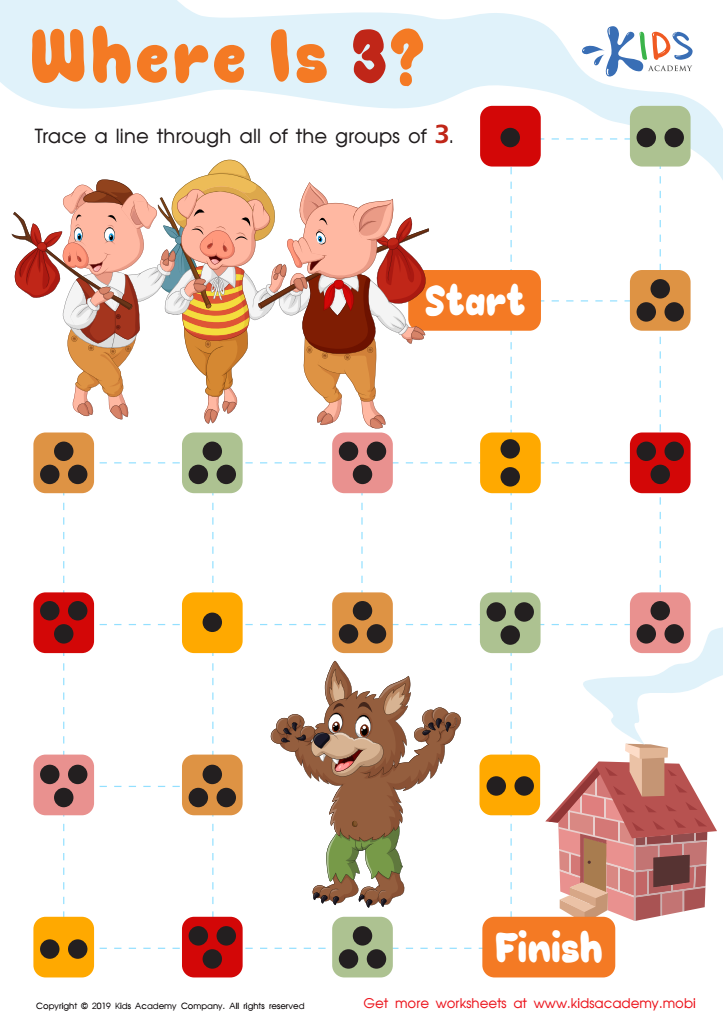
Where Is 3? Worksheet
Let your little mathematician join the Three Little Pigs on an adventure! With this free worksheet, they'll guide the pigs through a maze of numbered bricks, using one-to-one representation to get to the sturdy house. Have fun helping the piggy friends past the wolf!
Where Is 3? Worksheet
Worksheet
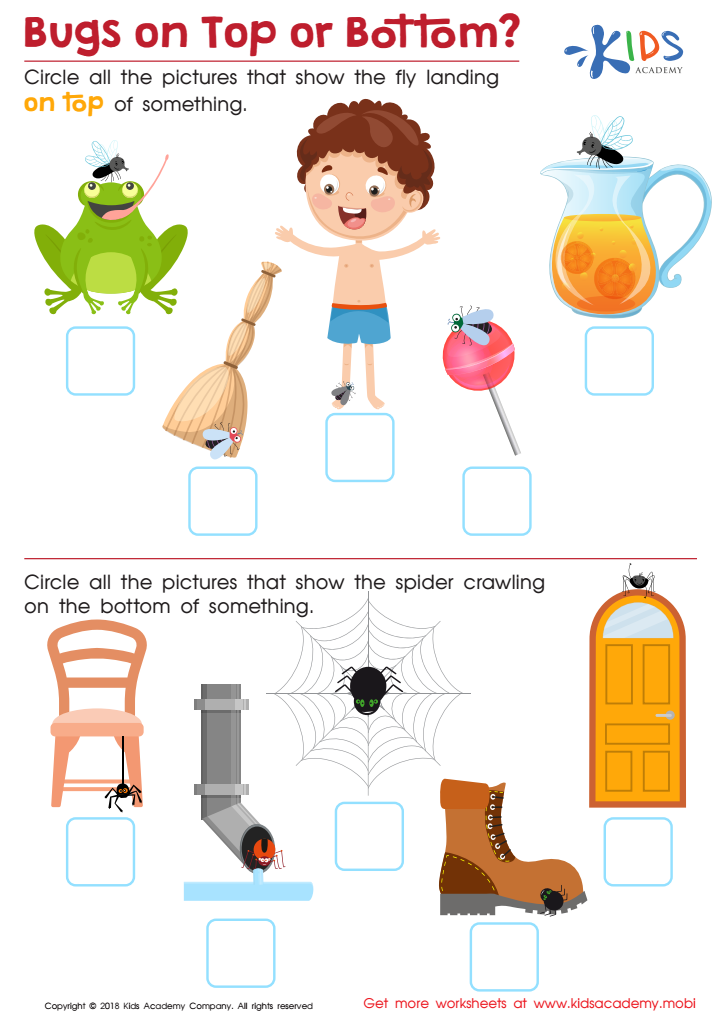
Bugs on Top or Bottom? Worksheet
Preschoolers need to learn directional skills such as top and bottom. This PDF worksheet helps them recognize bugs on the top or bottom using fun visuals. It builds their spatial reasoning while teaching prepositional words in an engaging way.
Bugs on Top or Bottom? Worksheet
Worksheet
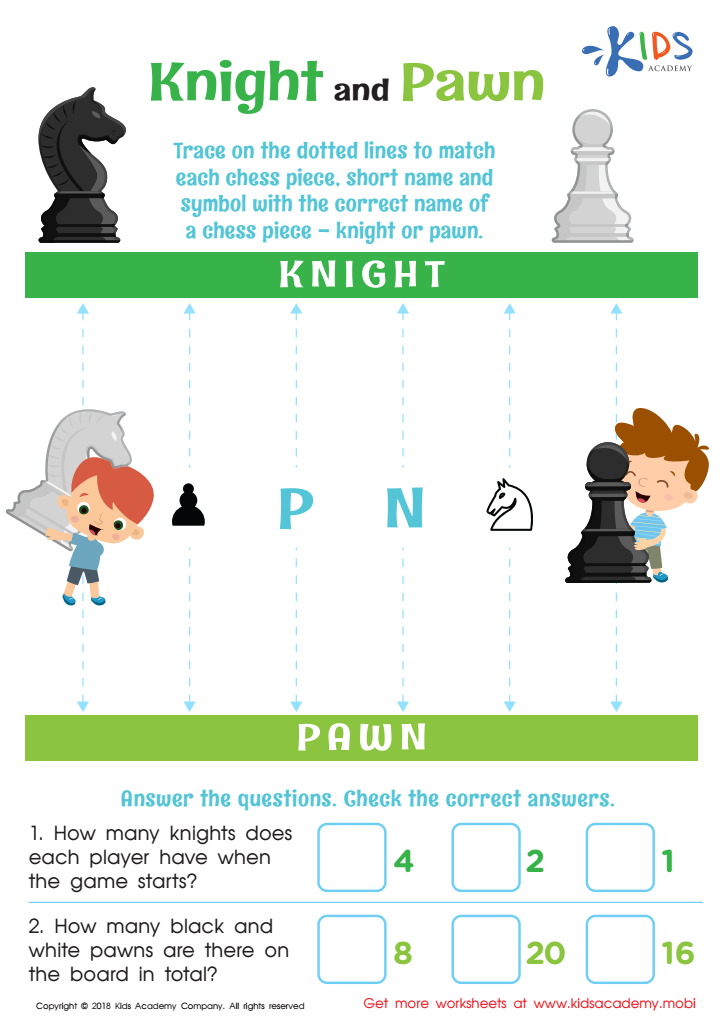
Knight and Pawn Worksheet
This tracing worksheet teaches kids about chess. They trace the dotted lines to match pieces, names and symbols to the correct chess piece. Questions at the bottom test their understanding. It's a simple exercise for a fun way to learn.
Knight and Pawn Worksheet
Worksheet
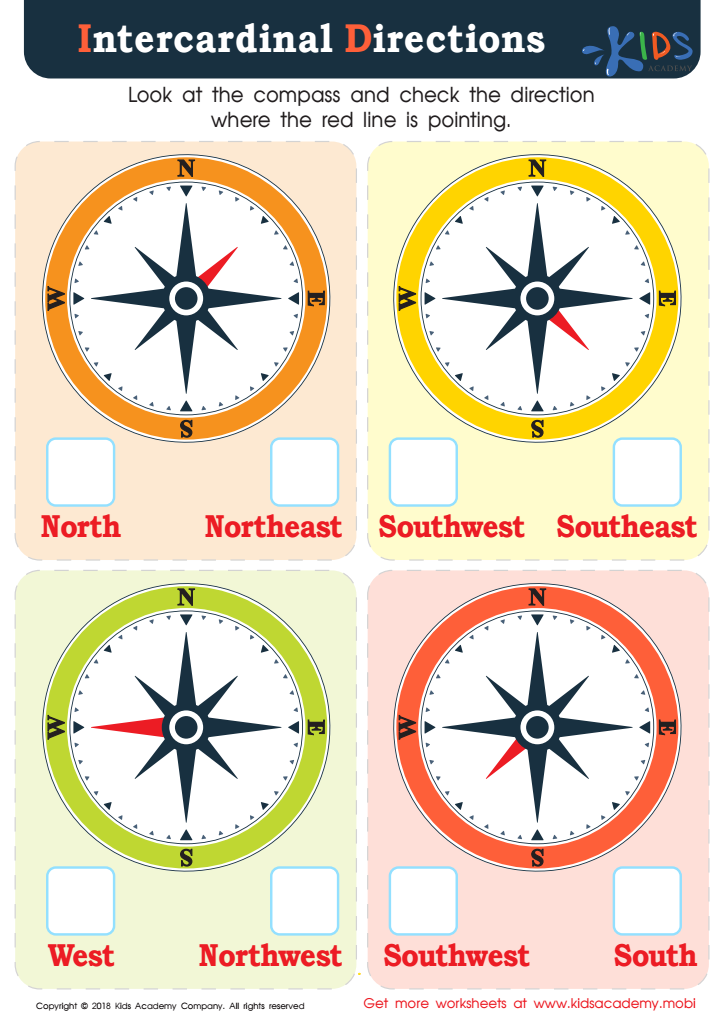
Intercardinal Directions Worksheet
Young students often don't get to practice cardinal and intercardinal directions in the digital age, but it's an important social studies and geography concept to learn. This PDF provides colorful compasses for them to practice with, giving them a real-world skill for common curriculum and independent living.
Intercardinal Directions Worksheet
Worksheet
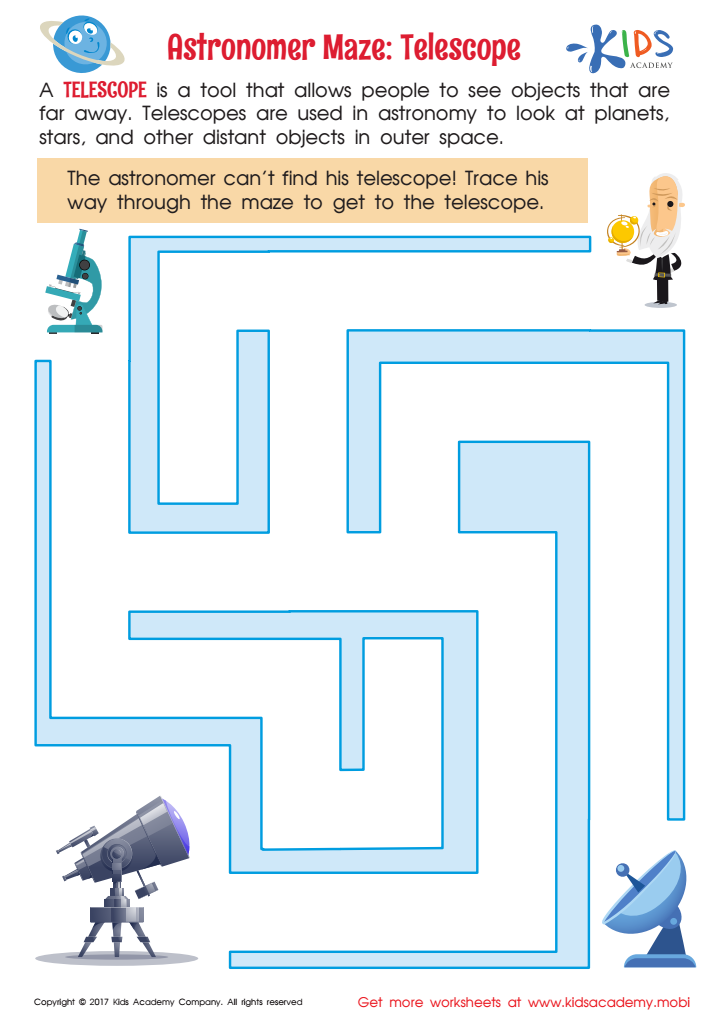
Astronomer Maze: Telescope Worksheet
Let your mini astronomer explore the galaxy with this fun and puzzling space maze worksheet – Telescope! Your child will have a great time navigating the maze, while learning how telescopes help scientists study the stars.
Astronomer Maze: Telescope Worksheet
Worksheet
Join Kids Academy for Free
Who is primarily going to use this learning content?




Understanding directions is a crucial skill for children aged 4-7 as it lays the groundwork for successful learning and social interactions. At this age, children's cognitive, linguistic, and social abilities are rapidly developing, making it an ideal time to foster these skills. Comprehending directions not only helps with academic tasks but also essential life skills.
For parents and teachers, emphasizing direction-following encourages independence and builds confidence in young learners. When children can understand and follow verbal or written instructions, they gain the ability to complete tasks on their own, leading to a sense of achievement. This independence enhances their problem-solving skills and promotes critical thinking—key components for future learning.
Moreover, understanding directions aids in effective communication, allowing children to express needs and understand others better. It also plays a significant role in group activities, where teamwork and collaboration are necessary.
Additionally, children who struggle with following directions may experience frustration academically and socially. By nurturing this skill, parents and teachers can help prevent these challenges, ensuring that children feel competent and secure as they navigate their formative years. Ultimately, mastering the ability to understand directions is essential for holistic development and lifelong learning.








