Understanding matter Worksheets for Ages 4-7
3 filtered results
-
From - To
Discover our "Understanding Matter Worksheets" for children ages 4-7, designed to spark curiosity about the world around them! These engaging worksheets introduce young learners to the basic concepts of matter, including solids, liquids, and gases. Through fun activities and colorful illustrations, kids will explore how different substances interact and change states. Our resources promote critical thinking and observation skills, making learning an exciting adventure. Perfect for home or classroom use, these worksheets encourage hands-on exploration while aligning with educational standards. Dive into the fascinating world of matter with our easy-to-use, printable worksheets that captivate and educate young minds!
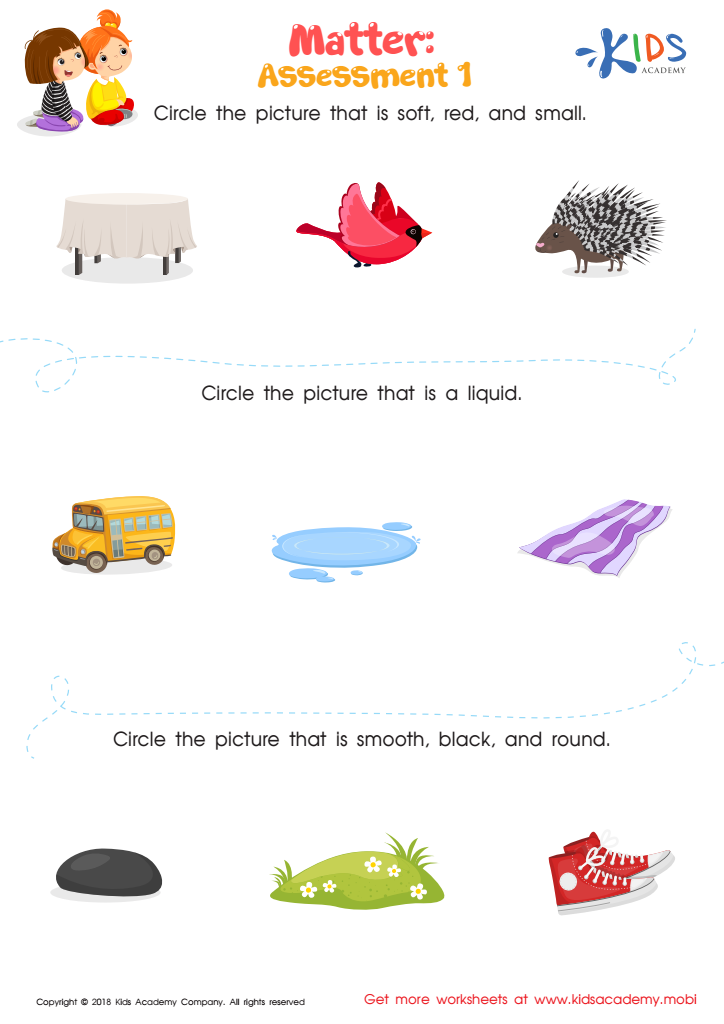
Matter: Assessment 1 Worksheet
 Assign to My Students
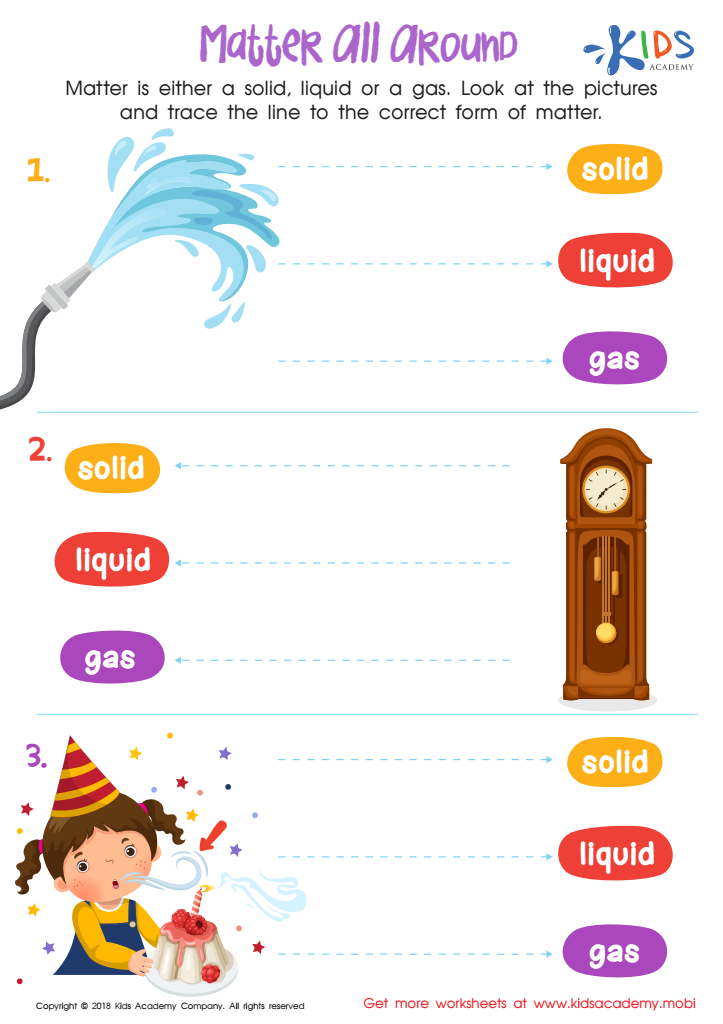
Matter all Around Worksheet
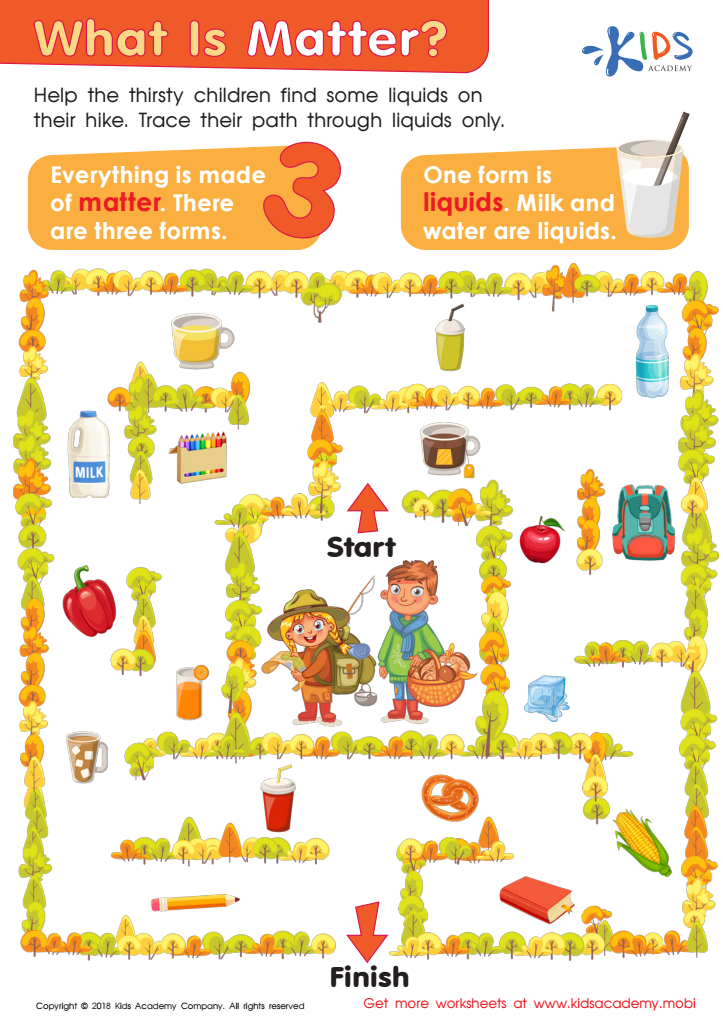
What Is Matter? Worksheet







Understanding matter is foundational for children aged 4-7, as it helps them make sense of the world around them. At this age, curiosity is at its peak, and children are naturally inclined to explore. By introducing the concepts of matter—solid, liquid, and gas—parents and teachers can ground this exploration in scientific understanding, fostering critical thinking skills.
Engaging children with hands-on activities, like pouring water or observing ice melting, enhances their observational skills and encourages inquiry. This early exposure nurtures a sense of wonder about natural phenomena and builds a strong foundation for later scientific learning.
Moreover, understanding matter can enhance children's language skills as they learn new vocabulary and concepts. It also supports early math skills through measuring and comparing quantities. As they explore different states of matter and their properties, children gain essential problem-solving skills, learning to predict outcomes based on their observations.
Incorporating matter into learning not only aligns with educational standards but also equips children with knowledge that is applicable in everyday life. Ultimately, fostering an early understanding of matter contributes to well-rounded development, encouraging lifelong learning and curiosity.








