Understanding natural resources Worksheets for Ages 4-7
5 filtered results
-
From - To
Our "Understanding Natural Resources" worksheets for ages 4-7 in PDF format, offer engaging activities to introduce young learners to the concept of natural resources. Designed for kids in preschool through 1st grade, these printable resources make learning about nature fun and interactive. Each worksheet focuses on vital topics such as water, trees, soil, and energy, encouraging children to learn through matching games, coloring, and simple puzzles. Help your child appreciate and understand the world around them with our worksheets that fuse education with creativity and hands-on learning. Unlock their curiosity today!
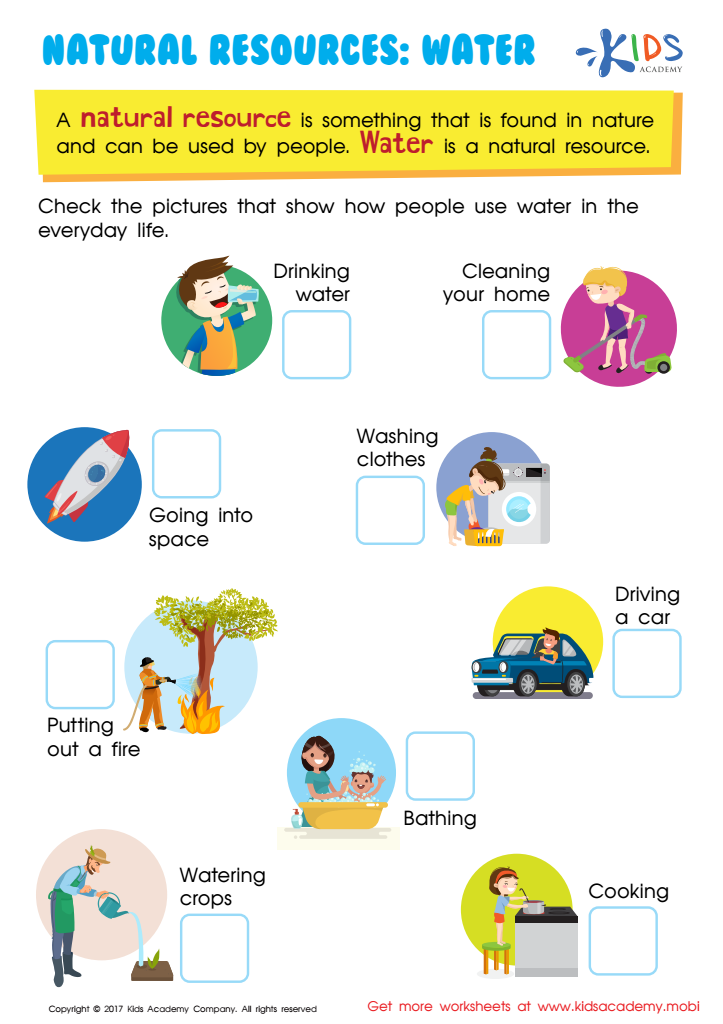
Natural Resources: Water Worksheet
Natural Resources Coloring Page Worksheet
 Assign to My Students
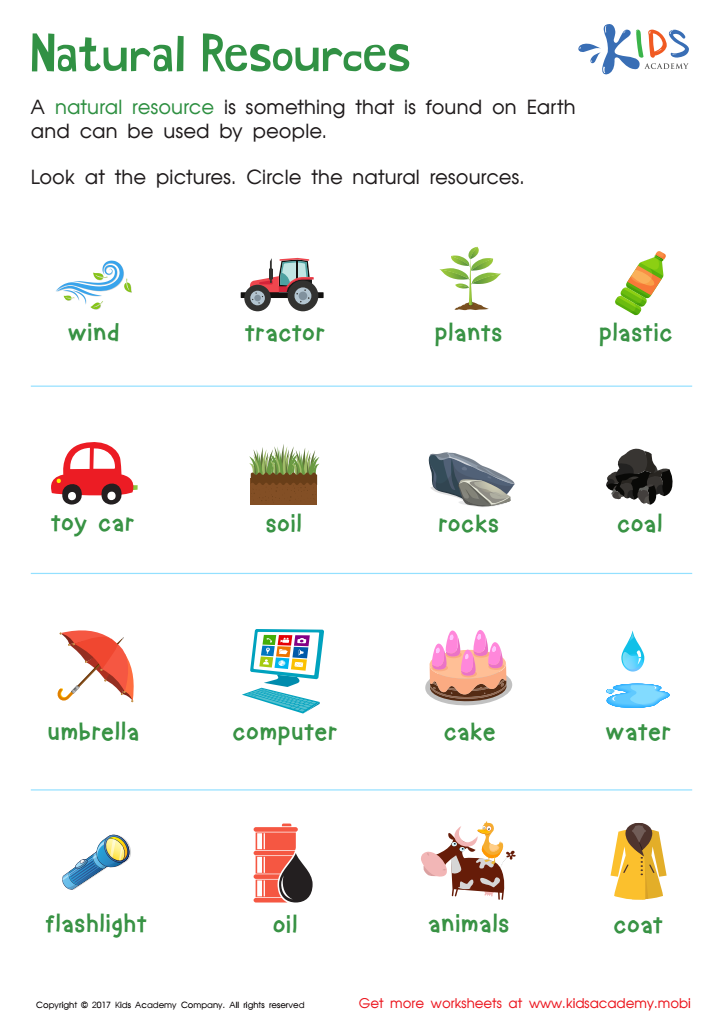
Natural Resources Worksheet
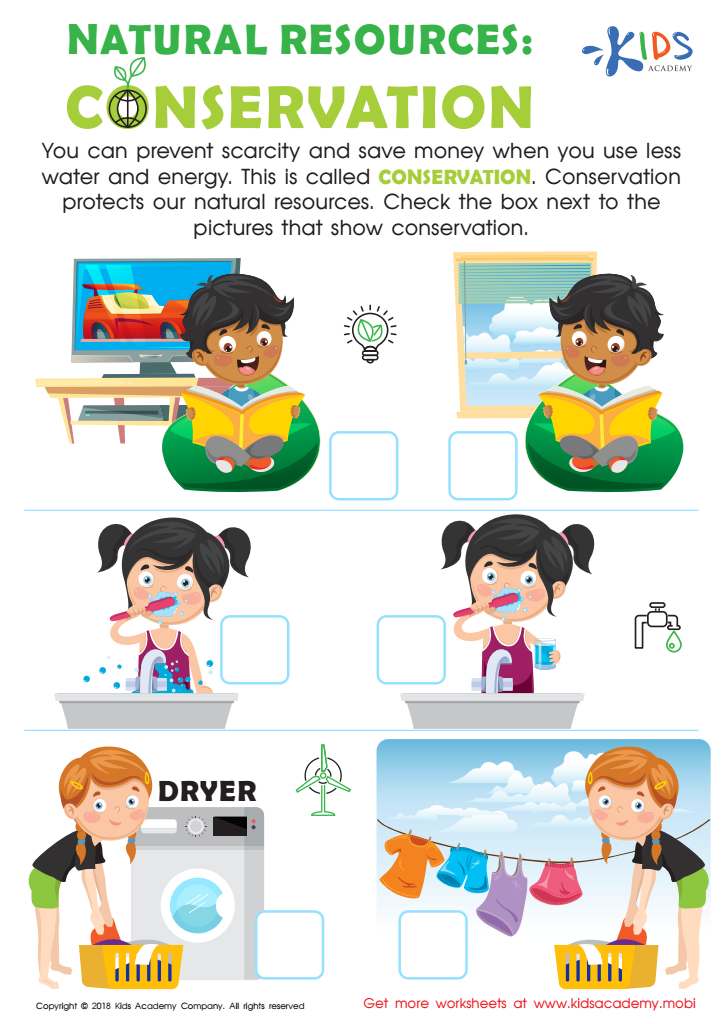
Natural Resources: Conservation Worksheet
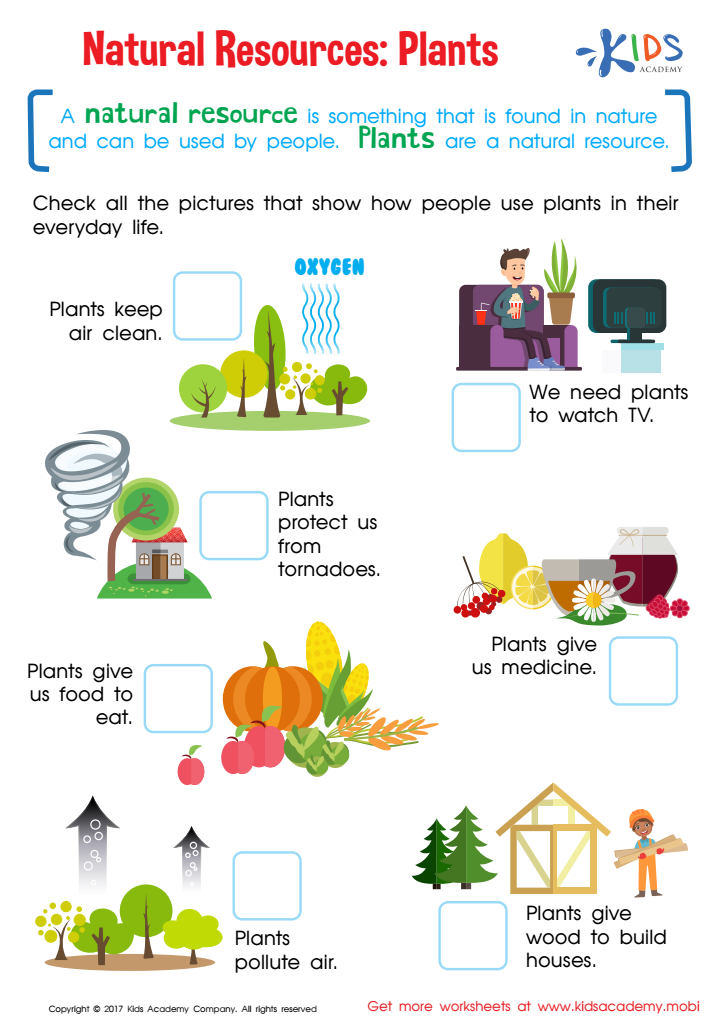
Natural Resources: Plants Worksheet







Understanding natural resources is crucial for young children, as it lays the foundation for responsible environmental stewardship and overall awareness of the world around them. For ages 4-7, learning about natural resources like water, air, soil, plants, and animals can be both engaging and educational.
Firstly, children in this age group are naturally curious and eager to explore their surroundings. By introducing them to the basics of natural resources, parents and teachers can satisfy this curiosity and foster a sense of wonder and respect for nature. Understanding where everyday items come from, like food growing from plants or water coming from rivers and lakes, helps children appreciate the environment's essentiality.
Moreover, early education on natural resources promotes sustainable habits from a young age. When children learn the importance of conserving water or the impact of recycling, they are more likely to develop and maintain these positive behaviors throughout their lives. It’s easier to form environmentally friendly habits early on than to change unsustainable practices later.
Lastly, understanding these resources can enhance a child's critical thinking and problem-solving skills. Asking questions like "Why is it important to save water?" or "What happens if trees are cut down?" encourages children to think about cause and effect and the broader implications of human actions on the environment. This holistic understanding equips them to be thoughtful and responsible citizens in the future.








