
Understanding number sequences Worksheets for Ages 4-7
8 filtered results
Difficulty Level
Grade
Age
-
From - To
Subject
Activity
Standards
Unlock the world of number sequences with our engaging worksheets designed for children ages 4-7. These interactive resources help young learners grasp the fundamentals of counting, patterns, and number relationships. By exploring a variety of activities, kids will enhance their mathematical skills, boost problem-solving abilities, and gain confidence as they progress. Our worksheets cater to different learning styles, ensuring every child stays interested and motivated. Perfect for home or classroom use, these fun, educational tools encourage early numeracy and set a strong foundation for future math success. Dive into the exciting journey of number sequences today!
Favorites
With answer key
Interactive
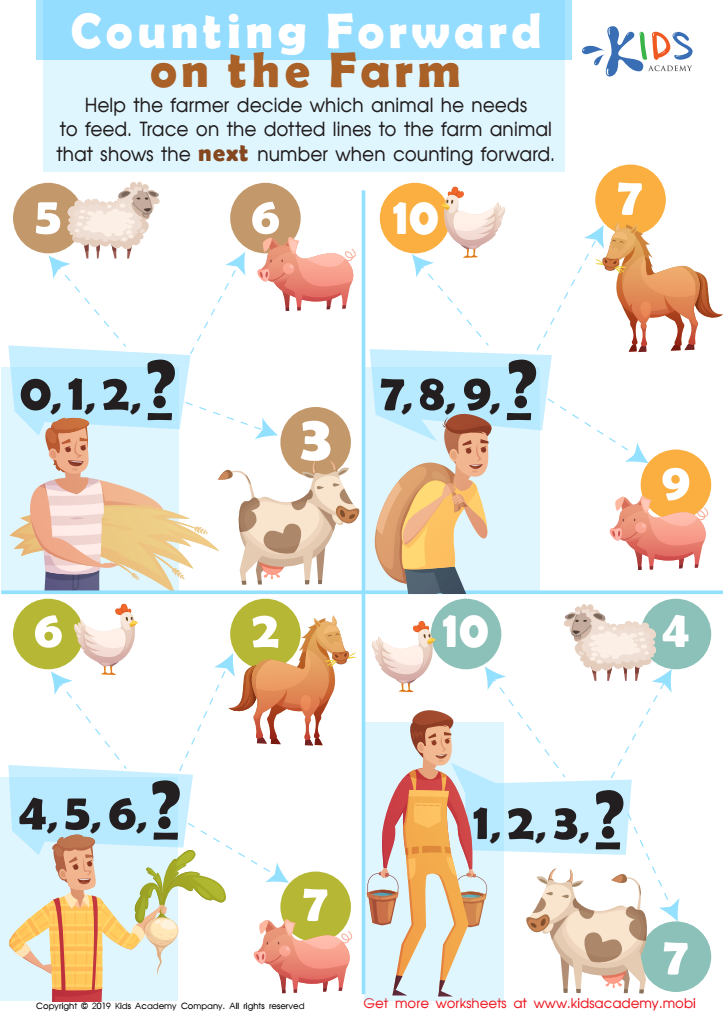
Counting Forward On the Farm Worksheet
Help your child practice counting with this fun worksheet. Have them help a farmer feed the right animal by counting on from a starting point. This activity will help them build number line thinking and refine fine motor skills.
 Assign to My Students
Counting Forward On the Farm Worksheet
Worksheet
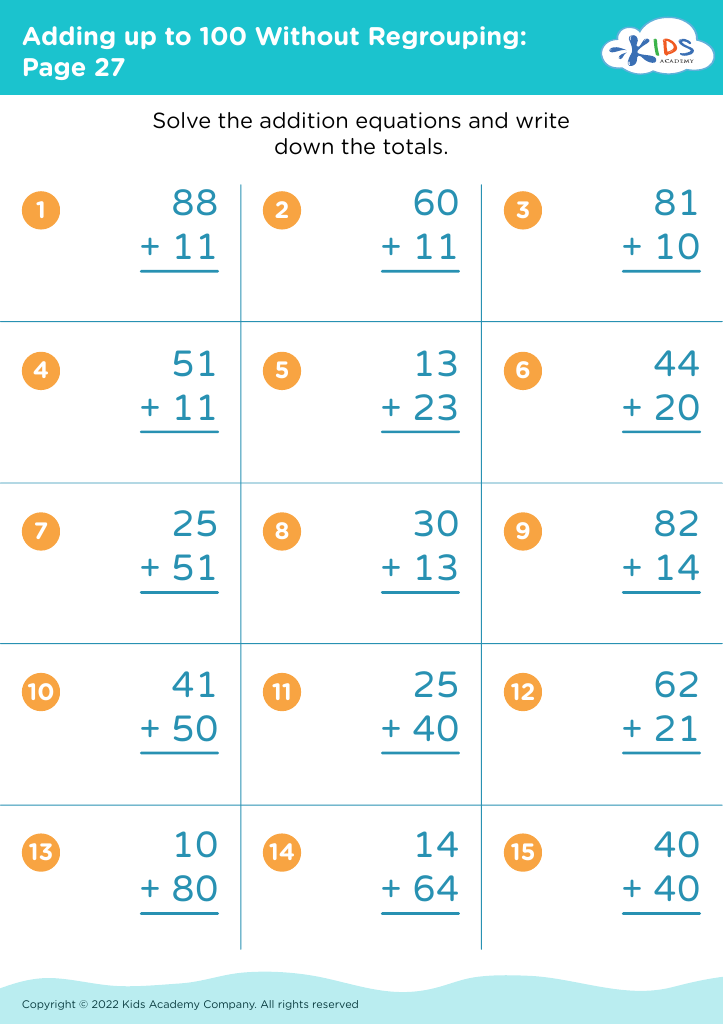
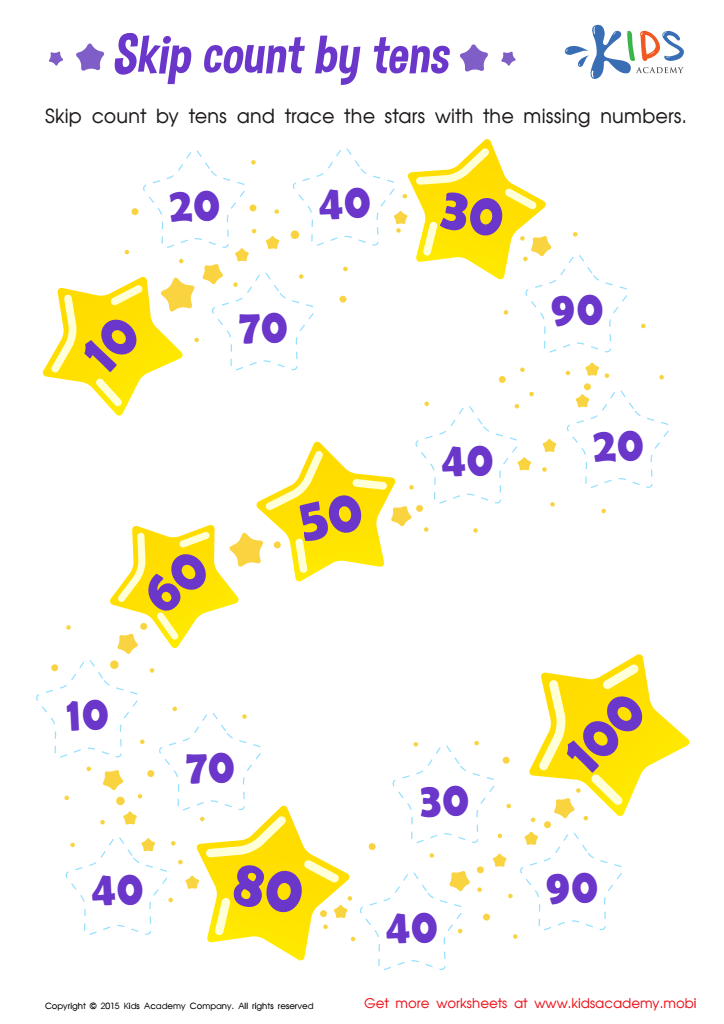
Learn dozens: Skip Count by Tens Printable
Follow a shooting star on an adventure of skip counting by 10s. Strengthen math skills with this fun and colorful worksheet. Kids will solve a puzzle, exercise logical reasoning and problem-solving skills. Get them ready for multiplication and division through increased skip counting abilities. Print this worksheet and take your star to the next level!
Learn dozens: Skip Count by Tens Printable
Worksheet
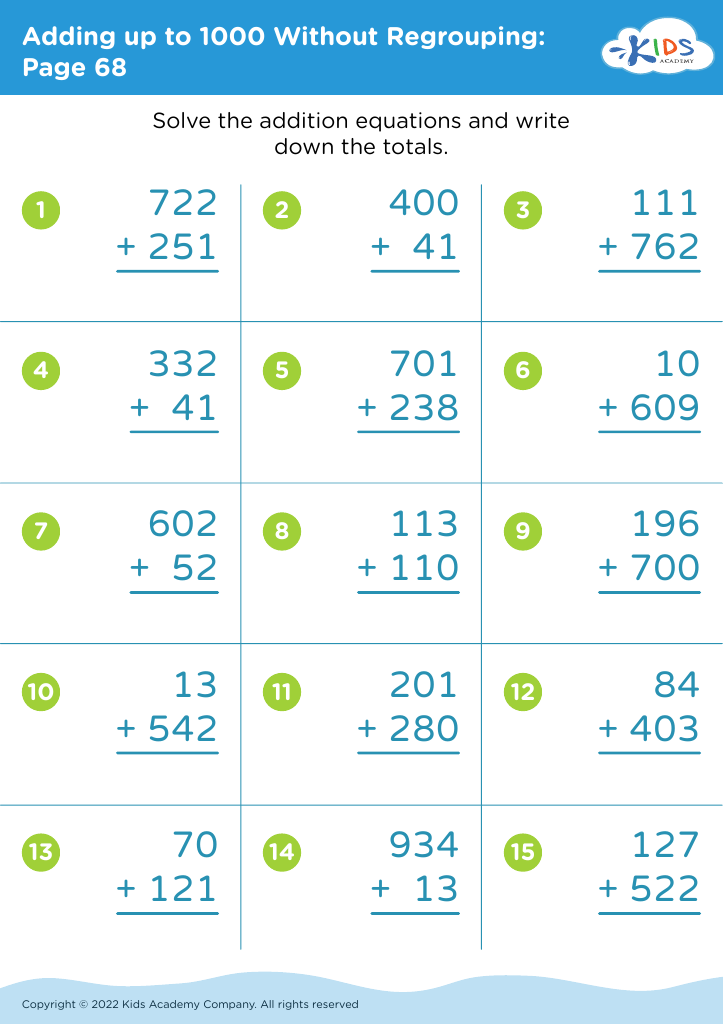
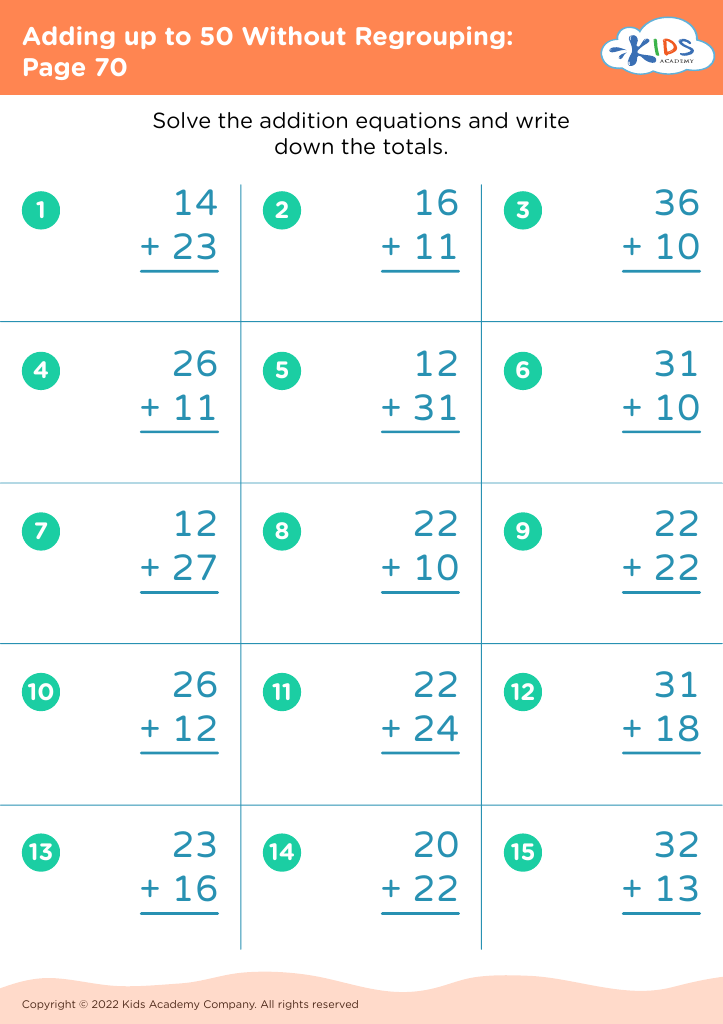
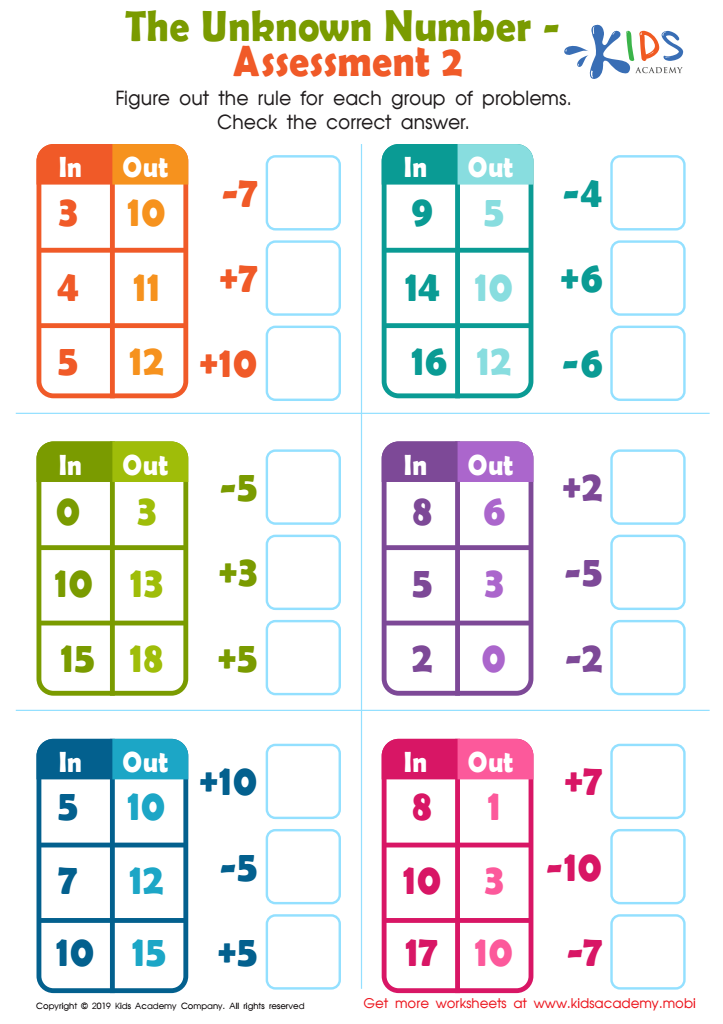
The Unknown Number - Assessment 2 Worksheet
Help your kids to figure out the rule for each group of math problems. Check the right answer and show that there's nothing to be nervous about. Encourage them and use creative learning for better understanding of math. Constant practice is key.
The Unknown Number - Assessment 2 Worksheet
Worksheet
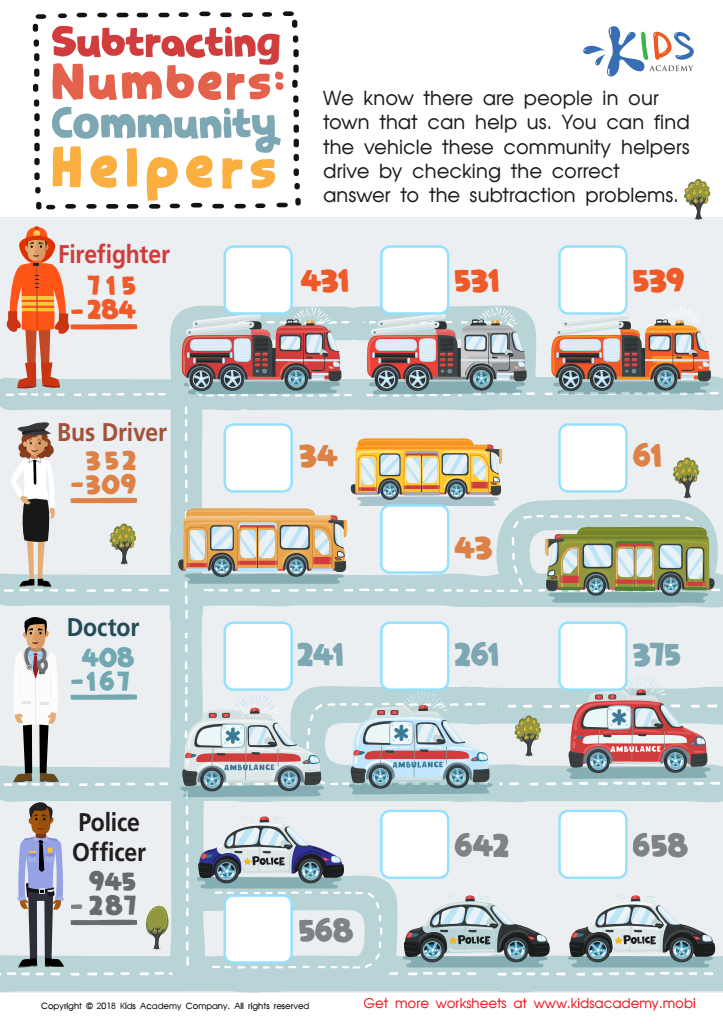
Subtracting Numbers: Community Helpers Worksheet
A community is an area of different people, buildings and other elements. People in a community have varied roles and work together to make it thrive. Ask your child what community helpers they know and how they help. Match the helpers to their vehicles by solving subtraction problems!
Subtracting Numbers: Community Helpers Worksheet
Worksheet
Join Kids Academy for Free
Who is primarily going to use this learning content?








Understanding number sequences is a foundational skill for children aged 4-7 that plays a crucial role in their mathematical development. Number sequences, such as counting forwards and backwards or recognizing patterns, help young learners grasp the concept of order and relationships between numbers. This foundational knowledge is vital for building more complex mathematical concepts later on, such as addition, subtraction, and even basic algebra.
Engaging with number sequences fosters critical thinking and problem-solving skills. Children learn to recognize patterns, predict outcomes, and develop logical reasoning by identifying what comes next in a sequence. These skills are not only essential for mathematics but also transferable to other academic areas and daily life.
Moreover, a solid understanding of sequences boosts a child's confidence and allows them to explore numbers more independently. Teachers and parents play a pivotal role in reinforcing these concepts through fun activities, games, and everyday math conversations. Encouragement and clear explanations help create a positive attitude towards mathematics, setting the stage for future learning successes. Ultimately, cultivating number sequence skills enhances a child's overall cognitive development, laying the groundwork for both academic achievement and confidence in their abilities.








