Understanding plurals Worksheets for Ages 4-7
7 filtered results
-
From - To
Discover our comprehensive "Understanding Plurals Worksheets for Ages 4-7" designed to enhance your child's grammar skills early on. These engaging printables break down the concept of singular and plural nouns into fun, easy-to-follow activities that young learners will love. Perfect for both classroom use and home practice, our worksheets are crafted to encourage language development through interactive puzzles, matching games, and colorful illustrations. Ideal for children aged 4-7, these resources support every child's journey toward mastering essential grammar skills. Boost your child's confidence in language arts with Kids Academy’s plural worksheets today!
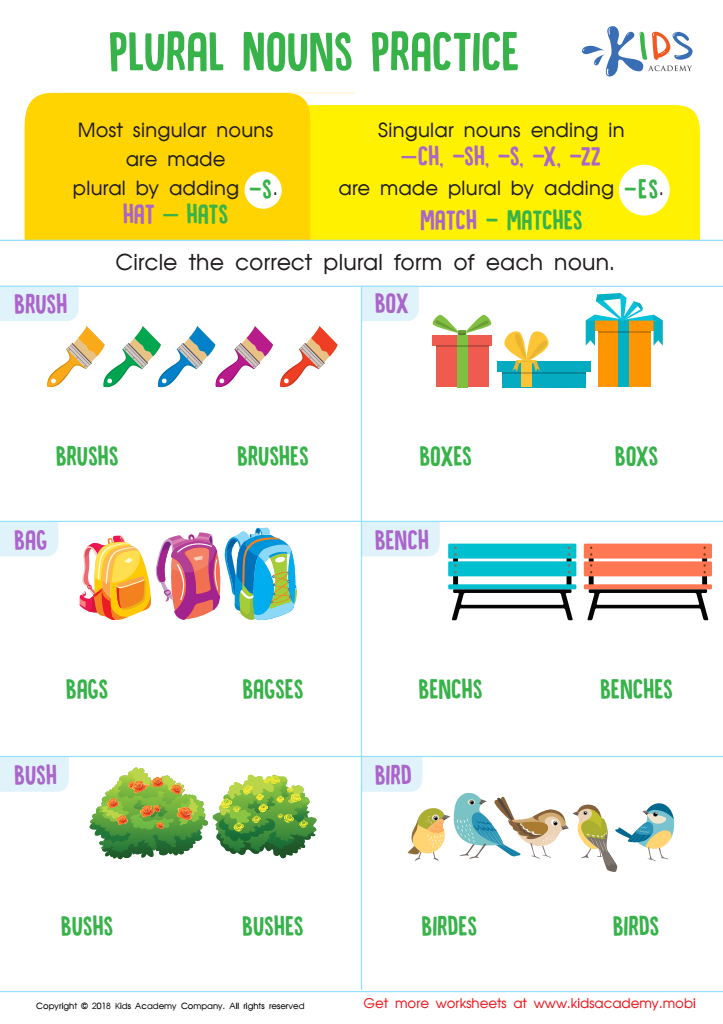
Plural Nouns Practice Worksheet
 Assign to My Students
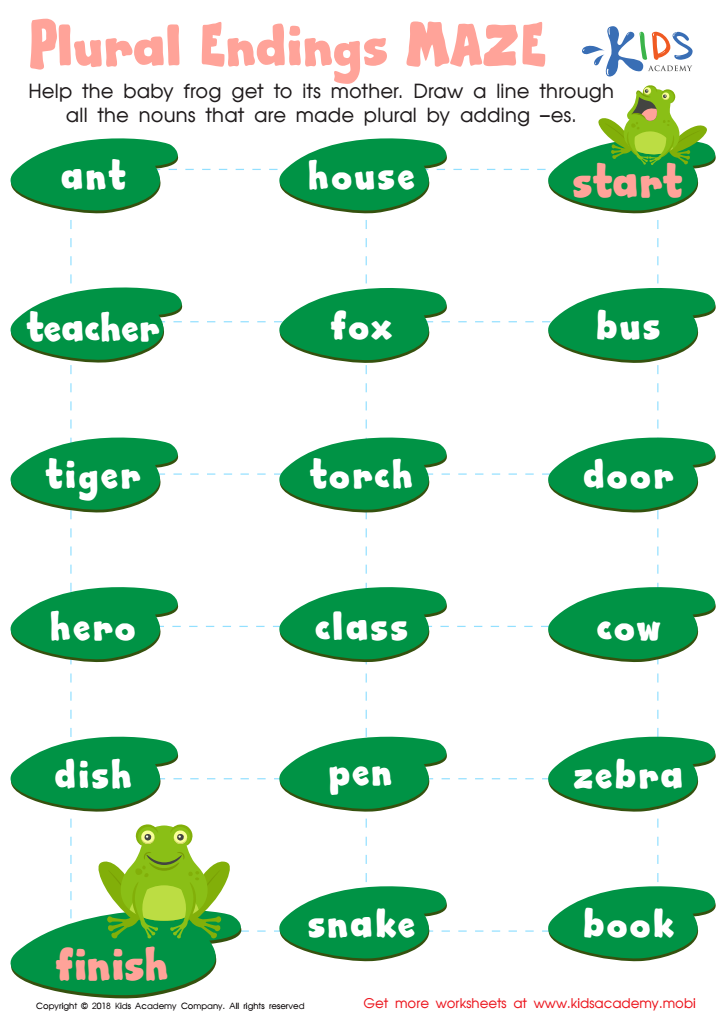
Plural Endings Maze Worksheet
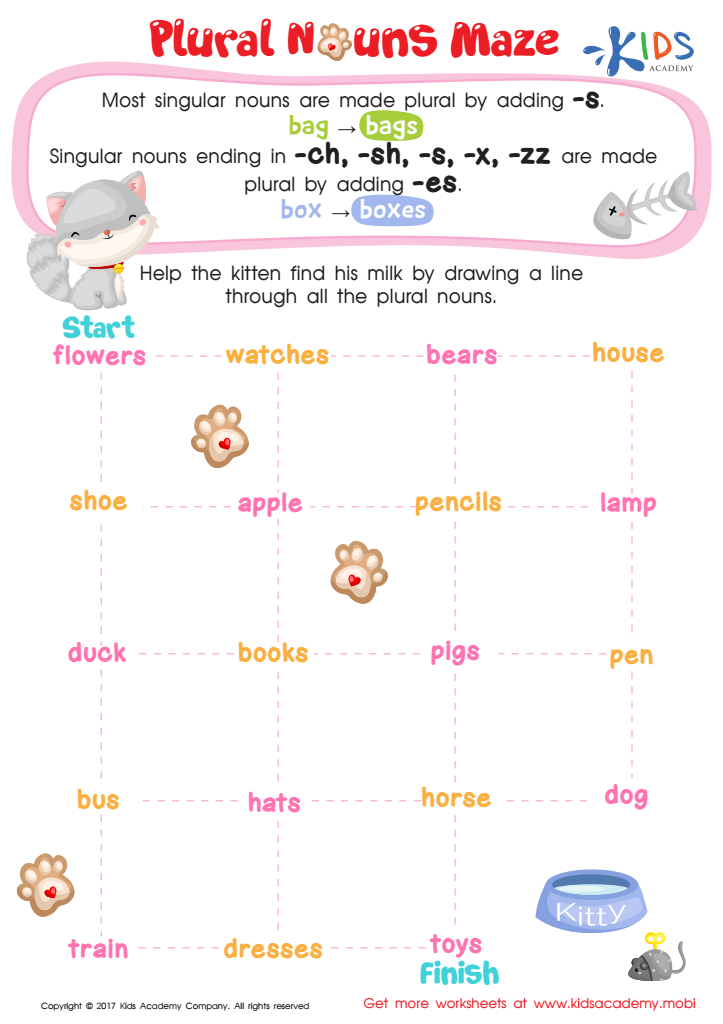
Plural Nouns Maze Worksheet
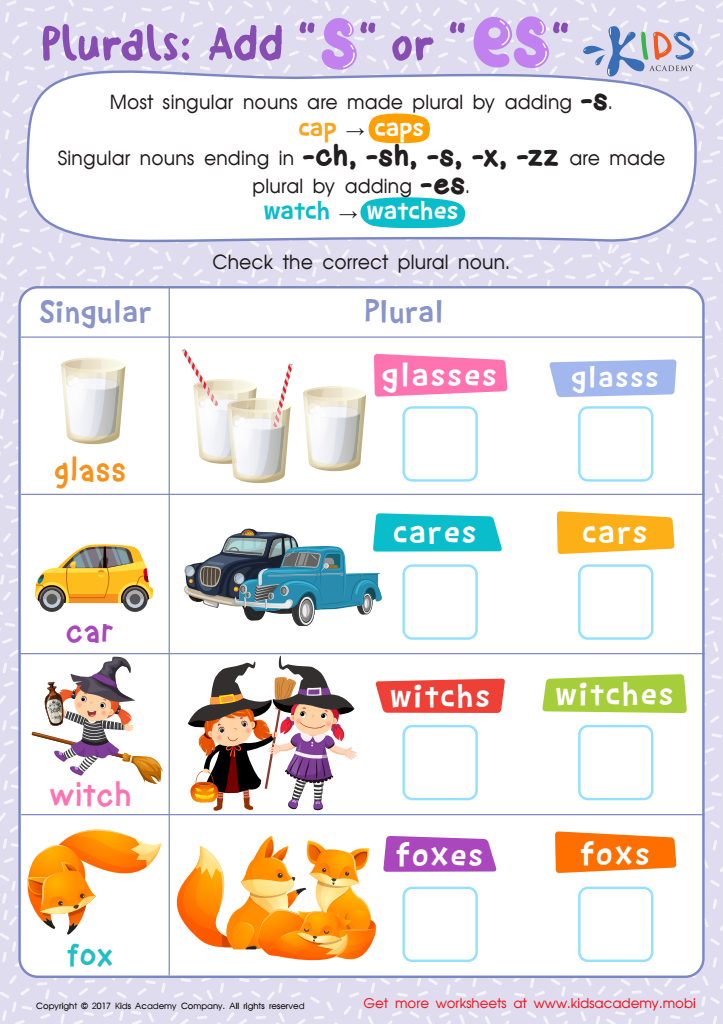
Plurals: "–es" or "–es"? Worksheet
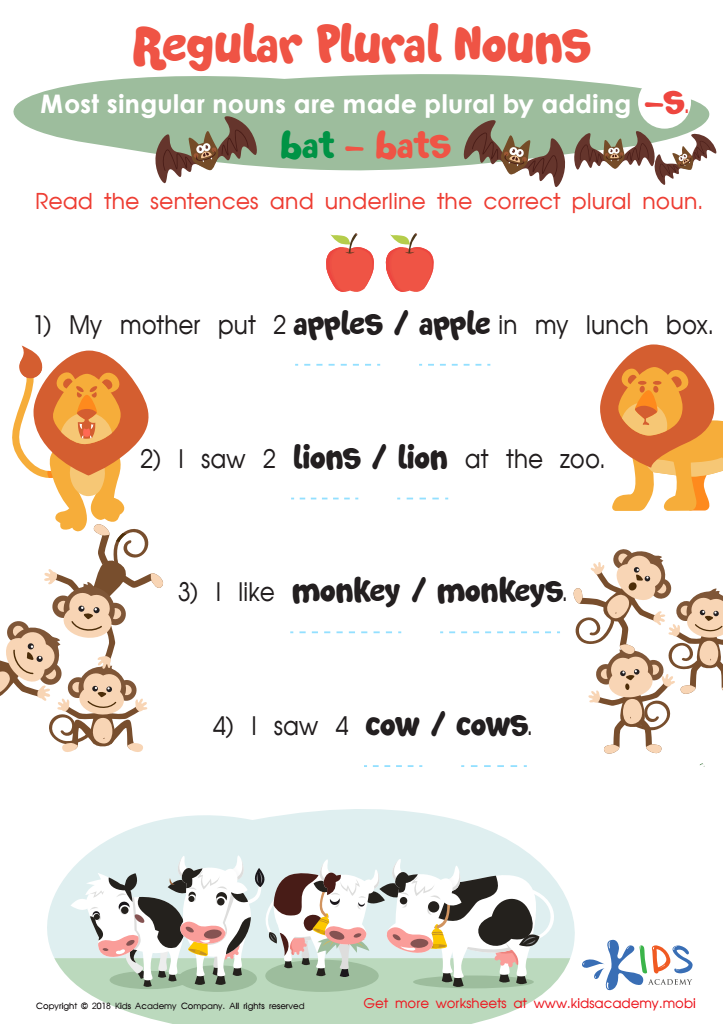
Regular Plural Nouns Worksheet
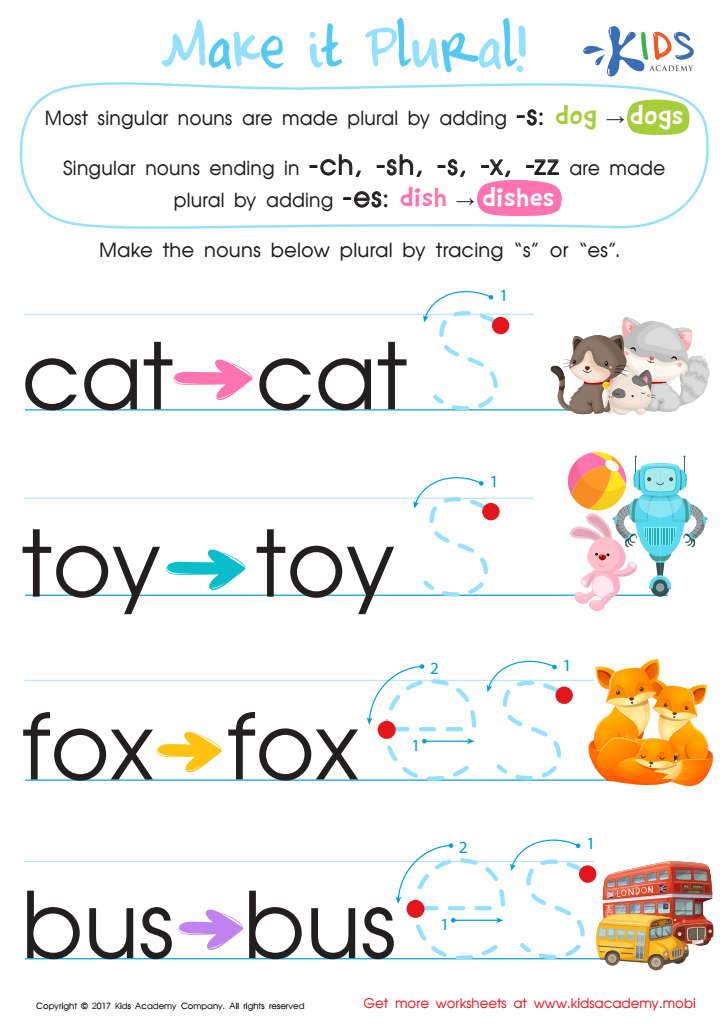
Make it Plural Worksheet


.jpg)

.jpg)



Understanding plurals is vital for young children's language development, typically aiming at ages 4-7. During these early years, children are actively expanding their vocabulary and grasping the basic rules that govern language. Knowing how to properly form plurals helps improve their communication skills, enabling them to express themselves more clearly and effectively.
For parents and teachers, encouraging children to master plurals enriches their reading and writing abilities. This foundational knowledge aids in better comprehension of books and texts, facilitating academic success. When children understand plurals, they can more confidently tackle more complex grammatical structures as they advance in grade levels.
Additionally, understanding plurals is essential for social development. Children learn to interact and convey their thoughts more accurately, building stronger relationships with peers and adults. Comprehension of this aspect of language also fosters self-confidence, as the child can navigate conversations more adeptly.
Early mastery of plurals is a stepping stone toward broader linguistic competence. Therefore, parents and teachers play a crucial role by incorporating engaging activities and consistent practice to help children learn plurals. This early emphasis paves the way for continued academic and social success, making it a critical area of focus in their developmental journey.








