
Visual interpretation skills Worksheets for Ages 4-7
3 filtered results
Difficulty Level
Grade
Age
-
From - To
Subject
Activity
Standards
Unlock your child's potential with our engaging Visual Interpretation Skills Worksheets for Ages 4-7! Designed to enhance critical visual processing abilities, these worksheets provide fun and interactive activities that cultivate observation and comprehension skills. Children will explore various exercises that promote understanding of shapes, patterns, and spatial concepts through colorful illustrations and relatable scenarios. Ideal for young learners, our resources foster creativity and analytical thinking, making learning enjoyable. Whether in the classroom or at home, these worksheets equip children with essential skills for lifelong learning. Dive into our collection and watch your child’s visual interpretation skills flourish! Exploring has never been this fun!
Favorites
With answer key
Interactive
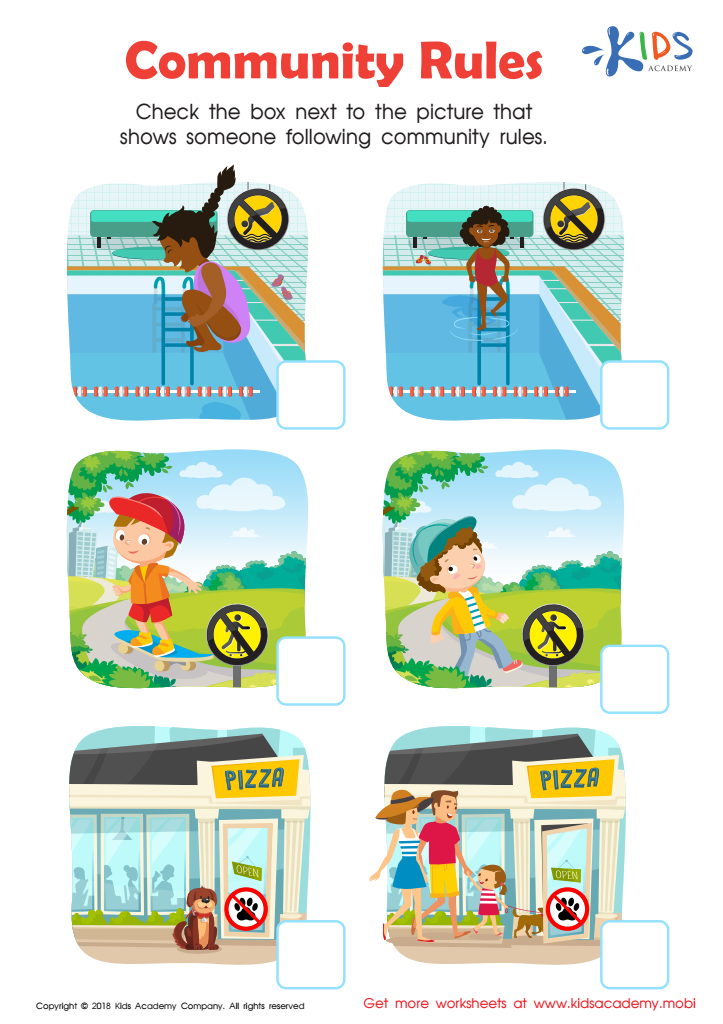
Community Rules Worksheet
Communities are where different people live, work and worship. They're made up of homes, schools, places of worship, businesses and other buildings. To create a healthy, functioning community, it's important for members to follow the rules and guidelines. Use this printout to teach kids about community rules. Ask them to check the box next to the picture that shows someone following them.
 Assign to My Students
Community Rules Worksheet
Worksheet
Join Kids Academy for Free
Who is primarily going to use this learning content?




.jpg)


.jpg)
Visual interpretation skills are essential for children aged 4-7 as they form the foundation for academic and cognitive development. These skills enable young learners to make sense of the world around them by decoding visual information, such as shapes, colors, symbols, and images. At this critical developmental stage, children begin to recognize patterns and categorize information, which aids in their understanding of math concepts, reading comprehension, and spatial awareness.
For parents and teachers, nurturing visual interpretation skills promotes creativity and enhances problem-solving abilities. Children who can interpret and manipulate visual data are better equipped to engage in hands-on learning and explore their environment effectively. This ability also fosters independence and critical thinking, as children learn to make decisions based on visual cues.
Moreover, strong visual literacy is vital in today’s image-saturated society, where visuals often convey meaning faster than words. By encouraging visual interpretation, parents and teachers help children develop resilience in facing complex information, ultimately setting the stage for lifelong learning. Integrating opportunities for visual exploration through arts, games, and interactive activities helps children build these skills, ensuring they are prepared for future challenges and successes in school and beyond.








