Weather identification Worksheets for Ages 4-7
7 filtered results
-
From - To
Discover exciting Weather Identification Worksheets for kids aged 4-7. These interactive printables make learning about weather fun and engaging. Designed by educational experts, our weather worksheets help children recognize different weather conditions, understand season changes, and build vocabulary through hands-on activities. Perfect for preschool and early elementary students, these resources blend creativity with learning, fostering curiosity and foundational science knowledge. Whether used in the classroom or at home, these printable worksheets are an excellent tool for teaching young learners about our dynamic world. Foster a love for learning and spark curiosity with our weather identification worksheets today!
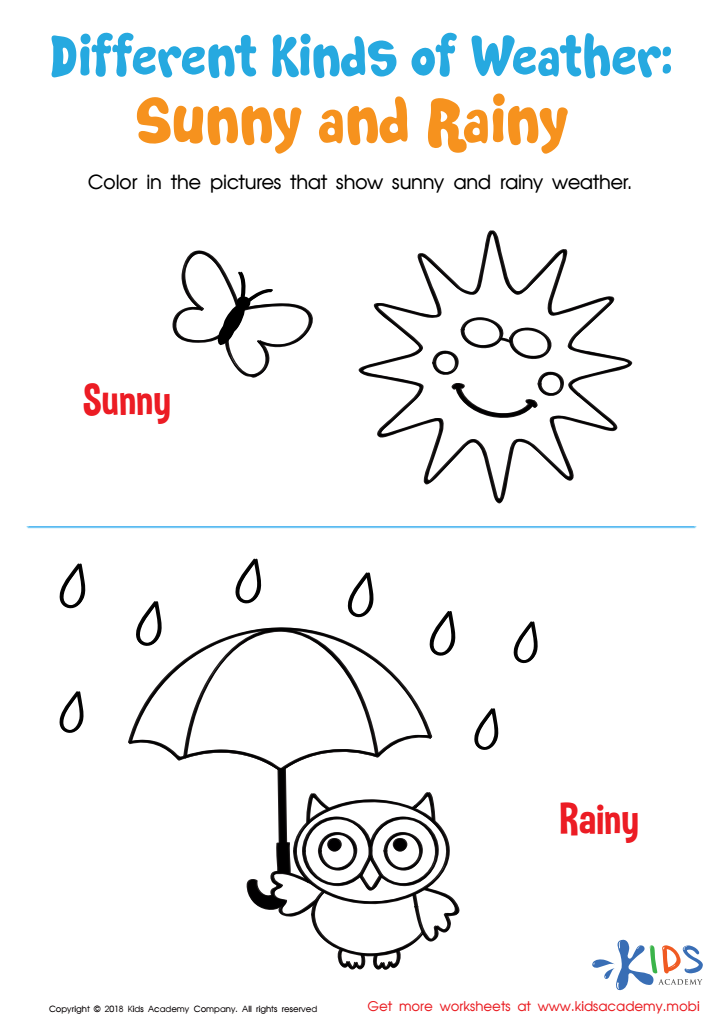
Different Kinds of Weather: Sunny and Rainy Worksheet
 Assign to My Students
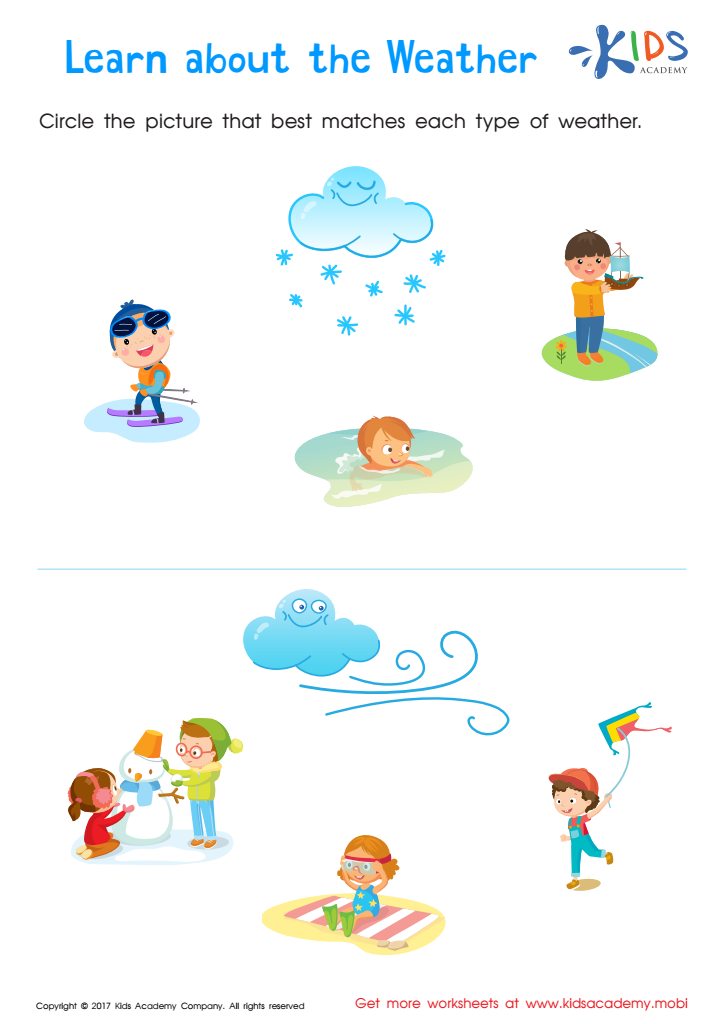
About the Weather Printable
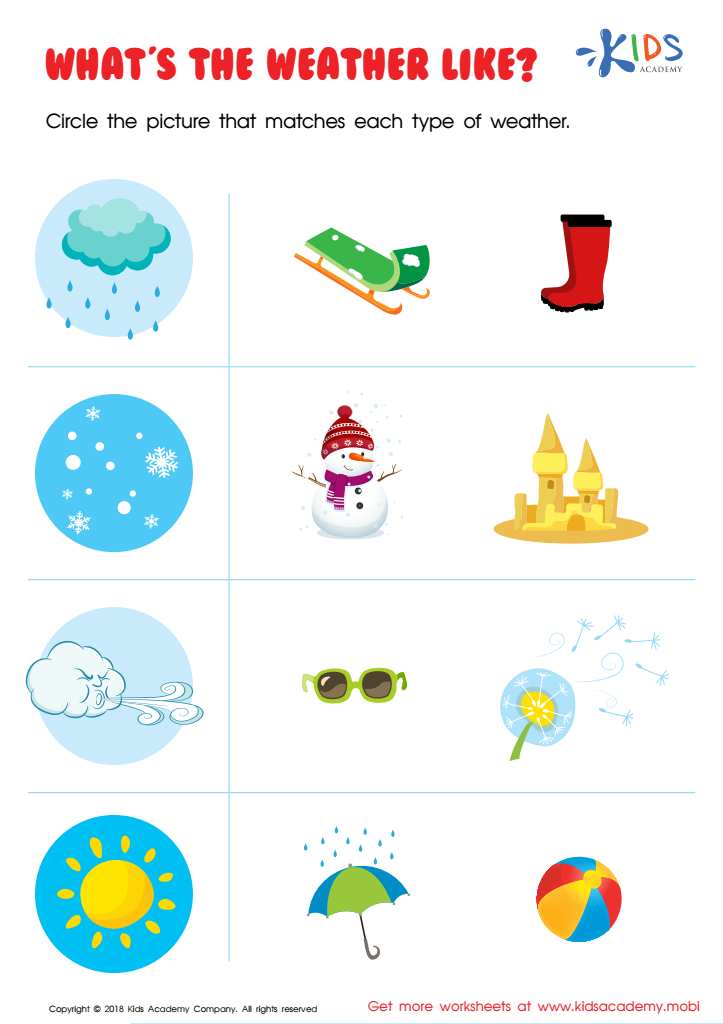
What's the Weather Like? Worksheet
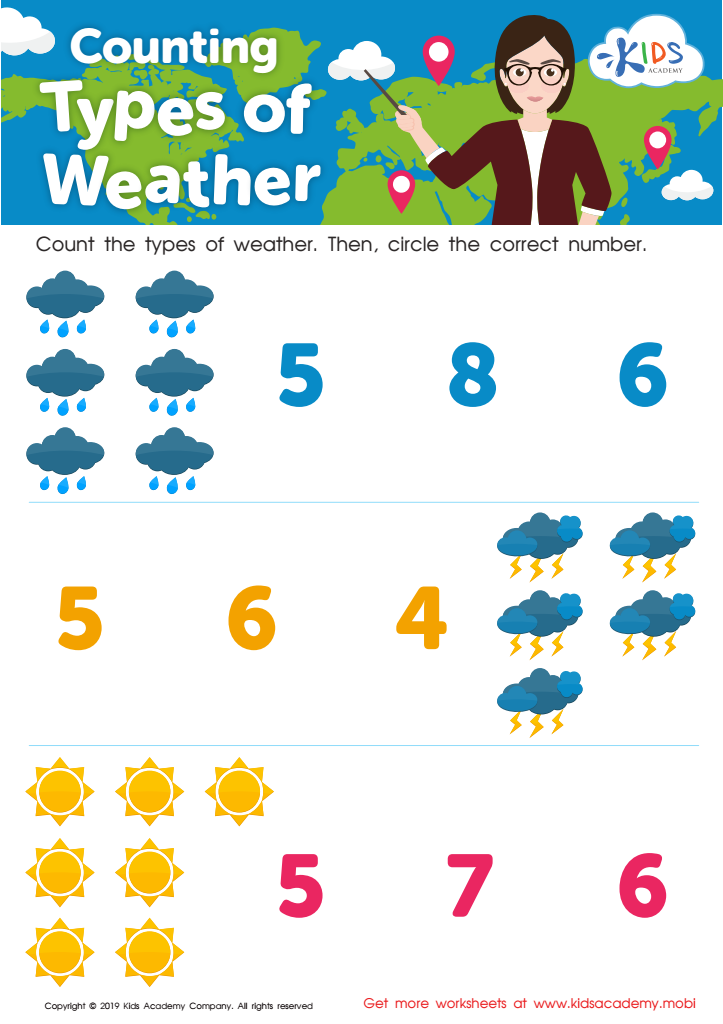
Counting Types of Weather Worksheet
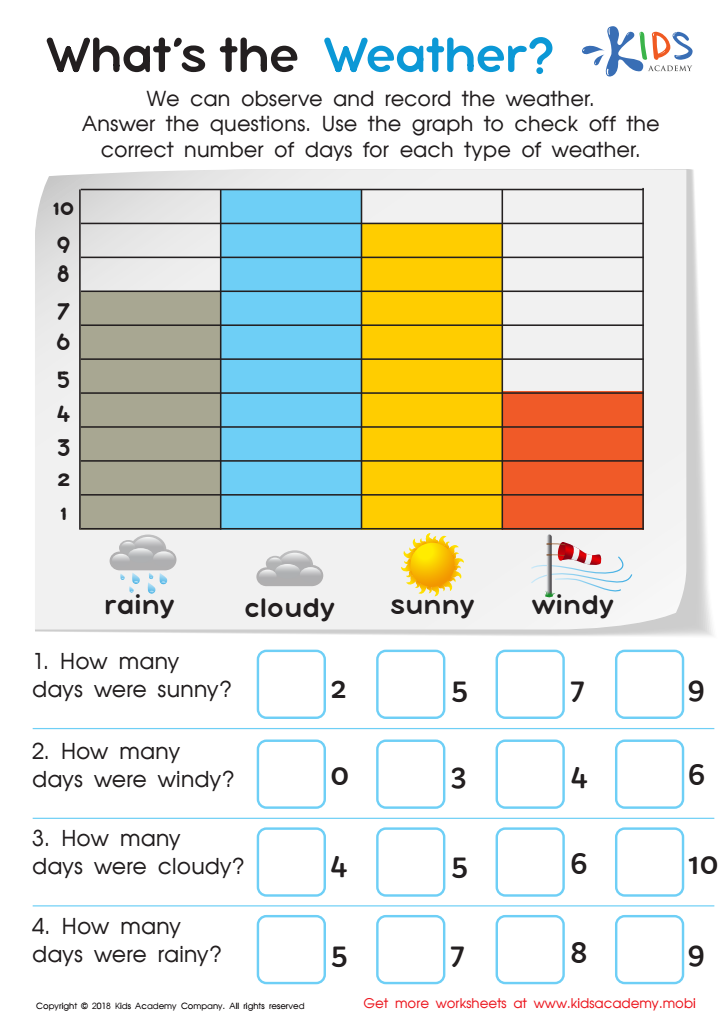
What's the Weather? Worksheet
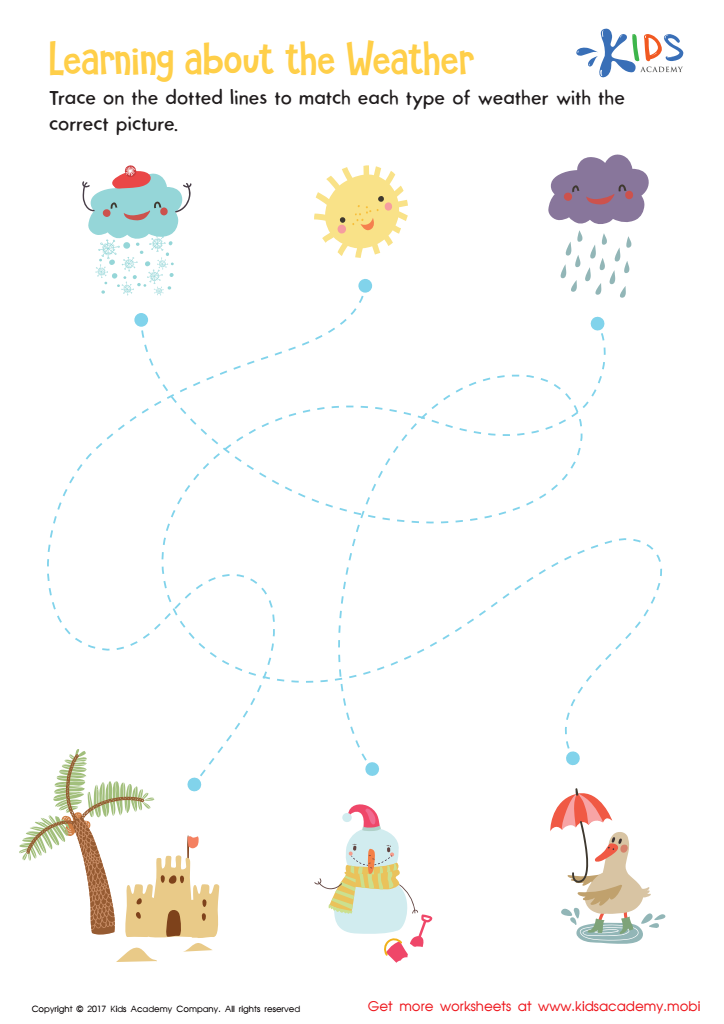








Weather identification for ages 4-7 is crucial for several reasons, supporting both cognitive and practical dimensions of early childhood development. Firstly, understanding weather and its patterns helps foster a sense of curiosity and scientific inquiry in young minds. It introduces them to basic scientific concepts such as observation, pattern recognition, and cause-and-effect relationships in a simple, comprehensible manner.
Additionally, learning about weather conditions enhances children's safety and awareness. Knowing whether it’s hot, cold, rainy, or sunny helps them make informed decisions about appropriate clothing and activities, promoting self-sufficiency and personal care. For instance, they learn to wear boots and carry an umbrella when it looks like rain, or to apply sunscreen when it's sunny.
Weather identification also integrates into broader educational themes such as seasons, nature, and geography, creating a holistic learning experience. This naturally strengthens language skills as they learn and use new vocabulary such as “cloudy,” “windy,” or “snowy.”
Moreover, this practical knowledge boosts children's ability to engage in outdoor play safely and in a timely manner, fostering physical activities and social interactions. Thus, emphasizing weather identification for young children isn't just educational— it’s a fundamental aspect of fostering well-rounded, aware, and curious young learners.








