Counting skills 2D Shapes Worksheets for Ages 4-7
6 filtered results
Difficulty Level
Grade
Age
-
From - To
Subject
Activity
Standards
Enhance your child's learning experience with our Counting Skills 2D Shapes Worksheets for Ages 4-7! Designed specifically for young learners, these engaging worksheets help kids develop fundamental counting skills while exploring various 2D shapes. Each activity combines fun visuals with essential math concepts, allowing children to practice counting while identifying circles, squares, triangles, and more. Perfect for home or classroom use, these worksheets foster creativity and confidence in early math learners. Encourage your child's love for shapes and numbers as they learn through interactive exercises that promote critical thinking and problem-solving skills. Start counting and exploring shapes today!
Favorites
With answer key
Interactive
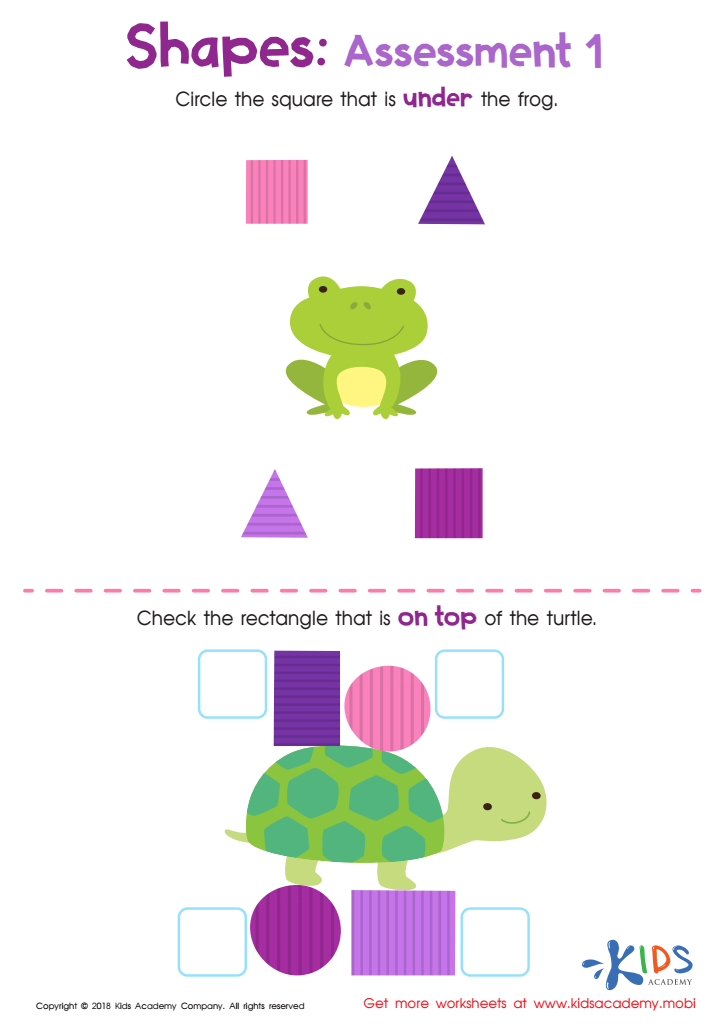
Geometry – Assessment 1 Worksheet
This activity helps preschoolers find shapes "on top of" and "under" animals. They must identify the correct shapes assigned to them. It's a great way to learn geometry and placements of objects.
 Assign to My Students
Geometry – Assessment 1 Worksheet
Worksheet


Count the Shapes Worksheet
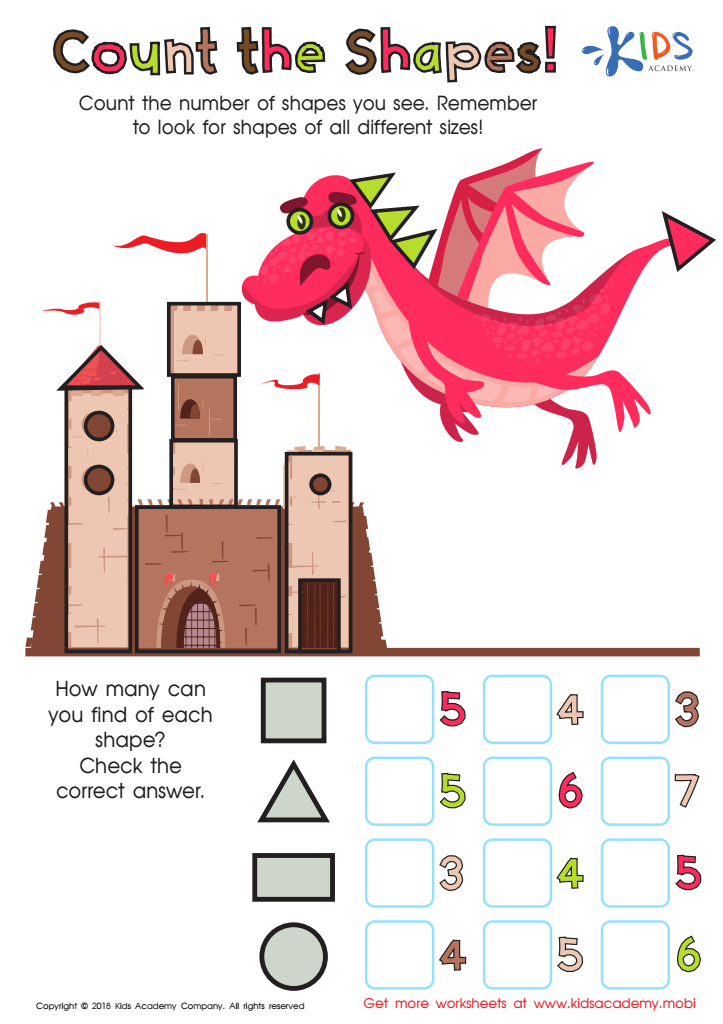
This fun and learning worksheet is perfect for sharpening visual discrimination skills. Kids search a castle picture featuring a dragon and identify shapes, counting circles, squares, triangles and rectangles. Checking the correct box beside the number, they practice shape identification and counting. Download now and get started!
Count the Shapes Worksheet
Worksheet
Woodpecker and Triangles Worksheet
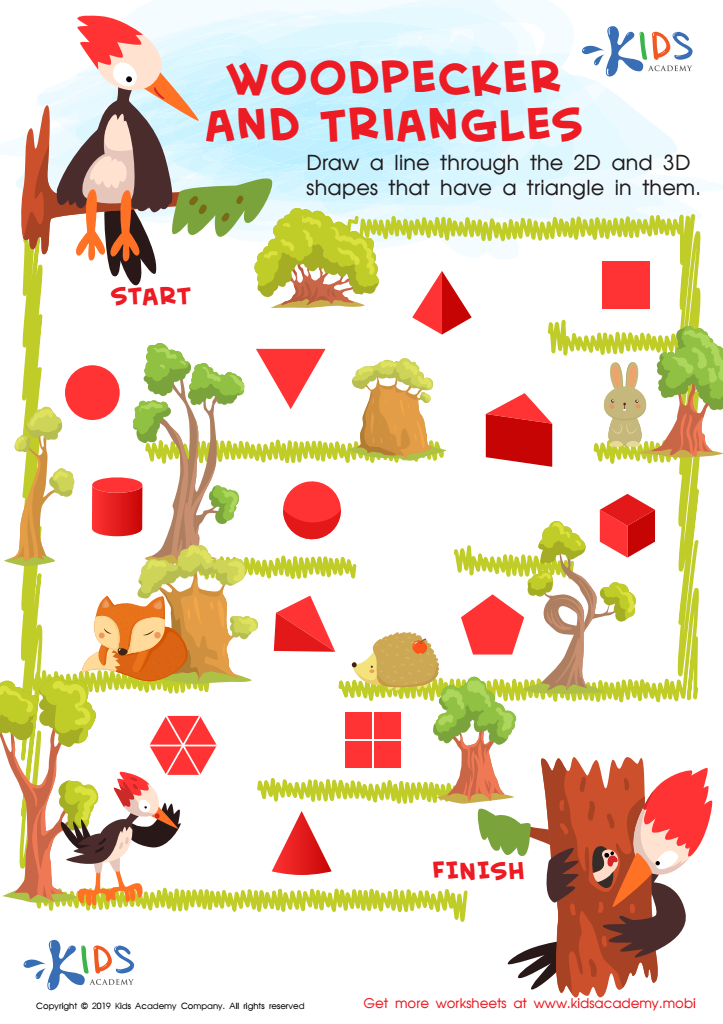
Woodpeckers peck wood, and this printout helps kids learn about triangles. Ask your kindergartners to draw a triangle, then draw a line through the shapes that have a triangle in them to help the woodpecker get out of the maze.
Woodpecker and Triangles Worksheet
Worksheet
Using Squares to Make Rectangles Worksheet
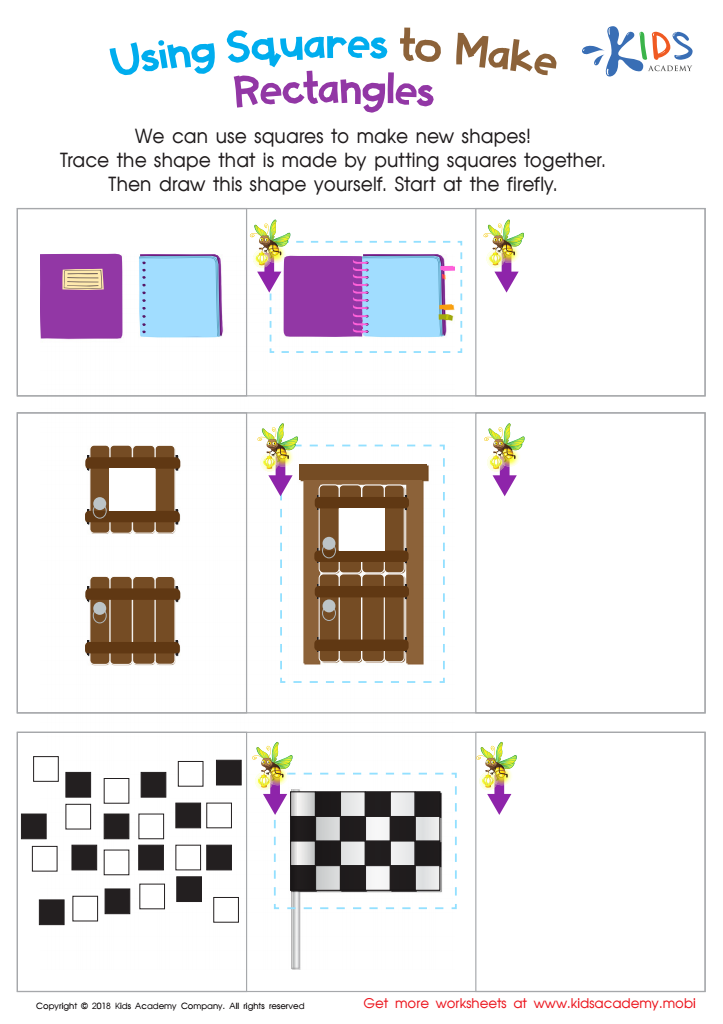
Creating shapes from other shapes (composing shapes) develops spatial skills, an essential geometry standard for young students. This worksheet introduces familiar square objects, then demonstrates how they create rectangles. Students practice tracing and then drawing the shape independently. Download this free math resource for the classroom today! (80 words)
Using Squares to Make Rectangles Worksheet
Worksheet
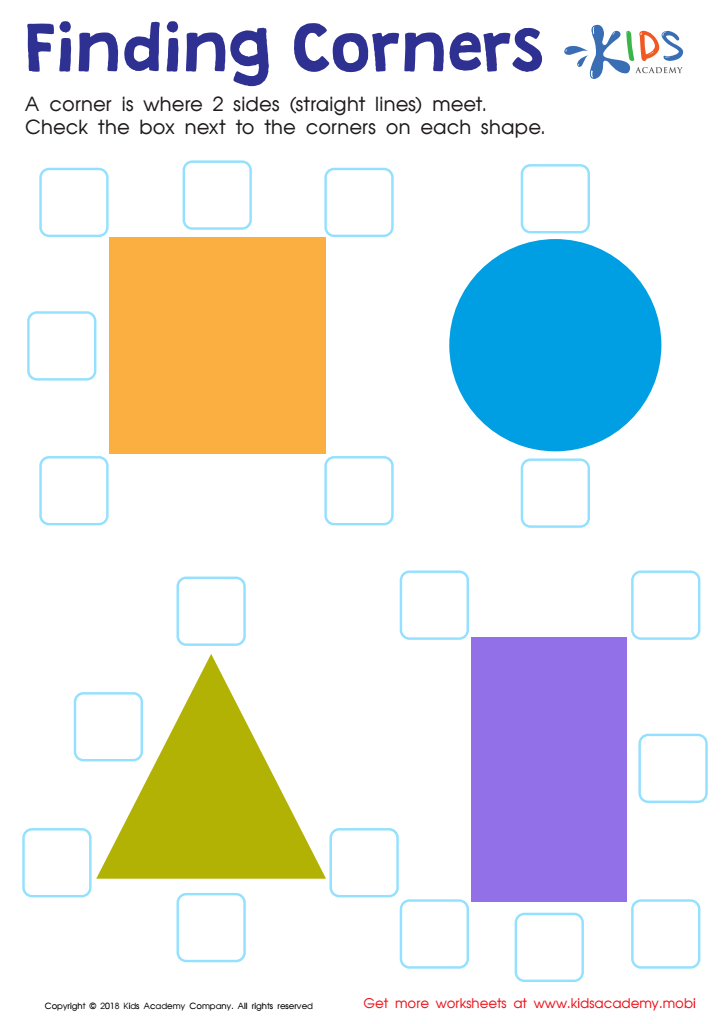
Finding Corners Worksheet
This vibrant worksheet introduces young learners to the fundamentals of geometric shapes. Through the downloadable PDF, they'll develop an understanding of corners - the intersection of two line segments - and how to identify them on different shapes. Fun colors and boxes let them label corners, helping them master this concept for future geometric reasoning.
Finding Corners Worksheet
Worksheet
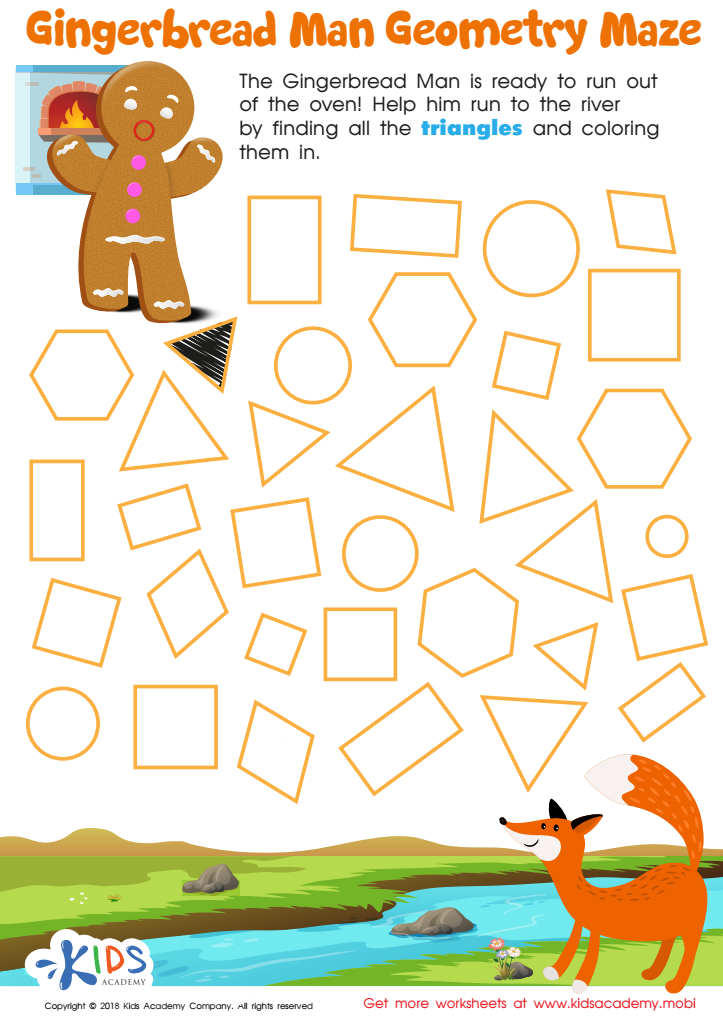
Gingerbread Man Geometry Maze Worksheet
Help a beloved character escape the oven! Kids race through a sea of geometrical shapes, searching for triangles of various sizes. With this free worksheet, they can have fun while learning about similarity of geometrical shapes concepts. Run, run, run as fast as they can!
Gingerbread Man Geometry Maze Worksheet
Worksheet
Join Kids Academy for Free
Who is primarily going to use this learning content?








Counting skills and an understanding of 2D shapes are foundational components of early childhood education, critical for cognitive development in children aged 4-7. Developing these skills encourages numeracy and spatial reasoning, essential for more complex mathematical concepts in later years.
Counting lays the groundwork for arithmetic skills, helping children recognize patterns and develop problem-solving abilities. When children become proficient in counting, they can perform tasks like sorting, measuring, and simple addition or subtraction, which boosts their confidence and fosters a love for learning.
2D shapes, including circles, squares, triangles, and rectangles, enhance children's ability to identify, categorize, and compare objects in their environment. Recognizing shapes helps young learners enhance their observational skills, leading to improved dexterity in tasks like drawing and constructing. Shape recognition is also integral in concepts of geometry that they will encounter in later grades.
Moreover, when educators and parents prioritize these skills, they contribute to children's overall cognitive development, preparing them not just for academic success, but also for real-world applications. By engaging children through fun activities, games, and everyday experiences, parents and teachers play a crucial role in nurturing efficient learners, ultimately establishing a solid foundation for future educational growth.