Matching skills 2D Shapes Worksheets for Ages 4-7
5 filtered results
Difficulty Level
Grade
Age
-
From - To
Subject
Activity
Standards
Enhance your child's understanding of 2D shapes with our engaging Matching Skills Worksheets, designed specifically for ages 4-7. These printable activities provide a fun and interactive way for young learners to recognize and match various shapes, improving their cognitive skills and shape identification. With colorful visuals and simple instructions, children will enjoy sorting and connecting different 2D shapes while developing foundational math abilities. Perfect for both classroom and home use, our worksheets promote essential learning through hands-on practice. Help your child build confidence and foster a love for learning with our educational resources. Start matching shapes today!
Favorites
With answer key
Interactive
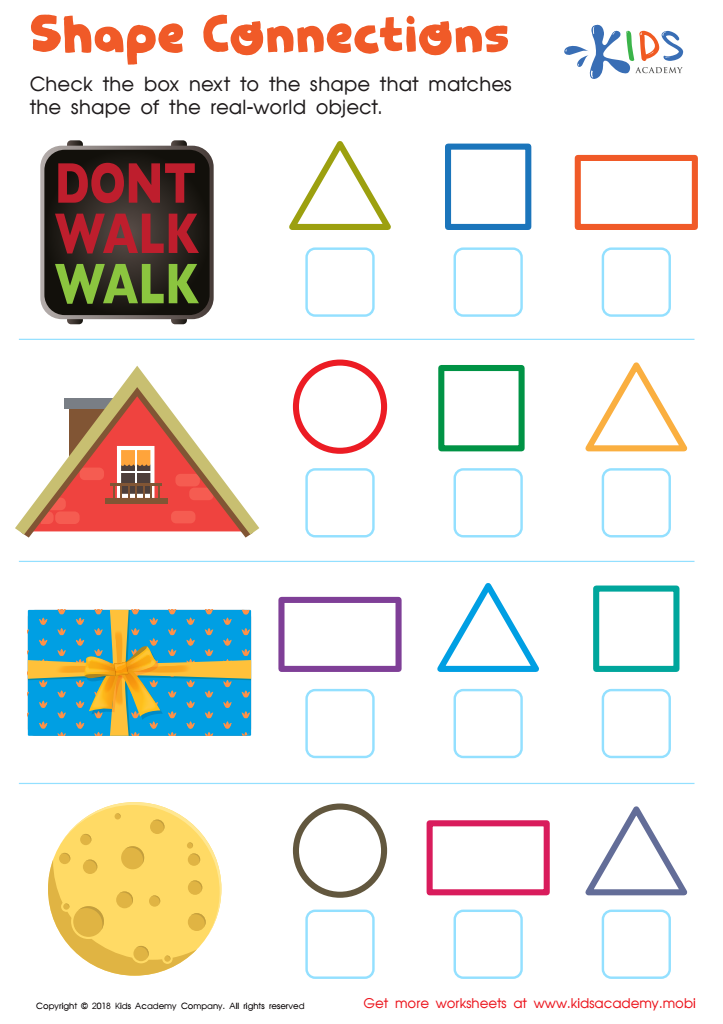
Shape Connections Worksheet
Geometric shapes are all around us and this fun worksheet brings it to life. Kids will match real-world pictures with the corresponding basic shapes, connecting how math is used in various aspects of daily life. A great way to reinforce these concepts!
 Assign to My Students
Shape Connections Worksheet
Worksheet

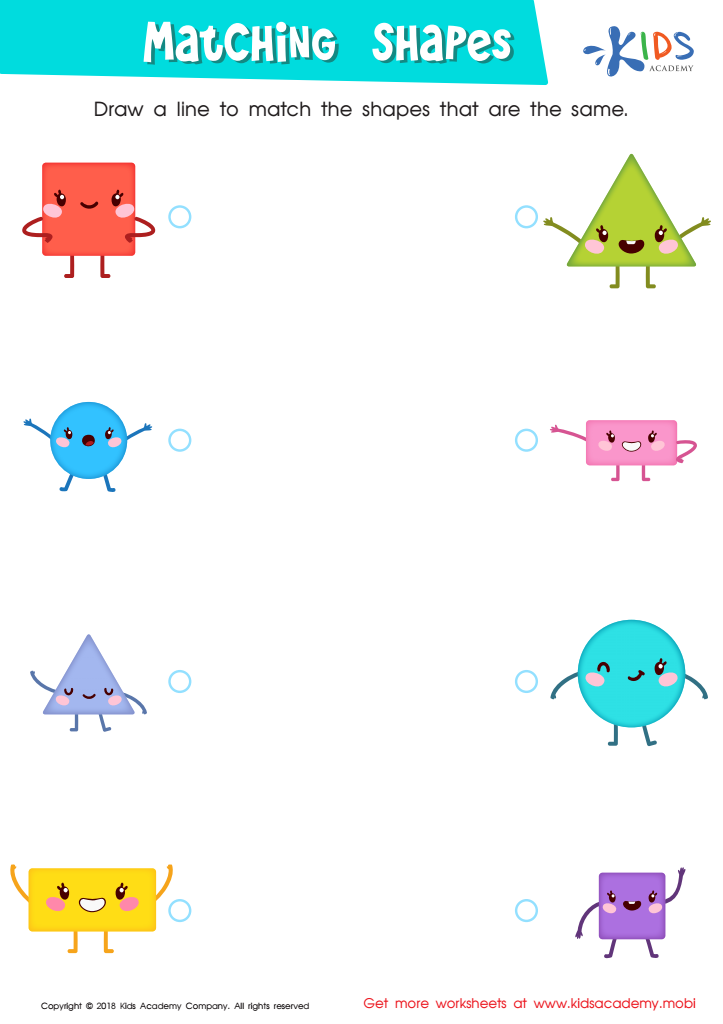
Matching Shapes Worksheet
Introduce your students to the 4 most common shapes: squares, triangles, rectangles and circles. When they progress, show them other shapes like rhombuses and parallelograms. Use this matching shapes worksheet to help them match two identical shapes. Print out the worksheet and instruct them to draw lines connecting them.
Matching Shapes Worksheet
Worksheet
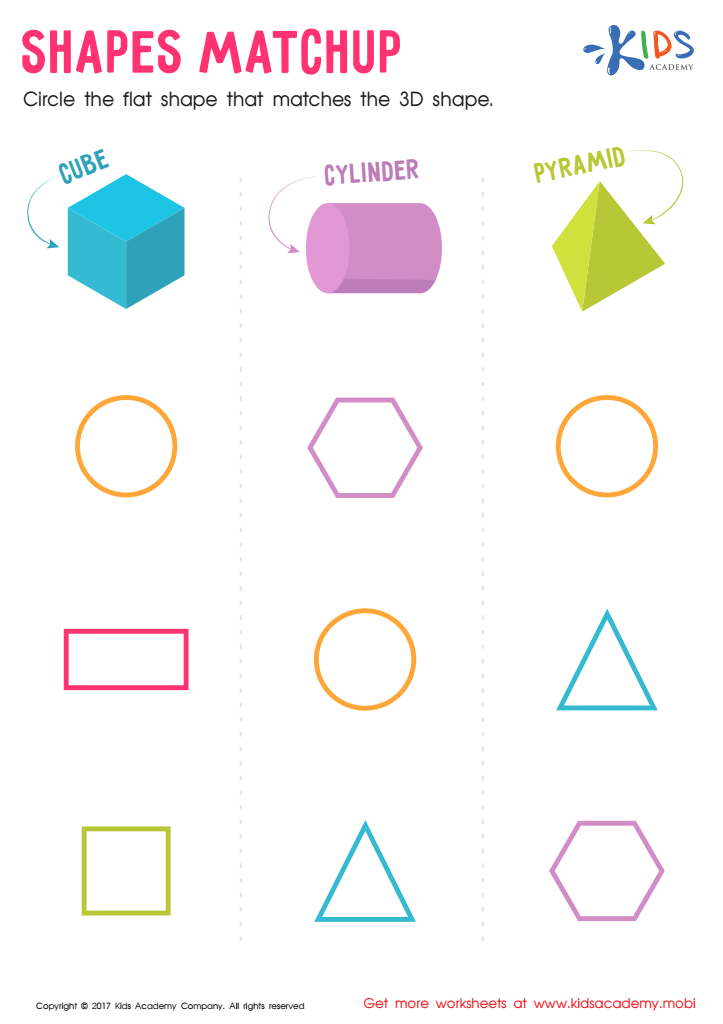
Shapes Matchup Worksheet
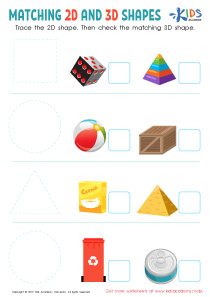
Explain to your kids that 3D shapes are the view from another angle, offering depth, height and width. This worksheet encourages them to match the 3D shapes to their 2D form. They can circle the flat shapes that match the 3D shapes in the printout.
Shapes Matchup Worksheet
Worksheet
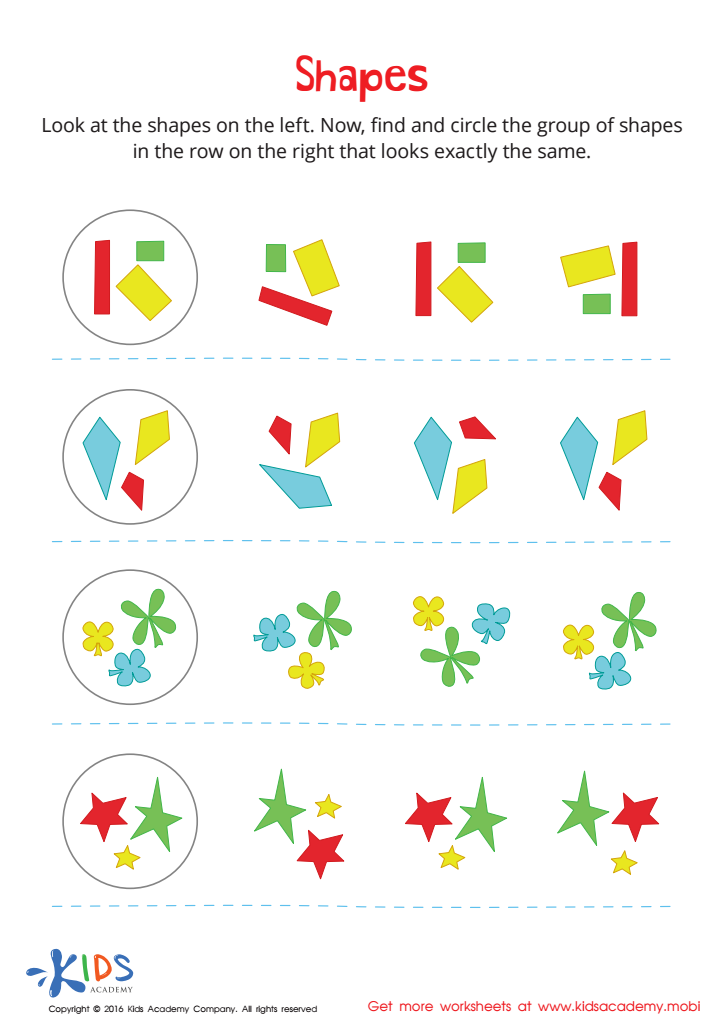
Shapes Worksheet
This fun worksheet will challenge your child to recognize tricky patterns, sort through similar ones, and create strategies to get the right answer. It'll also help them to strengthen problem-solving skills and build confidence. With more challenging tasks, your child will be ready to tackle higher level math and sequencing skills.
Shapes Worksheet
Worksheet
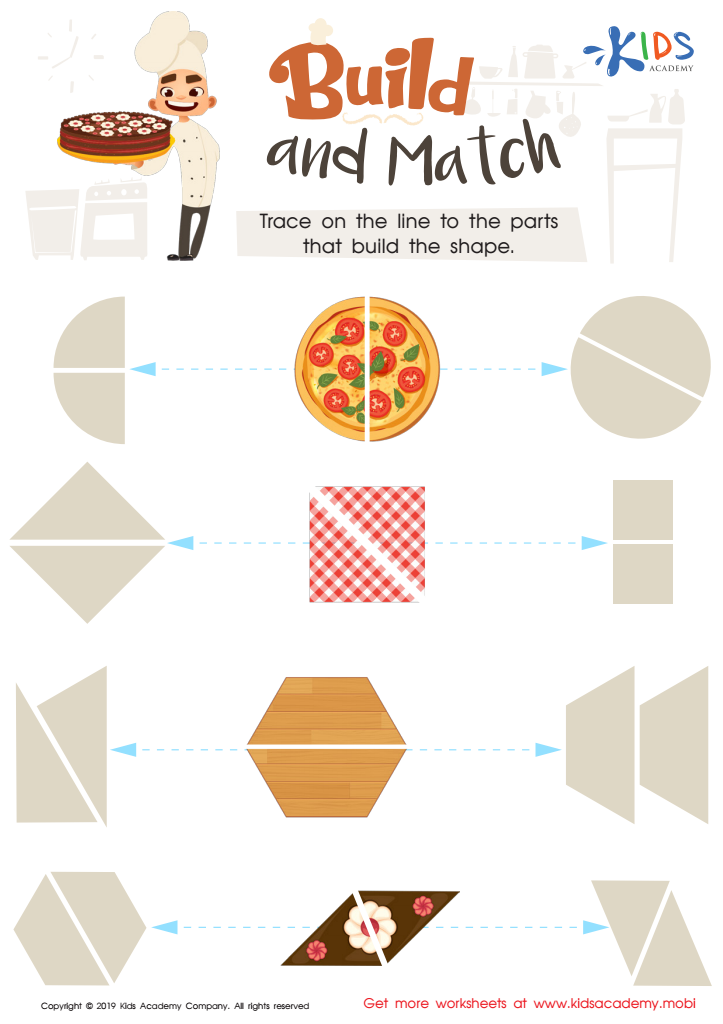
Build and Match Worksheet
This bright worksheet will get your kids excited to learn more! Use the colorful images and shapes to engage them and have them trace the parts to build the shape. This fun exercise will help them retain the lessons and make it an enjoyable experience.
Build and Match Worksheet
Worksheet
Join Kids Academy for Free
Who is primarily going to use this learning content?








Matching skills, particularly with 2D shapes, are essential for children aged 4 to 7 as they lay the foundation for various cognitive and motor skills. At this young age, children are naturally curious and eager to explore their environment, and introducing them to shape matching cultivates this inquisitiveness. Recognizing and matching 2D shapes helps develop critical visual discrimination abilities, enabling children to distinguish between different forms and understand their characteristics.
Furthermore, mastering shape matching enhances spatial awareness, a vital skill in fields such as mathematics, engineering, and even art. When children engage in shape games, they not only grasp the concept of different shapes but also learn to categorize and compare them, boosting analytic skills.
Additionally, matching activities often foster social interaction, as children can work together in pairs or small groups, promoting teamwork and communication skills. As they navigate shape activities, they gain confidence, satisfaction, and joy in achieving tasks. Consequently, it’s crucial for parents and teachers to prioritize these activities, as they contribute significantly to a child’s overall development, encouraging both cognitive growth and social skills in early education settings.