Visual Learning Adding at the Zoo Worksheets for Ages 4-7
9 filtered results
-
From - To
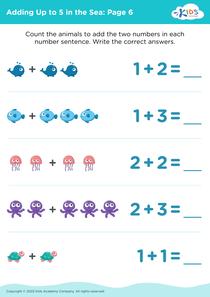
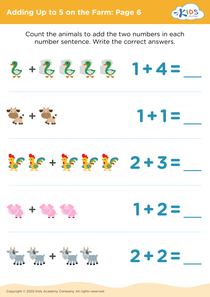
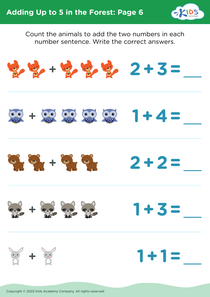
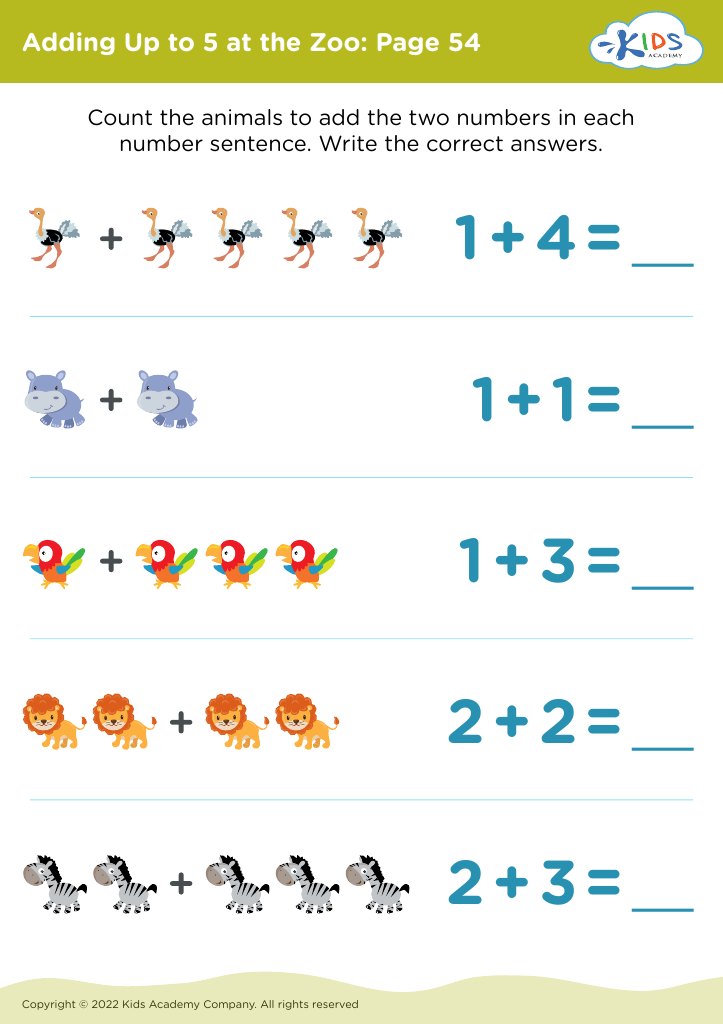
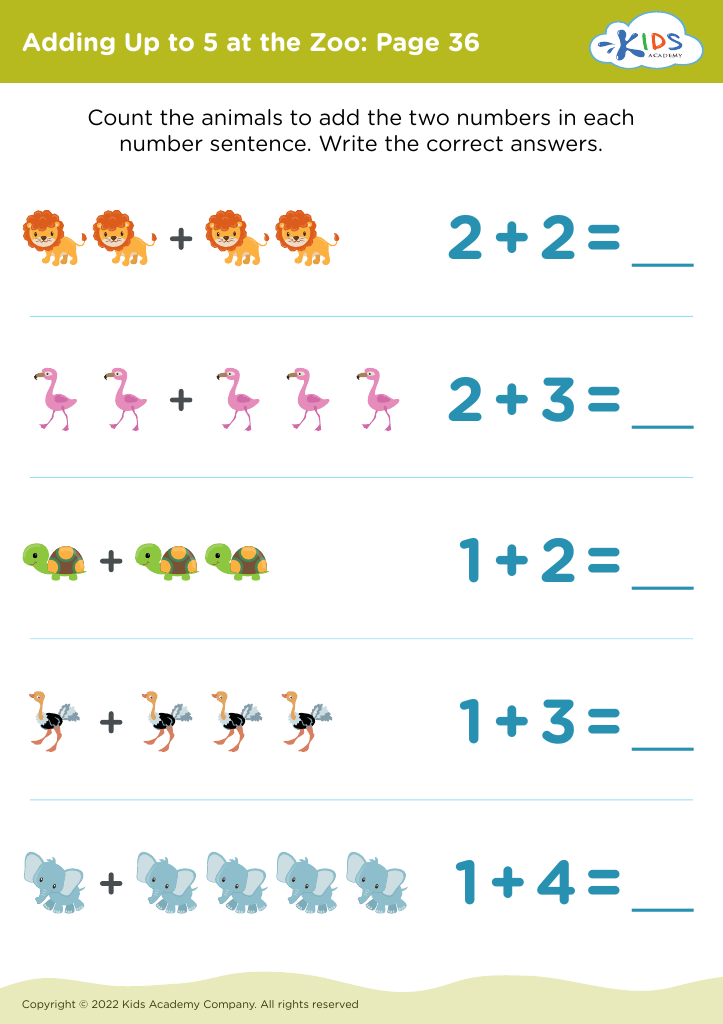
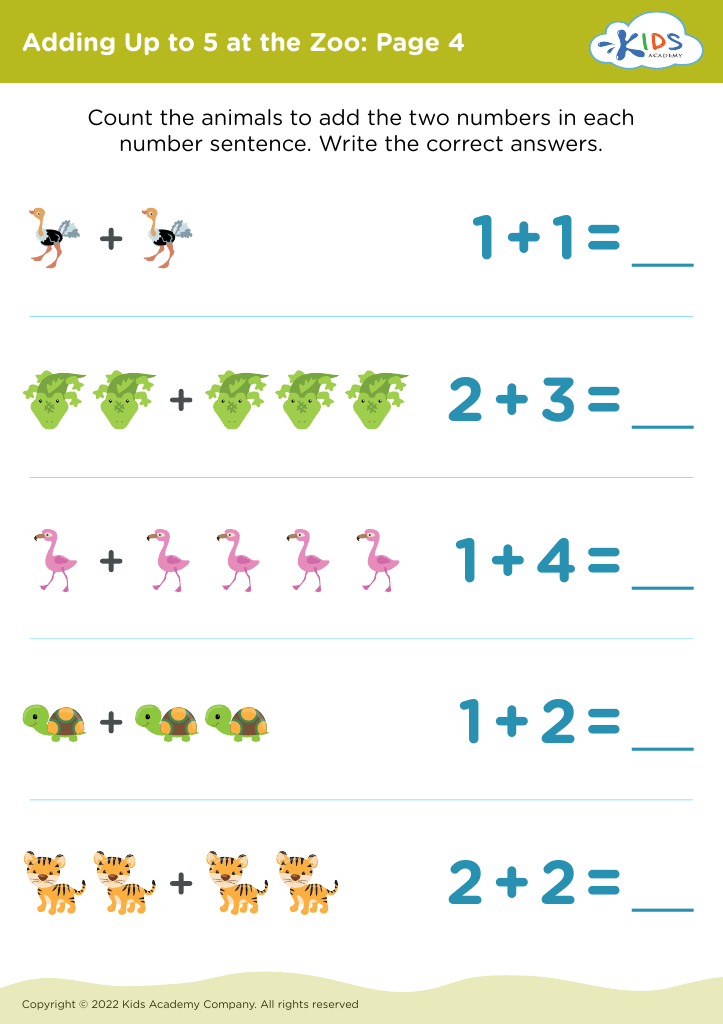
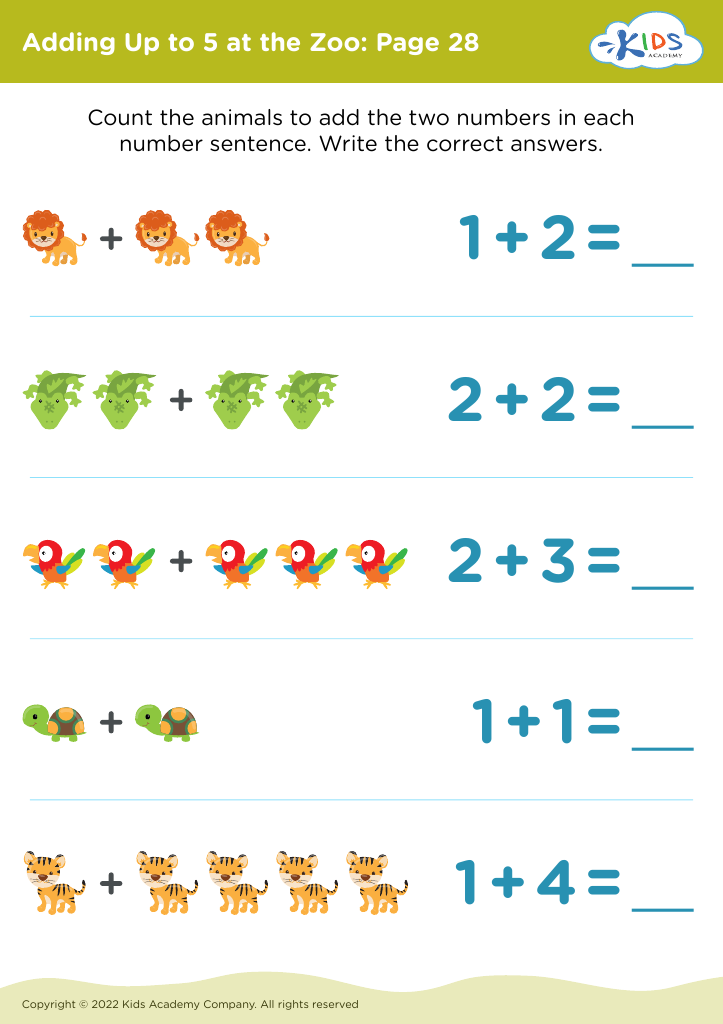
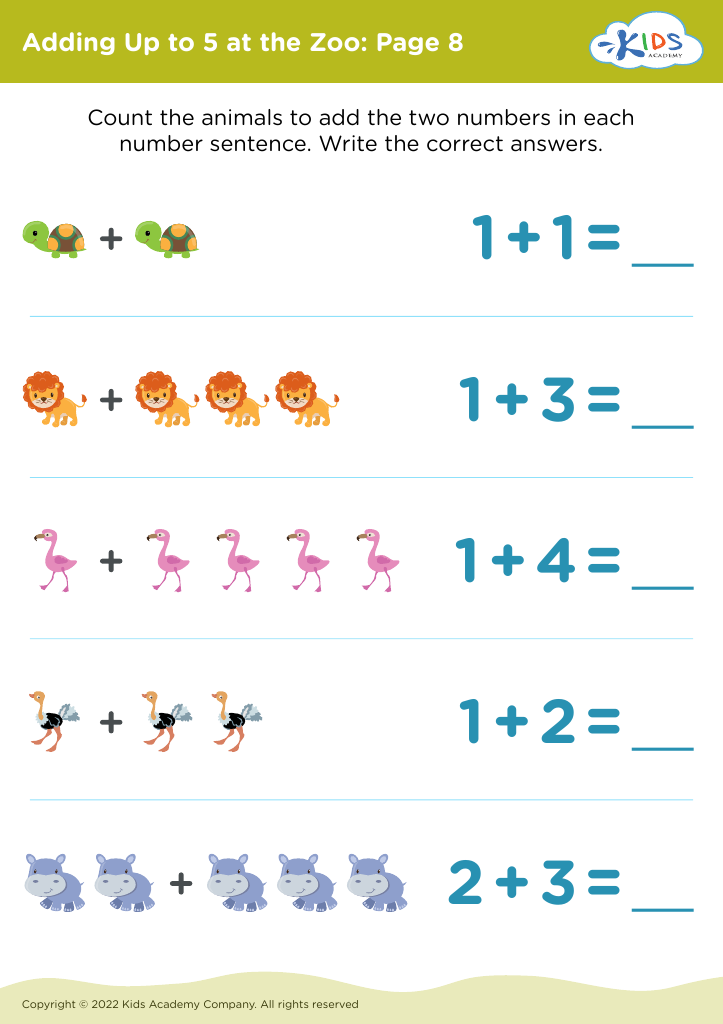
Discover the "Visual Learning Adding at the Zoo" worksheets, designed specifically for children ages 4-7! These engaging, colorful activities make math fun and accessible for young learners. Using vivid animal illustrations and zoo-themed scenarios, children will enhance their addition skills while exploring the exciting world of wildlife. Each worksheet encourages visual learning, allowing kids to see mathematical concepts in action, promoting deeper understanding. Perfect for reinforcing early math skills at home or in the classroom, these worksheets are a fantastic resource for teachers and parents alike. Help your little ones become confident mathematicians with interactive learning at the zoo!
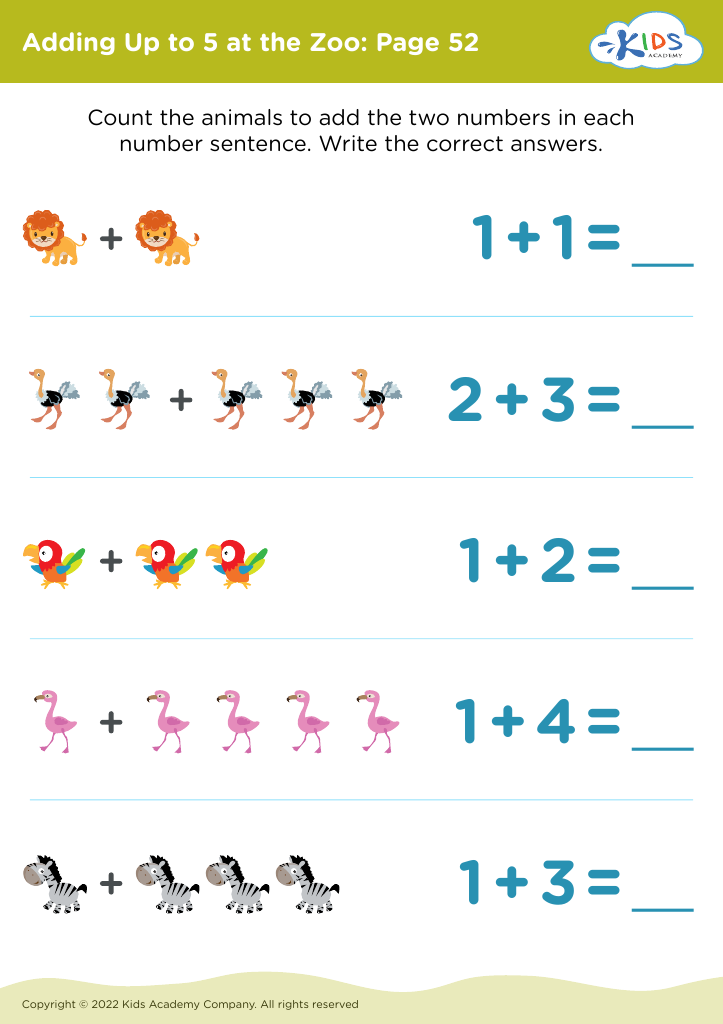
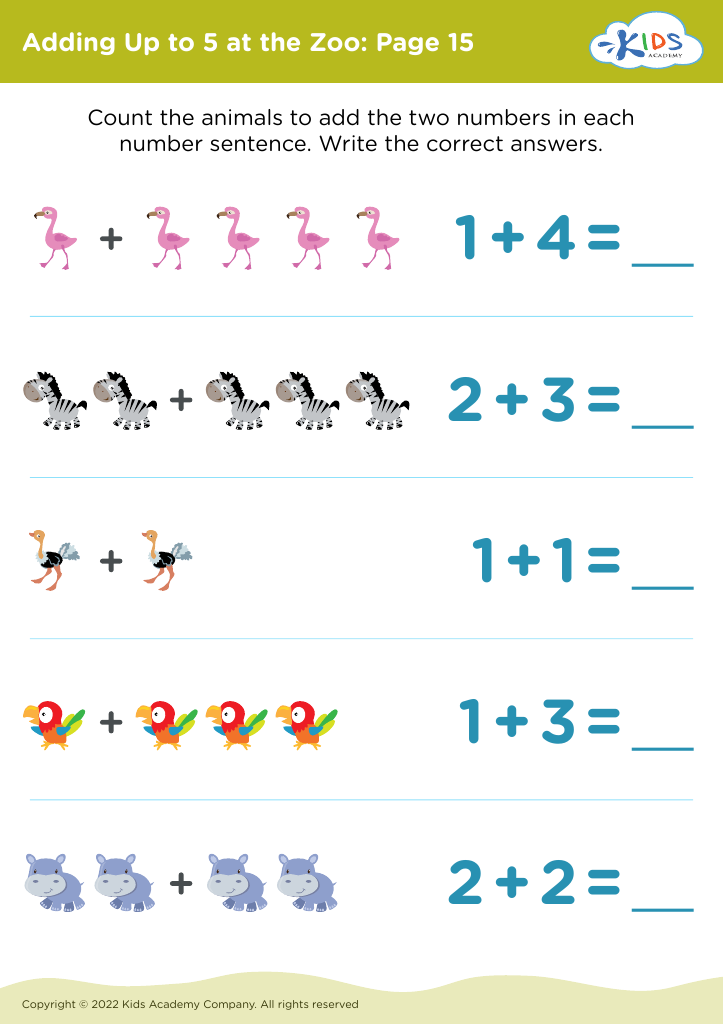
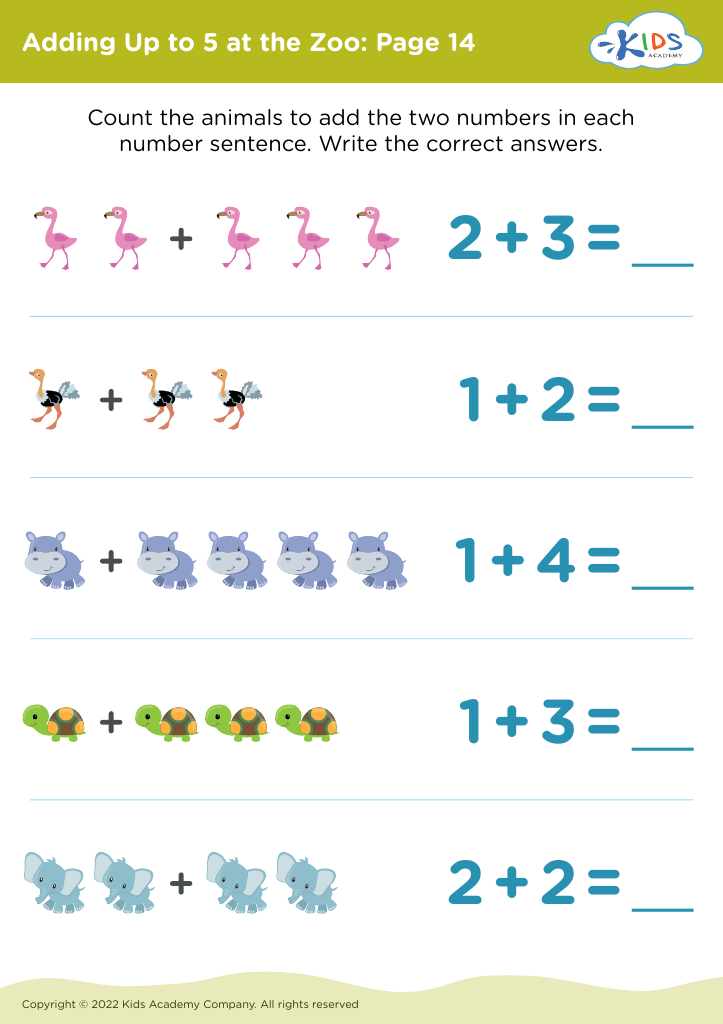
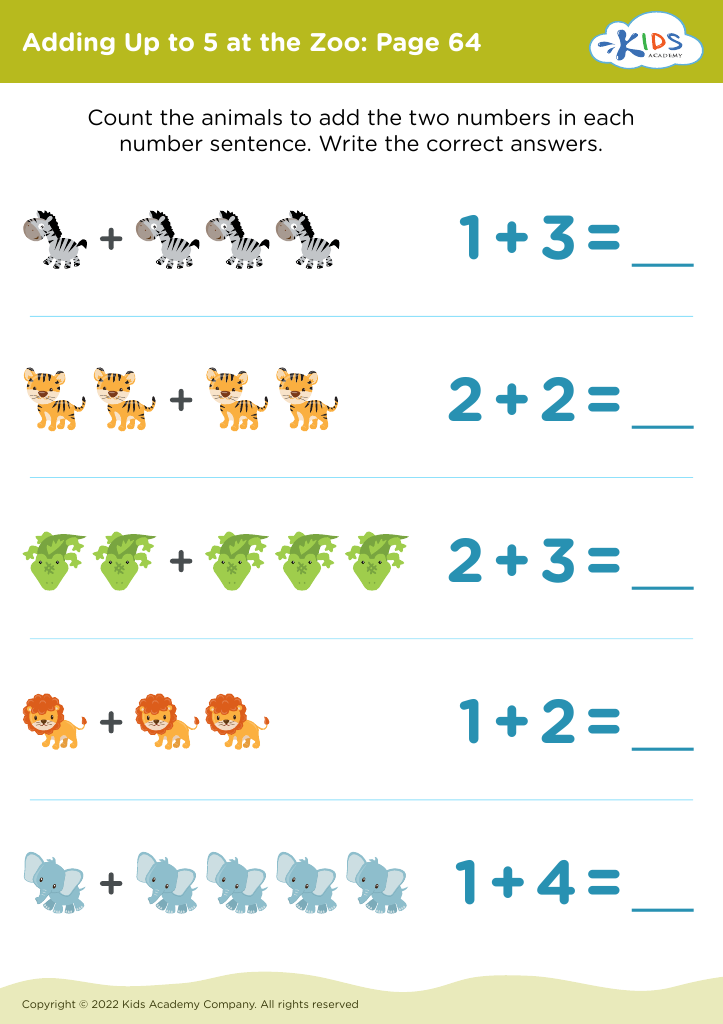



Visual learning is a powerful tool for children aged 4-7, especially in engaging settings like a zoo. For parents and teachers, understanding the significance of visual learning in this context can greatly enhance a child's education and development.
Firstly, young children are naturally drawn to vibrant images and interactive visual aids. A zoo environment provides a rich array of colorful animals, engaging exhibits, and dynamic displays that stimulate curiosity and learning. By incorporating visual learning tools such as picture books, educational videos, and interactive activities about the animals, parents and teachers can help children better retain information and understand the natural world.
Secondly, visual learning enhances cognitive skills. Children learn to categorize and compare animals by shape, color, and size, developing critical thinking abilities. It also promotes language development as they learn to describe what they see and ask questions.
Moreover, visiting the zoo fosters emotional connections and empathy as children observe animals in their habitats. This nurturing of emotional intelligence is vital for their social development.
In conclusion, integrating visual learning at the zoo not only makes education enjoyable but also cultivates essential life skills. Parents and educators should prioritize visual learning experiences to support holistic development in young children.