Basic Math Skills Adding up to 100 Without Regrouping Worksheets for Ages 4-7
4 filtered results
-
From - To
Discover our specialized worksheets designed to help kids aged 4-7 master basic math skills by adding numbers up to 100 without regrouping. These engaging and visually appealing worksheets are perfect for young learners, fostering a solid understanding of addition concepts in a fun and interactive way. Each worksheet offers a variety of problems that build confidence and enhance problem-solving abilities. Ideal for both classroom and at-home learning, these resources aim to ensure children develop essential math skills early on. Explore our comprehensive worksheets to support your child’s educational journey and make learning math enjoyable!
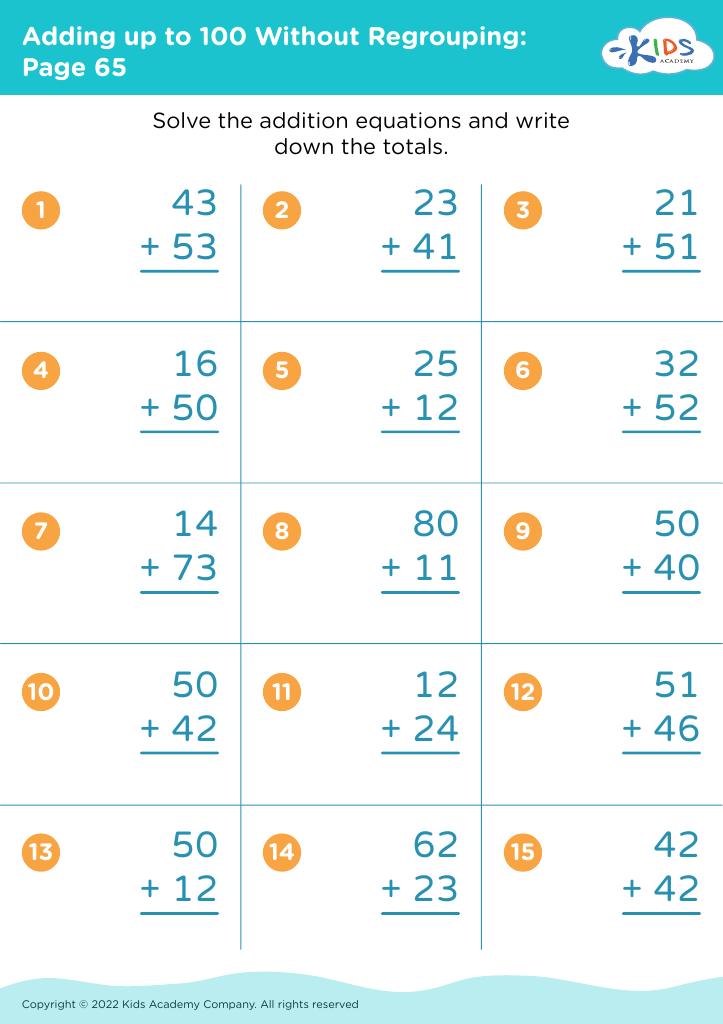
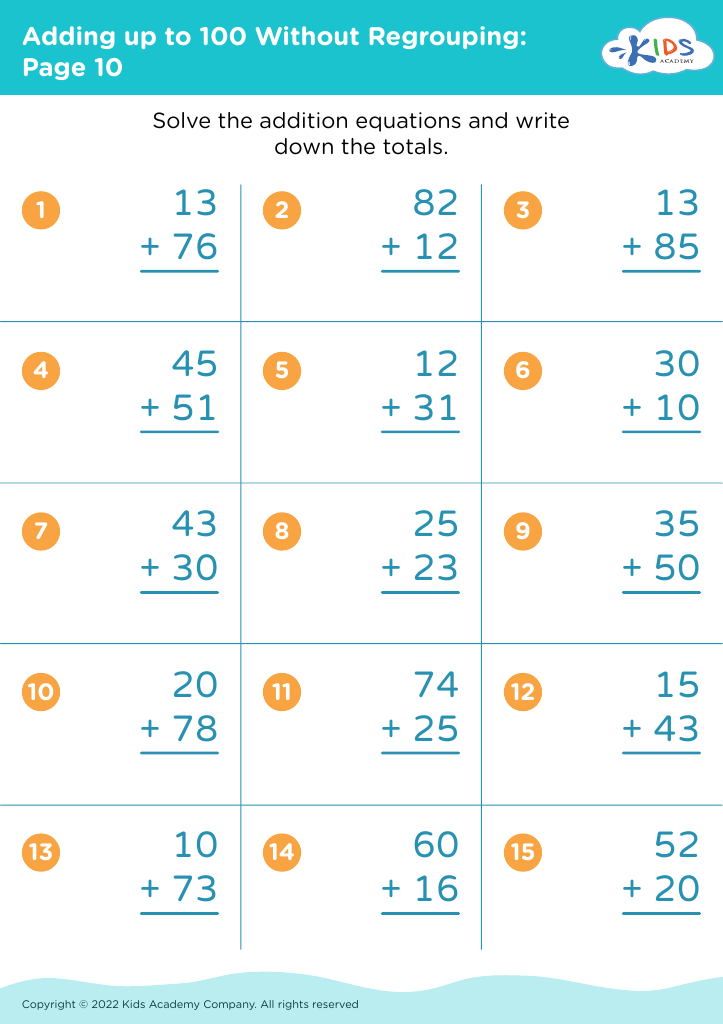
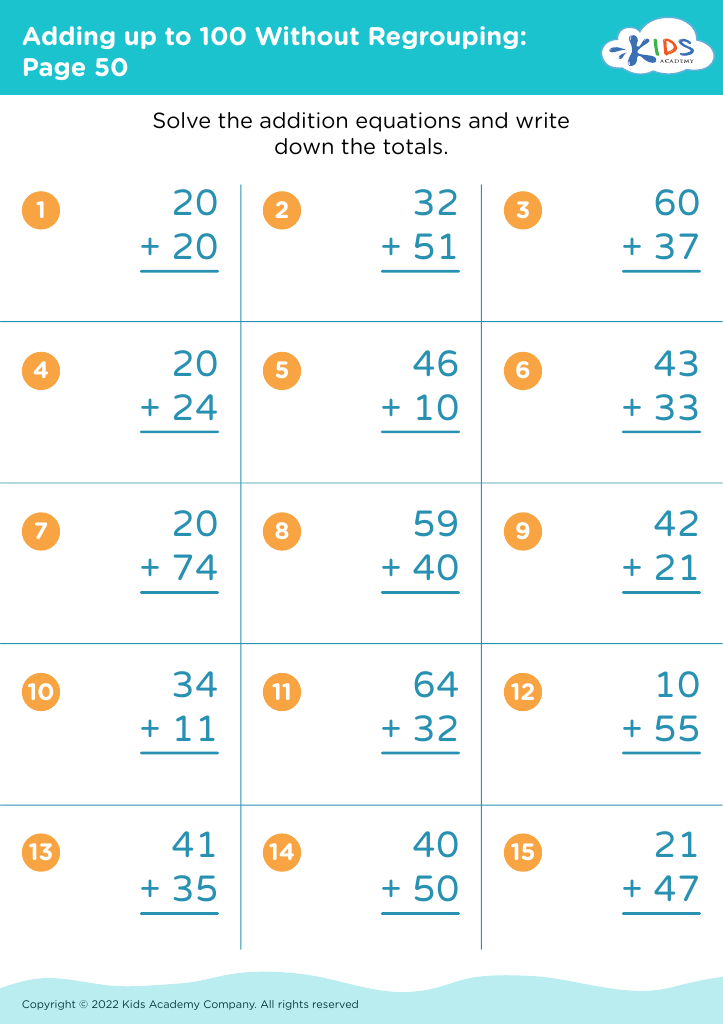
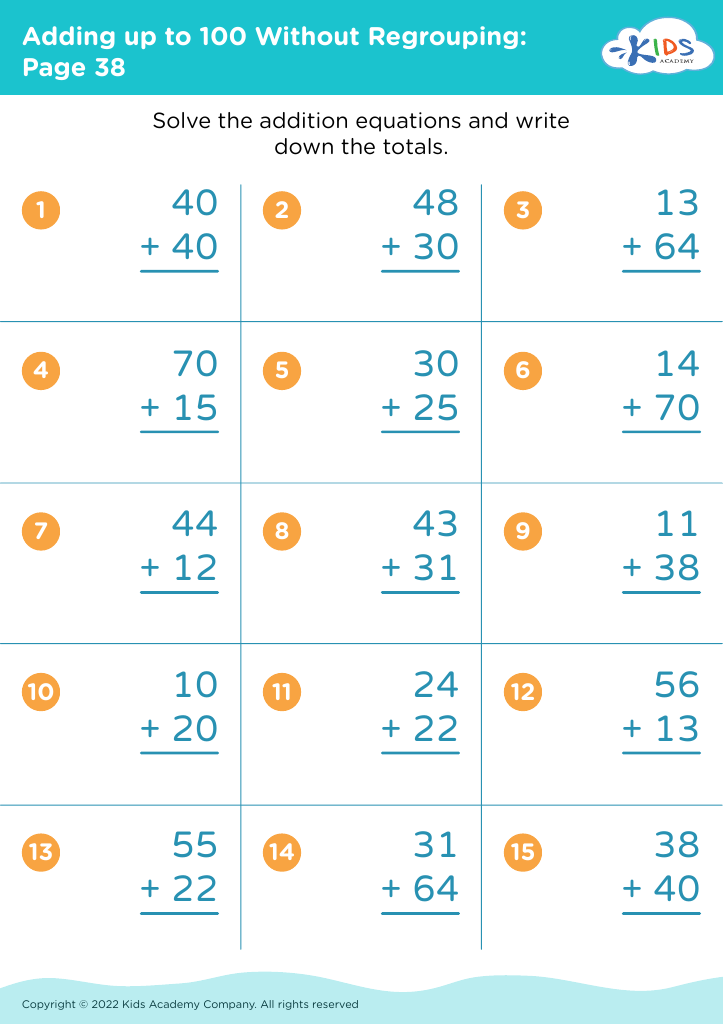




Basic math skills, particularly adding up to 100 without regrouping, are crucial for children ages 4-7 as they lay the foundation for more advanced mathematical concepts and everyday problem-solving. Mastering these skills enhances their number sense, enabling them to understand quantities, recognize patterns, and develop computational fluency. Early comprehension of addition builds confidence and stimulates a positive attitude toward math, which is essential for long-term academic success.
For parents and teachers, fostering these skills enriches children's overall cognitive development. Engaging children in simple addition activities promotes critical thinking and encourages them to approach problems with creativity and determination. Moreover, when children grasp the concept of addition without regrouping, they are likely to feel a sense of accomplishment, thus motivating them to tackle more complex challenges in the future.
Furthermore, these skills are not just limited to academic contexts; they apply to daily life—be it counting items, helping with shopping calculations, or budgeting an allowance. In cultivating strong basic math skills, parents and teachers empower children with tools for independence and success both in and outside the classroom. Ultimately, a solid math foundation will prepare them for life's mathematical challenges ahead.