Understanding fractions Adding up to 100 Without Regrouping Worksheets for Ages 4-7

Filters

19 filtered results

Clear all filters
Favorites
With answer key
Interactive

19 filtered results

Difficulty Level

Grade


Explore our engaging "Understanding Fractions Adding Up to 100 Without Regrouping Worksheets" designed for children ages 4-7! These worksheets provide a fun and interactive way for young learners to grasp essential fraction concepts while mastering addition skills without the complexity of regrouping. Carefully crafted with vibrant visuals and age-appropriate challenges, our resources help develop a solid foundation in math. Encourage your child's confidence and critical thinking as they practice adding fractions in a playful environment. Perfect for parents and educators alike, these worksheets will make learning fractions enjoyable while ensuring your child is well-prepared for future math success!
Check out this FREE Trial Lesson on Adding up to 100 Without Regrouping for age 4-7!

Match Exactly the Same

Favorites
With answer key
Interactive
  • 4-7
  • Understanding fractions
  • Adding up to 100 Without Regrouping
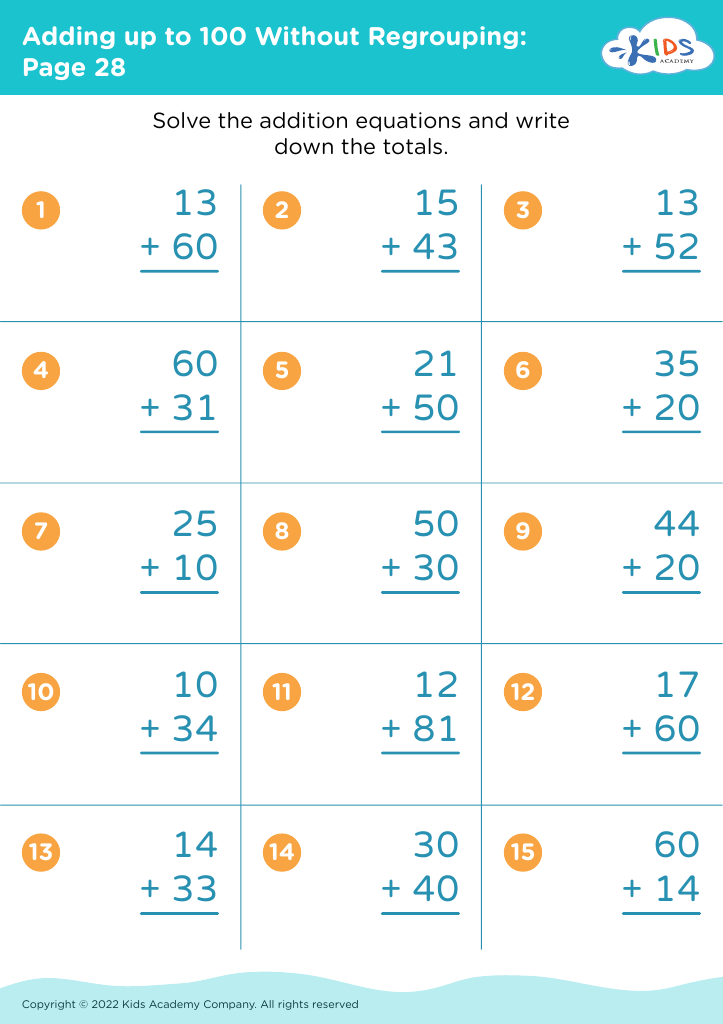
Adding up to 100 Without Regrouping: Page 28
Worksheet
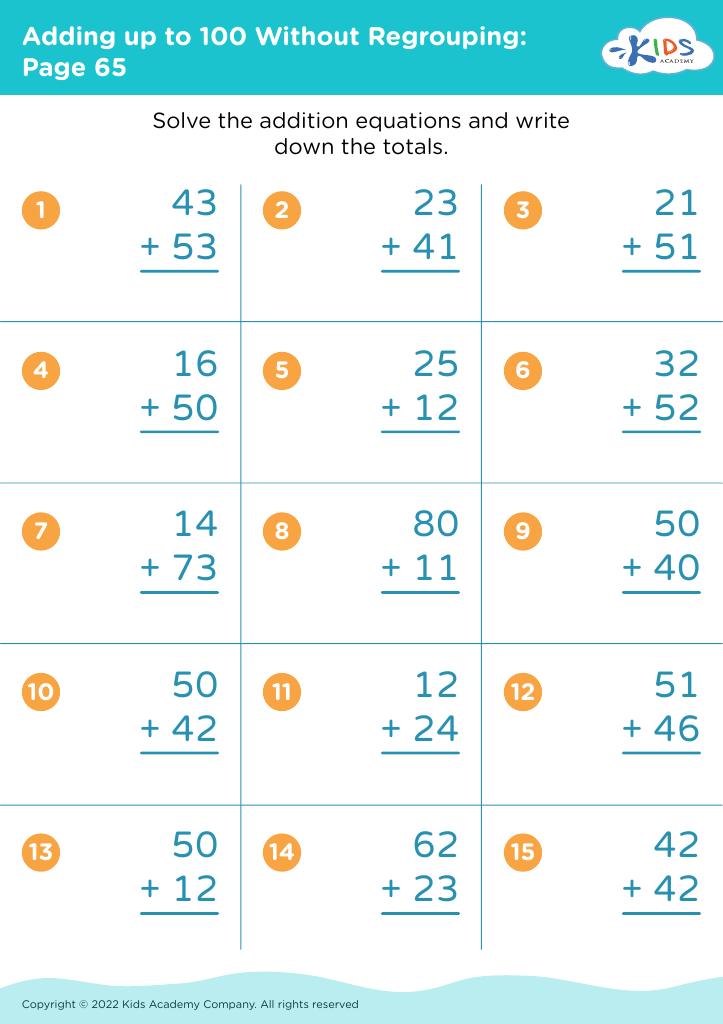
Adding up to 100 Without Regrouping: Page 65
Worksheet
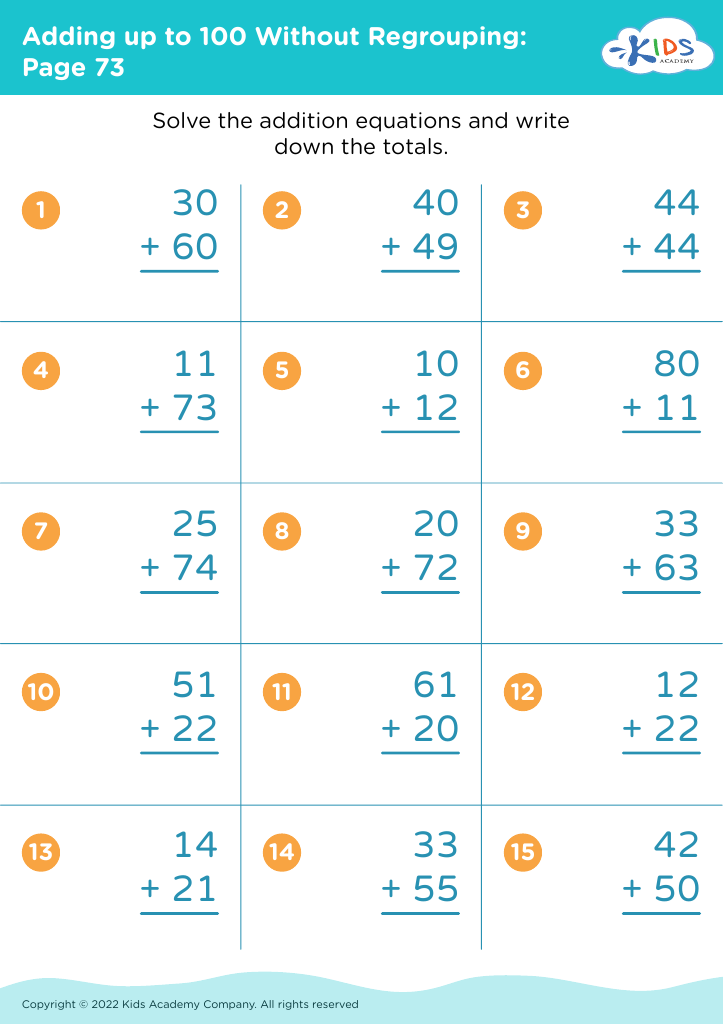
Adding up to 100 Without Regrouping: Page 73
Worksheet
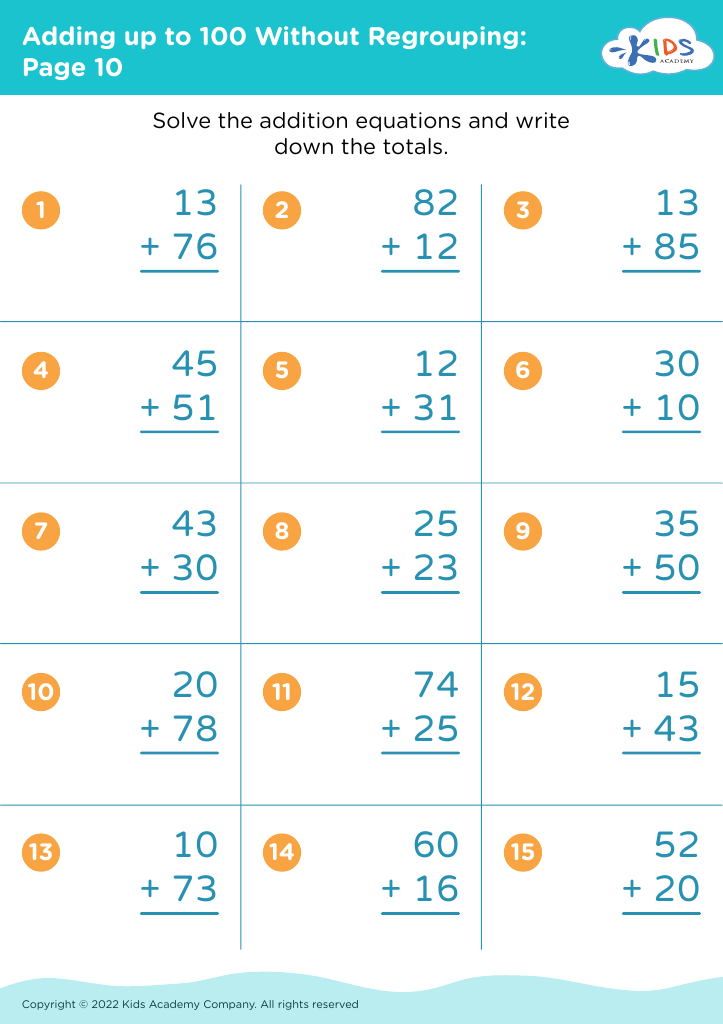
Adding up to 100 Without Regrouping: Page 10
Worksheet
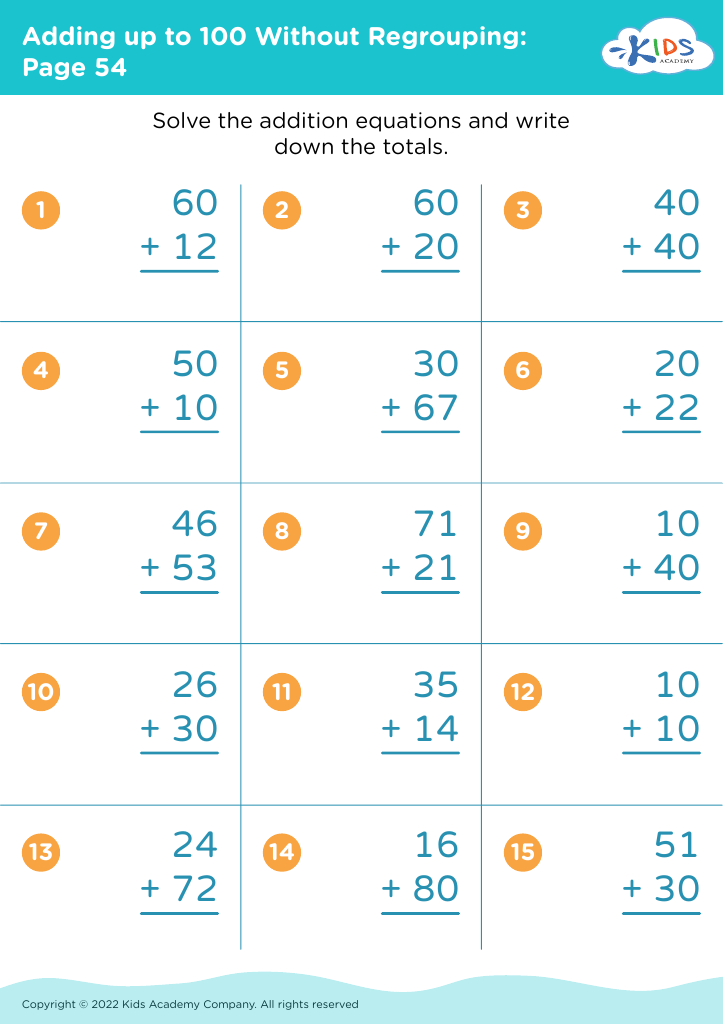
Adding up to 100 Without Regrouping: Page 54
Worksheet
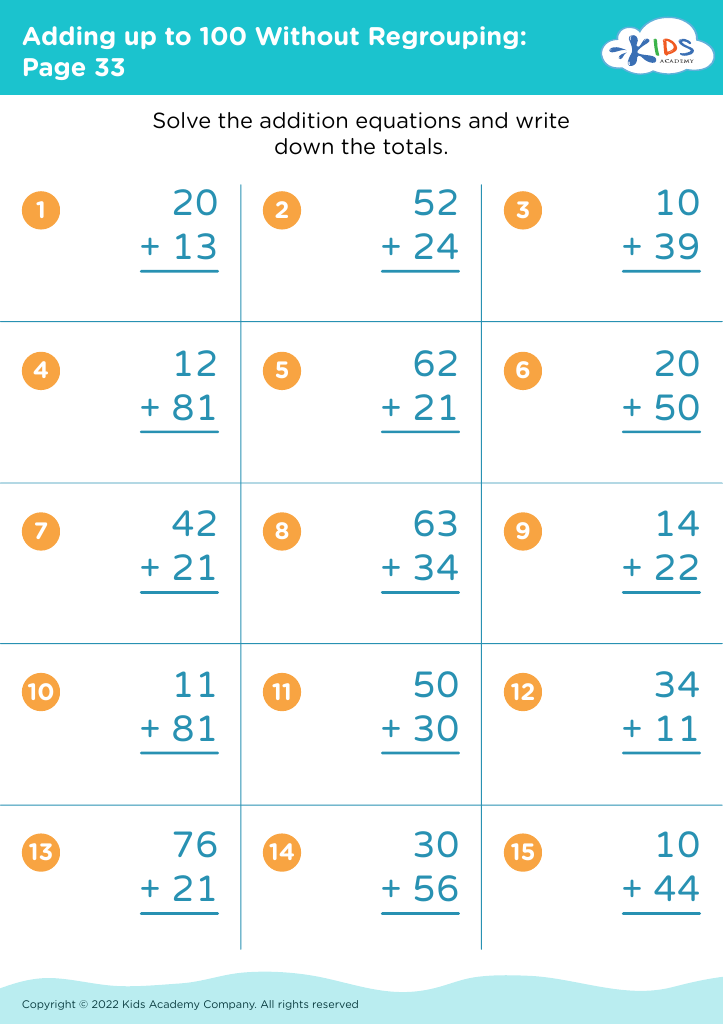
Adding up to 100 Without Regrouping: Page 33
Worksheet
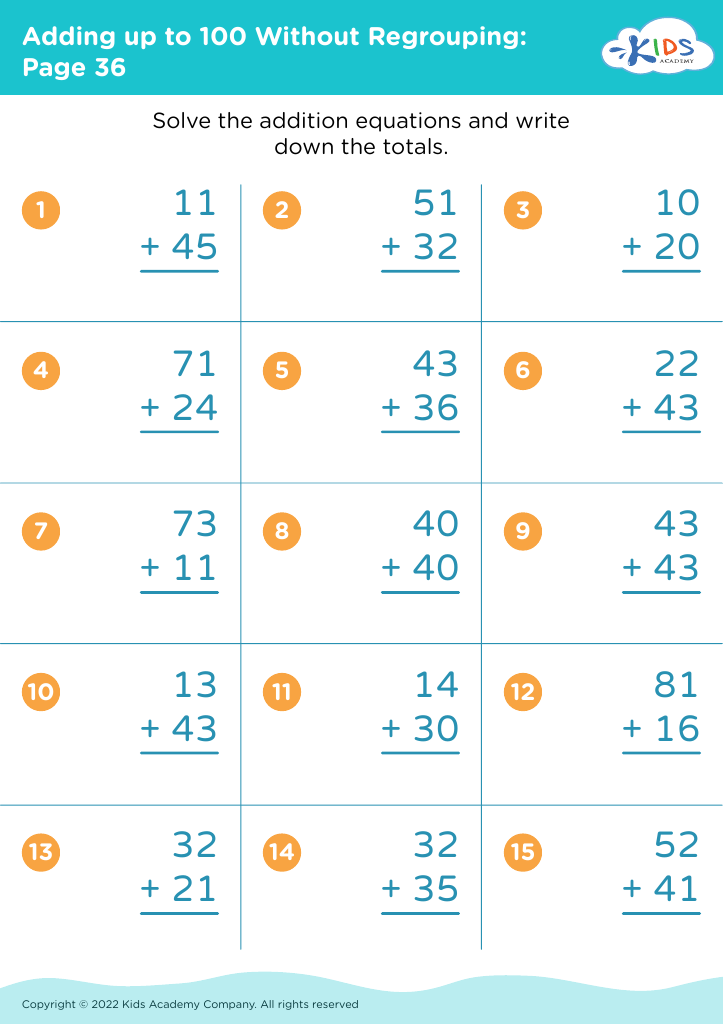
Adding up to 100 Without Regrouping: Page 36
Worksheet
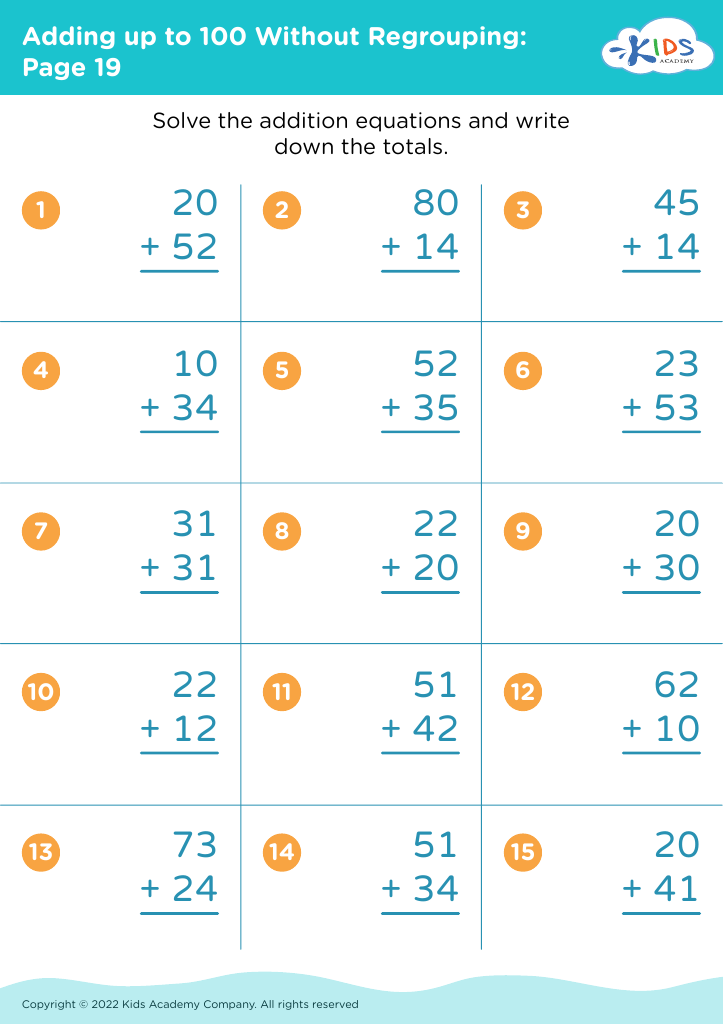
Adding up to 100 Without Regrouping: Page 19
Worksheet
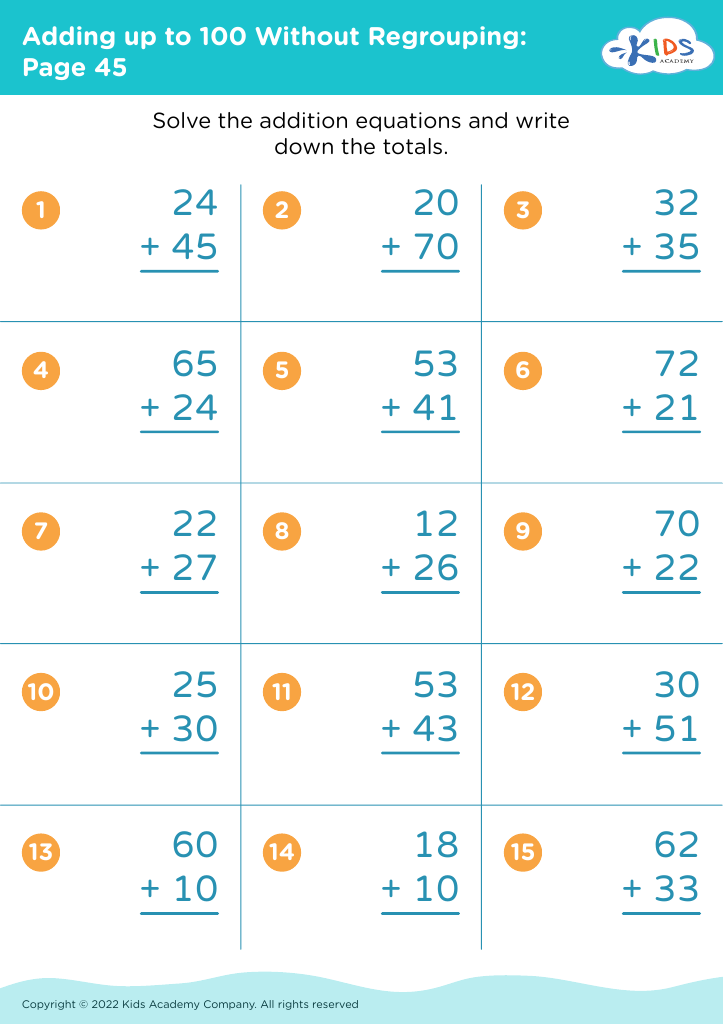
Adding up to 100 Without Regrouping: Page 45
Worksheet
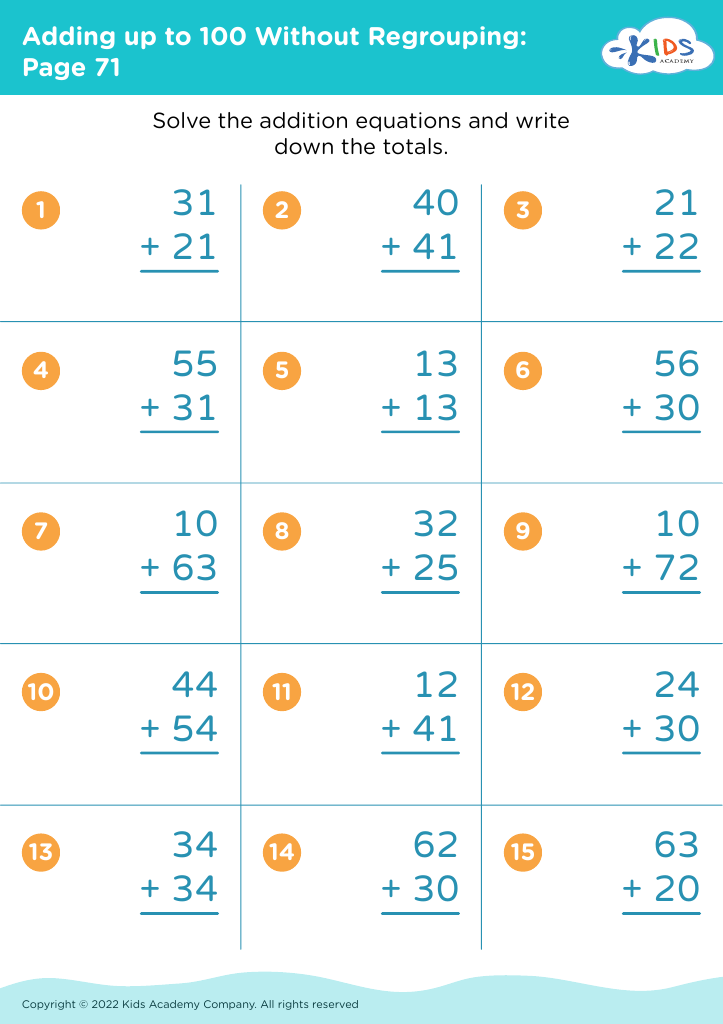
Adding up to 100 Without Regrouping: Page 71
Worksheet
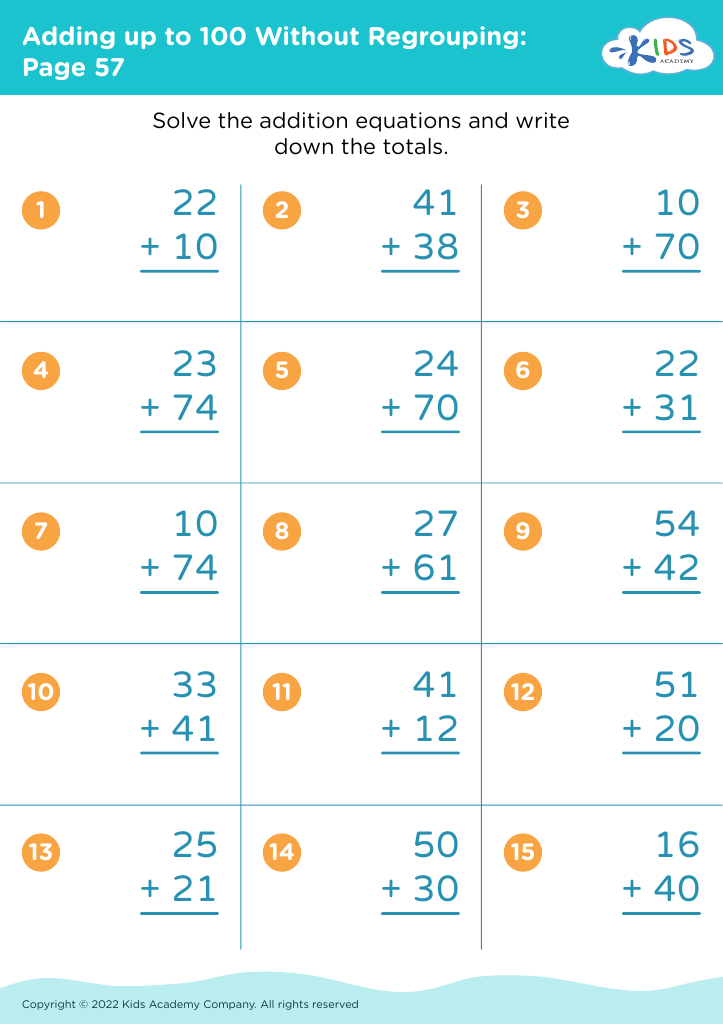
Adding up to 100 Without Regrouping: Page 57
Worksheet
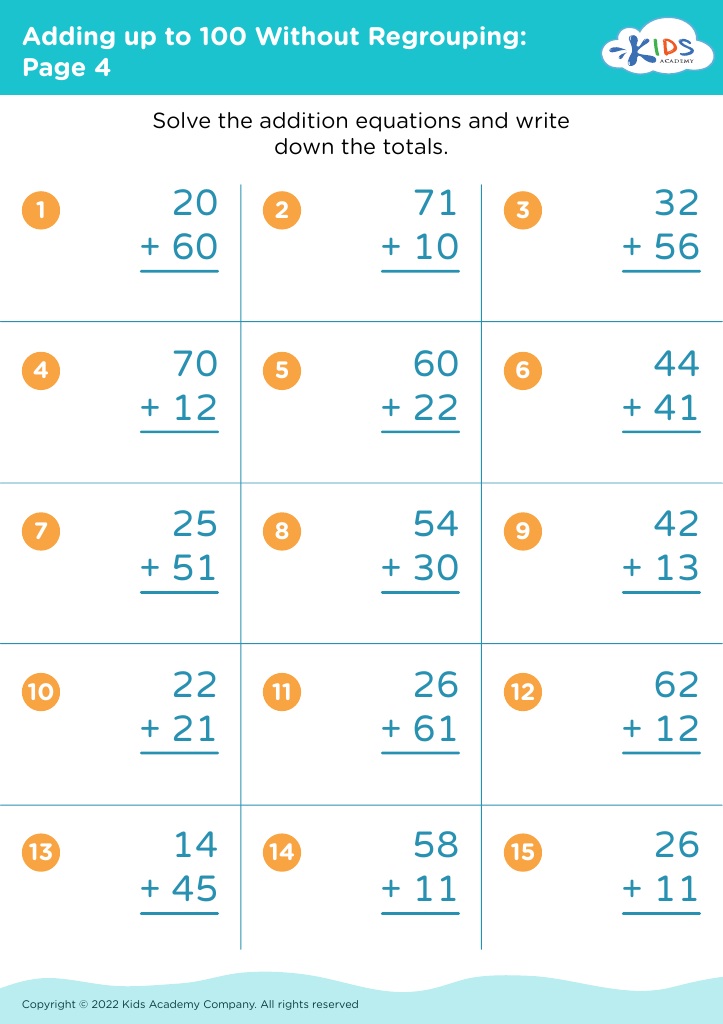
Adding up to 100 Without Regrouping: Page 4
Worksheet
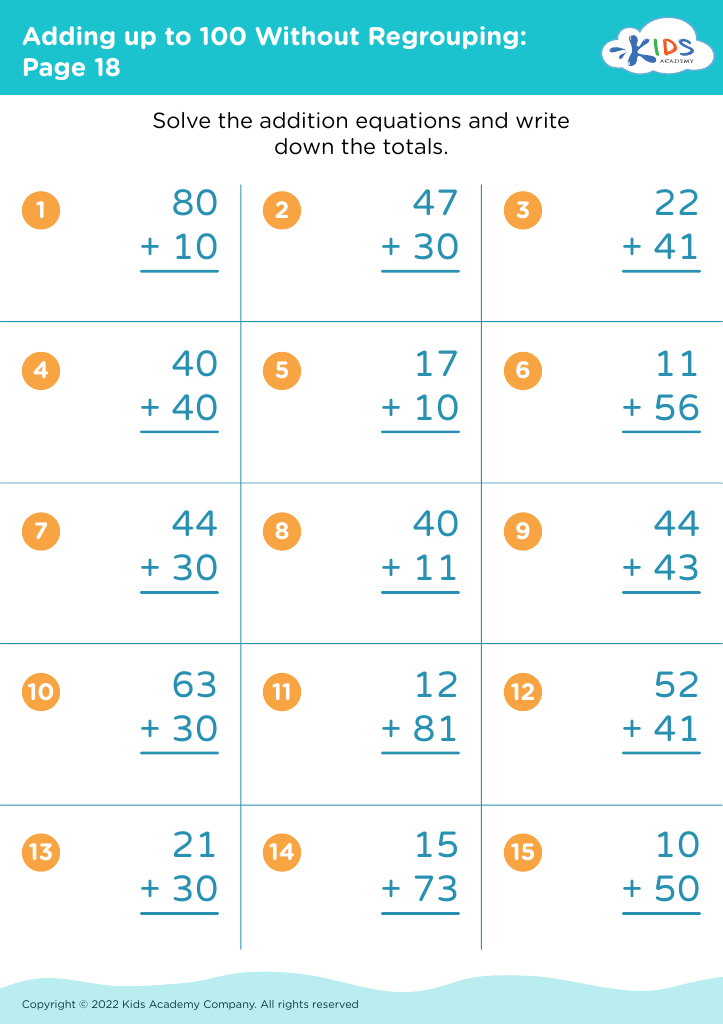
Adding up to 100 Without Regrouping: Page 18
Worksheet
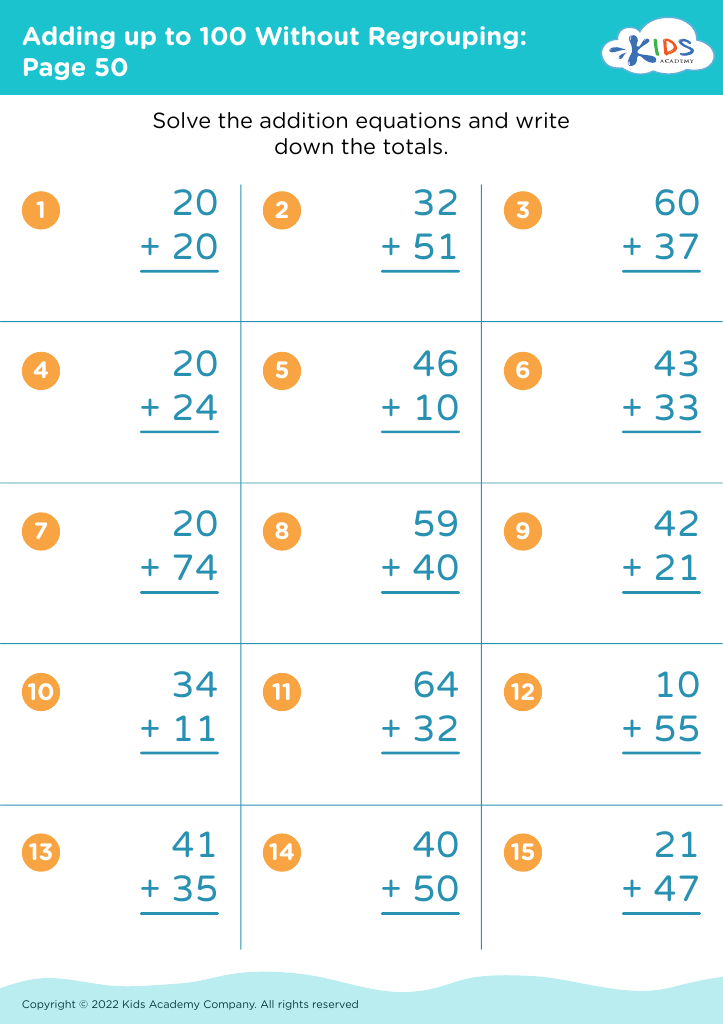
Adding up to 100 Without Regrouping: Page 50
Worksheet
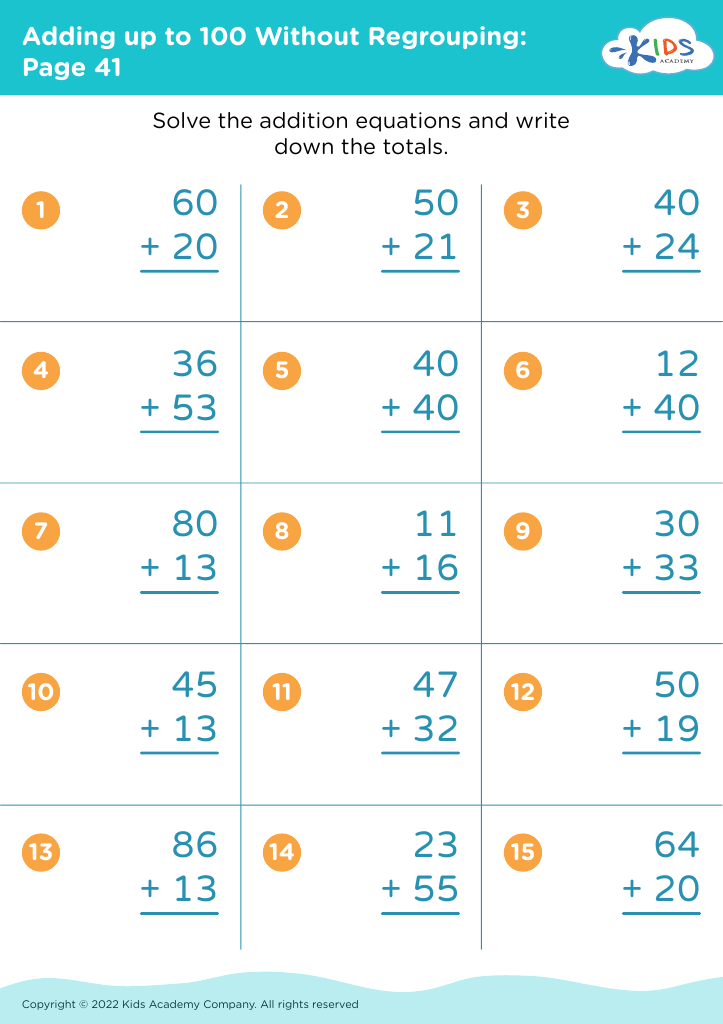
Adding up to 100 Without Regrouping: Page 41
Worksheet
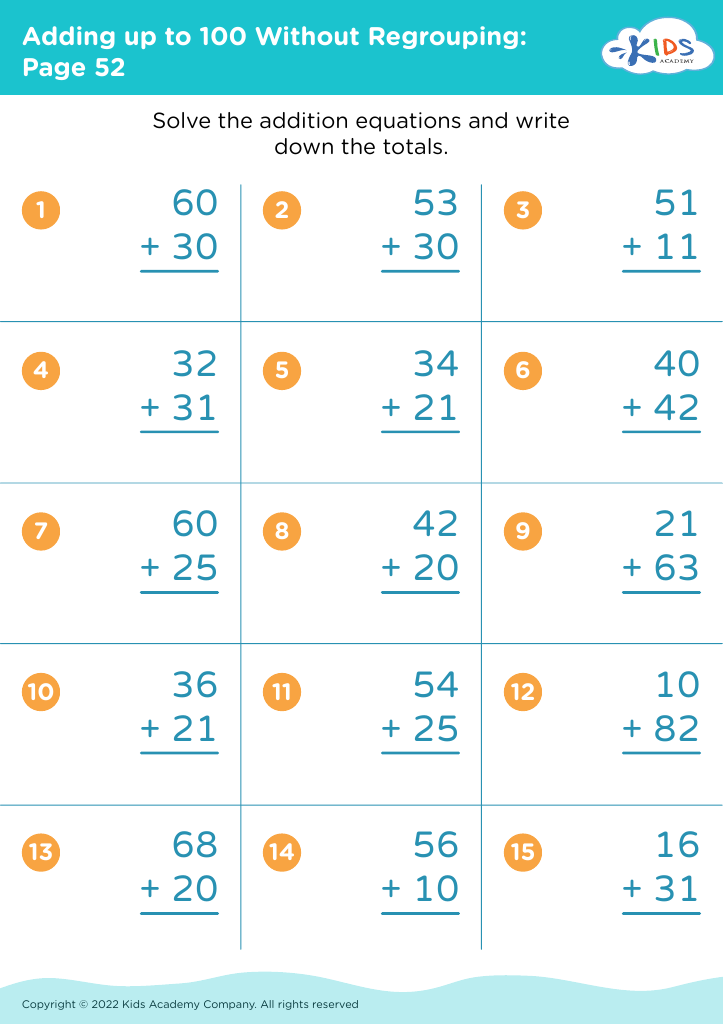
Adding up to 100 Without Regrouping: Page 52
Worksheet
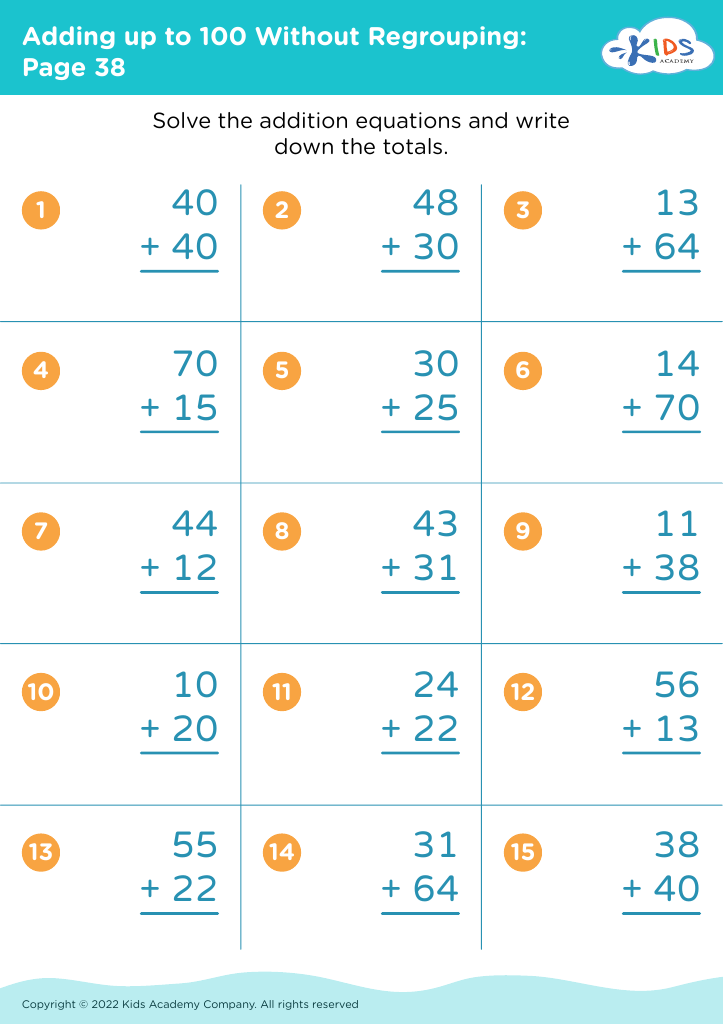
Adding up to 100 Without Regrouping: Page 38
Worksheet
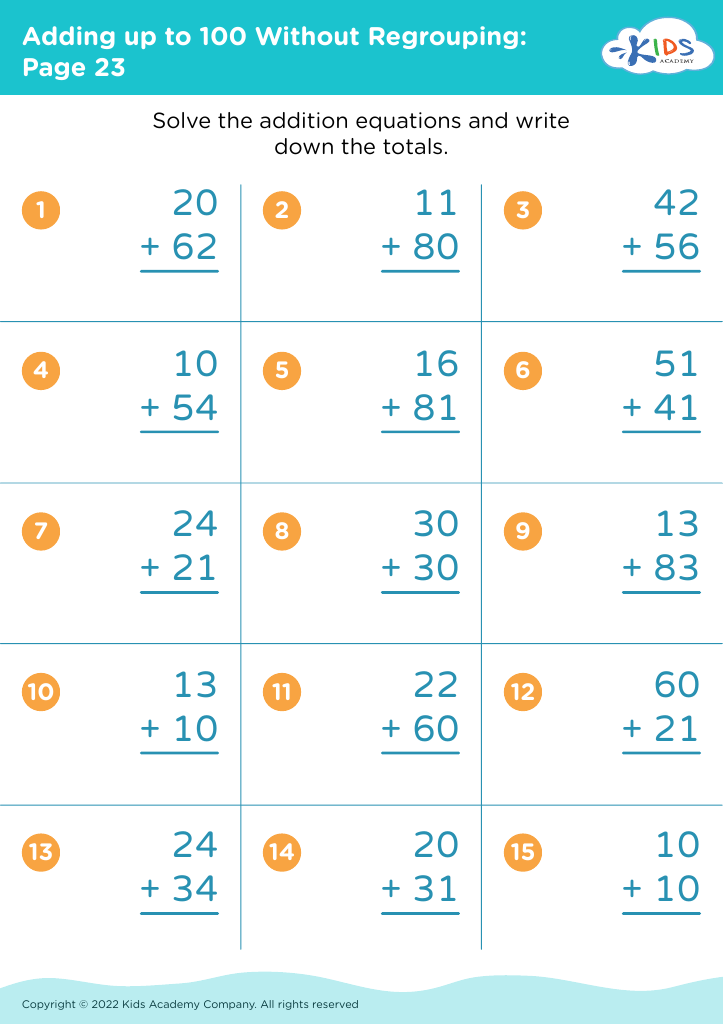
Adding up to 100 Without Regrouping: Page 23
Worksheet
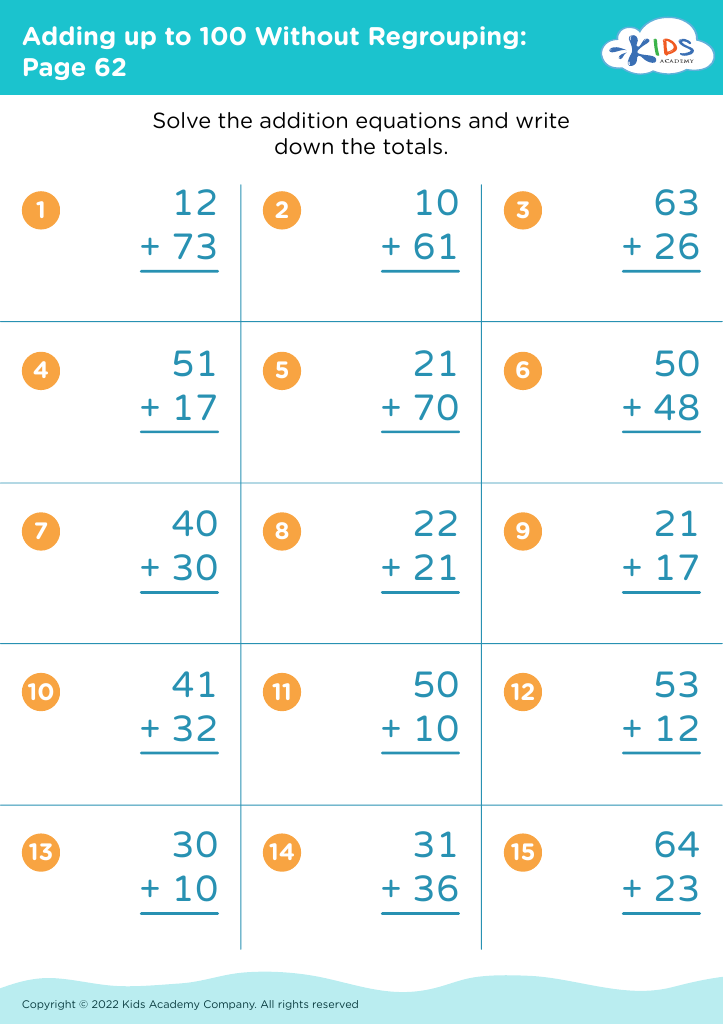
Adding up to 100 Without Regrouping: Page 62
Worksheet


Understanding fractions and the concept of adding up to 100 without regrouping is essential for young learners, particularly for ages 4-7, as it lays the foundation for their future mathematical skills. During these formative years, children develop critical thinking and problem-solving abilities that will benefit them throughout their education and daily life.

First, fractions are a cornerstone of understanding parts of a whole, which is crucial not only in mathematics but also in real-life situations, such as cooking or sharing. Learning to recognize and work with fractions helps children appreciate divisions and ratios, setting the stage for more complex topics later on.

Additionally, mastering addition without regrouping contributes to their numerical fluency. It empowers students to solve problems quickly and accurately, boosting their confidence in math. This knowledge supports their ability to manipulate numbers, essential for mastering larger sums and more complicated calculations as they advance.

Lastly, engaging children in these concepts encourages teamwork and communication. When parents and teachers collaborate to foster a strong mathematical foundation, they cultivate a positive attitude towards learning that inspires curiosity and resilience in their young learners, ultimately preparing them for a lifetime of success in mathematics and beyond.