Basic Addition Skills Adding up to 100 Worksheets for Ages 4-7
5 filtered results
-
From - To
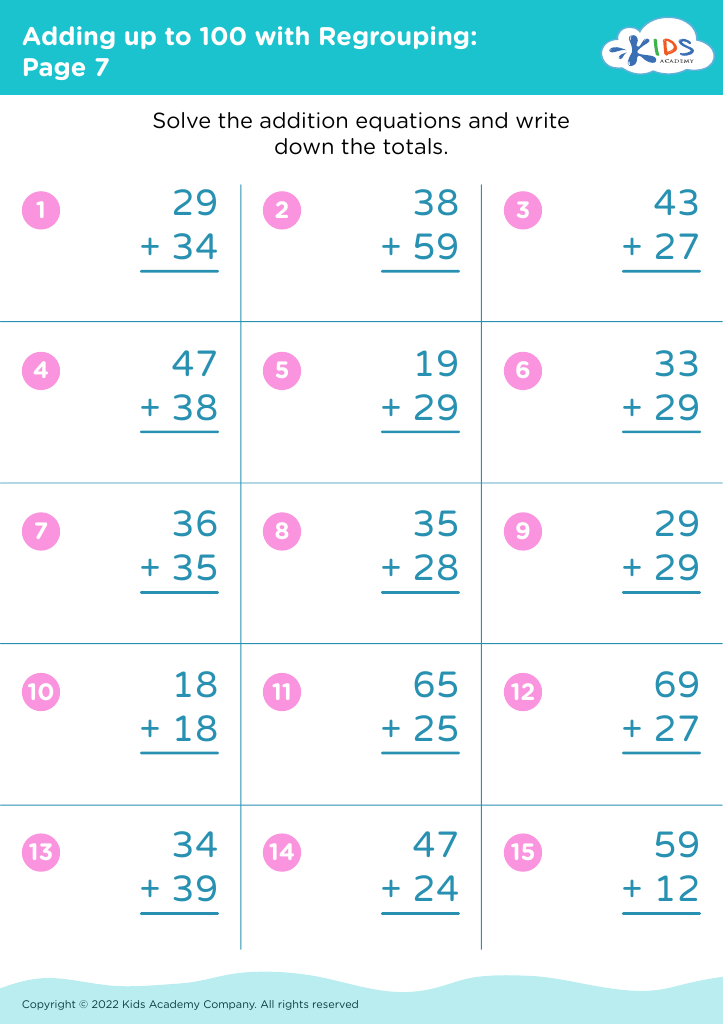
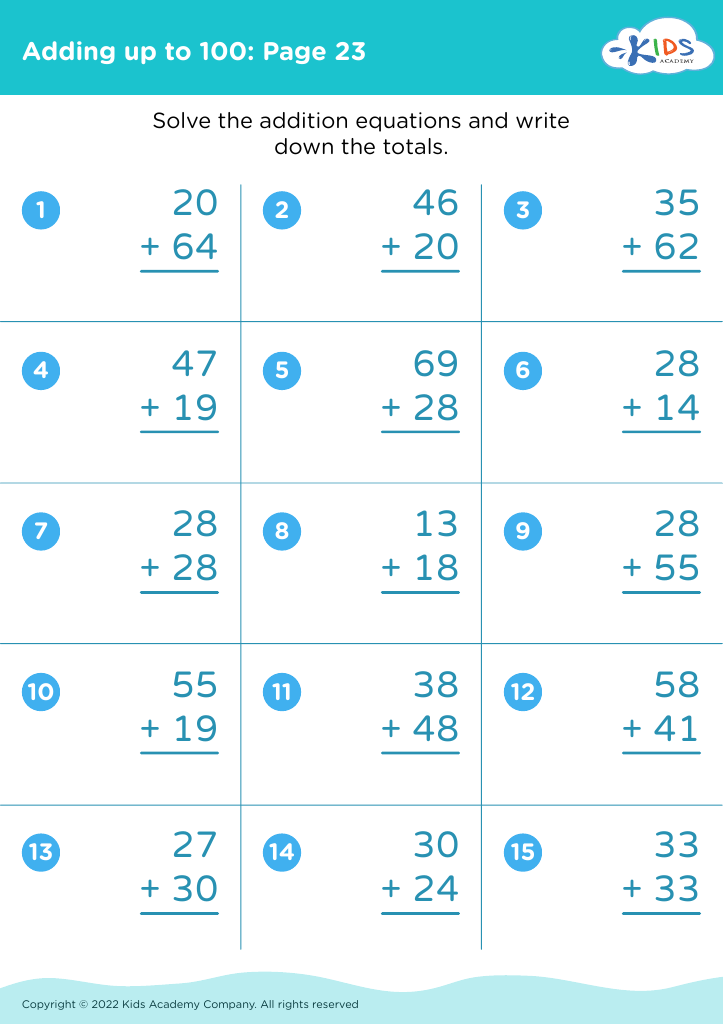
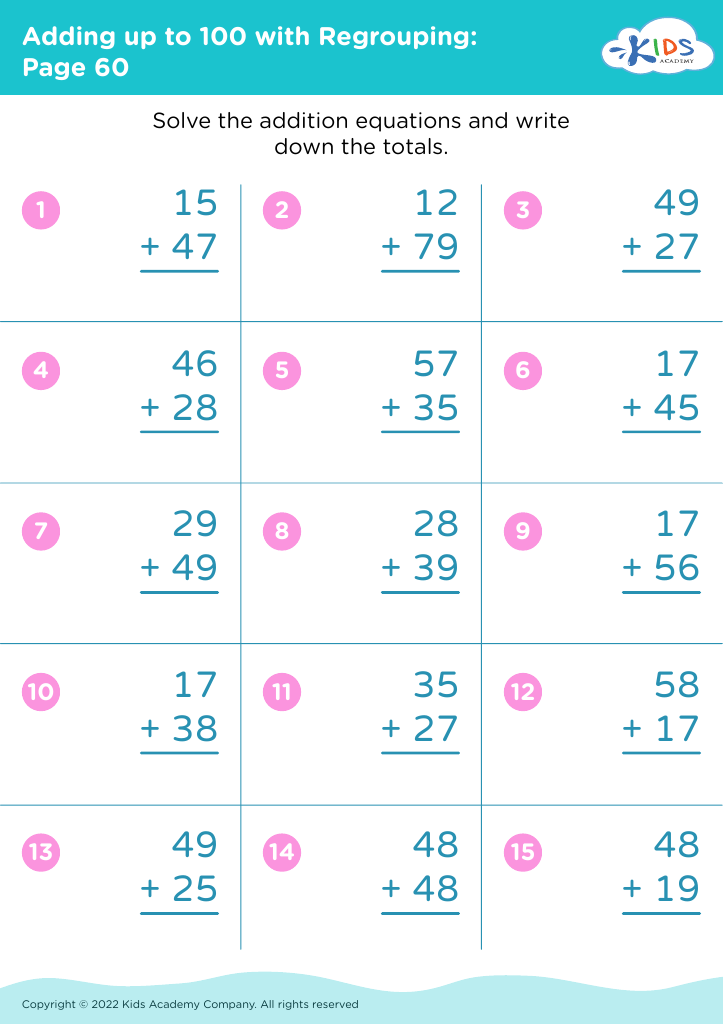
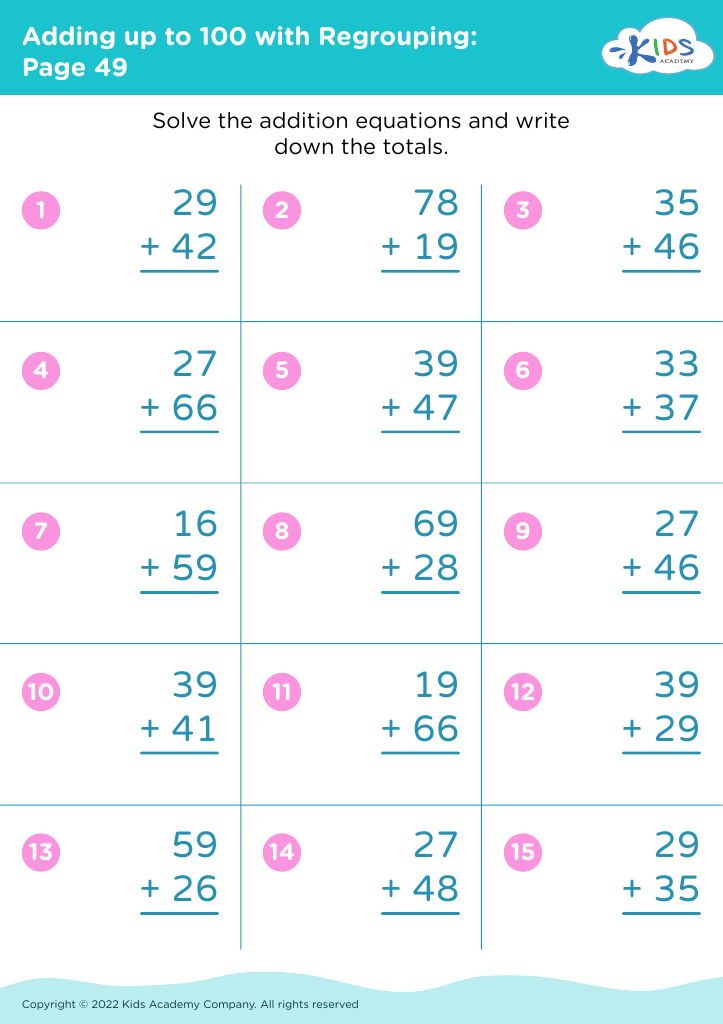
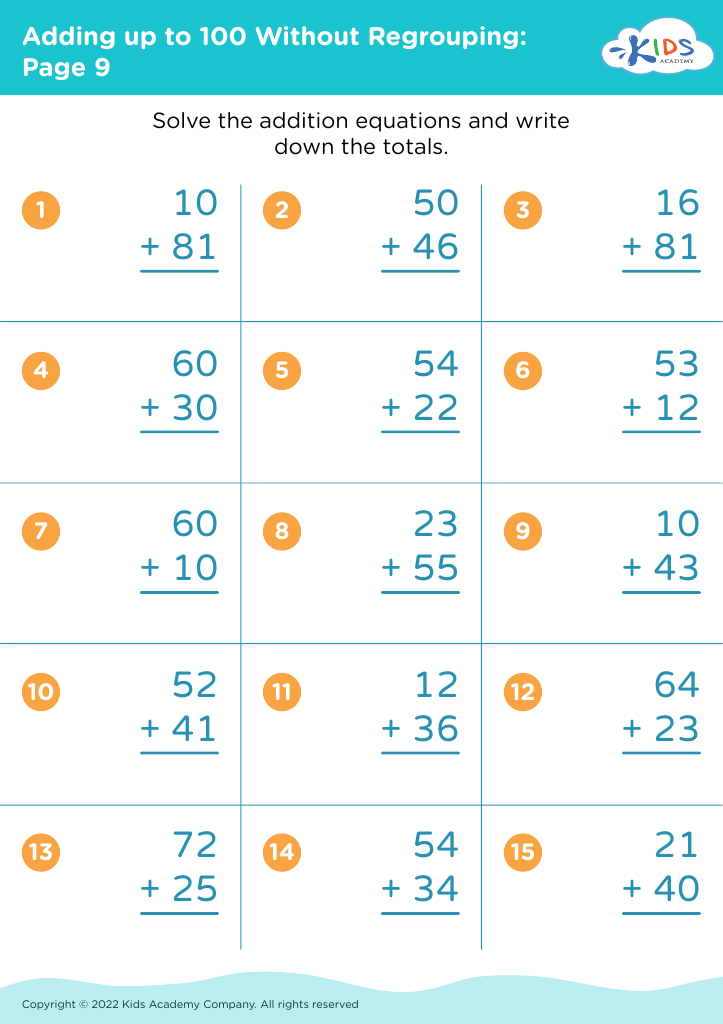
Discover essential basic addition skills with our engaging "Adding Up to 100" worksheets, designed for children ages 4-7. These interactive worksheets make learning addition fun and accessible, helping young learners master essential math concepts through colorful illustrations and easy-to-follow exercises. With a variety of practice problems and visual aids, children will build confidence and improve their arithmetic abilities in no time. Perfect for homeschooling or classroom activities, our worksheets align with educational standards and cater to diverse learning styles. Equip your little mathematicians with the foundational skills they need to succeed in their academic journey. Start their math adventure today!




%20(1).jpg)


Basic addition skills are foundational for young learners, especially for those aged 4-7. At this stage, children are developing critical cognitive abilities that will support their future academic success. Mastering addition up to 100 equips children with essential numerical fluency, which fosters confidence in their mathematical abilities. As they grasp these concepts, they also begin to understand patterns and relationships, laying the groundwork for more complex math skills.
Parents and teachers should care about this skill set because it enhances problem-solving aptitude and encourages logical thinking. Early proficiency in addition can positively impact a child's performance in other subjects, as mathematics is often integrated into science, art, and everyday activities. Furthermore, a solid grasp of basic addition reduces anxiety around math later on. Engaging with math at an early age can help instill a love for learning, making children more likely to pursue subjects related to STEM.
Additionally, as children master addition, they build self-esteem and motivation to take on challenges. Parents and educators play a vital role in nurturing these skills through interactive activities and positive reinforcement, supporting children's overall development and lifelong learning.








