Color Identification Adding up to 100 Worksheets for Ages 4-7
8 filtered results
-
From - To
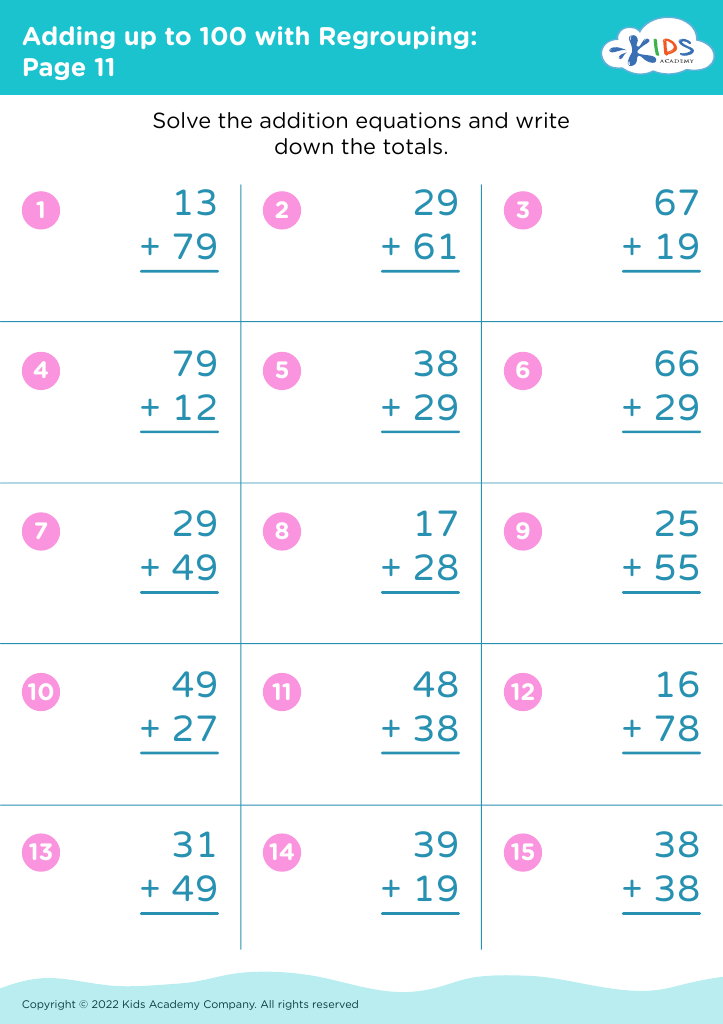
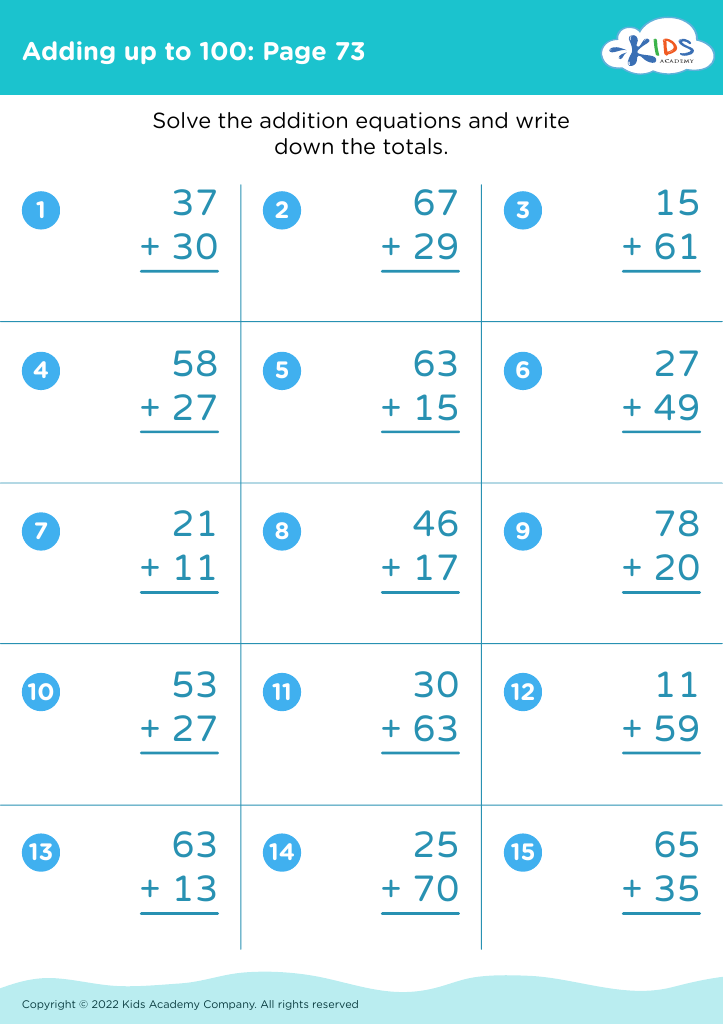
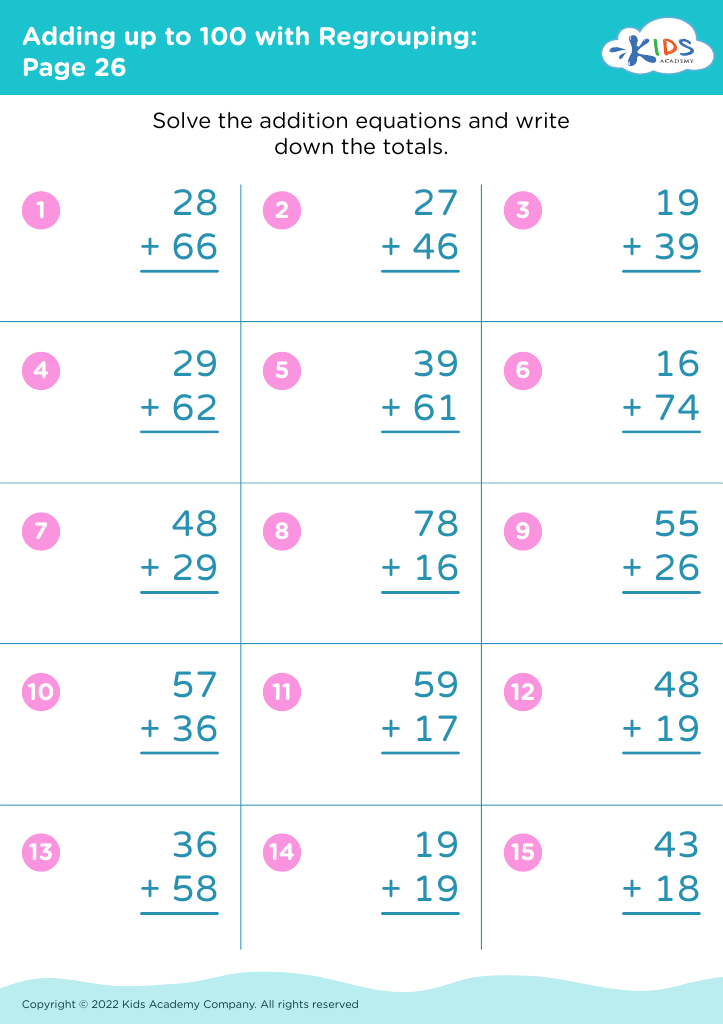
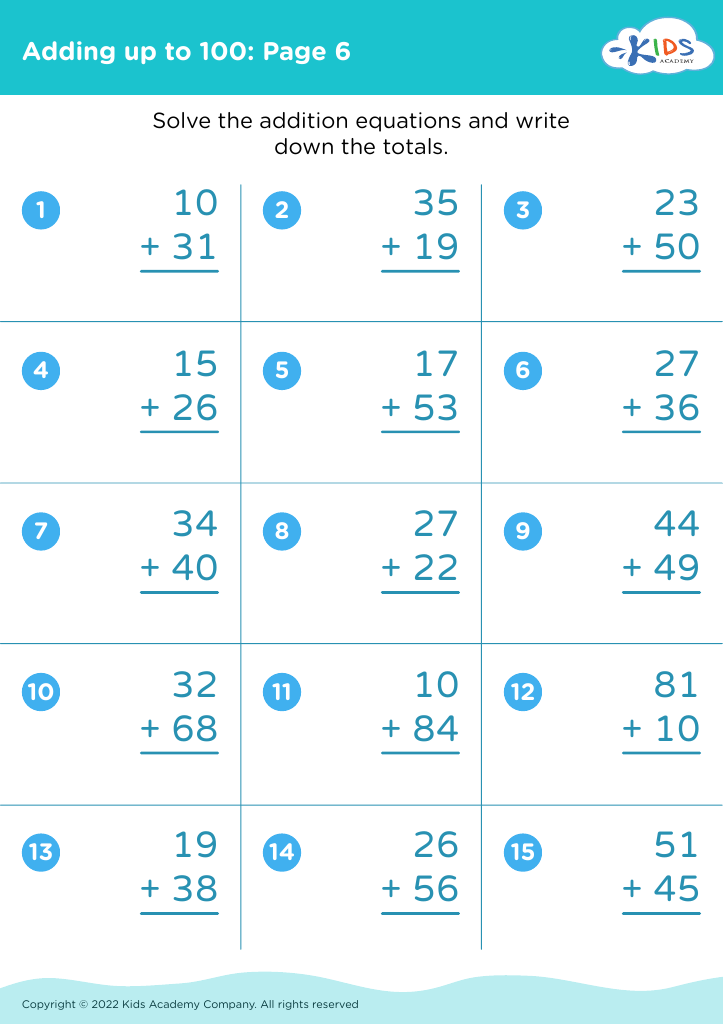
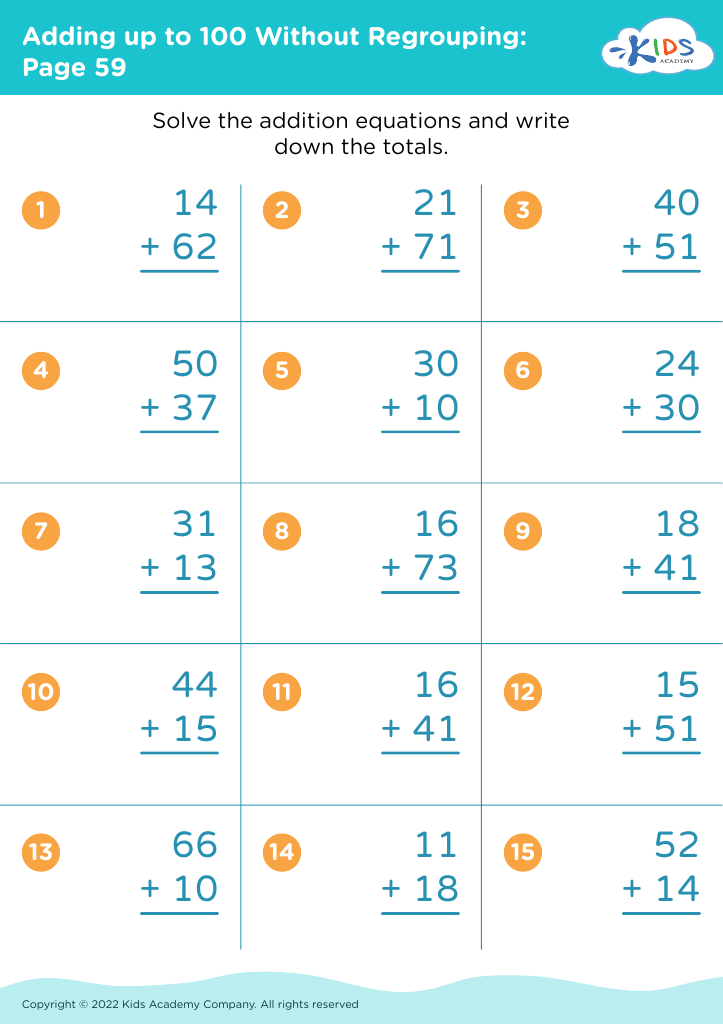
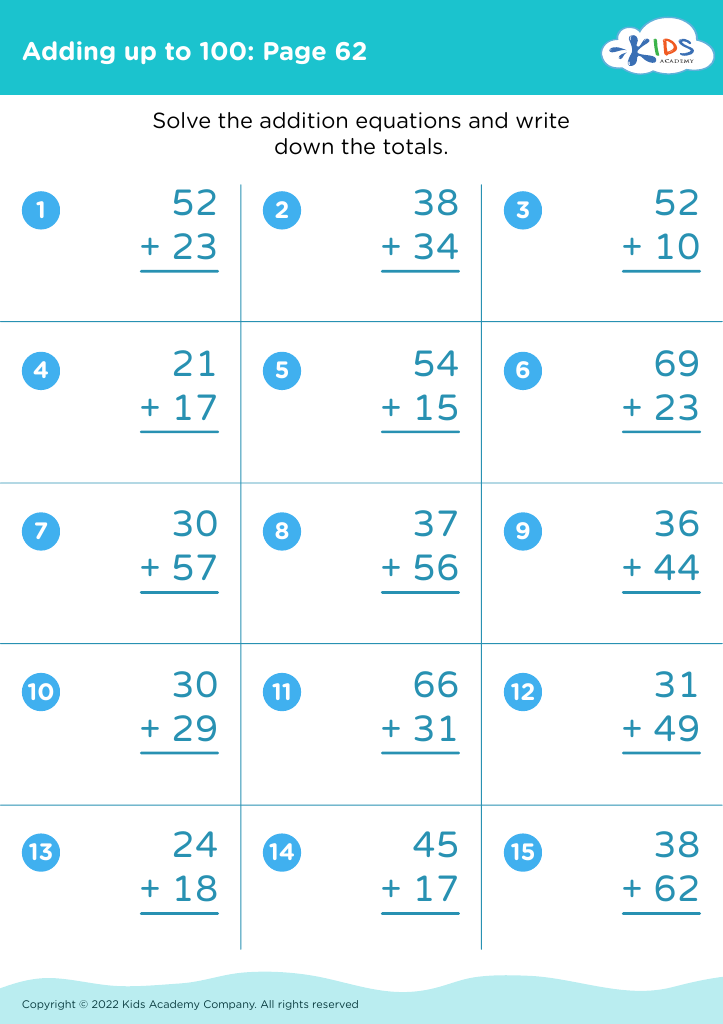
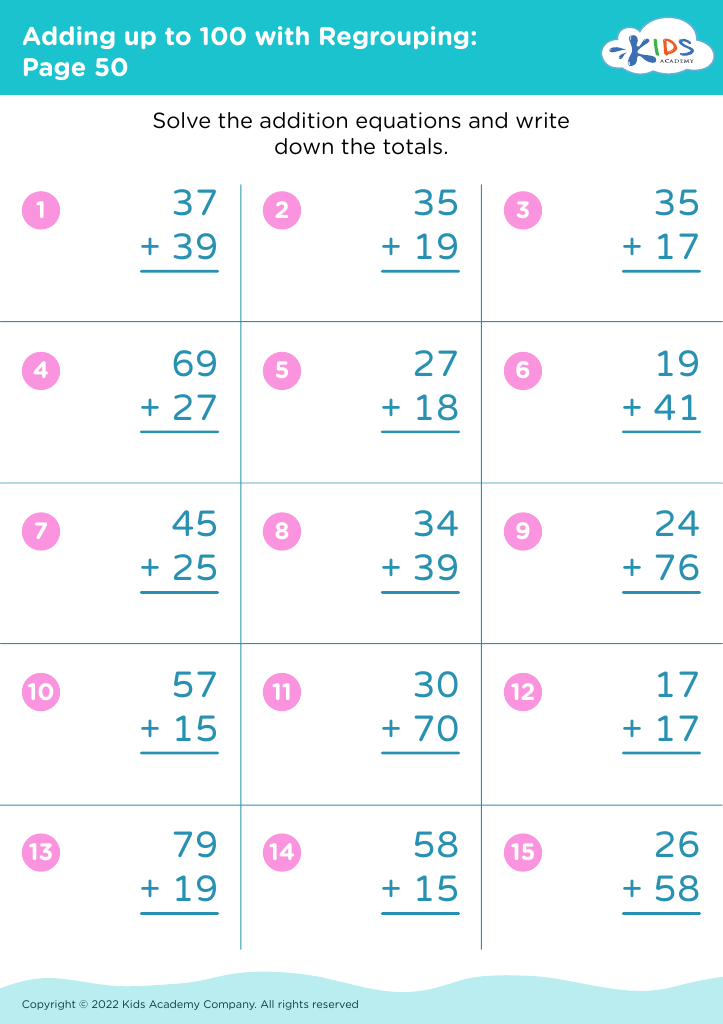
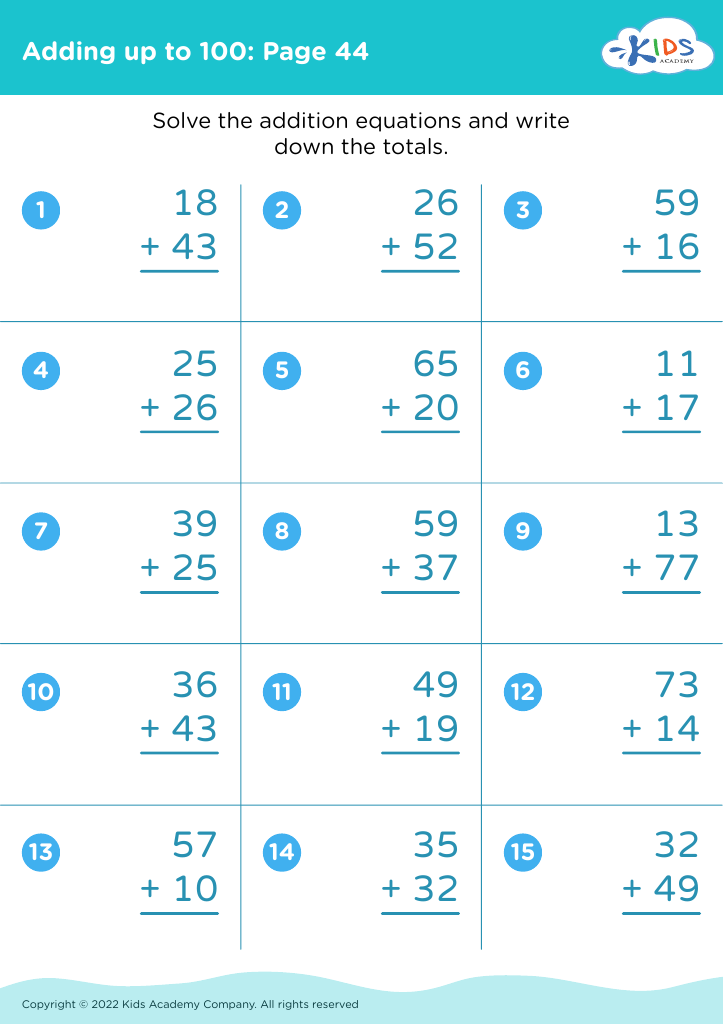
Introduce young learners to the exciting world of math with our "Color Identification Adding up to 100 Worksheets for Ages 4-7." Designed to blend fun and education, these worksheets help children practice addition while identifying vibrant colors. Perfect for preschoolers and first-graders, the engaging activities bolster counting skills, color recognition, and basic arithmetic concepts. With a focus on colorful visual aids, students learn to add numbers effectively while stimulating their artistic sense. Ideal for classroom or at-home learning, these worksheets are an excellent resource for nurturing a love for math from an early age!






%20(1).jpg)
Color identification and practicing basic addition up to 100 are crucial skills for early childhood development. Both aren't just academic milestones —they are intertwined with broader cognitive and emotional growth that significantly impacts a child's future learning patterns and problem-solving skills.
At ages 4-7, children's brains are like sponges, rapidly absorbing information. Learning to identify colors boosts their visual discrimination abilities, which are essential for reading readiness and attentive observation in their environment. It also enhances their descriptive and communication skills, allowing them to better express their thoughts and understand instructions.
Simultaneously, introducing simple addition up to 100 fosters foundational math skills. Engaging them in practical, colorful additions, like counting colored blocks or stickers, integrates math into their daily lives, making abstract numbers concrete and understandable. This not only sharpens their numerical sense but also develops logical thinking, memory, and attention to detail.
Furthermore, linking these concepts cultivates a positive learning attitude by transforming lessons into playful, interactive scenarios. This blend of enjoyment and education nurtures a child's intrinsic motivation to learn, sparking curiosity and confidence. Parents and teachers should care about this because mastering these skills equips children with vital tools for their future academic achievements and everyday problem-solving.








