Color recognition Adding up to 100 Worksheets for Ages 4-7
4 filtered results
-
From - To
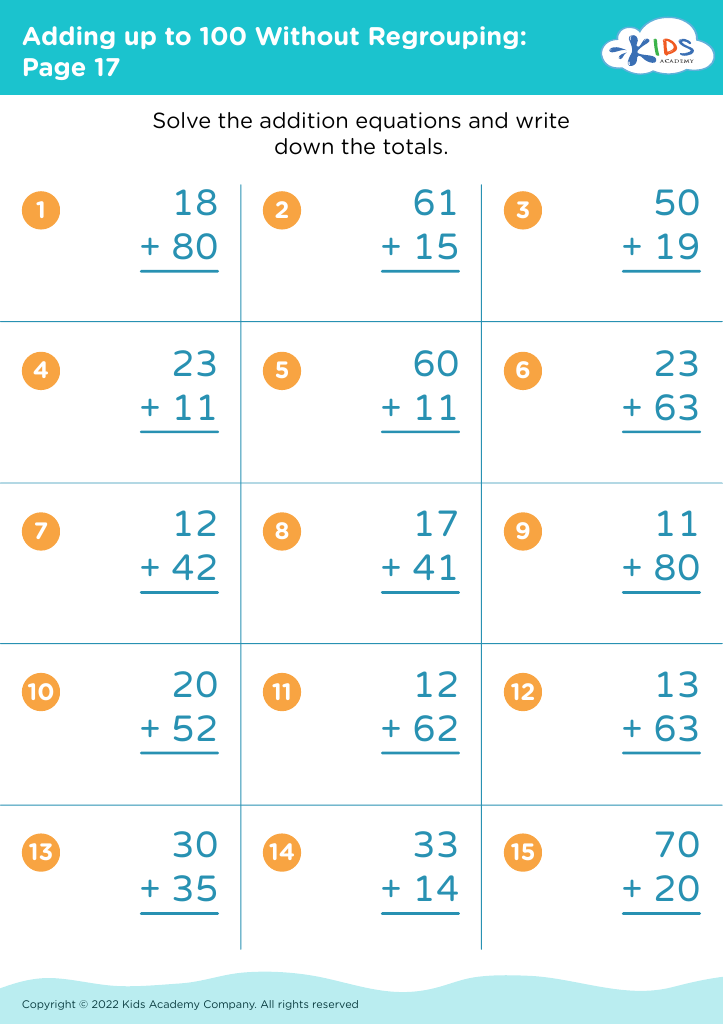
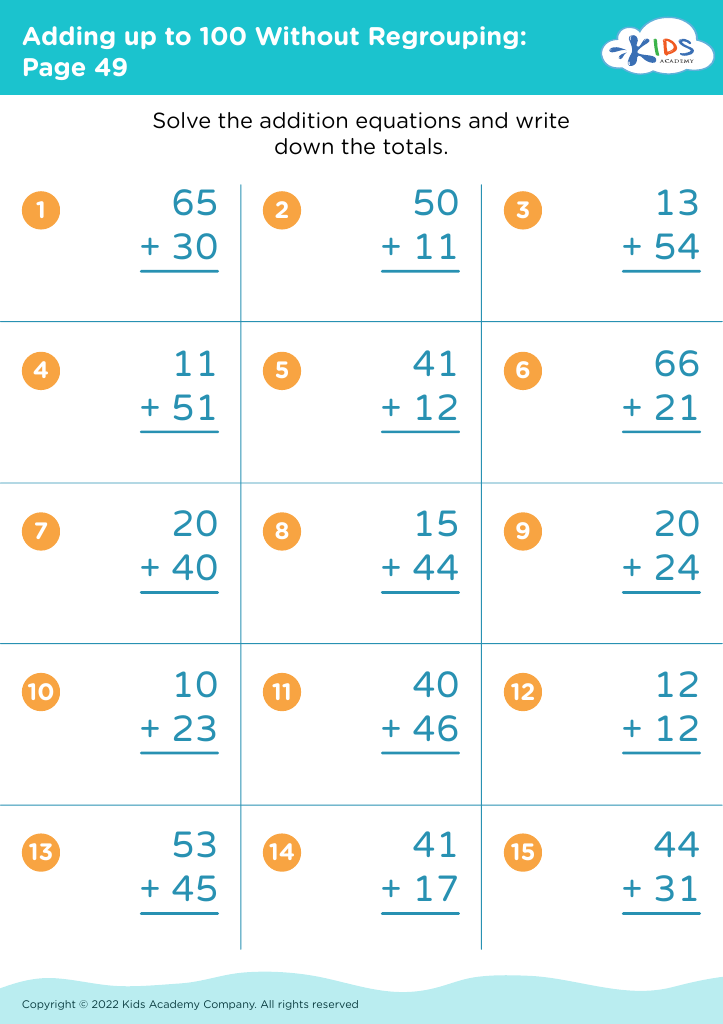
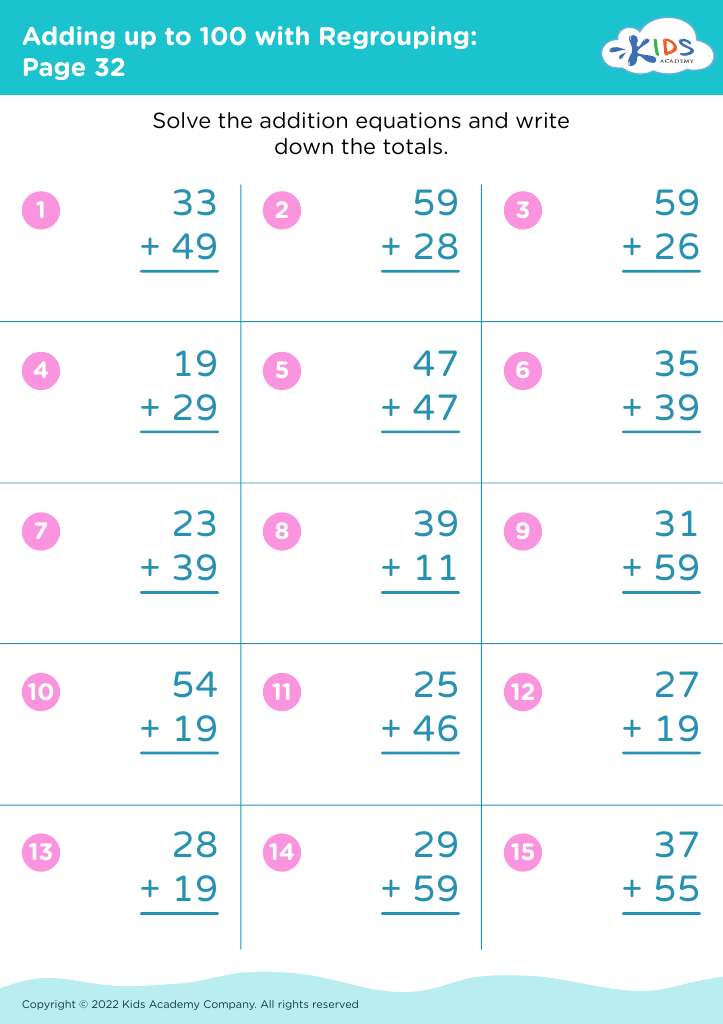
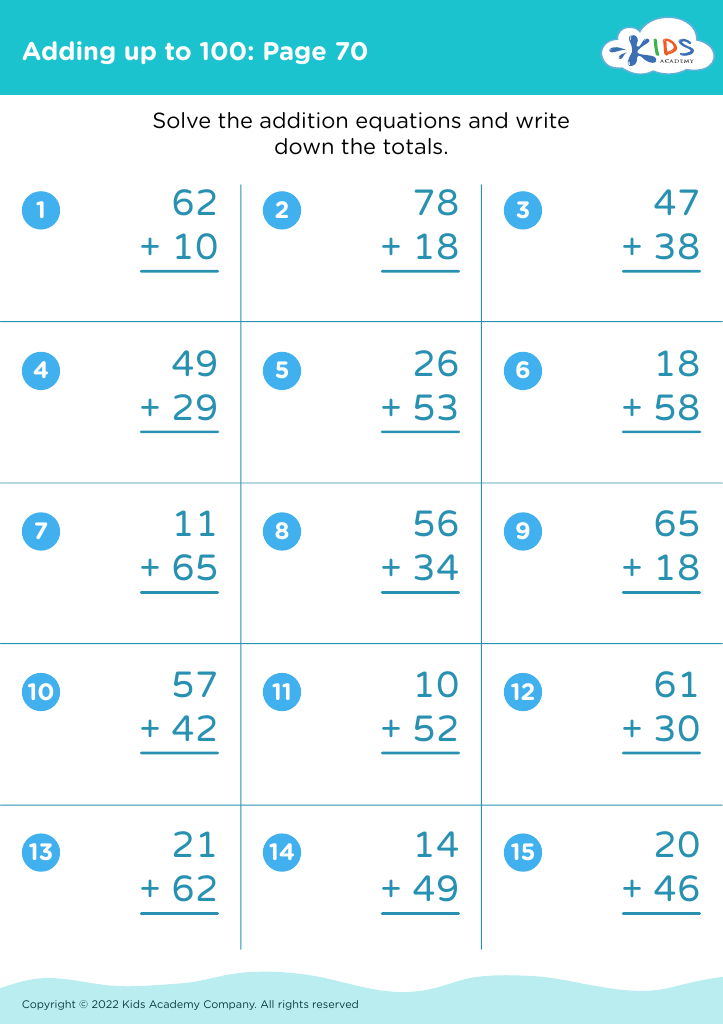
"Color Recognition Adding up to 100 Worksheets for Ages 4-7" offer a fun and educational way for young learners to enhance their math and color recognition skills. These engaging worksheets combine bright colors with simple addition problems, helping children practice adding numbers up to 100 while identifying and matching colors. Perfect for early graders, the interactive exercises make learning a visual treat, promoting both cognitive and fine motor development. Ideal for home or classroom use, these worksheets make math exciting and accessible, laying a strong foundation for future mathematical success. Encourage your child to explore, learn, and have fun with these vibrant educational resources!


%20(1).jpg)




Color recognition and basic math skills are foundational for children ages 4-7, setting the stage for future academic success. When parents and teachers prioritize color recognition, it enhances a child’s cognitive development, aiding in the differentiation of objects, improved memory, and stronger communication abilities. By distinguishing and naming various colors, children sharpen their visual discrimination and vocabulary, empowering them to describe their world more accurately and meaningfully.
Similarly, teaching children how to add up to 100 introduces fundamental mathematical concepts, nurturing number sense, and logical thinking. This early exposure to addition develops problem-solving skills and confidence in handling numbers. It also lays a solid groundwork for more complex arithmetic operations and geometry, creating a bridge to advanced math topics taught in higher grades.
Combining color recognition with foundational math activities makes learning both enjoyable and effective. Engaging with hands-on activities such as sorting colored objects and counting, or solving colorful puzzles that involve counting and addition, captures children's interest and enhances their grasp of these crucial skills. Thus, through fun and interactive approaches, parents and teachers contribute significantly to a young child's overall intellectual growth and readiness for future academic challenges.








