Comparing Fractions Adding up to 100 Worksheets for Ages 4-7 - Page 2





%20(1).jpg)


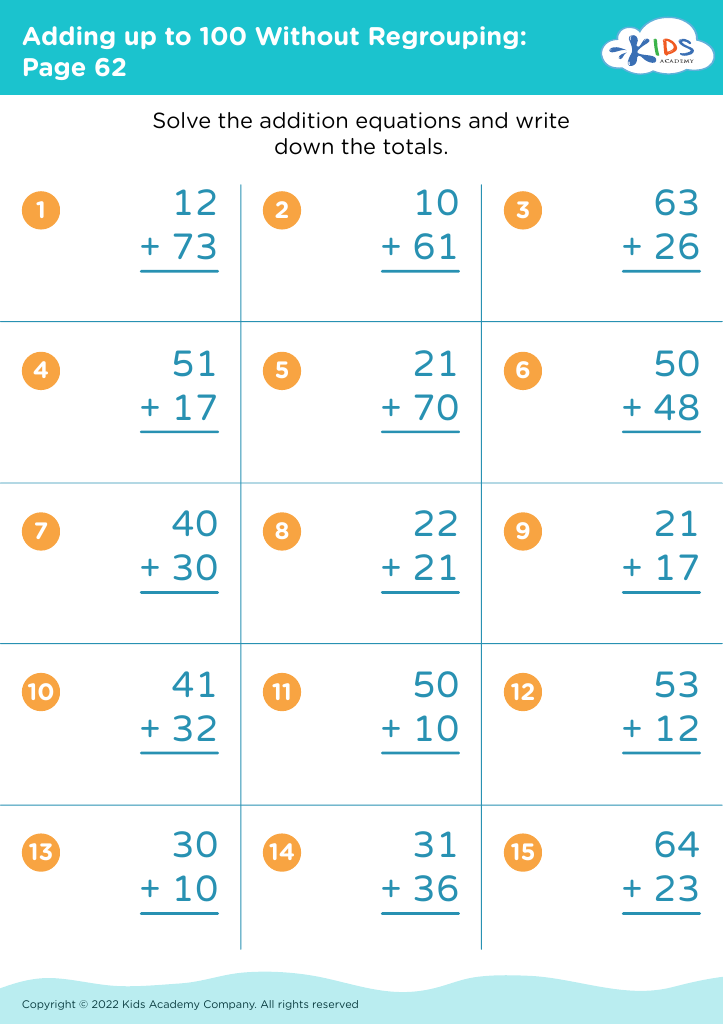
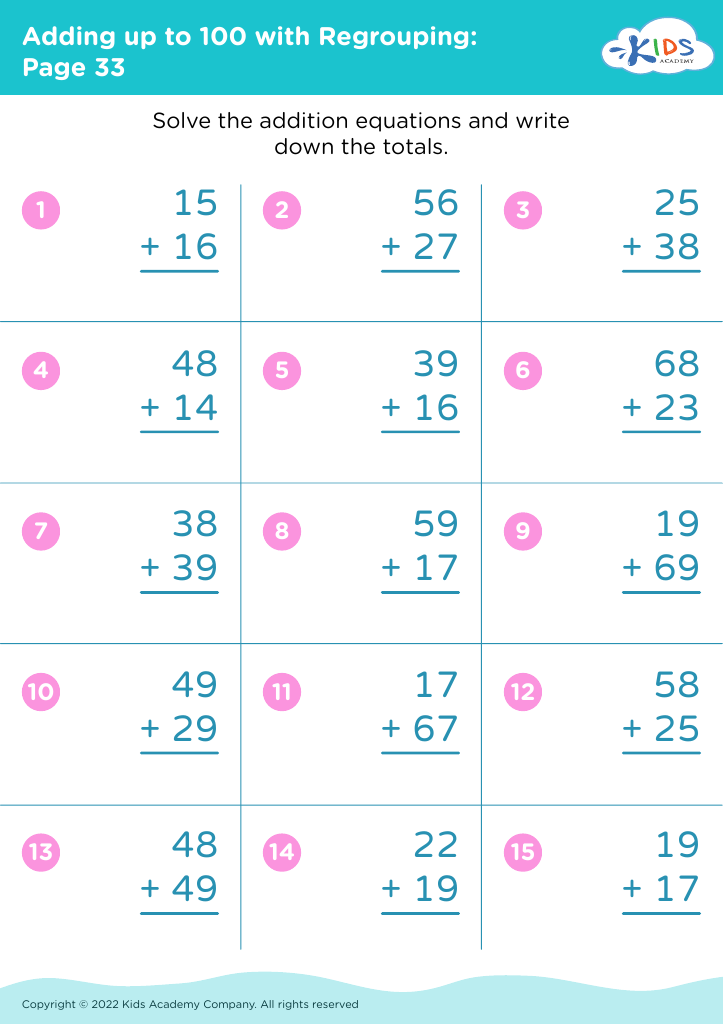
Parents and teachers should care about teaching children ages 4-7 to compare fractions and understand adding up to 100 because these foundational math skills are critical for their cognitive development and future academic success. At this age, children's brains are highly adaptable and learn best through concrete, visual, and hands-on experiences. Introducing fractions and the concept of 100 helps them grasp the basics of number sense, which is essential for more complex math concepts.
Comparing fractions teaches children about equality, parts of a whole, and proportional thinking, laying the groundwork for algebra and geometry. Understanding how numbers add up to 100 reinforces place value, addition, and subtraction, crucial skills in elementary math curricula. Moreover, these exercises promote problem-solving skills, logical thinking, and perseverance, which are transferable to all areas of learning.
Furthermore, when children are comfortable with these concepts early on, they are more likely to enjoy math and be confident in their abilities. This proactive learning approach can help prevent math anxiety and build a strong, positive relationship with the subject. Involving parents in this process ensures continuity between school and home, making learning an integrated and engaging experience. Engaging activities around these concepts can also help foster curiosity, tightening the bond between parents, teachers, and children.








