Develop critical thinking Adding up to 100 Worksheets for Ages 4-7
5 filtered results
-
From - To
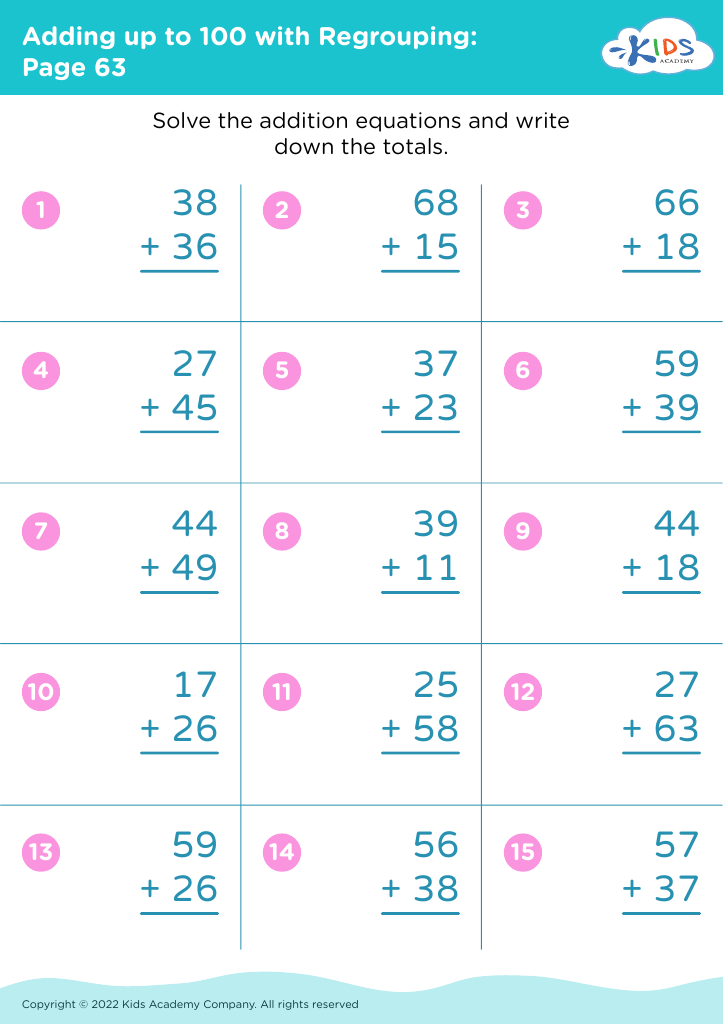
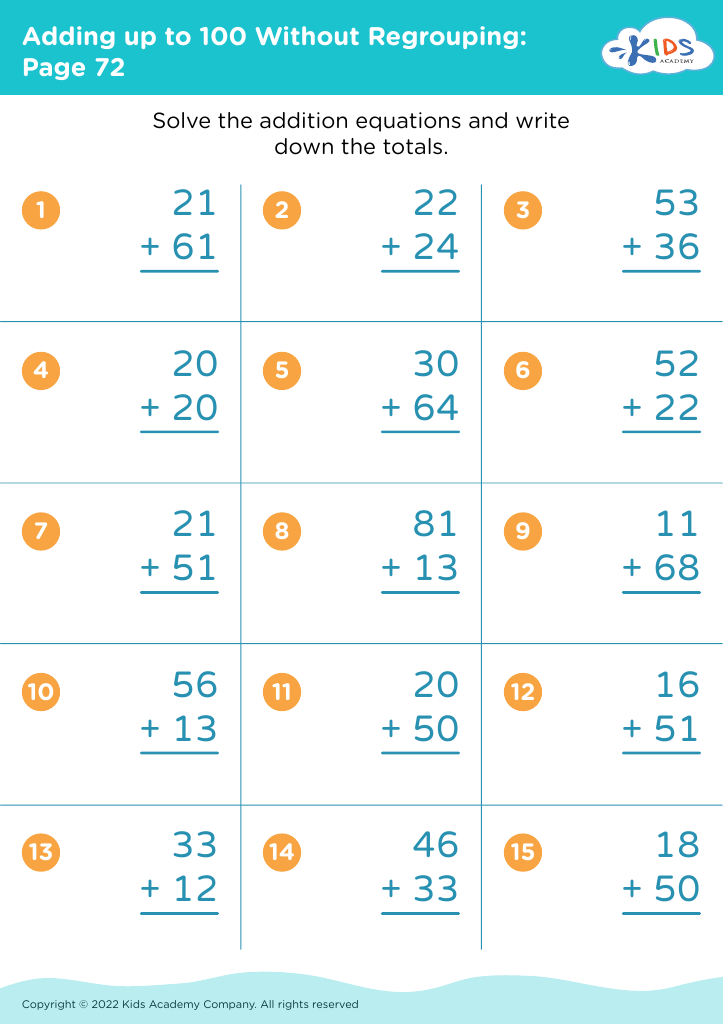
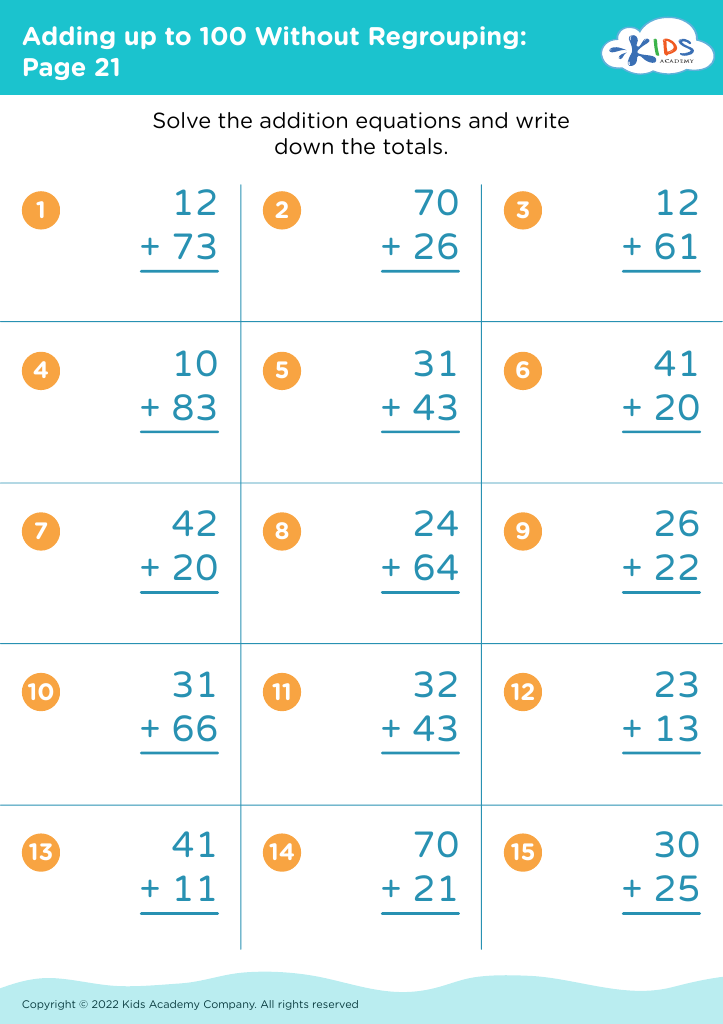
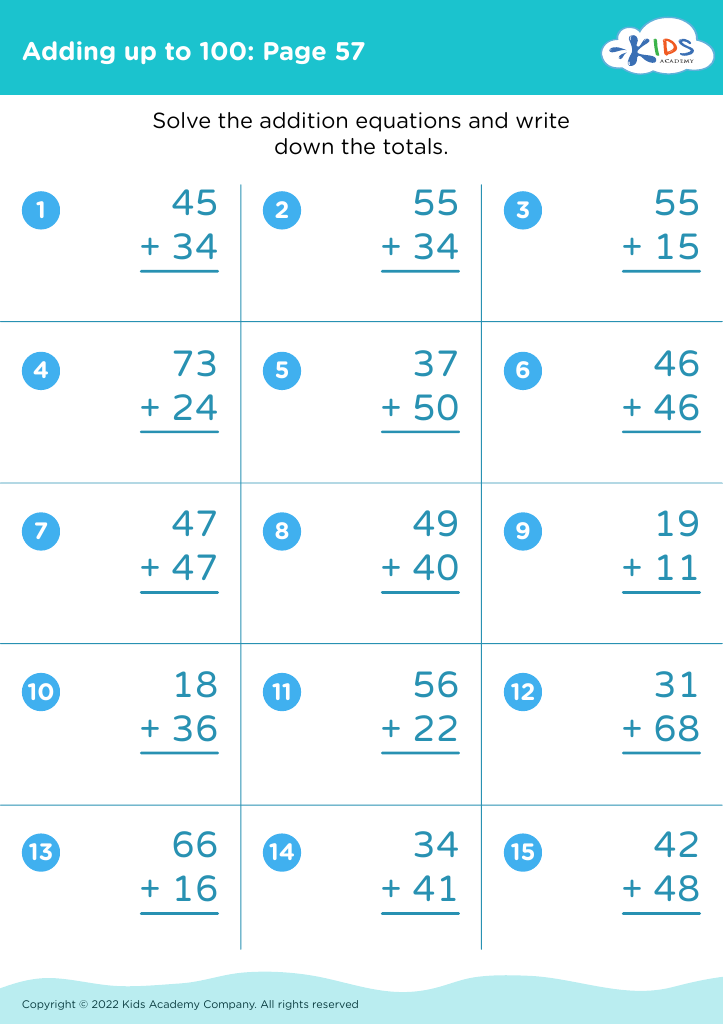
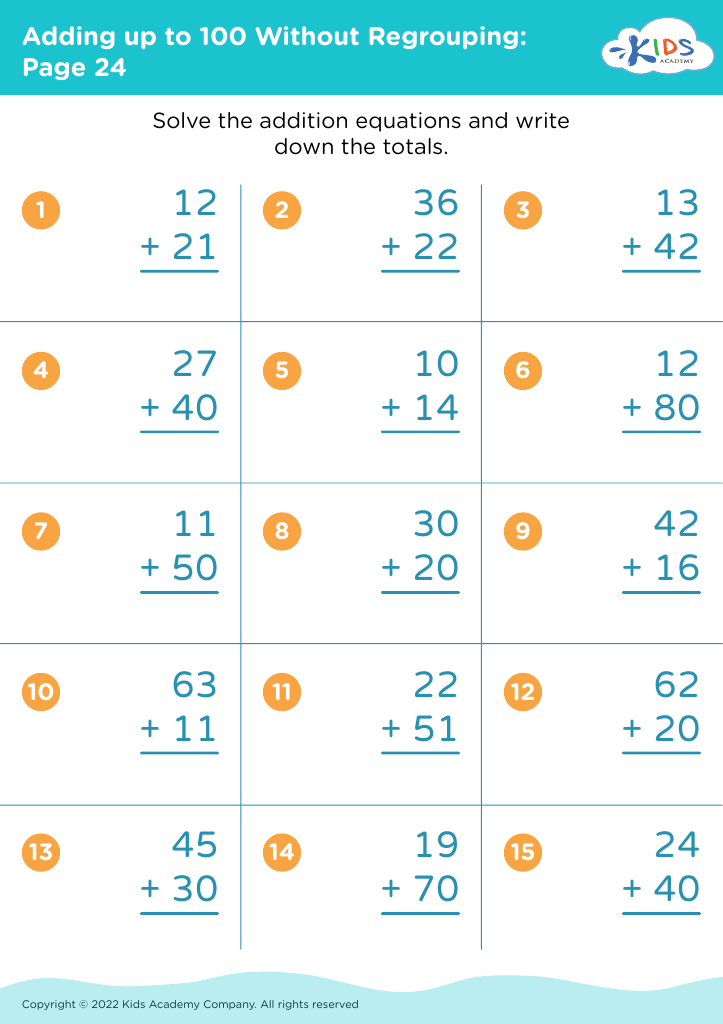
Unlock the power of critical thinking with our curated collection of 100 worksheets designed for children ages 4-7! Engaging activities focus on adding up to 100, fostering not just math skills but also problem-solving and analytical thinking. Each worksheet encourages kids to explore strategies that enhance their cognitive abilities, making math fun and interactive. With vibrant visuals and age-appropriate challenges, learners will develop essential skills while boosting their confidence. Perfect for teachers, parents, or caregivers, these worksheets are an excellent resource for nurturing young minds in their early educational journey. Start cultivating critical thinkers today!





%20(1).jpg)

Developing critical thinking skills from an early age, particularly for children aged 4-7, is vital for their overall cognitive growth and future success. For both parents and teachers, fostering these skills can help children enhance their problem-solving abilities, become more independent thinkers, and improve their understanding of the world around them.
By engaging young learners in activities that promote critical thinking, such as puzzles, open-ended questions, and creative play, adults can encourage children to analyze situations, evaluate options, and draw logical conclusions. This age group is exceptionally curious, and tapping into that curiosity through guided exploration not only makes learning enjoyable but also deepens their comprehension.
Moreover, critical thinking helps children become effective communicators. When they articulate their thoughts and reasoning, they build language skills and gain confidence in expressing individual viewpoints. This is crucial in a diverse society where collaboration is key.
In the context of math, representing numbers as sums can develop early addition skills; for instance, exploring different ways to make 100 reinforces number sense and arithmetic proficiency. Ultimately, by prioritizing critical thinking, parents and teachers lay a foundational skill set that supports lifelong learning and adaptability.








