Developing math skills Adding up to 100 Worksheets for Ages 4-7
3 filtered results
-
From - To
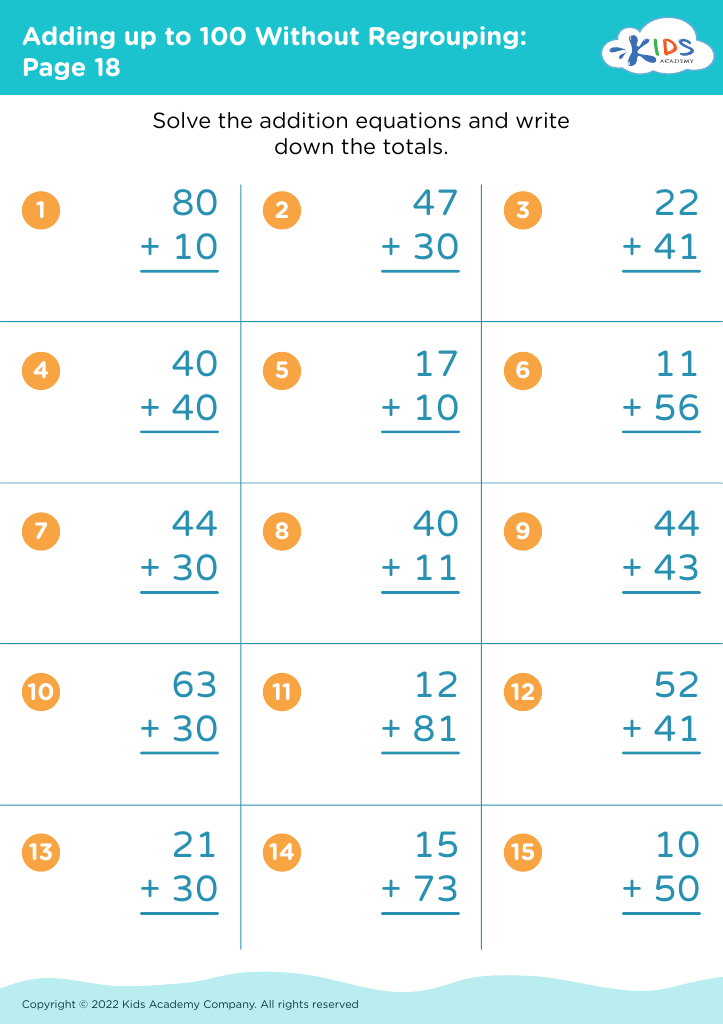
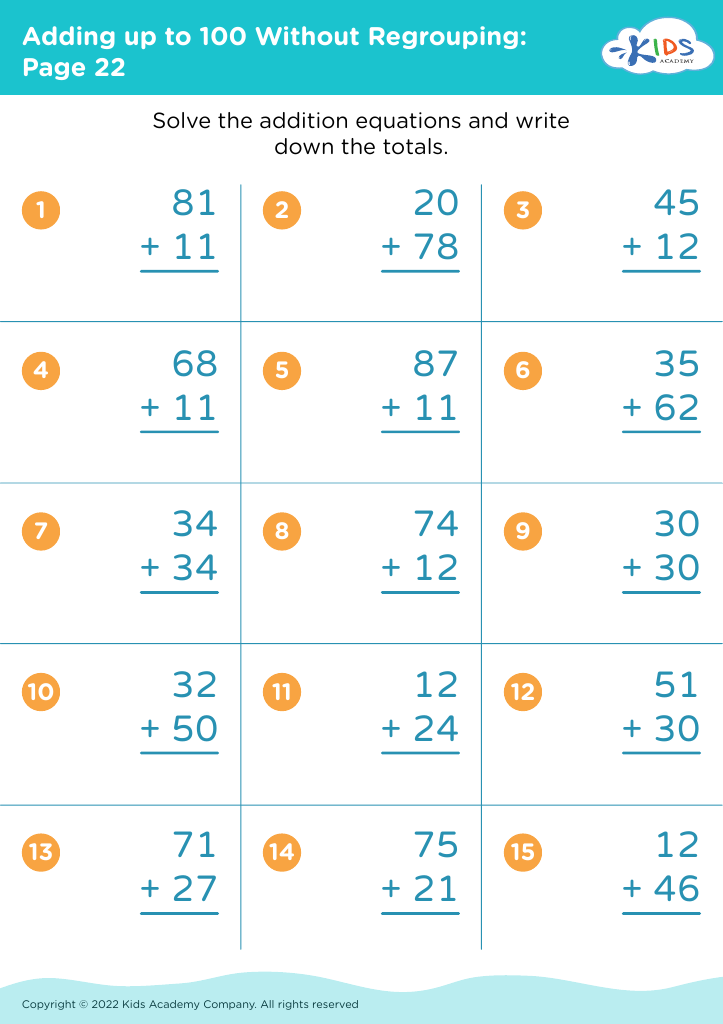
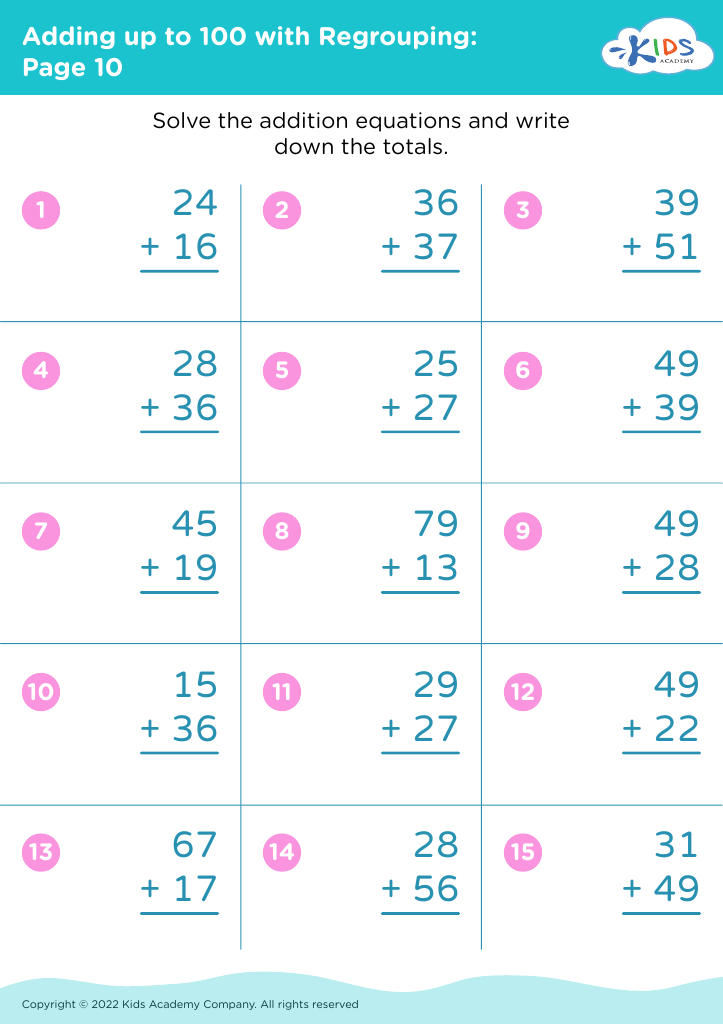
Unlock your child's math potential with our "Developing Math Skills: Adding up to 100 Worksheets" designed for ages 4-7. These engaging worksheets provide a fun and interactive way for young learners to practice addition skills, helping them build a strong foundation in mathematics. Tailored to various learning styles, the worksheets feature colorful illustrations and varied exercises to keep kids excited about learning. Parents and educators can easily print these resources at home or in the classroom. Boost your child's confidence in math while enhancing their problem-solving abilities and number recognition skills. Start their math journey today!



%20(1).jpg)



Developing math skills, particularly the ability to add up to 100, is crucial for children aged 4-7 for several reasons. At this developmental stage, children are laying the foundation for their mathematical understanding, which will be vital throughout their education. Mastering addition to 100 helps them develop number sense, enhance cognitive skills, and improve problem-solving abilities.
Firstly, adding up to 100 introduces children to essential concepts like place value and the relationship between numbers, fostering a stronger grasp of higher-level math seen in later grades. As children build confidence in their capacity to perform basic arithmetic, they also nurture critical thinking skills.
Furthermore, strong math skills enhance academic performance across the curriculum, as logic and quantitative reasoning are integrated into subjects like science and social studies. This foundation is key to minimizing future math anxiety and sets the stage for a lifelong positive attitude toward learning.
Lastly, a focus on early math skills supports social skills through cooperative learning activities and games that require children to work together, boosting communication and teamwork. By supporting their math development, parents and teachers equip children not just for academic success but also for everyday life skills that involve numerical reasoning.








