Drawing skills Adding up to 100 Worksheets for Ages 4-7
3 filtered results
-
From - To
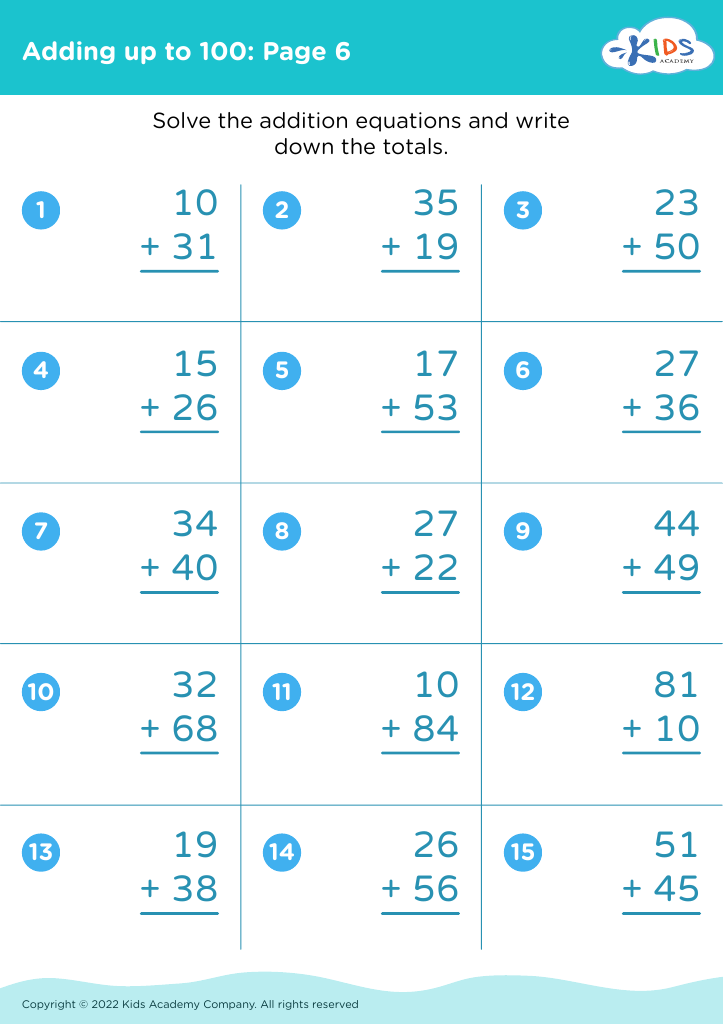
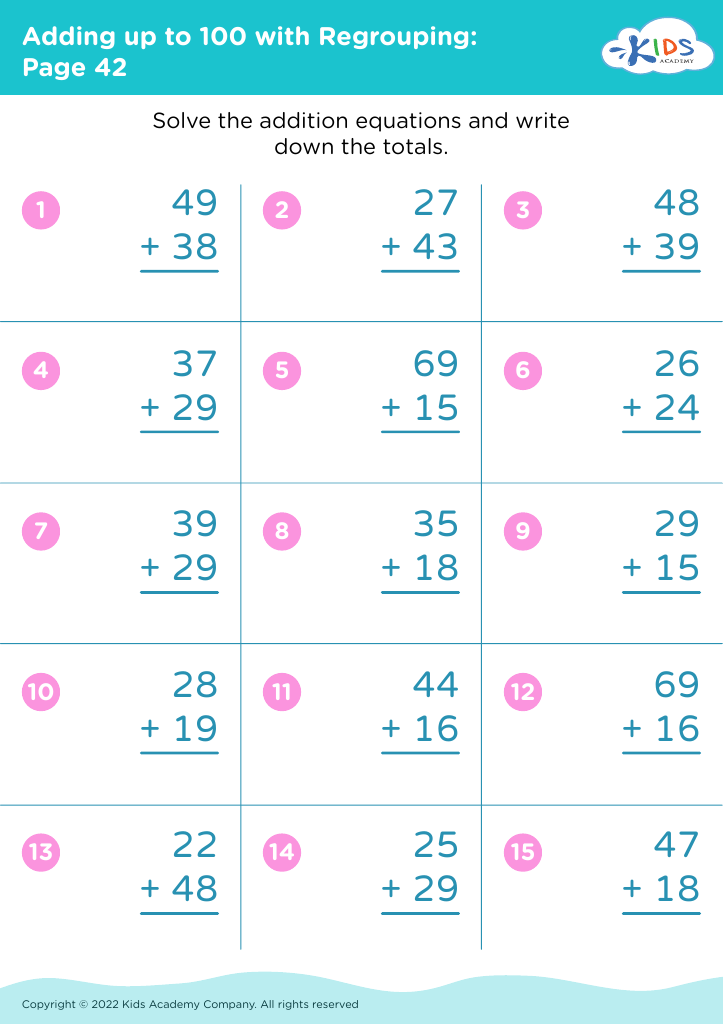
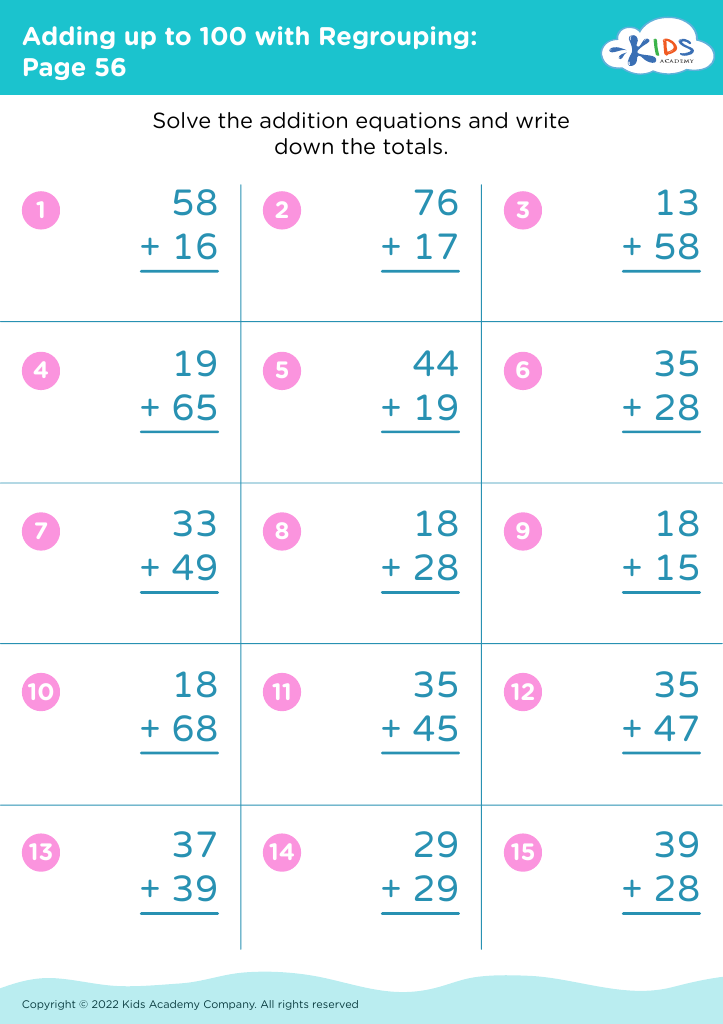
Enhance your child's creativity and mathematical abilities with our "Drawing Skills Adding up to 100 Worksheets for Ages 4-7". Specially designed to fuse art with math learning, these worksheets make mastering addition up to 100 fun and engaging. Each worksheet incorporates captivating drawings and requiring children to complete addition problems. This unique approach not only boosts addition skills but also enhances fine motor skills and creativity. Perfect for young learners, parents, and educators, these worksheets transform math practice into an enjoyable adventure. Make math delightful and artistic with our dynamic drawing-centric worksheets for ages 4-7!



%20(1).jpg)



Encouraging drawing skills and basic arithmetic, such as adding up to 100, in children aged 4-7 is crucial for their development.
First, drawing fosters creativity and fine motor skills. It helps children improve their hand-eye coordination and dexterity, which are fundamental for daily tasks and academic activities. Through drawing, kids learn to express themselves, understand spatial relationships, and enhance their visual processing abilities.
Meanwhile, teaching basic arithmetic, especially addition up to 100, builds a strong foundation for numeracy. It lays the groundwork for more advanced mathematical concepts they'll encounter in the future. Arithmetic helps children develop logical thinking and problem-solving skills. It also instills a sense of discipline and perseverance, as they learn through practice and repetition.
Combining drawing with arithmetic, such as drawing and coloring exercises that incorporate number problems, makes learning more engaging and less intimidating. This integrative approach can help children grasp concepts more effectively, as it blends creativity with analytical thinking. Encouraging parents or teachers to support both drawing and arithmetic skills ensures children develop a balanced and well-rounded skill set, essential for their overall cognitive, emotional, and social growth. In an ever-evolving educational landscape, these foundational skills are pivotal for their future academic success and personal development.








