Enhance number recognition Adding up to 100 Worksheets for Ages 4-7
8 filtered results
-
From - To
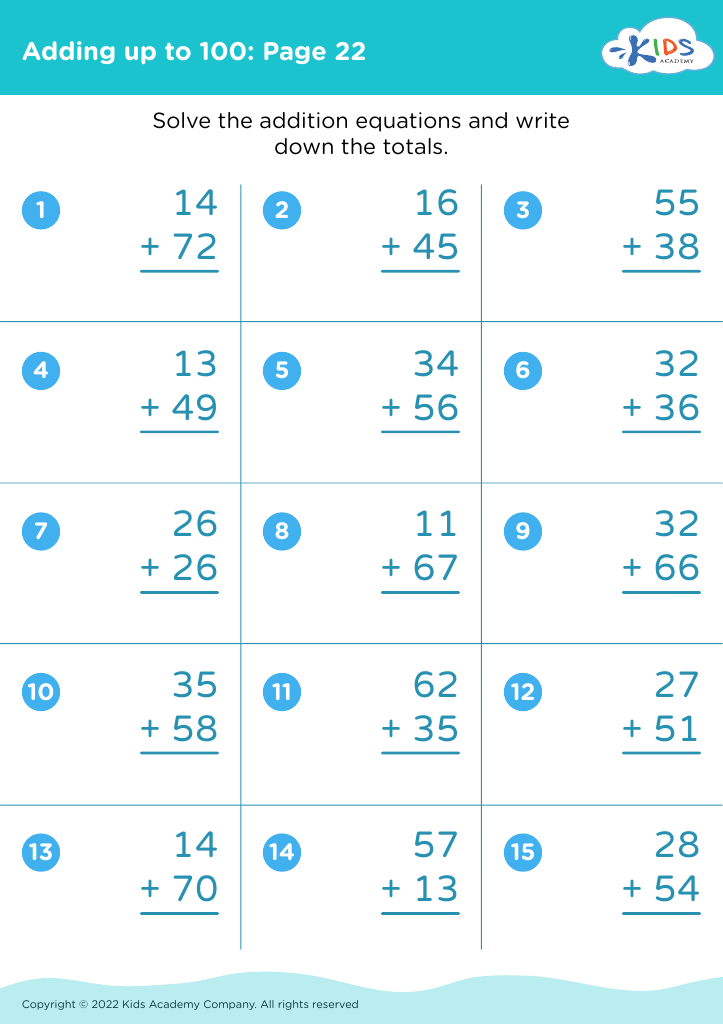
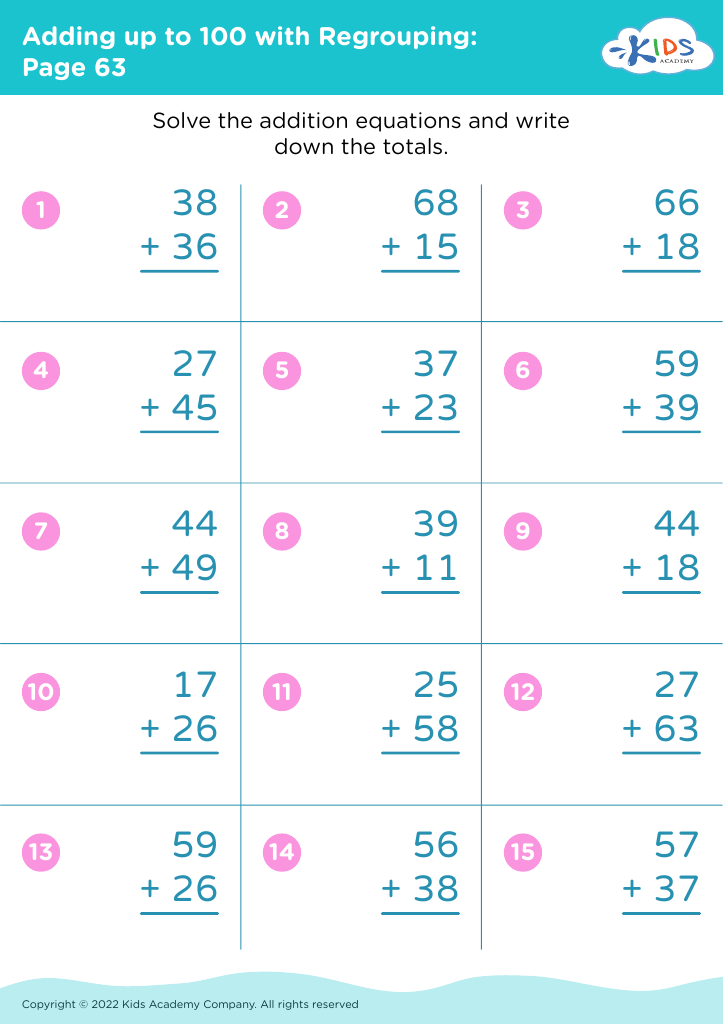
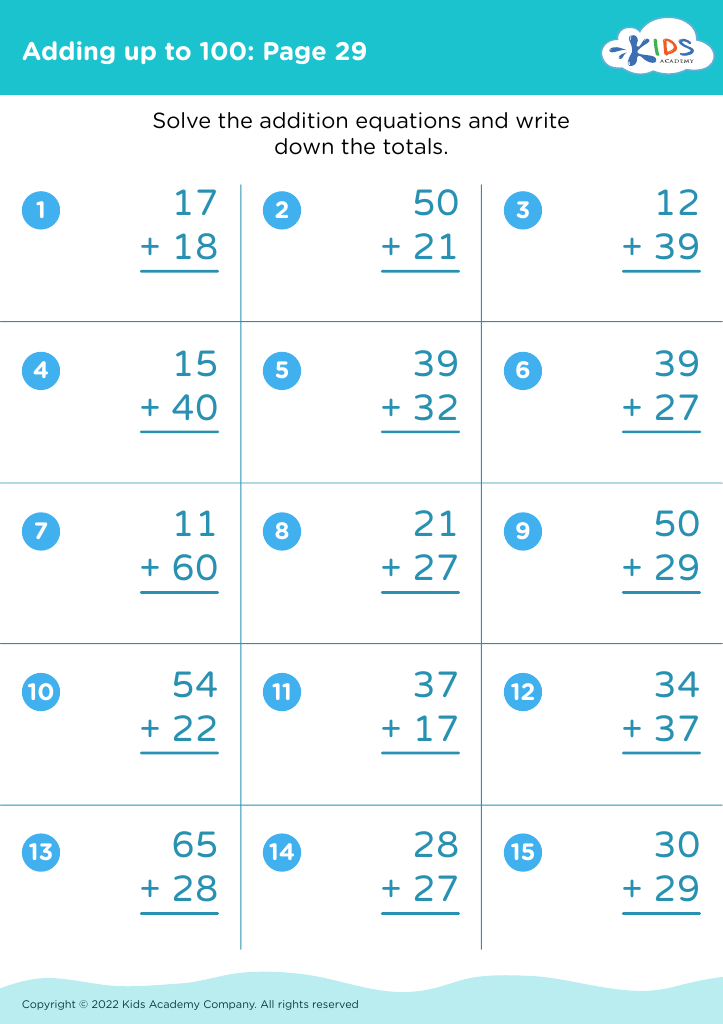
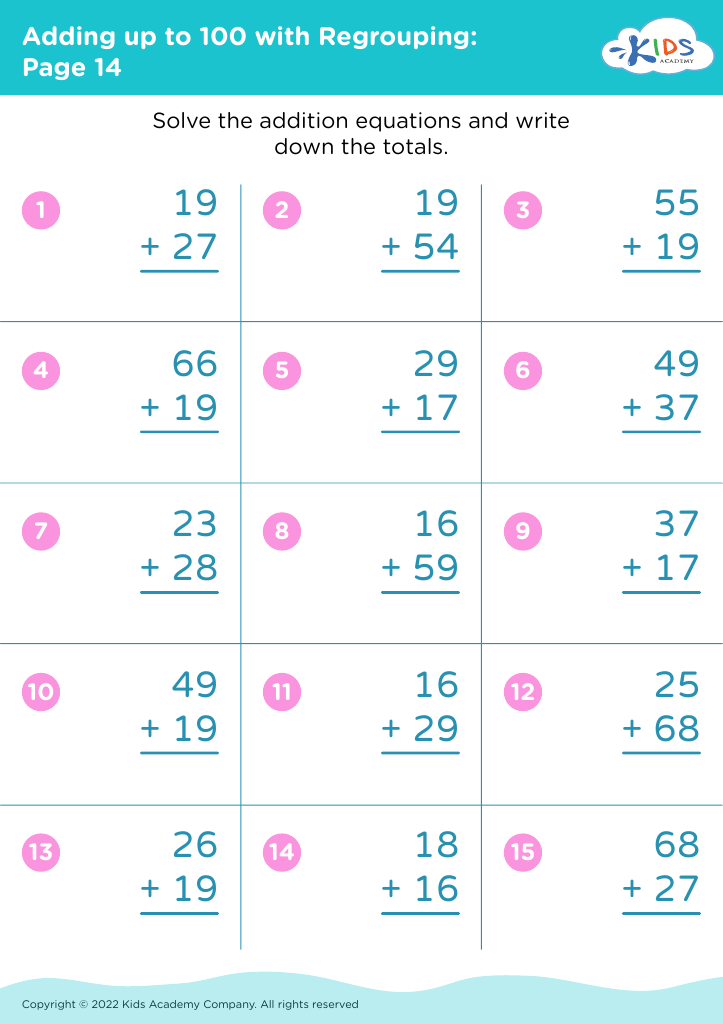
Boost your child's math skills with our "Enhance Number Recognition Adding Up to 100 Worksheets" designed for ages 4-7. These engaging worksheets are perfect for young learners to practice number recognition and addition in a fun and interactive way. Packed with colorful illustrations and age-appropriate challenges, these printable resources help kids develop critical thinking and problem-solving skills. Ideal for both classroom and home use, our worksheets make learning math enjoyable and effective. Help your child build a strong foundation in number recognition and addition up to 100 with these educational and entertaining worksheets.
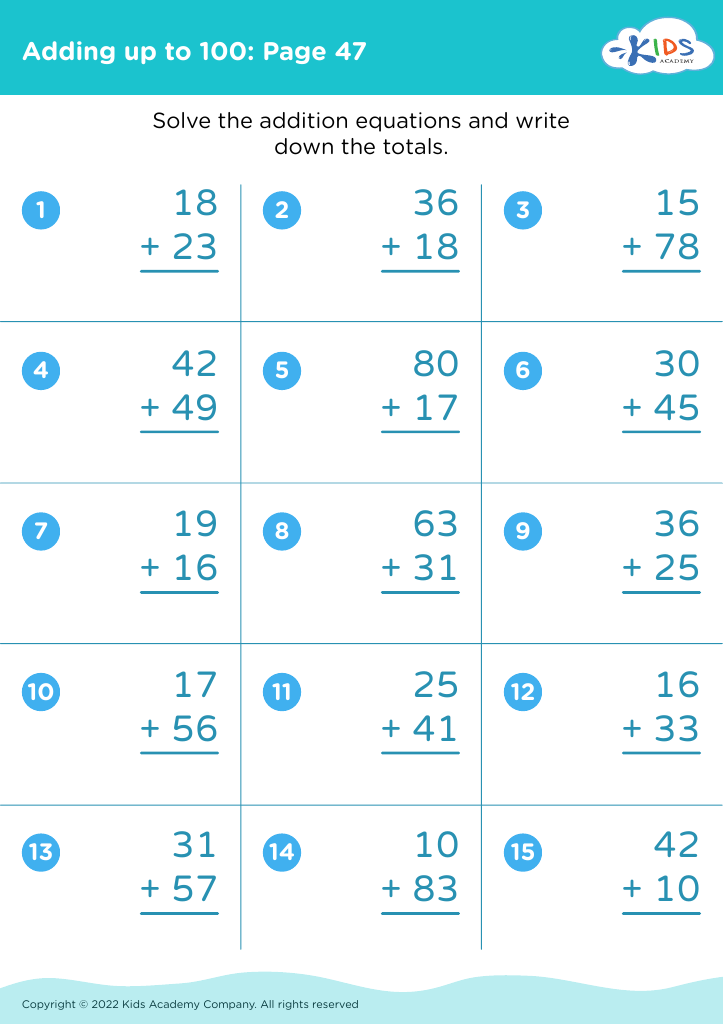
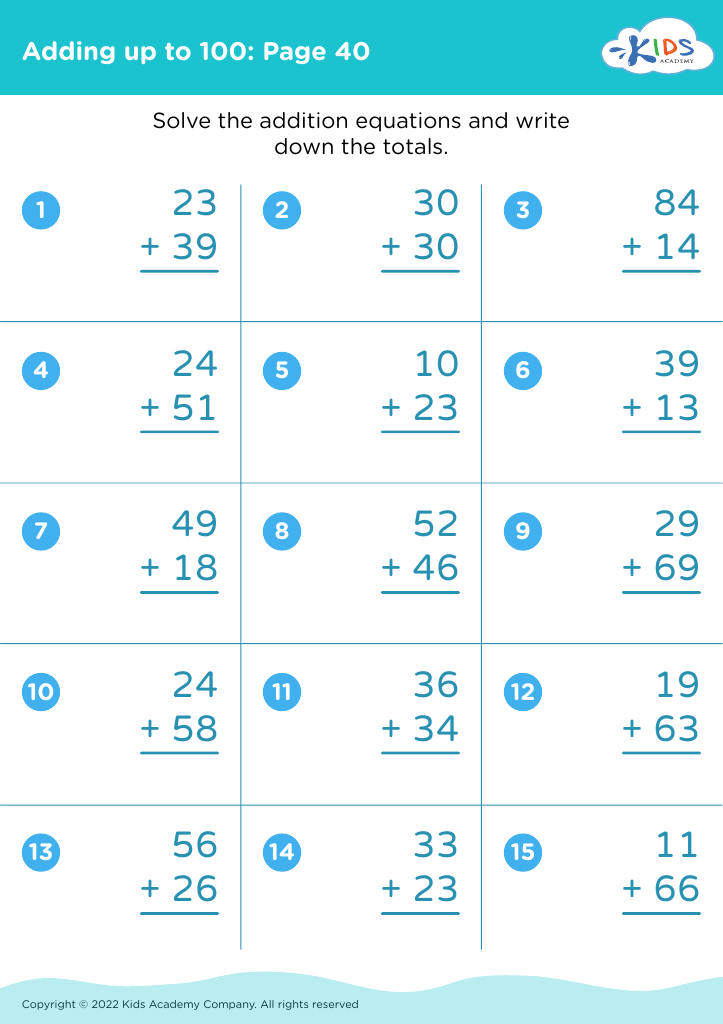
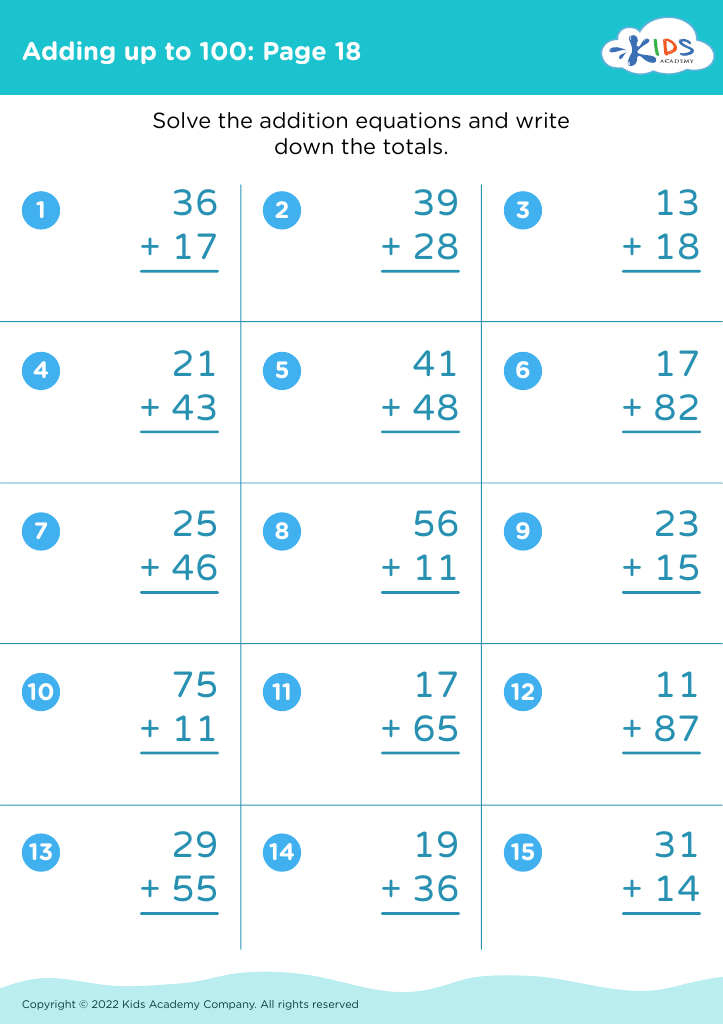
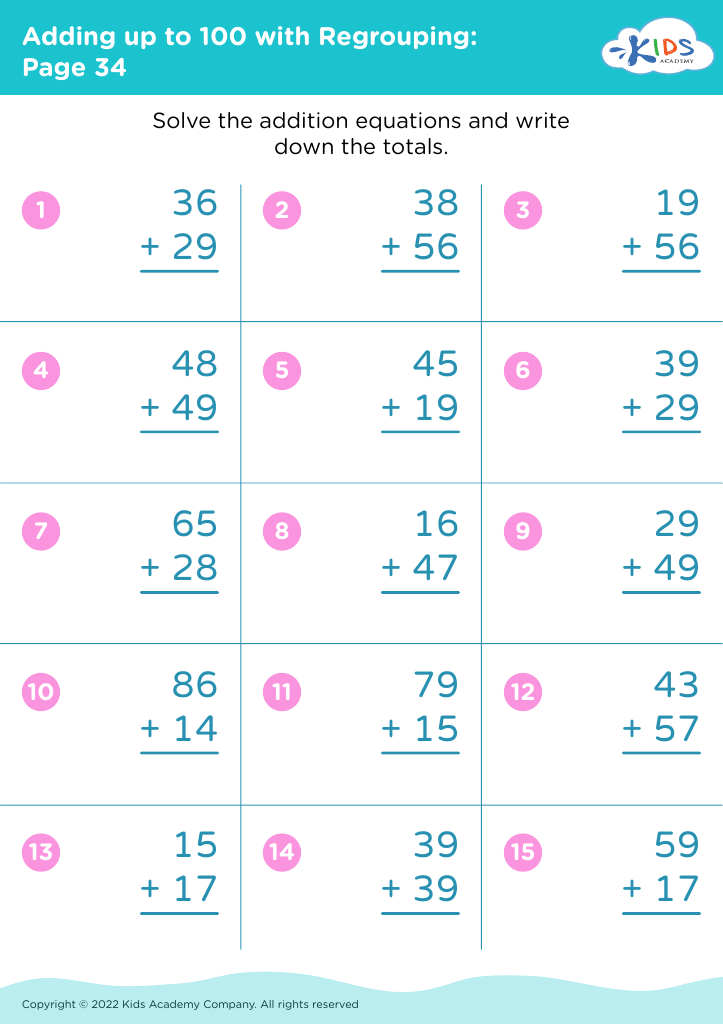




%20(1).jpg)


Enhancing number recognition and understanding addition up to 100 for ages 4-7 lays a critical foundation in mathematical literacy that sets the stage for future academic success. At this developmental stage, children’s brains are highly receptive and form neural connections rapidly. Establishing a strong grasp of numbers and basic arithmetic helps children in grasping the concepts of counting, comparing, and ordering, which are crucial for more advanced mathematical problem-solving which they will encounter later.
Moreover, number recognition and basic addition are intertwined with everyday tasks like telling time, counting money, and understanding measurements, making them practical life skills. Early proficiency in these areas boosts a child's confidence and promotes a positive attitude toward mathematics, fostering a lifelong love for learning.
For teachers and parents, investing time and resources into teaching these foundational skills can lead to numerous educational benefits. It helps identify and address any early numeracy difficulties, ensuring that children receive necessary support sooner. Through engaging activities, interactive learning, and consistent practice, children can achieve a solid numerical foundation and are less likely to face academic struggles in primary school and beyond. Therefore, caring about building these skills is pivotal not only for immediate academic results but for long-term educational and personal success.








