Enhance problem-solving skills Adding up to 100 Worksheets for Ages 4-7
3 filtered results
-
From - To
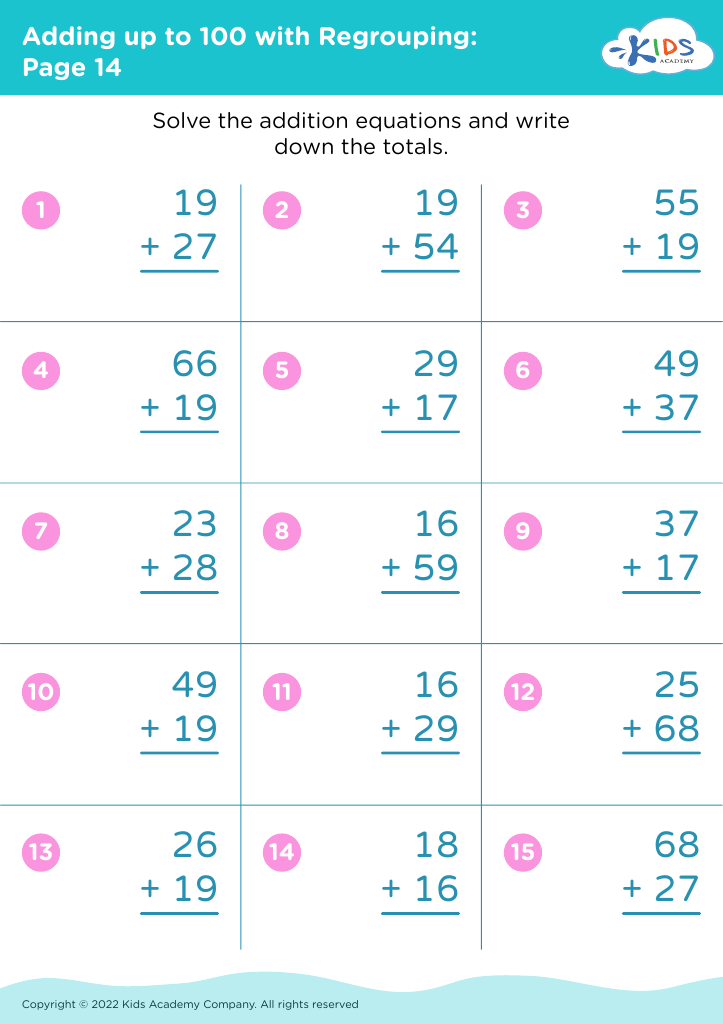
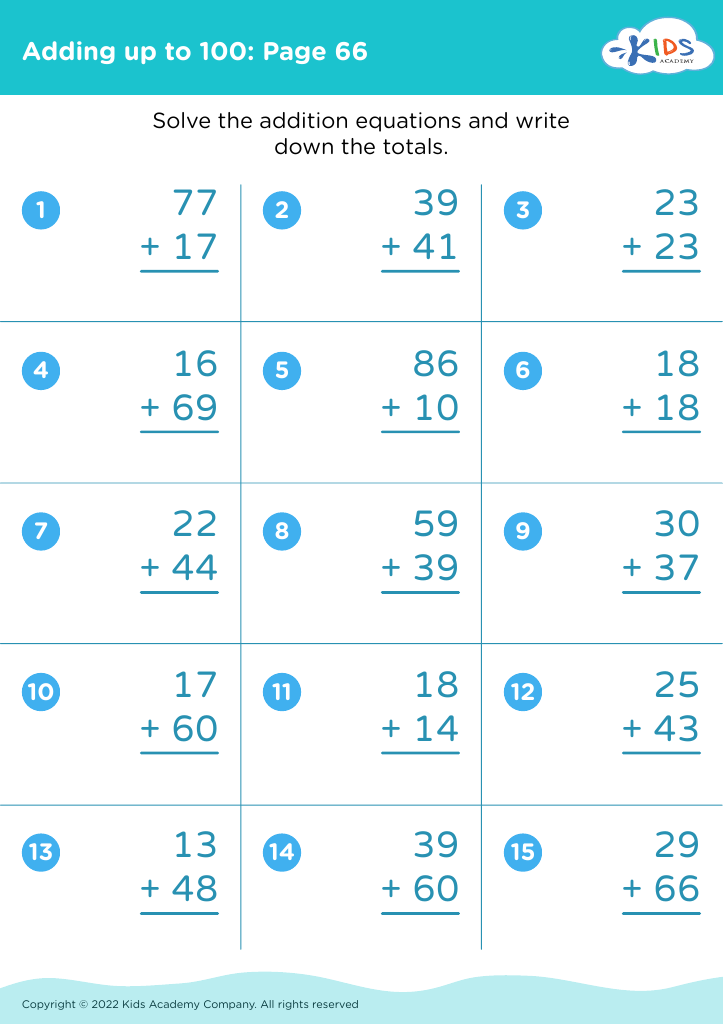
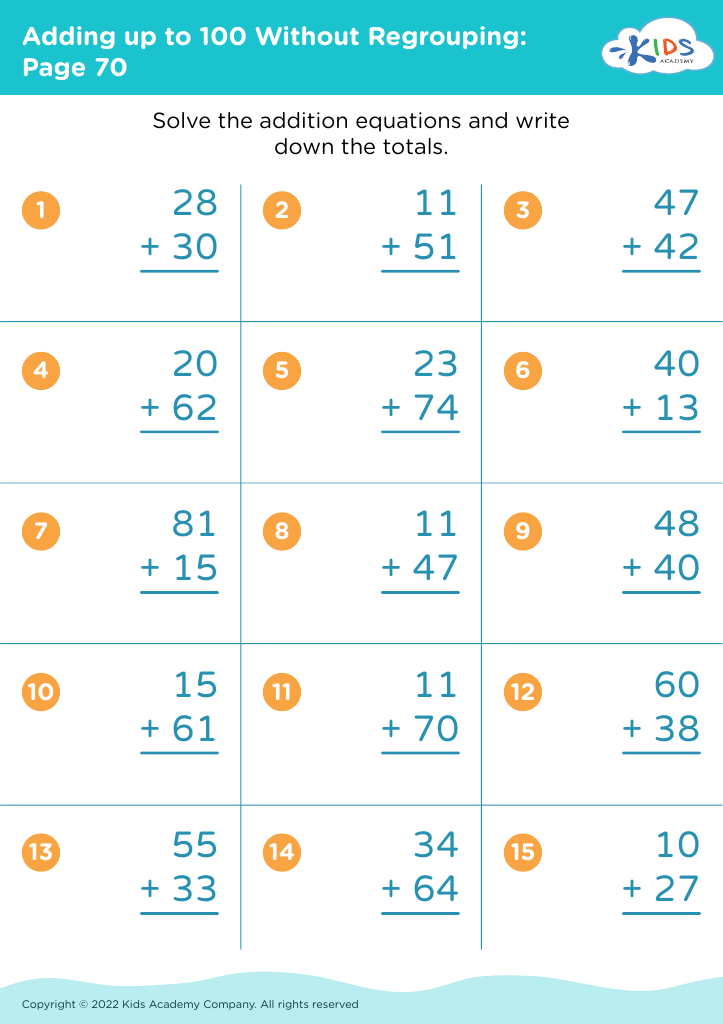
Boost your child’s problem-solving skills with our "Adding Up to 100 Worksheets" designed specifically for ages 4-7! This engaging collection features 100 printable worksheets that encourage young learners to explore addition in a fun and interactive way. Through colorful illustrations and age-appropriate exercises, children will practice counting, recognizing patterns, and developing critical thinking skills essential for math success. Ideal for home or classroom use, these worksheets make learning addition exciting while also promoting confidence and independence in young mathematicians. Foster a love for math early on and set the foundation for lifelong learning—start enhancing your child's problem-solving abilities today!




%20(1).jpg)


Enhancing problem-solving skills, particularly in the context of adding up to 100 for children aged 4-7, is crucial for several reasons. First, early mathematical skills serve as a foundation for all future learning. Mastering basic concepts like addition not only builds confidence but also fosters a love for mathematics. When children engage with numbers through problem-solving, they develop critical thinking abilities that extend beyond math, empowering them to tackle real-life challenges.
Moreover, at this developmental age, children's cognitive abilities are rapidly evolving. They benefit immensely from activities that stimulate their logical reasoning and analytical skills. These problem-solving experiences help children understand the relationship between numbers, aiding memory retention and comprehension.
Parents and teachers also facilitate social development through cooperative problem-solving activities. Working together encourages communication, teamwork, and the sharing of strategies. This collaboration helps build empathy and interpersonal skills.
Finally, enhancing these skills prepares children for standardized assessments in later grades, promoting academic success. By prioritizing problem-solving exercises in their educational journey, parents and teachers equip children with essential life skills, ensuring they become effective learners and critical thinkers in an ever-changing world.








