Enhancing calculation skills Adding up to 100 Worksheets for Ages 4-7
4 filtered results
-
From - To
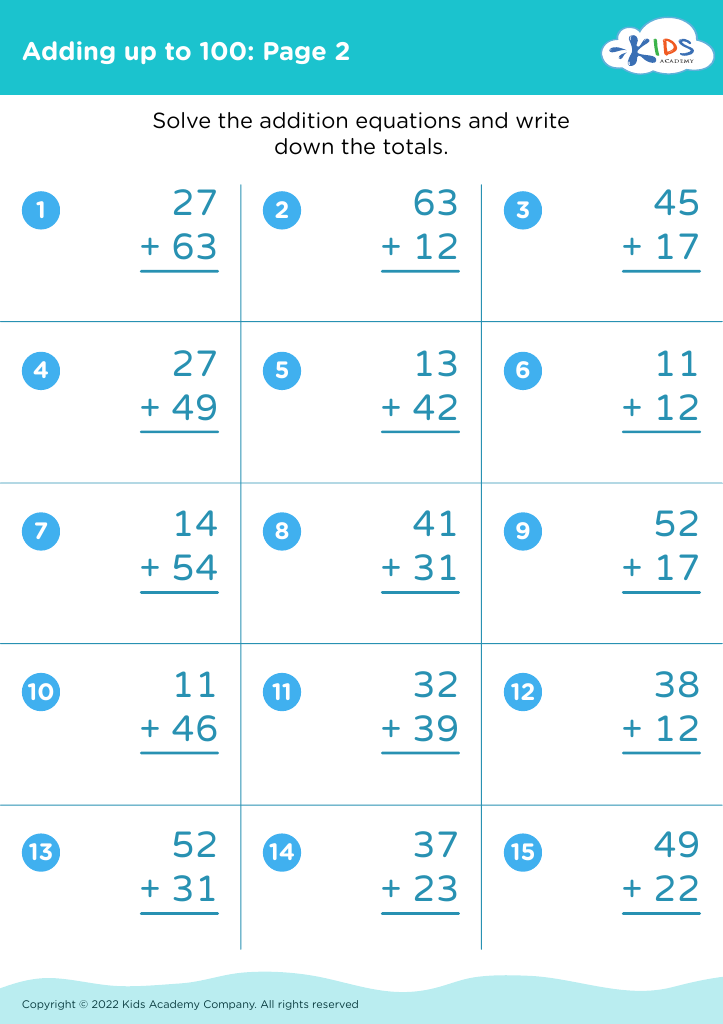
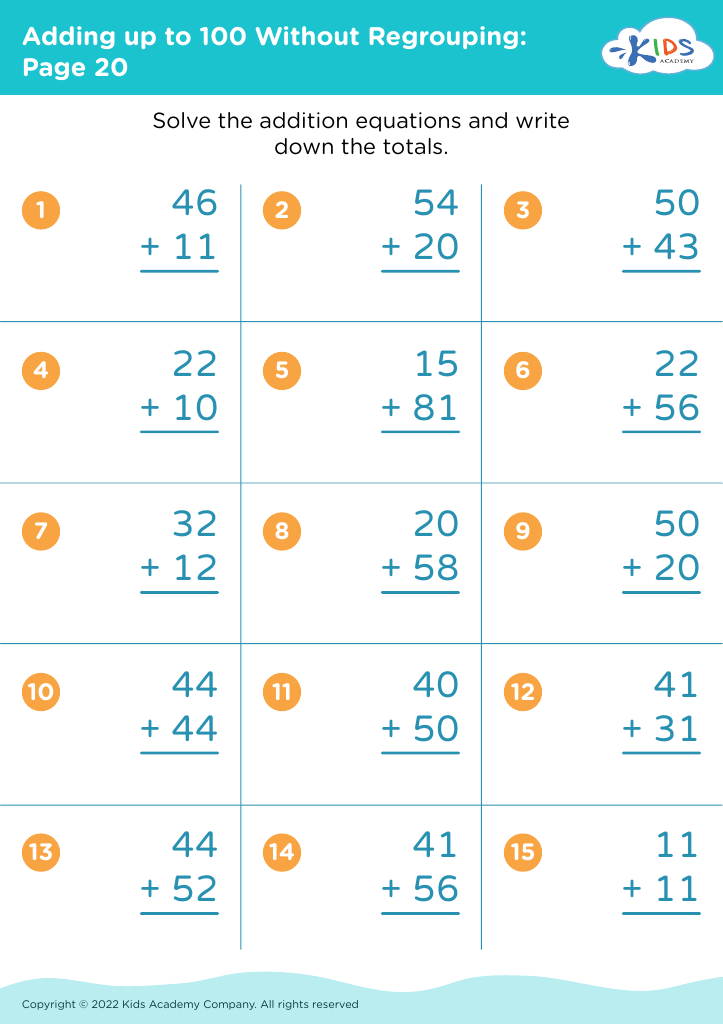
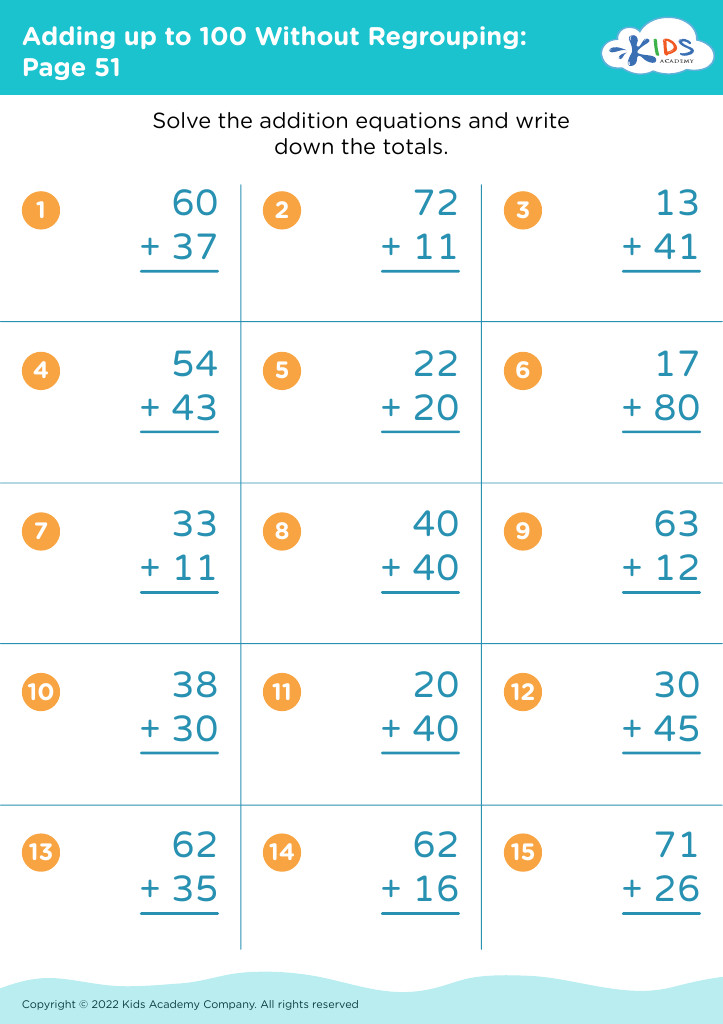
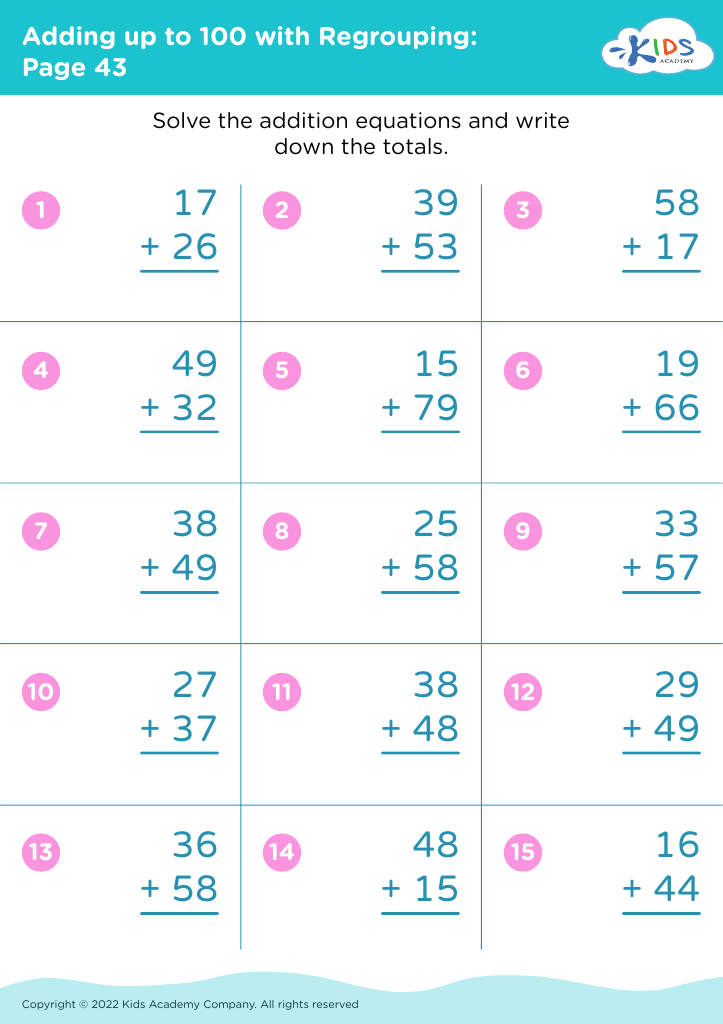
Unlock the joy of learning with our "Enhancing Calculation Skills: Adding Up to 100 Worksheets" tailored for children aged 4-7. These engaging and colorful worksheets are designed to strengthen early math skills through fun activities and interactive exercises. Each worksheet provides opportunities for kids to practice addition, understand number concepts, and build confidence as they work towards mastering calculations up to 100. Perfect for homeschooling or supplementary practice, these resources are a fantastic way to make learning math enjoyable and accessible. Help your little ones develop essential mathematical foundations while having fun with these exciting worksheets!




%20(1).jpg)


Enhancing calculation skills, particularly the ability to add up to 100, is crucial for children aged 4-7 for several reasons. First, this foundational skill fosters a strong understanding of numbers, promoting number sense that is essential for future mathematical learning. Mastery of addition helps children not only grasp basic arithmetic concepts but also prepares them for more complex mathematical operations that they will encounter in later grades.
Additionally, strong calculation skills boost children's confidence. When kids can easily add numbers, they feel more capable in their abilities, encouraging a positive attitude towards learning. This early success in math can help address anxiety and build resilience when faced with challenging concepts later on.
Moreover, enhancing calculation skills supports critical cognitive development. Engaging in addition activities encourages problem-solving, logical reasoning, and critical thinking. These skills are transferable across subjects and can influence a child’s overall academic performance.
Finally, parental and teacher involvement in enhancing these skills creates a supportive learning environment. When educators and parents collaborate to practice math, they strengthen the child's learning experience, making it more meaningful and enjoyable. Investing time in these skills is beneficial, setting the stage for lifelong math proficiency and an aptitude for learning.








