Fraction Addition Adding up to 100 Worksheets for Ages 4-7
3 filtered results
-
From - To
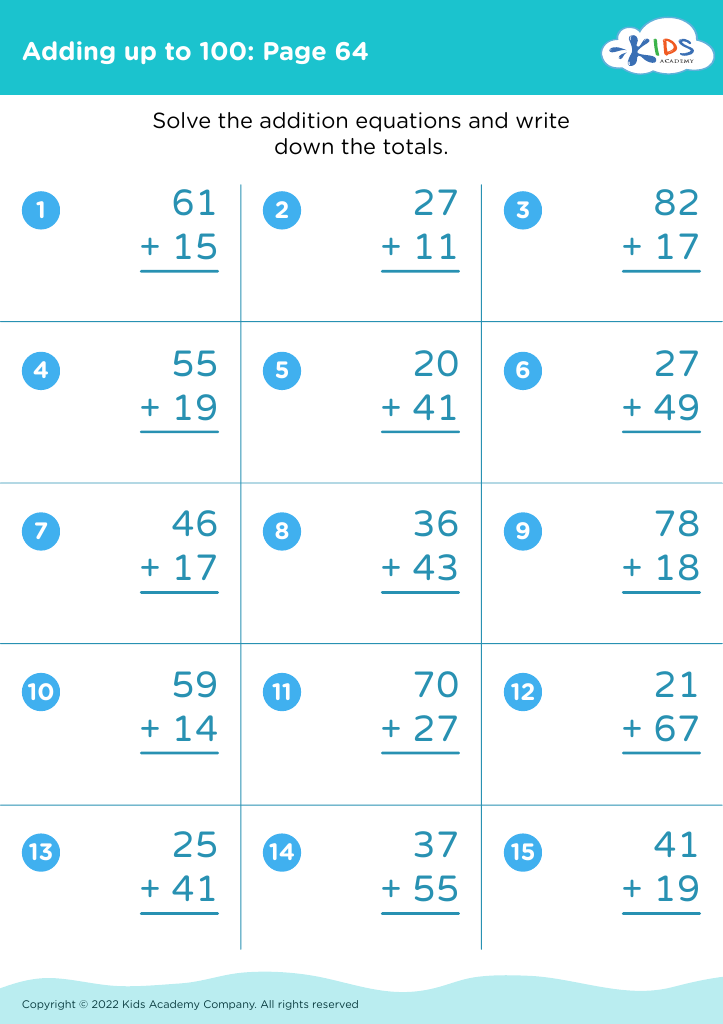
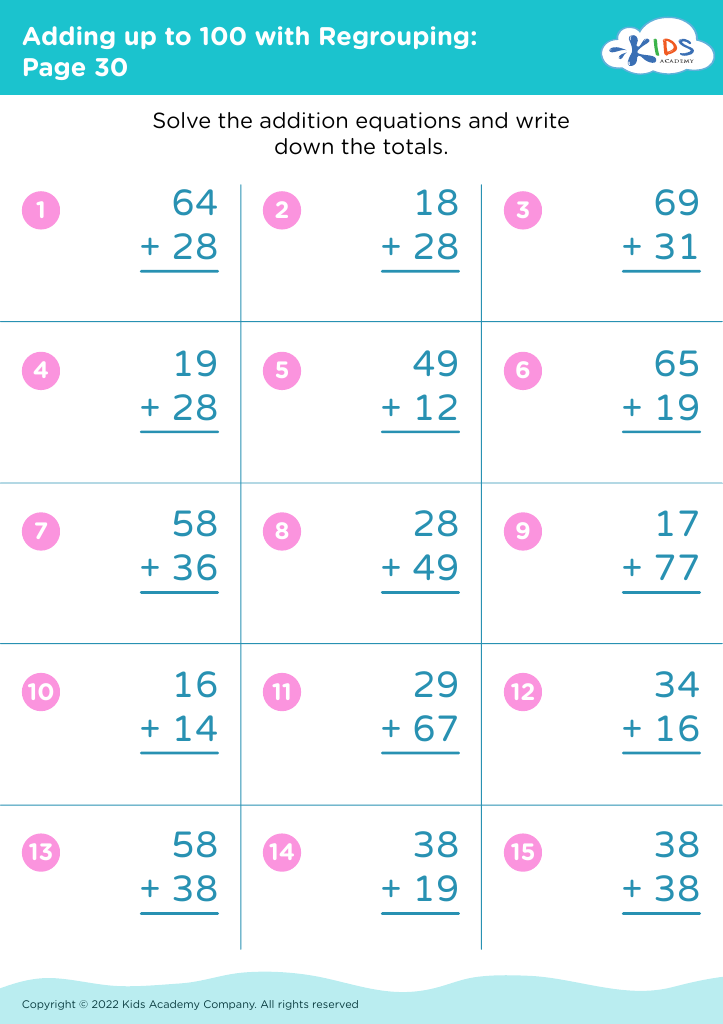
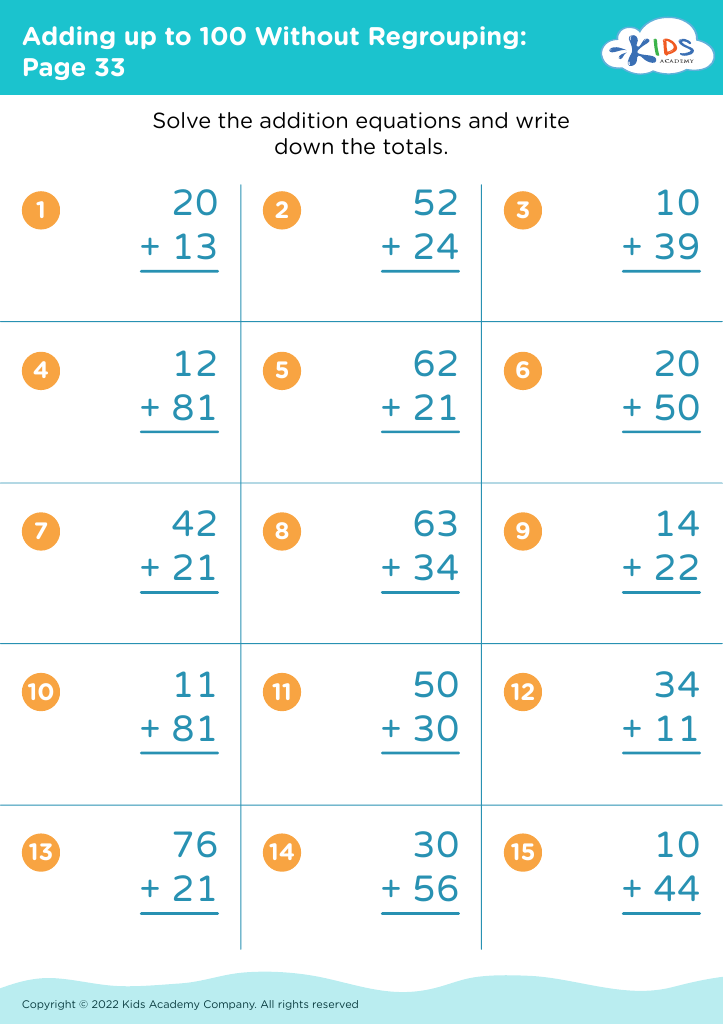
Boost your child's math skills with our engaging Fraction Addition Adding Up to 100 Worksheets, specially designed for ages 4-7! These interactive worksheets help young learners grasp the concept of fractions in a fun and meaningful way. With colorful visuals and kid-friendly exercises, children will practice adding fractions up to 100, promoting numeracy and problem-solving. Each worksheet is tailored to foster critical thinking and instill a love for math from an early age. Perfect for both classroom and home use, our resources support early educators and parents in guiding children on their mathematical journey. Start the adventure of learning fractions today!


%20(1).jpg)




Understanding fraction addition, particularly adding fractions that sum up to 100, is crucial for young children aged 4-7 as it lays a strong foundation for their future mathematical skills. At this age, children are developing their number sense—a core ability to comprehend and manipulate numbers. Introducing fractions at a young age helps them grasp not only basic mathematical concepts but also promotes critical thinking.
Engaging with fractions fosters problem-solving skills as children learn to identify parts of a whole and understand relationships between numbers. Adding fractions that result in whole numbers like 100 encourages children to see the importance of cohesion in math, as it mirrors real-world applications, such as dividing things equally.
For parents and teachers, fostering an early understanding of such concepts prepares children for more complex arithmetic and algebra as they progress in their education. Additionally, encouraging exposures to practical examples of fractions in everyday life, such as cooking or sharing treats, makes learning enjoyable and relevant. Ultimately, nurturing an intuitive grasp of fraction addition not only helps children excel academically but also builds their confidence in approaching math with curiosity and resilience, essential traits for lifelong learning.








